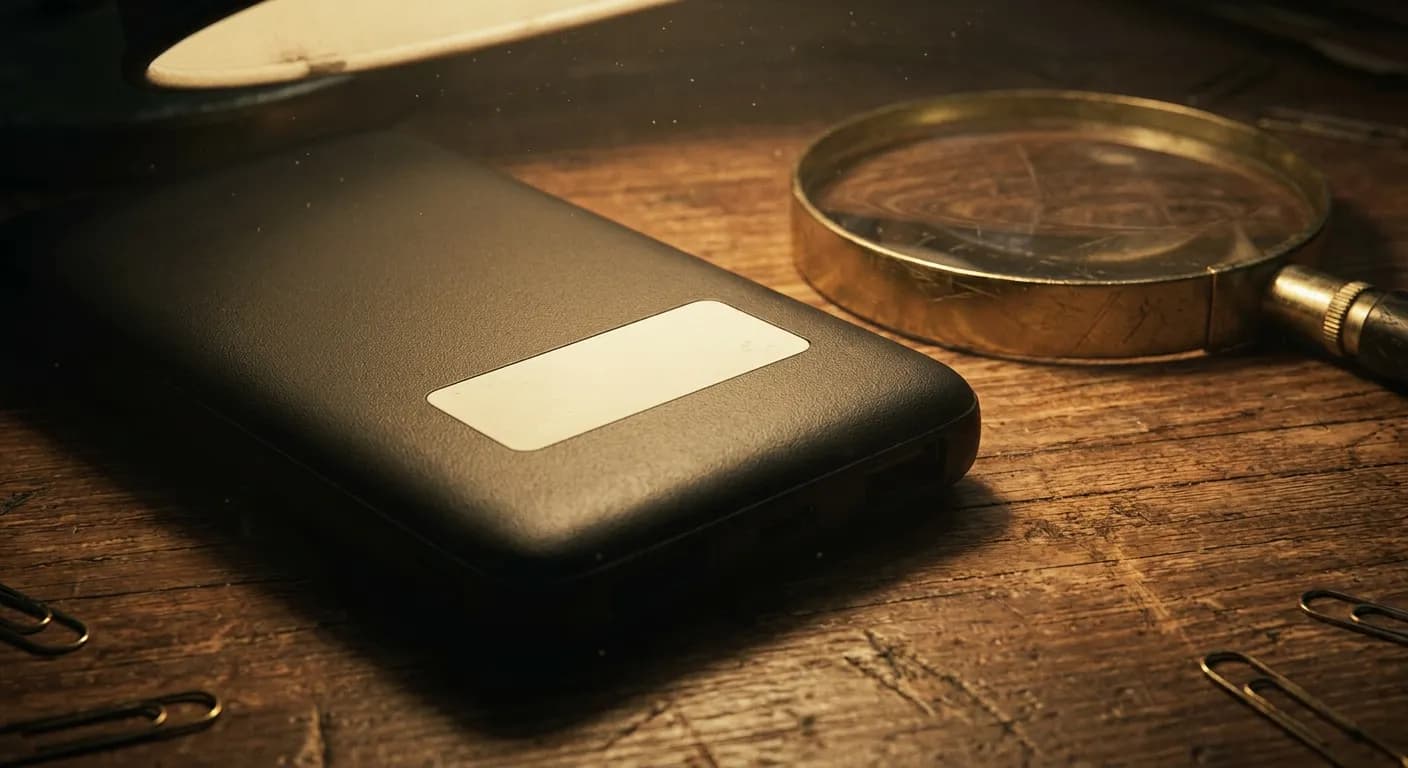
Somewhere on the bottom of your power bank, in type designed for ants, is the number that decides whether it flies out of SFO without a conversation. Battery rules for air travel run on watt-hours — not the milliamp-hours the marketing uses, not the number of phone charges the box promised — and the gap between those units is where most airport battery confusion lives. With airlines tightening battery policies all year, five minutes with the label at home beats any amount of negotiating at the checkpoint.
Karpo can do the watt-hour conversion for any battery you own, tell you whether it clears your airline's rules, and suggest a compliant replacement if it doesn't. Text Karpo a photo of the label and get a yes or no before you pack.

The number that matters
Watt-hours measure total stored energy — capacity times voltage — and the aviation thresholds are refreshingly round. Under 100 Wh, a battery flies in your carry-on with no questions; this covers nearly every phone power bank, tablet and laptop battery sold to normal humans. From 100 to 160 Wh — the territory of large camera batteries, serious video rigs and the biggest "charge everything" bricks — you need your airline's approval, generally capped at two spares. Over 160 Wh doesn't board a passenger flight, full stop. The tiers are federal; airlines layer their own paperwork on top.
Manufacturers increasingly print watt-hours directly on the case — look for "Wh" near the fine print. If your battery states it plainly, you are done. If it only lists mAh, you have one small equation to run.
The mAh conversion, once and for all
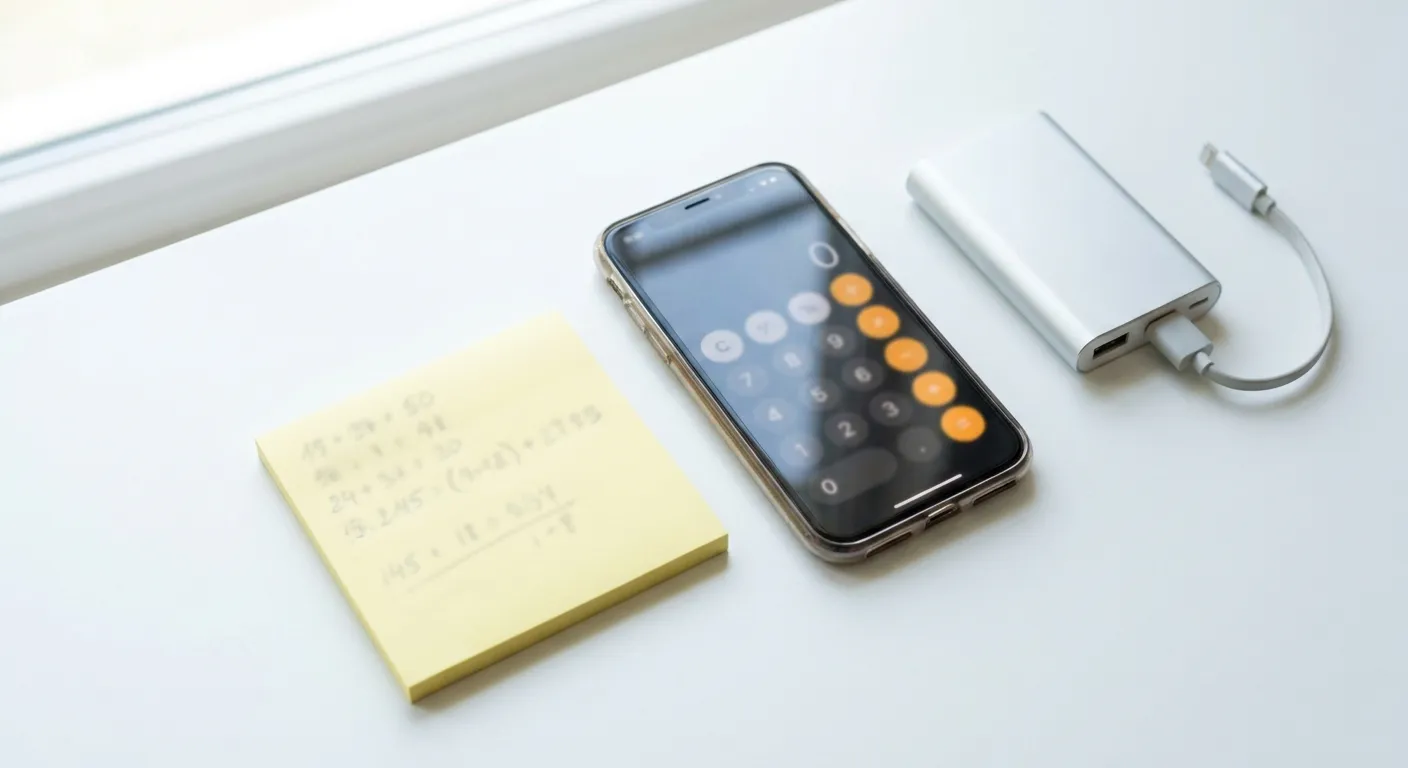
The formula: watt-hours equal milliamp-hours times voltage, divided by 1,000. The subtlety is which voltage to use — the lithium cells inside a power bank run at a nominal 3.7 volts, not the 5 volts of the USB output. A "20,000 mAh" power bank is therefore 20,000 × 3.7 ÷ 1,000 = 74 Wh: comfortably legal. A 26,800 mAh brick lands near 99 Wh — inside the line, which is exactly why so many premium power banks max out at that oddly specific capacity. Cross into the 30,000-plus range and you may pass 100 Wh, entering ask-your-airline territory.
Quick reference for the common sizes: 10,000 mAh ≈ 37 Wh. 20,000 mAh ≈ 74 Wh. 26,800 mAh ≈ 99 Wh. 30,000 mAh ≈ 111 Wh — approval needed. When in doubt, compute with 3.7 volts and round up; screeners do not award partial credit for optimistic math.
The unlabeled-battery problem
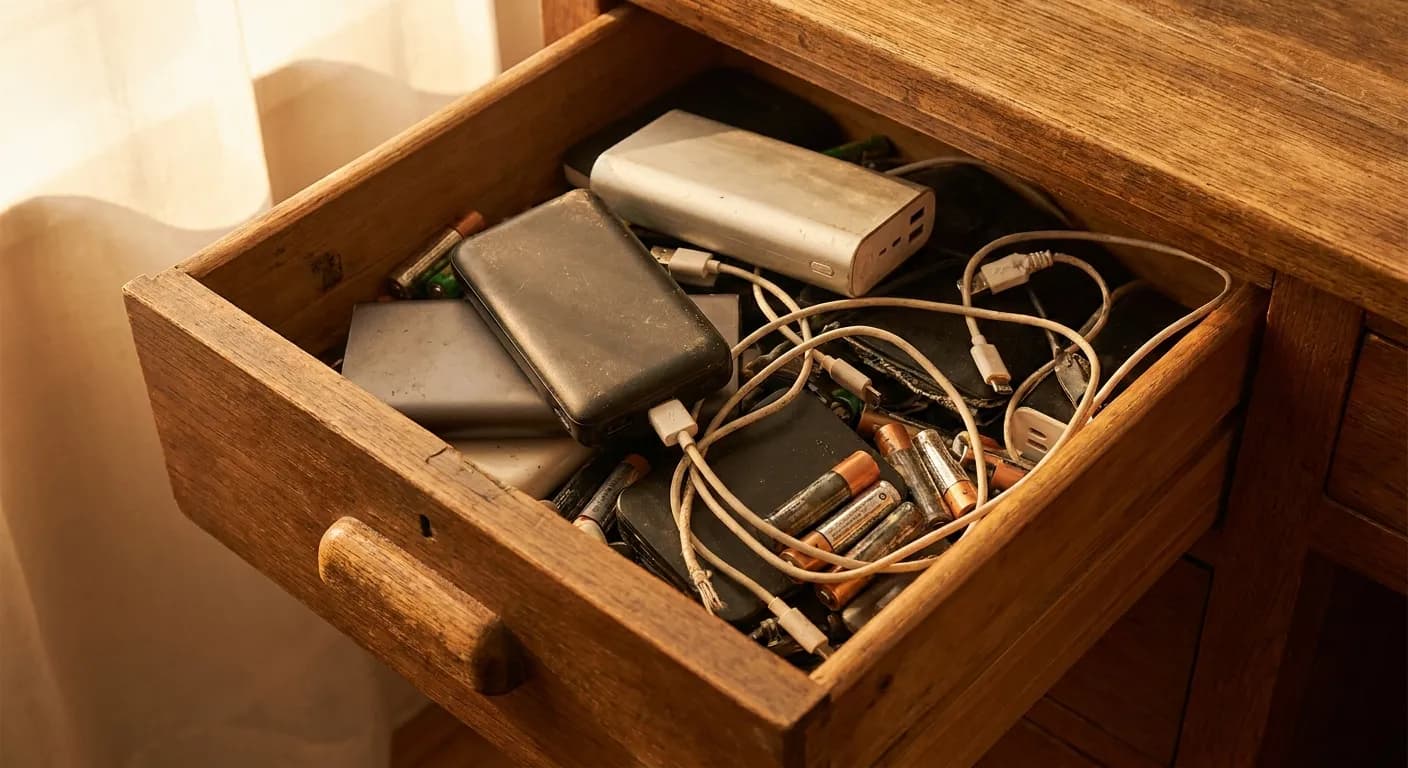
Here is the rule nobody reads until it bites: a battery whose capacity can't be determined can be refused. Bargain-bin power banks with worn-off printing, decade-old bricks, unbranded conference swag — if the label is gone or was never there, a screener or gate agent has no way to verify it is under the limit, and "it's probably fine" is not a recognized unit. San Francisco's drawers are full of exactly this hardware. The pre-trip move: check every battery you plan to carry, and if the rating is unreadable, either leave it home or retire it properly at an e-waste drop — SF's recycling infrastructure makes that the easiest errand in the city.
Ninety seconds before every trip
The whole discipline compresses to a pre-flight ritual: flip each battery, find the Wh (or run the 3.7-volt math), confirm everything is under 100, and put every spare in the carry-on where it belongs — cabin only, never checked. Photograph the labels of your regular travel batteries once and the ritual becomes a glance at your camera roll. It is the least glamorous form of travel preparedness and the one most likely to save you from donating a $60 battery to the SFO checkpoint bin.
Practical notes
Thresholds: under 100 Wh flies in carry-on freely; 100–160 Wh requires airline approval, usually limited to two spares; over 160 Wh is prohibited on passenger aircraft. Conversion: Wh = mAh × 3.7 ÷ 1,000 for typical lithium cells. Spare batteries and power banks are cabin-only regardless of size. Unlabeled or damaged batteries can be refused. Airlines have added their own in-flight use restrictions during 2026 — check your carrier's battery page before departure; federal rules live on the FAA's PackSafe site.
Tags: #karpo #sanfrancisco #sfo #watthours #powerbank #travelmath #carryon #batteryrules #packingtips #travel2026
Sources consulted: faa.gov · tsa.gov · flysfo.com
All trademarks are the property of their respective owners.
Ask Karpo first
Not sure if the big brick clears the line, or where to responsibly retire the mystery batteries in your drawer? Ask Karpo — one photo of a label now saves one sad goodbye at the SFO checkpoint later.