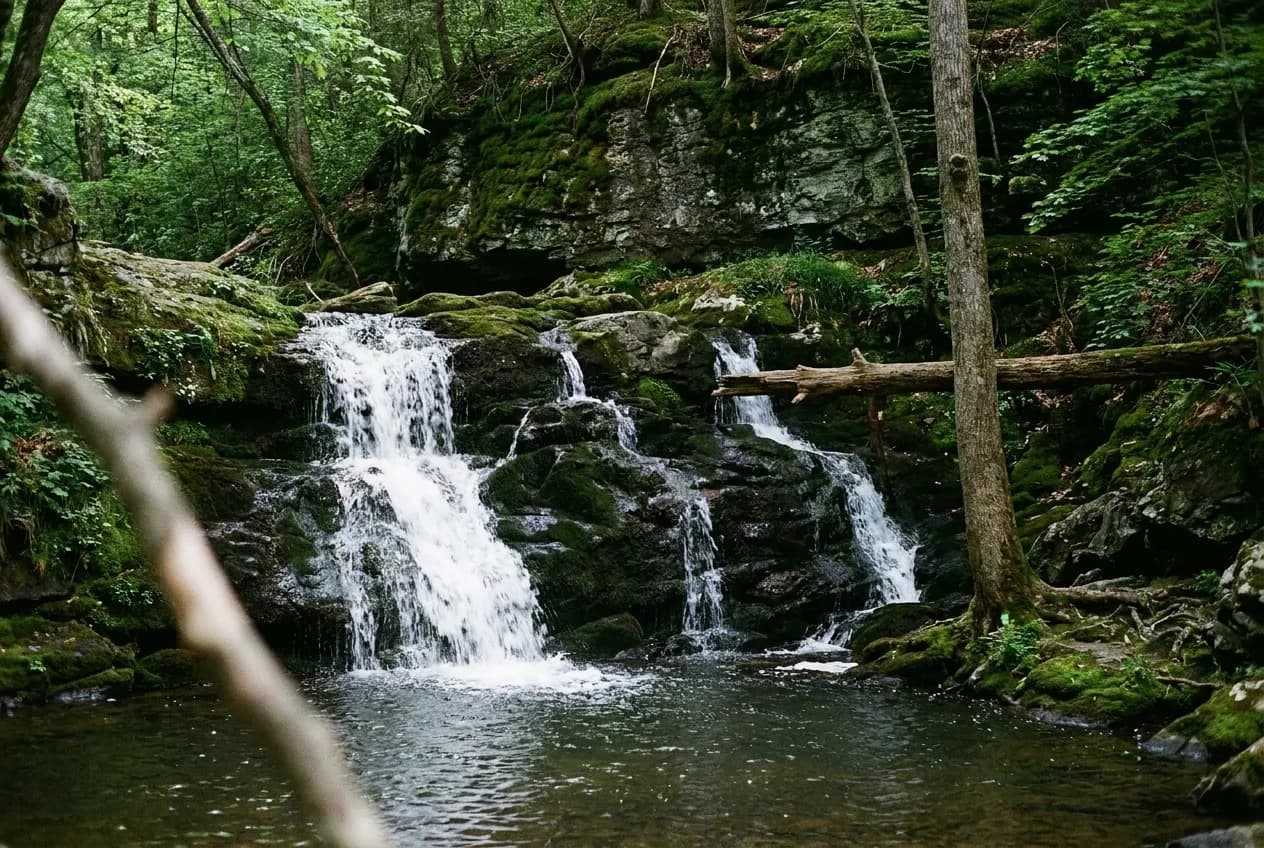
The first thing to understand about waterfalls near San Francisco is that they are weather, not landmarks. This is a Mediterranean climate: it rains between roughly November and April and then essentially stops. A fall that is thunderous in early March is a stain on a rock in August, and every year a large number of people drive an hour and hike three miles to discover this for themselves. The season, not the destination, is the decision.
Half of these are dry for half the year. Ask Karpo whether the falls near you are actually running this week before you drive.
The season, precisely
The reliable window is late January to early April, peaking one to three days after a substantial rain. The falls need cumulative rainfall in the ground before they respond well, which is why a heavy storm in November often produces less than a moderate one in February. By May most of the smaller creeks are down to a trickle; by July the only water you will find is in the deepest shaded canyons, and even that is more a seep than a fall.
The corollary is that the best waterfall hiking here happens in mud, in green hills, with the whole landscape looking nothing like the golden-brown version that appears in most photographs of Northern California. Bring boots you do not mind ruining and accept that the trail will be slippery.
The Marin options, which are the closest
The mountain across the bridge holds the region's best-known cascade hikes: a stepped series of falls through a wooded canyon on the flank of the mountain, reached by a steep trail with a long staircase section, and several smaller falls in the canyons on the southern side. These are genuinely beautiful in season and genuinely crowded on a sunny weekend after rain, because everybody in the region has the same idea at the same time.
Parking is the constraint. The trailhead lots are small, they fill by nine in the morning on a good weekend, and the roadside overflow is limited and enforced. Going on a weekday, or arriving before eight, is the difference between a pleasant morning and an hour of circling. Some parks in the area now run advance reservations for vehicles in peak periods, so check the specific park's site rather than assuming.
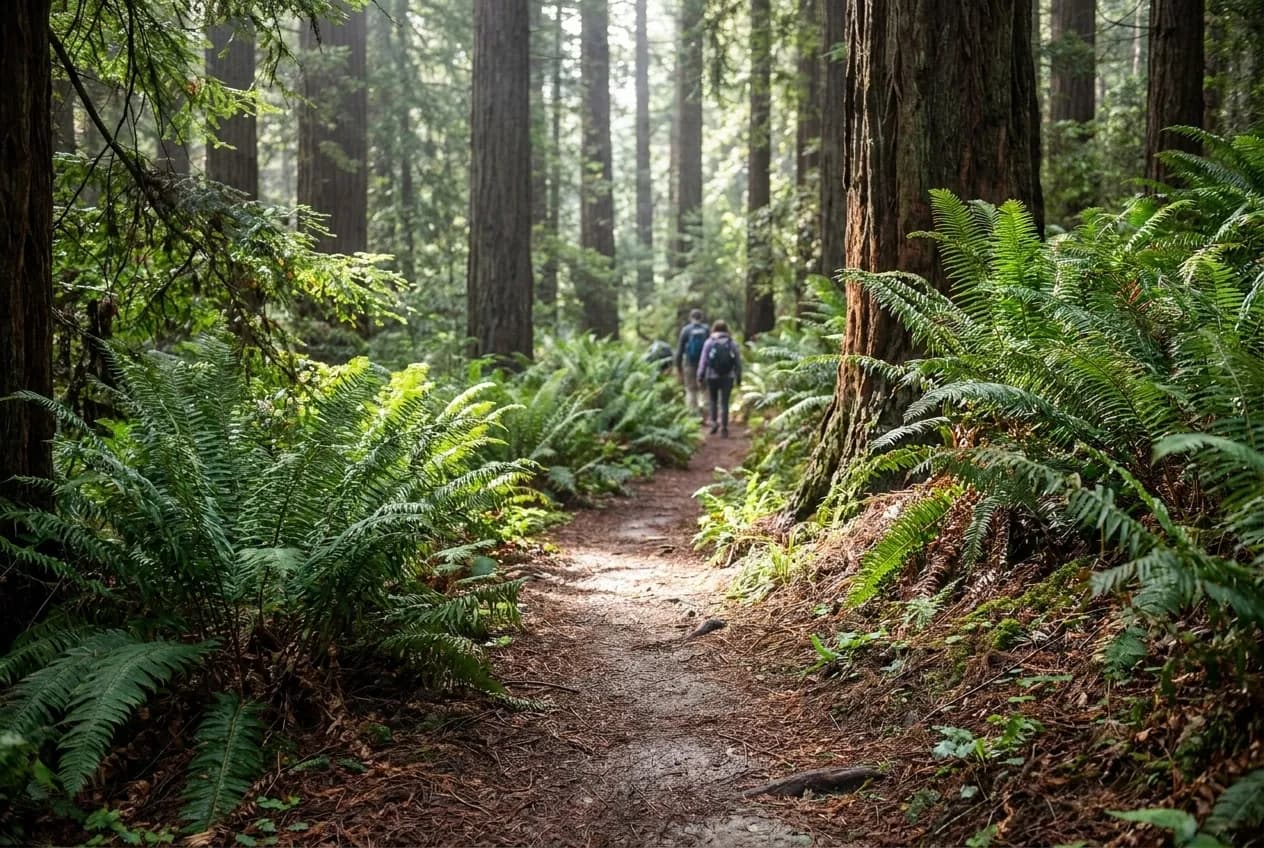
The coastal one that ends on a beach
Further north on the coast there is a rare tidefall — a waterfall that drops directly onto the beach and into the sea. It is spectacular and it is a serious undertaking: a long out-and-back of around twelve to thirteen miles from the official trailhead, with a final scramble down an eroding bluff that the park service explicitly does not maintain and does not recommend. People are injured there most years.
If you go, go early, allow six hours, take real water and food, check the tide so you are not on the beach at high water, and treat the descent seriously. The official parking is a small lot at the trailhead that fills very early on weekends. It is a magnificent walk; it is not a casual afternoon.
The Peninsula and South Bay alternatives
South of the city, the redwood parks in the coastal range hold several waterfalls, including a well-known chain deep inside a large state park that requires a substantial hike to reach. Large parts of that landscape burned in the major fires of recent years, and while trails have progressively reopened, closures and reroutes remain in force in places — checking the park's current trail status before setting out is not optional there.
Further south there are smaller, easier waterfall loops in county parks that are excellent for families: a two- or three-mile circuit past several small falls, with a car park at the trailhead and no serious elevation. These are the best option if you have young children or limited time, and they run on the same seasonal rules as everything else.
Practicalities that decide the day
Most of these parks charge a vehicle entry fee, several are cash-only at the kiosk, and mobile signal at the trailheads ranges from poor to nonexistent — download the map before you leave the city. Dogs are prohibited on most of the state and national park trails in this region, which surprises people every weekend. Restrooms exist at the main trailheads and nowhere else.
Weather on the coastal ridges is its own system. It can be sunny in San Francisco and raining on the mountain, or the reverse. Check the forecast for the specific park rather than the city, and take a waterproof layer in season regardless of what the sky looks like when you leave.
The plan that works
Watch the rain, wait two days, leave the city by seven thirty on a weekday if you possibly can, take the closest Marin canyon for a half-day or the coastal tidefall for a full one, and save the southern parks for when the northern trailheads are full. In a good wet spring you can do all of them in six weeks; the rest of the year, go for the walk and treat any water as a bonus.
Tags: #WaterfallsNearMe #Marin #MountTamalpais #SanFrancisco #DayTrips #Hiking #BayArea #WeekendPlans #PointReyes #ThingsToDoSF #Outdoors #Redwoods #TrailDay #NorCal
All trademarks are the property of their respective owners.
Ask Karpo first
Want to know whether the falls are running and which trailhead still has parking? Ask Karpo before you commit the whole morning to the drive.