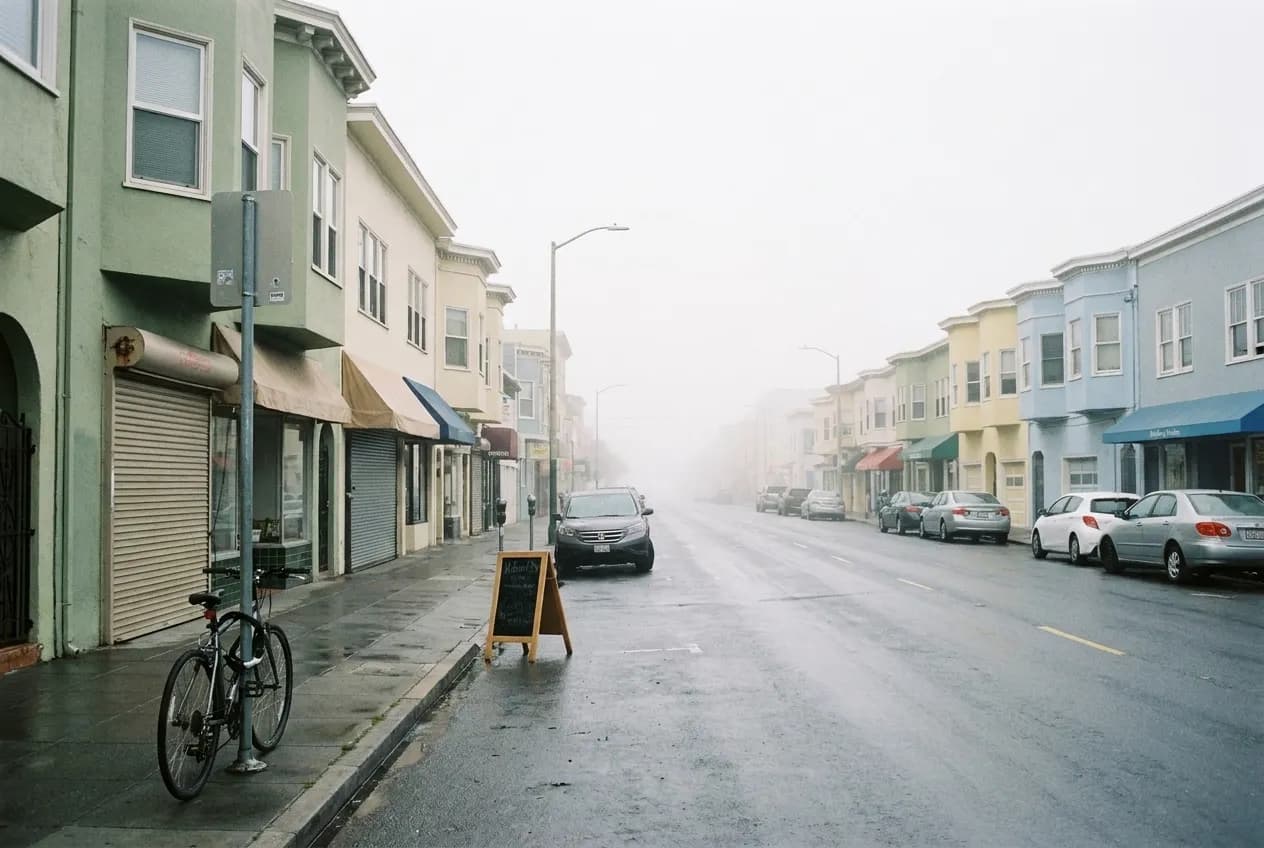
Late May in the Upper Haight means fog rolling back by noon and storefronts propped open to catch the breeze. This is when you notice the posters—not the tchotchke reproductions aimed at tour groups, but the dealers who've quietly maintained San Francisco's paper trail through decades of rent hikes and neighborhood churn. These shops traffic in original concert bills from the Fillmore's heyday, mid-century travel lithographs, and advertising art that predates the algorithm. They're staffed by people who can date a printing technique by touch and who understand that a well-preserved poster is as much historical document as decoration.
The enduring appetite for paper
Walk Haight Street between Masonic and Stanyan on a weekday morning and you'll find the vintage poster sf crowd already at work: dealers unpacking estate acquisitions, collectors bent over flat files, framers measuring archival mats. The trade persists because posters occupy a peculiar niche—accessible enough to build a collection without trust-fund backing, tactile in an era of screens, and specific enough to San Francisco's visual culture that the market remains local even as everything else migrates online.
The neighborhood's association with psychedelic art gives these shops built-in credibility, but the smart dealers stock broader. You'll find French aperitif advertisements from the 1920s, Swiss railway posters, Polish film art, Cuban revolutionary graphics. The through line isn't style but craft: lithography, letterpress, screen-printing—processes that required a printmaker's hand and left evidence of that hand in registration marks, ink texture, paper bite. Collectors respond to that.
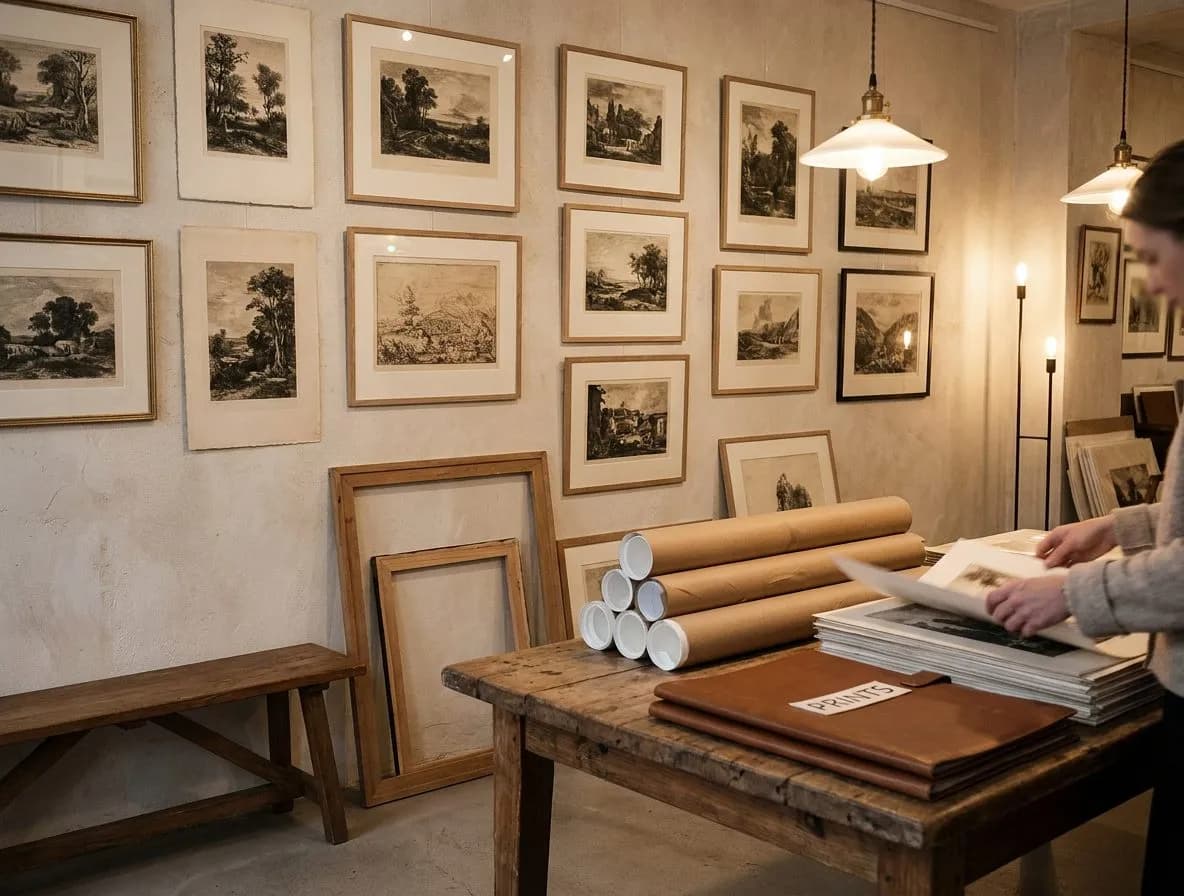
What the flat files hold
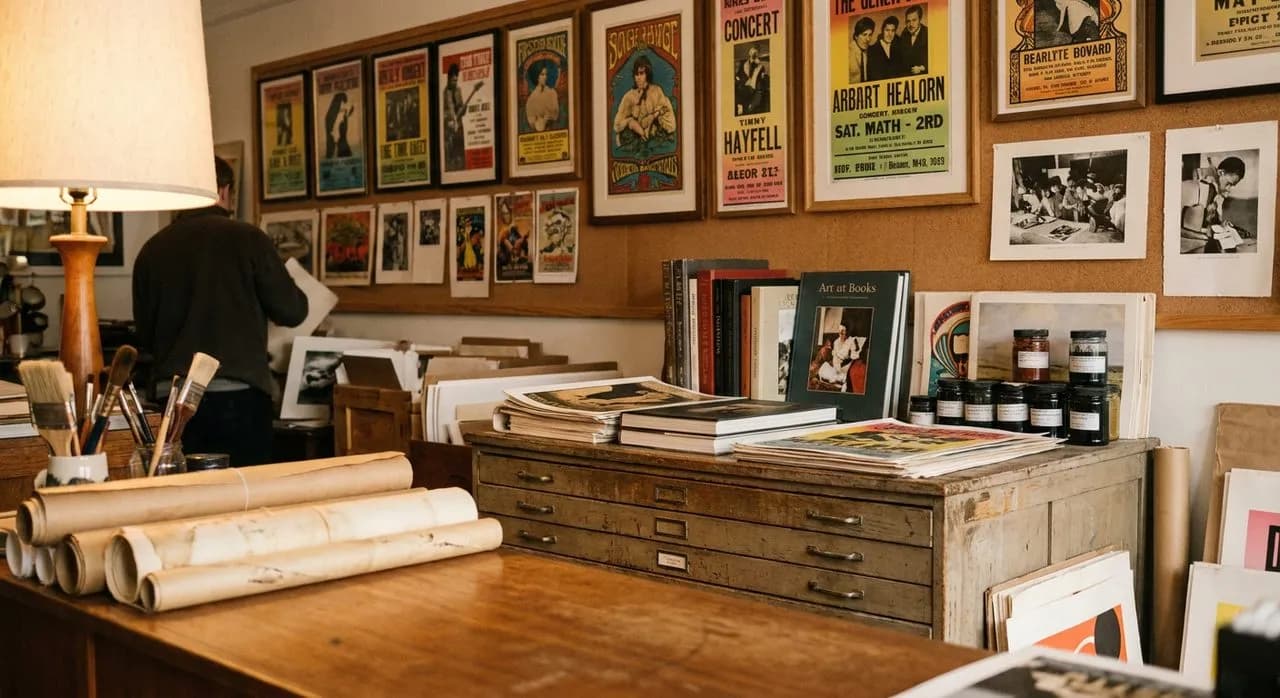
The real inventory lives in wide, shallow drawers that line the shop walls. Flat files protect paper from light and folding, and flipping through them is the point—a tactile education in how visual language has shifted. Concert posters from the late sixties carry that unmistakable Haight lineage: Victor Moscoso's vibrating color fields, Wes Wilson's liquid lettering, Rick Griffin's totemic imagery. They're unsigned multiples, originally wheat-pasted on telephone poles, now matted and priced according to condition and rarity.
But scan deeper and you'll surface WPA-era national park posters, stark and geometric. Art Nouveau theatre bills from Paris, all whiplash curves and block lettering. Travel posters selling Mediterranean coastlines to a generation that crossed the Atlantic by ship. The haight ashbury shops know their legacy inventory moves the tourists, but the dealers stay solvent on clients building thematic collections: mid-century ski resorts, Eastern European circus art, American product advertising from the Eisenhower years. Each flat file is a referendum on taste, decade by decade.
Authenticity and its discontents
Every poster shop wrestles with the reproduction problem. The Fillmore originals have been reprinted so many times that distinguishing a 1967 first printing from a 1980s reissue requires expertise most buyers lack. Reputable dealers will walk you through it—paper stock, printing method, size variance, whether the poster was folded or rolled. They'll point out the telltale smoothness of offset lithography versus the slight embossing of letterpress, the color saturation differences between decades. Some keep reference binders with side-by-side examples.
The market has arrived at an uneasy peace: acknowledged reprints sell briskly at accessible prices, while authenticated originals command premiums that reflect their scarcity. A well-documented first printing of a major Grateful Dead show might run two thousand dollars; a licensed reprint of the same image, forty. Both have their place. The key is transparency, and the neighborhood's surviving dealers understand that their reputations hinge on it.
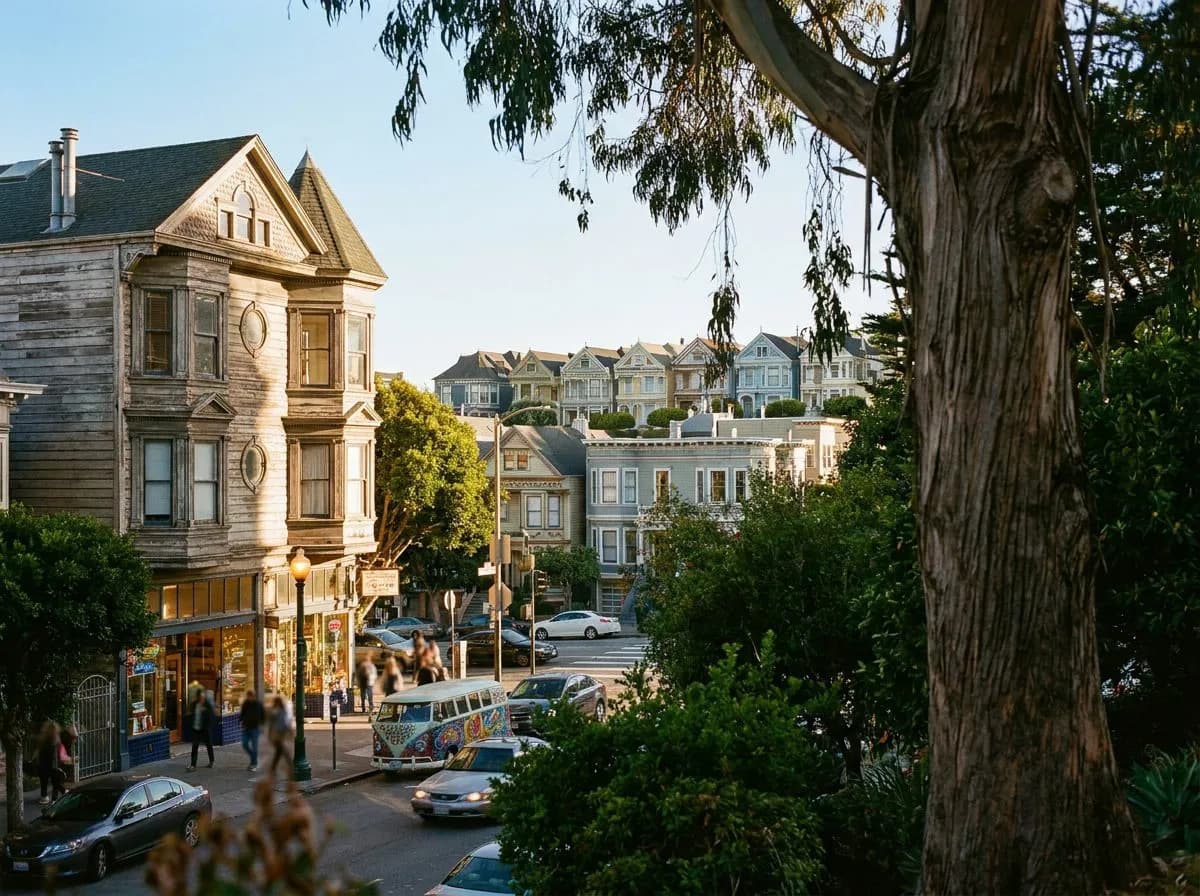
Framing makes the difference
A poster is potential until it's framed. The Haight's print shops either frame in-house or maintain relationships with framers who understand archival standards—acid-free mats, UV-filtering glazing, techniques that won't yellow the paper or off-gas chemicals over time. Framing costs often exceed the poster's price, a reality that surprises first-time buyers. But a museum-quality frame transforms a $150 print into wall art that holds its value and looks intentional.
Some dealers will talk you out of framing altogether. If you're buying for investment rather than display, keep it in archival sleeves, stored flat, away from light and humidity. The poster market, like any collectibles market, rewards patience and proper storage. Framed pieces are harder to resell; the frame becomes part of the package, and taste in framing ages faster than taste in posters.
Seasonal rhythms and timing
Late spring brings estate sales and collection liquidations, as families sort through decades of accumulated paper. June 2026 has already seen several significant Haight-area acquisitions hit the market—nothing a dealer will announce on Instagram, but word circulates among the regulars. If you're hunting specific artists or eras, this is when fresh inventory surfaces. Summer tourist season pushes prices up slightly on the recognizable names; fall and winter reward the patient.
Weekday mornings remain ideal for serious browsing. You'll have the flat files to yourself and the dealer's full attention, which matters when you're trying to understand why one poster is priced at sixty dollars and the visually similar one beside it is three hundred. These shops run on conversation as much as commerce.
Building a collection with intention
The collectors who haunt these shops counsel against buying randomly. Better to develop a focus—a specific venue, a graphic style, a decade, a printmaking technique—and build depth. That focus becomes a lens that makes you notice details: how concert poster typography evolved from Victorian wood type to psychedelic illegibility and back toward clarity. How travel posters sold aspiration as much as destination. How political movements have always understood that a striking image, cheaply reproduced, reaches farther than a pamphlet.
Even a modest collection tells a story when it's thoughtfully curated. Three posters from different printmakers advertising the same 1968 venue. A chronological sequence showing how a particular product's advertising aesthetic shifted. Regional variations on a theme—ski resorts, national parks, airline routes. The dealers can guide this process, pulling examples you wouldn't have found on your own, connecting visual dots across decades and geographies.
Practical notes
The Haight's vintage print dealers cluster along Haight Street between Masonic Avenue and Stanyan Street, easily explored on foot. The N-Judah light rail runs nearby along Carl Street with stops in the Cole Valley/Inner Sunset area; several Muni bus lines serve the corridor, including the 7 and 43; verify current service before visiting. Street parking exists but requires patience; nearby parking garages and metered parking are available in the area. Most shops keep Wednesday-through-Sunday schedules, with variable hours—call ahead or verify online before making a dedicated trip. Accessibility varies by storefront age; narrow aisles and flat-file access may pose challenges. Bring a tape measure if you're shopping for a specific wall space, and a notebook for tracking prices across multiple stops. Serious buyers should ask about return policies and authenticity guarantees.
Tags: #VintagePosters #HaightAshbury #SanFranciscoShopping #PosterCollecting #PsychedelicArt #PrintCulture #TheOddEdit #SFStyle #PaperEphemera #ConcertPosters #GraphicDesignHistory #HaightStreet #UrbanCollecting #SummerInSF #SFNeighborhoods
Sources consulted: Haight-Ashbury · Psychedelic Art · San Francisco Travel · Time Out San Francisco · Fillmore Auditorium
All trademarks are the property of their respective owners.