 Stonestown Winter Farmers Market Picker for Student Cooks
Weekend Plans
SF Urban Wildlife Sanctuary: 3 Mountain Lake Watching Tips
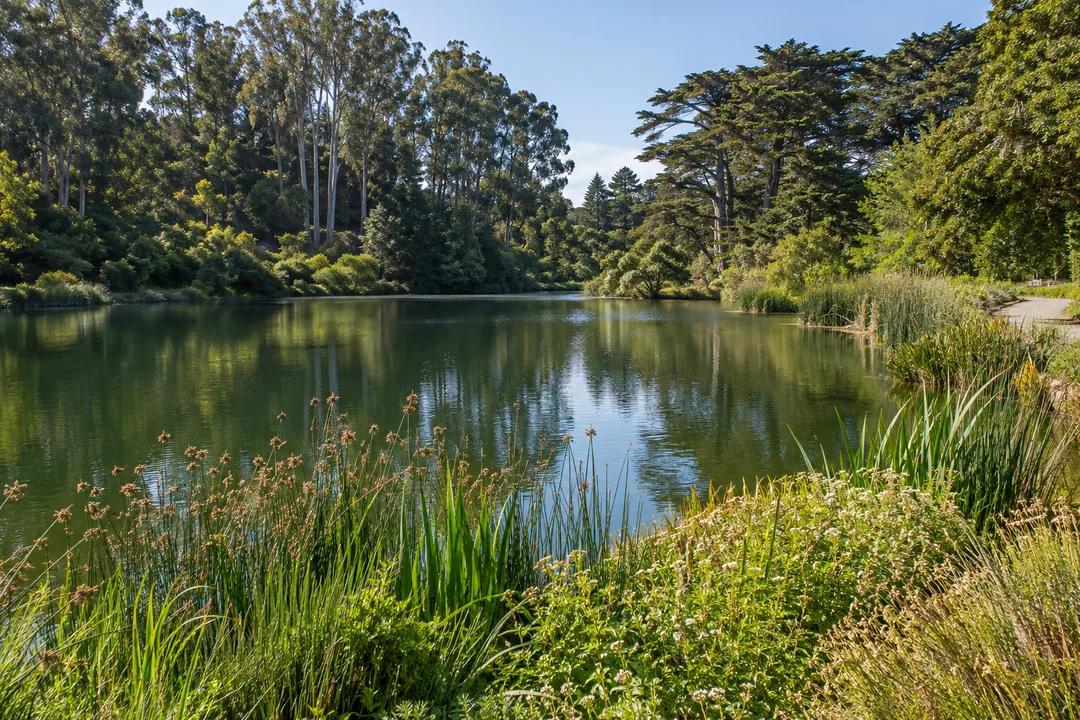
Mountain Lake in the Presidio suits a patient wildlife outing, with restored native habitat and a lakeside pause before a longer walk through the park.
Mountain Lake rewards a different kind of SF urban wildlife sanctuary outing: watch the water before trying to identify everything on it. This restored Presidio habitat brings birds, native pond turtles and chorus frogs into the same small landscape. The useful choice is whether you want a patient lakeside pause or a longer walk through the surrounding park. Start with the pause. A rushed circuit can turn the lake into scenery, while staying with one patch of shoreline gives you something specific to notice.
First, separate the lake from the playground plan
The Presidio describes Mountain Lake as a natural habitat with a playground, lawn and picnic amenities nearby. That combination gives a mixed-interest group a workable outing. Someone who wants to watch birds does not need to turn everyone else into a birder. Agree on a meeting point and a short observation period, then leave room for the other parts of the visit. Treat those as separate activities rather than carrying a noisy game right to the water's edge.
For a family, a useful opening question is simply, “What moved?” Ask a child to describe what they saw before supplying a name. A small disturbance could be a bird surfacing, wind pushing vegetation or something you cannot identify. Leaving that last possibility unresolved is part of the experience. You are building attention, not taking an identification exam. An adult who has never used binoculars can join in on exactly the same terms.
Watching tip one: give the shoreline a second look
Pick a visible stretch of reeds, a piece of open water and a place where the two meet. Look across each area with your eyes before raising binoculars. This is a suggested way to organize your attention, not a promise that an animal will appear in every zone. The lake becomes easier to read when you stop searching the entire view at once. Notice movement against a fixed background, then follow it only while it remains comfortably visible.
If you have binoculars, locate the subject without them first and bring the lenses to your eyes while keeping your head facing it. Beginners often lose the bird while looking down at the equipment. A companion can help by naming a simple landmark: the end of a branch or an opening between reeds. Avoid vague directions such as “over there.” Describe the position quietly, and let the other person have a turn without pressing closer to the habitat.

One worthwhile exercise is to compare your first and second impressions of the same view. At first you may register only water and trees. Later, you might distinguish reflected leaves from real ones, or separate a stationary object from a moving shape. You do not need a rare sighting to make that comparison interesting. It is especially useful for a visitor who feels they are “bad at nature”: looking carefully is a skill you can practice without owning special equipment.
Watching tip two: make the turtle story about habitat
The Presidio's account of Mountain Lake centers on restoration and the return of native wildlife, including Western pond turtles. That makes a turtle more than a photograph to collect. If one is visible, observe its position in relation to water, vegetation and any resting surface. Keep your distance and resist the urge to improve the view by stepping beyond the public route. If you do not see one, the restoration story still gives the landscape a meaningful subject.
The lake's history also offers a concrete conversation about well-intentioned mistakes. The Presidio explains that released pets and other introduced animals damaged the ecosystem and displaced native wildlife. Do not bring an animal here to release it. A place that looks green and welcoming is not automatically a suitable home for a pet. For children, the distinction is useful: caring about an individual animal also means understanding the living community into which it would be introduced.
Skip the expectation of a guaranteed turtle encounter. It encourages people to crowd the most promising-looking spot and makes an ordinary visit feel unsuccessful. Instead, give your group a question that can be answered from the path: where does shelter meet open water, and what can you observe there? Keep a short note of what was actually visible. “No turtle seen” is a perfectly good record, and much more honest than turning a distant shape into a confident identification.
Watching tip three: listen without demanding a performance
Chorus frogs are part of the native wildlife described by the park, but that does not make calling frogs a scheduled attraction. Try a brief listening pause with conversation stopped and bags settled. Separate nearby sounds from distant ones without assuming their source. A faint repeated sound may deserve attention, but uncertainty belongs in your notes. Do not replay calls to draw an animal closer or search through plants for the source of a noise.
This is also a good moment to put photography in its place. Take a wider picture of the habitat if the subject is too distant for your camera. A photograph that shows the relationship between shoreline and water can say more about the visit than a heavily enlarged blur. Keep the path clear while framing it. If other walkers need to pass, lower the camera and make space rather than expecting everyone to wait for your shot.
Let the Southern Wilds decide the longer walk
Mountain Lake connects to a wider Presidio trail landscape. The official Mountain Lake Trail description places the lake within the Southern Wilds and describes a route that continues toward Baker Beach. That gives an energetic visitor an extension, but the full route is a separate decision. Do not present a small lakeside outing to a companion and then quietly turn it into a cross-park walk. Discuss energy, weather and the return journey before setting off beyond the lake area.
The official trail page currently carries a reforestation notice about intermittent closures near the Mountain Lake and Ecology Trails. Follow posted detours and leave the extension optional. If the onward route is unavailable, spend the remaining time observing the lake from permitted public areas or end the outing there. A closed segment is not an invitation to find an unofficial way through the work. Keeping the plan small makes this an easy adjustment rather than a spoiled day.
Practical Notes for a visit worth repeating
Bring a layer, water and binoculars if you already have them. Keep food for the picnic part of the outing, away from wildlife observation, and carry scraps out. The Presidio prohibits fishing at Mountain Lake because it is a restored habitat. That rule matters even when the water looks like a convenient recreational pond. Leave animals, plants and the shoreline undisturbed, and give other visitors room to enjoy the public path.
Use the Karpo APP to ask for ideas for the rest of your SF outing, with Mountain Lake as the starting point in your request. Describe whether you want more walking or a change of scene. Keep your own observation note separate from the next-stop plan: what you saw, what you only heard, and what remained uncertain. Returning to the same place with that small record can be more rewarding than immediately searching for a different wildlife destination.
Ask Karpo for more information.
Keep reading
- Stonestown Winter Farmers Market Picker for Student Cooks
 Clement St Winter Farmers Market Picker for Lunar New Year
 Fort Mason Winter Farmers Market Picker for Citrus Bakers