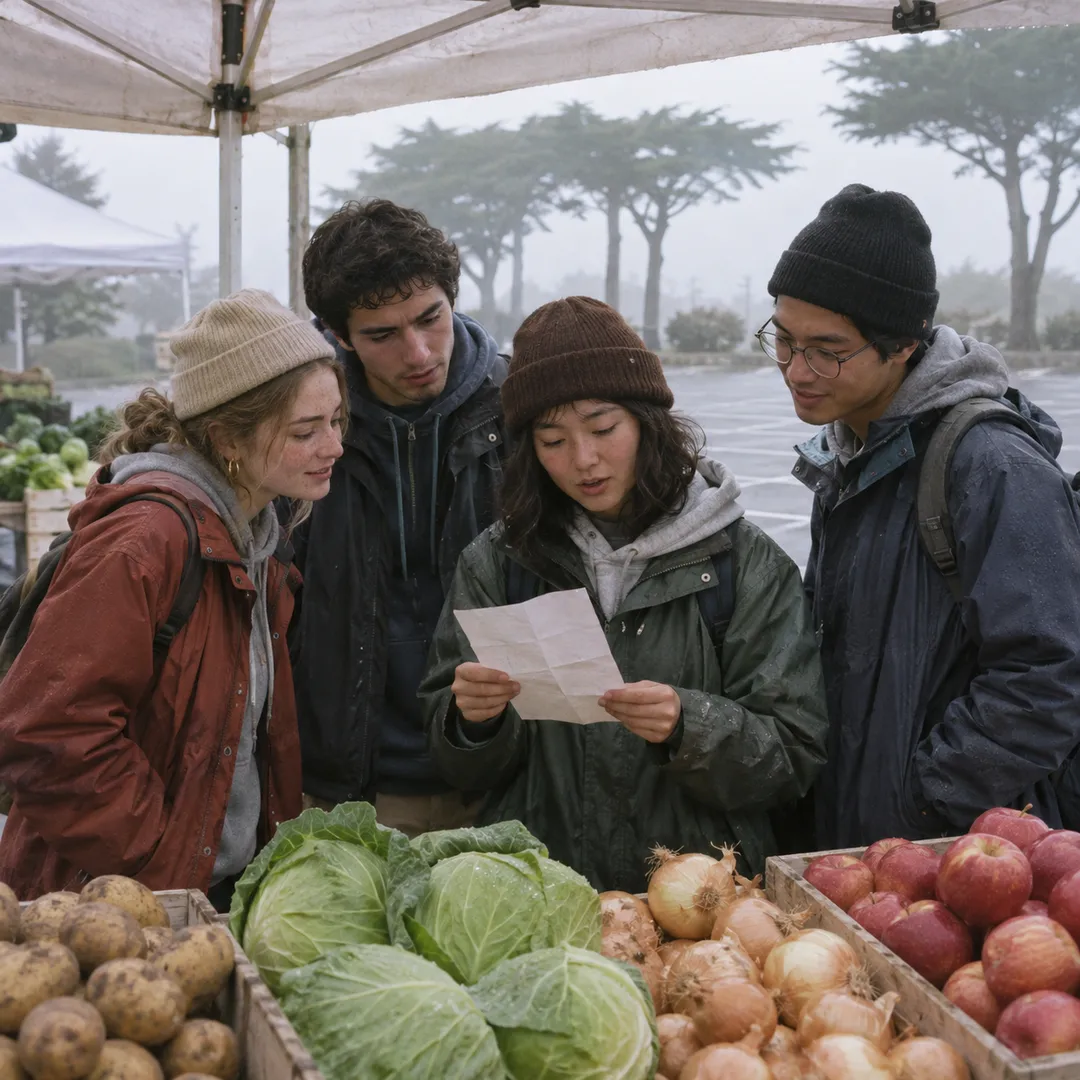
 Stonestown Winter Farmers Market Picker for Student Cooks
Weekend Plans
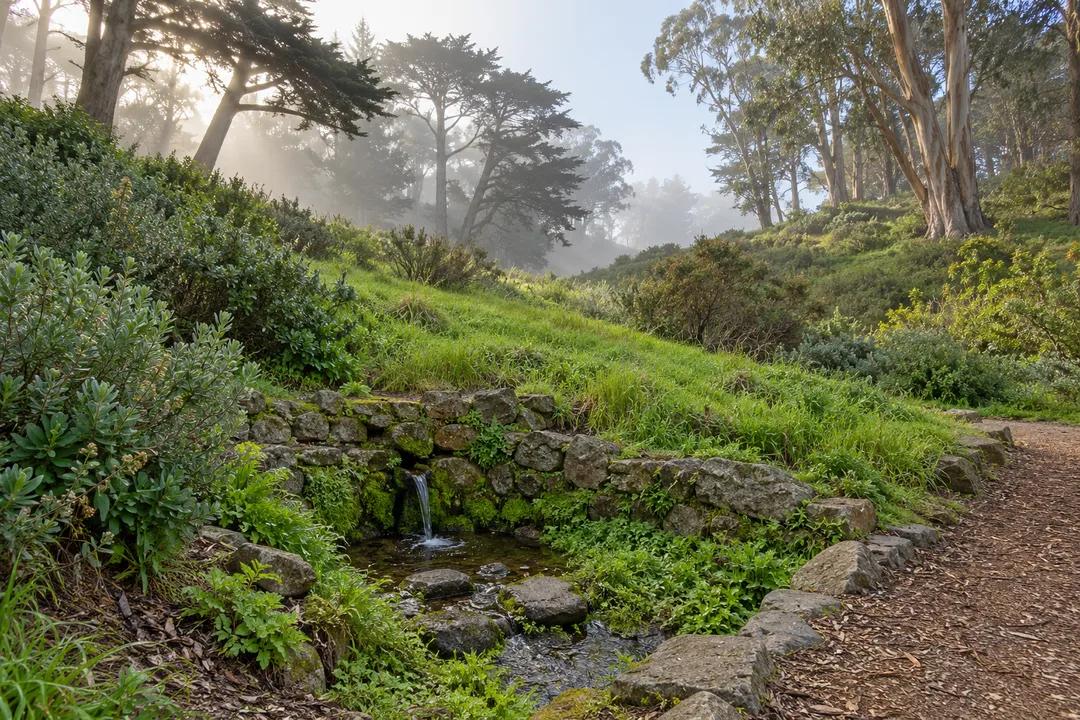
SF Urban Wildlife Sanctuary: Follow El Polin Spring Water
El Polin Spring in the Presidio connects fresh water, bird habitat and human history, making a compact SF nature pause before a wider park outing.
El Polín Spring makes a small source of fresh water the center of an SF urban wildlife sanctuary outing. In the Presidio's Tennessee Hollow, the spring connects a present-day habitat with a longer human history. Start by looking at the relationship between water, stone and the surrounding vegetation. Then let the story widen into the watershed. This is a visit for someone who would rather understand one place closely than cover a long route with a string of photo stops.
Fresh water gives this hollow its subject
The National Park Service describes a spring that flows throughout the year and supports wildlife and plants. The Golden Gate National Parks Conservancy likewise identifies fresh water and habitat as the site's central importance. Those descriptions explain why an apparently modest feature deserves attention. You do not need a dramatic cascade or a large body of water for a meaningful nature visit. Look at what is present without trying to make the spring resemble a different kind of attraction.
Begin with a simple question: what can you distinguish from the public route? You might be able to describe stone, water, vegetation and the shape of the hollow. Keep those direct observations separate from information you learned before arriving. That distinction is useful when sharing the visit with a companion. “The park describes this as a year-round spring” and “I can see water here today” are related statements, but they are not interchangeable evidence.
A water story becomes a human story
The park service's history places the Yelamu Ohlone and their ancestors in this landscape long before European colonization. It then describes the spring as an important source of water for the Spanish Presidio and a place where colonial families established homes. That sequence matters. It prevents a visitor from treating military history as the beginning of the place, or assuming that a present-day natural area has always existed apart from human life.
Use the history as a reason to look carefully rather than as a script for an imagined scene. There is no need to invent conversations, household routines or an encounter with a person from the past. Ask instead why reliable water would shape decisions about where people lived. The physical setting gives that question substance. A companion interested in history and another interested in birds can share the same pause without either person having to abandon their own way into the landscape.
If reading about the past feels too abstract for a younger visitor, keep the question practical: what would you need if you had to choose a place to live? Water may be one answer, alongside shelter and food. Then explain that the people connected with El Polín were real communities, not characters created for the walk. Avoid turning Indigenous presence into a vanished prelude. The purpose is to recognize layers of human connection, with care about what the evidence does and does not say.
The watershed continues beyond the spring
The National Park Service places El Polín within Tennessee Hollow and describes watercourses that ultimately connect with San Francisco Bay. The Conservancy's restoration work also treats the spring as part of a wider landscape of tributaries, forests and trails. That gives the visit a useful change of scale. You can begin with a small visible feature and think outward, rather than assuming the boundaries of your view are the boundaries of the habitat.
Try a drawing that uses only a few shapes: a source of water, a valley and a connection toward the bay. Label it as your simplified understanding, not a navigation map. The exercise is particularly helpful when traveling with someone who likes to explain systems. Keep the discussion grounded in the official watershed description. Do not claim that every wet patch you encounter is a named tributary or that you can trace a continuous route simply by following water downhill.
An outward-looking story does not require an outward walk. You can finish the watershed discussion where you began. If the group does want to continue through the Presidio, choose the next part as a separate walking decision and follow established routes. A hydrological connection is not automatically a public trail. This distinction keeps an interesting ecological idea from becoming a reason to wander into restoration areas or improvise a shortcut through vegetation.
Birdwatching can be a shared pause
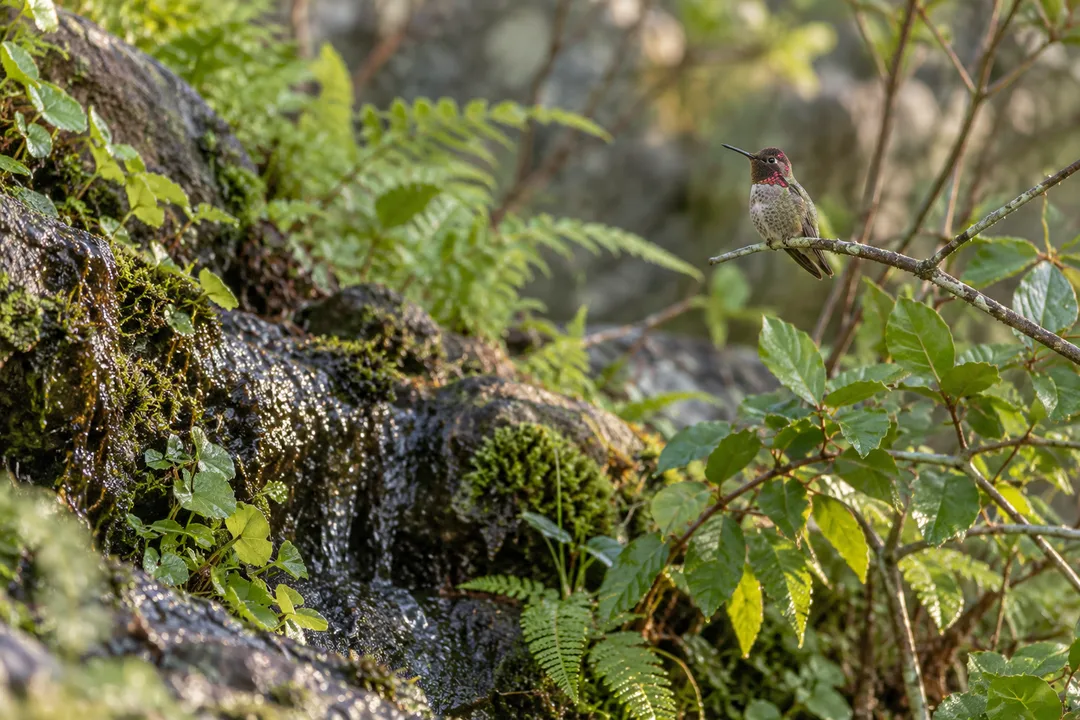
The park service recommends El Polín as a place to begin birdwatching in the Presidio. A beginner does not need to arrive with a target species. Choose a comfortable view, keep voices low and let each person describe movement before naming it. One person may notice a bird crossing an opening while another hears something from cover. Both observations can be useful. Nobody needs to transform an incomplete glimpse into a confident identification to justify the outing.
For a pair with different levels of experience, let the more practiced observer explain what they actually noticed: size, silhouette, behavior or a visible marking. That is more welcoming than announcing a name and moving on. Give the other person time with binoculars if they want it. Avoid crowding an animal or using recordings to draw it out. The spring is a habitat to observe, and a quiet period without a sighting can still belong in a worthwhile visit.
Restoration is something to notice without entering
The Conservancy presents El Polín as a restoration site, not just a scenic picnic setting. Look at how that changes the visitor's role. You can appreciate planting and habitat work from permitted areas without needing to inspect every feature closely. A barrier or closed section is part of how the place is managed. It is not an aesthetic inconvenience to step around for a cleaner photograph or a better view of water.
Take an environmental picture that includes context if you want a record of the visit. A small spring within a hollow tells a different story from a tight crop of wet stone. Neither picture needs a person posing inside the habitat to communicate scale. If your group brings food for a picnic, keep the meal separate from wildlife observation and take scraps away. Do not leave anything behind in an effort to make the next visitor's animal encounter more likely.
Practical Notes for a compact Presidio visit
Bring water, a layer and the equipment you already enjoy using, whether that is binoculars, a camera or a small notebook. Keep the plan modest enough that you can pause without worrying about completing a distant circuit. The National Park Service's birdwatching guidance permits dogs in the Presidio with restrictions and requires a leash. Follow the posted controls on your actual route and give people watching wildlife space to do so.
For the rest of the day, ask the Karpo APP for outing ideas using El Polín Spring as your reference point. Say whether your next preference is more nature, a neighborhood walk or somewhere indoors. Keep that next-stop request separate from the observations you made here. A useful record of El Polín might contain one detail of the spring, one question about its history and one way the watershed changed your understanding. That is enough to make a small place feel substantial without inventing a dramatic encounter.
Ask Karpo for more information.
Keep reading
- Stonestown Winter Farmers Market Picker for Student Cooks
 Clement St Winter Farmers Market Picker for Lunar New Year
 Fort Mason Winter Farmers Market Picker for Citrus Bakers