 Stonestown Winter Farmers Market Picker for Student Cooks
Weekend Plans
SF Urban Wildlife Sanctuary: 3 Ways to Read Bayview Hill
Bayview Park combines grassland, scrub and groves for an SF wildlife walk focused on habitat edges, reptiles and birds observed from the public route.
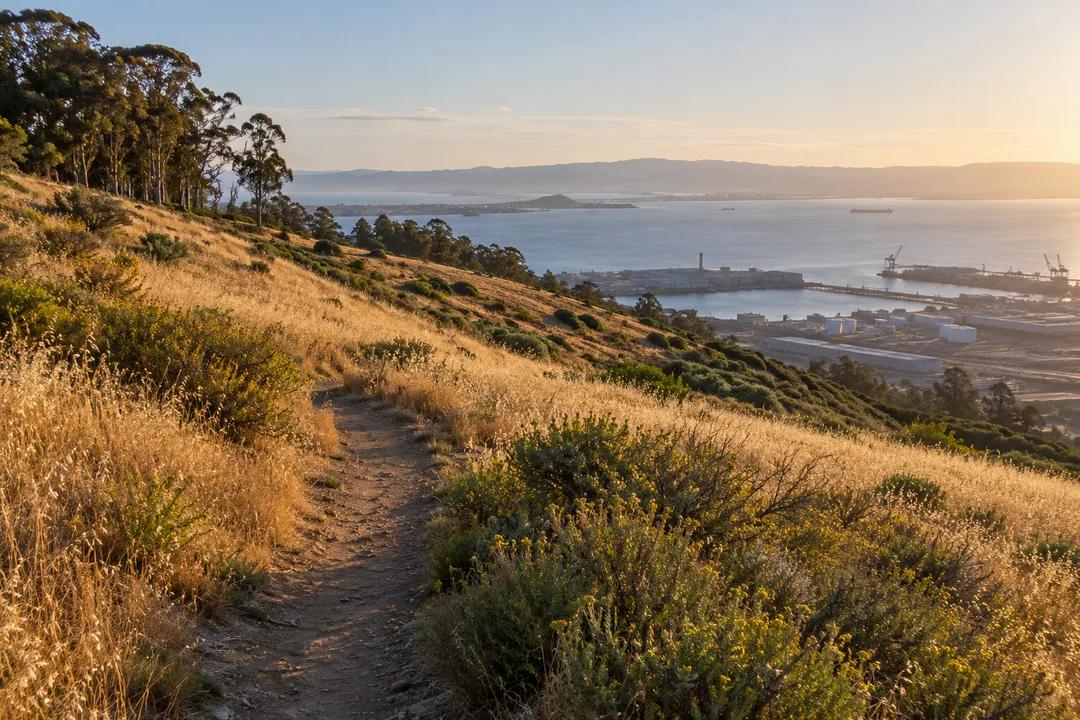
Bayview Park offers an SF urban wildlife sanctuary experience built around a hillside, not a pond or a formal animal collection. The city's natural-area description brings together grassland, coastal scrub and groves, with reptiles and birds among the wildlife associated with them. Approach the visit as a comparison of those environments. The rewarding question is where one texture of the hill changes into another, and what you can notice from the public route without stepping into the habitat.
Start with the ground instead of the skyline
An elevated view can make it tempting to look straight past the park. For the first part of your visit, reverse that habit. Notice the surface near the trail, the shape of surrounding grasses and the edges of shrubs. Then look farther out. This is a suggested order of attention rather than a prescribed route. It gives the hillside itself a chance to become the subject, instead of reducing it to a platform for a distant photograph.
Try an observation game with a companion: each person chooses a feature at ground level, another at shrub height and a third above the trees. Describe them before comparing choices. There is no need to select living animals for every category. A shadow, a seed head or a branch can be a useful answer. The exercise works particularly well for people who feel excluded by expert bird names, because it begins with things anyone can describe.
A lizard sighting should stay a passing encounter
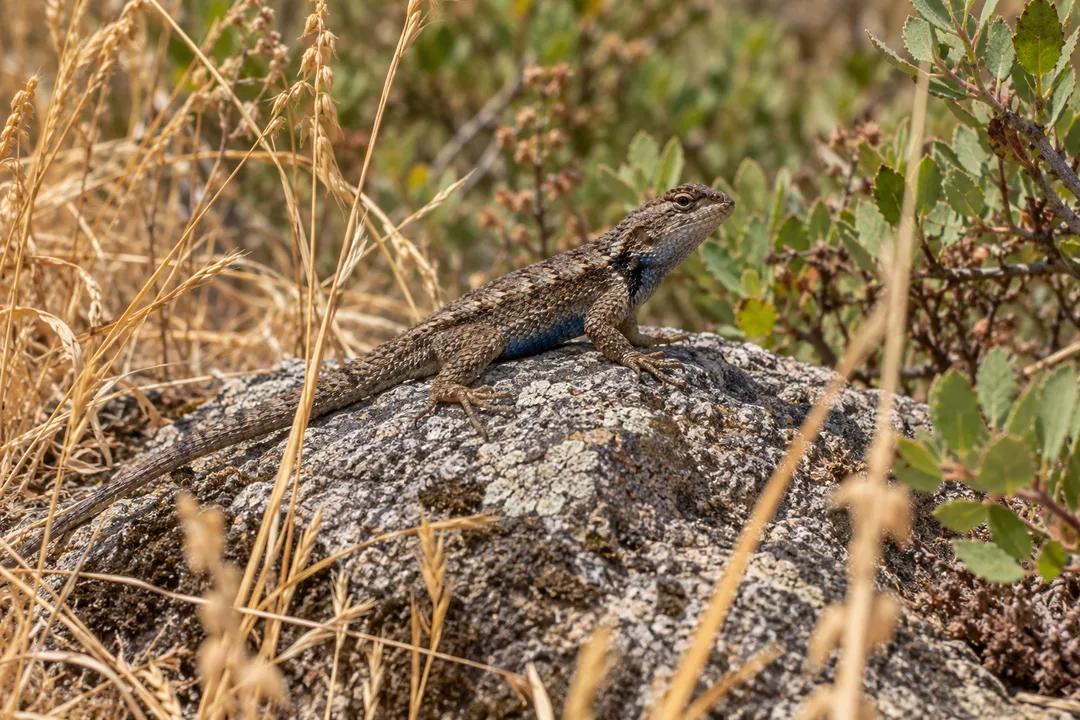
San Francisco Recreation and Parks lists western fence lizards and California alligator lizards among the animals visitors may encounter at Bayview Park. That is a possibility, not a guarantee. If you notice a small reptile, stop where you are and watch only while it remains visible. Do not chase it into vegetation or lift an object to find it again. The briefness of the encounter is part of observing a wild animal in a shared landscape.
For photography, decide in advance that distance is acceptable. A small animal within a larger habitat picture can tell a better story than an attempted close-up that sends it away. If your camera cannot record enough detail for identification, keep a written description instead: approximate size, color, movement and the surface where you saw it. Mark uncertain features as uncertain. A blurry image should not become the basis for a confident species label simply because a particular name sounds plausible.
Children may want to know whether they can catch what they see. Set the boundary before the encounter happens: this is a looking walk, with hands kept to yourself. Give them a useful alternative, such as drawing the animal's posture after it has gone. An adult can participate too. Comparing drawings can reveal how differently people remember the same movement, while leaving the animal free to continue whatever it was doing before the group arrived.
The scrub edge is a place to stand back
The city's description identifies coastal scrub as one of Bayview Park's plant communities. Look at it as a connected area of cover, not a collection of obstacles hiding a better viewpoint. From the established trail, compare the height and density of plants. Notice where grasses meet woody growth. You can observe that edge without assigning a purpose to every patch or assuming you know which animals are inside it.
A useful pause is to watch one small opening rather than scanning continuously. If nothing appears, describe the opening itself: how light reaches it, how plants frame it and whether the view changes when the wind moves. That remains a valid observation. Avoid introducing food to make the scene more active. A wildlife outing does not need an animal to approach you, and the absence of a sighting is not a problem that visitors should try to fix.
Look up for flight, not for an owl's hiding place
The official park account mentions red-tailed hawks overhead and great horned owls resting in trees. Take those as context for the habitat rather than instructions to search out a resting bird. Looking across the sky from a comfortable position is a different activity from pushing toward a concealed perch. If you happen to notice a resting animal, give it room. Do not recruit a crowd or keep moving to force a clearer angle.
When a bird crosses your view, follow its movement with your eyes before reaching for equipment. You may be able to describe the outline, direction and pattern of flight even if the moment is too short for a photograph. For a beginner, that can be more useful than an immediate name. If another person is looking too, use a fixed landmark to share the location quietly. Keep yourself and your belongings out of the way of passing walkers.
A grove and a grassland make different pictures
Bayview Park's official description also identifies eucalyptus and oak groves. When you move between a more open area and a wooded one, compare what the frame contains. A wide photograph might emphasize the slope and surrounding sky. A closer one might show layers of leaves and branches. These are composition choices, not evidence that you have found a better or more authentic part of the park. Let the environment determine the picture rather than forcing every scene into the same style.
If you are visiting with a friend who enjoys photography more than wildlife, make that distinction part of the plan. One person can watch while the other photographs vegetation or the broader hill. Then swap activities. You do not need to agree on a single subject all afternoon. The shared rule is simpler: nobody goes beyond the permitted route or disturbs an animal to obtain a shot. A picture missed under that rule is an acceptable outcome.
Give the visit an ending before adding another stop
The hill can be the whole outing. Before deciding on an extension, ask whether the group wants another outdoor walk or a change of scene. Those are different requests, and naming the preference prevents a tired companion from being carried along by a vague promise of “one more thing.” If you want ideas, ask in the Karpo APP with Bayview Park as the reference point and describe the kind of next stop you would enjoy.
Avoid turning nearby places into an improvised route on the assumption that everything visible is easy to reach on foot. A distant landmark is a visual reference, not proof of a convenient connection. Keep a neighborhood extension separate from the observation walk and choose it deliberately. For this visit, a perfectly good finish is to return along your established approach and compare what you notice on the way back with the details that first caught your attention.
Practical Notes for an exposed-hillside outing
Carry water, a layer and footwear appropriate for an unpaved surface. Let wind, footing and the comfort of your companions influence how far you go. If someone needs an easier day, shorten the outing rather than assuming every nature walk must reach a high point. Keep dogs under the controls required by posted rules and give wildlife room. Leave rocks, plants and other natural material where you find them, and carry your waste away.
Afterward, make a small record with three separate headings of your own: directly seen, possibly heard and worth learning about later. This keeps an uncertain bird call from turning into a claimed sighting. It also gives the next visit a purpose without requiring a different destination. Bayview Park's interest lies in the meeting of habitats on one hill. Learning to describe that meeting is a more durable reward than leaving with a long list of animals you hoped would appear.
Ask Karpo for more information.
Keep reading
- Stonestown Winter Farmers Market Picker for Student Cooks
 Clement St Winter Farmers Market Picker for Lunar New Year
 Fort Mason Winter Farmers Market Picker for Citrus Bakers