The arithmetic of visibility
Twin Peaks operates on a ruthless schedule between May and September. Sunrise arrives around 6:15am. By 9:45am on most summer mornings, the first tendrils of fog begin their crawl over the western ridge. That gives you roughly three and a half hours, but the light only becomes interesting after 6:45am when the sun clears the East Bay hills. Drive up Christmas Tree Point Road by 7am. Park in the north lot, not the main tourist pullout at the summit. You want the north peak's perspective, where downtown's towers arrange themselves in clean vertical lines against the bay.
The ranger who monitors the radio repeater at the summit calls this window "the margin." He's there most mornings by 6:30am, checking equipment before the tour buses arrive. He'll tell you the fog's behavior follows the marine layer's temperature differential—when it's more than eight degrees cooler than the air at 900 feet, Karl wins. The margin closes.
What you're actually seeing
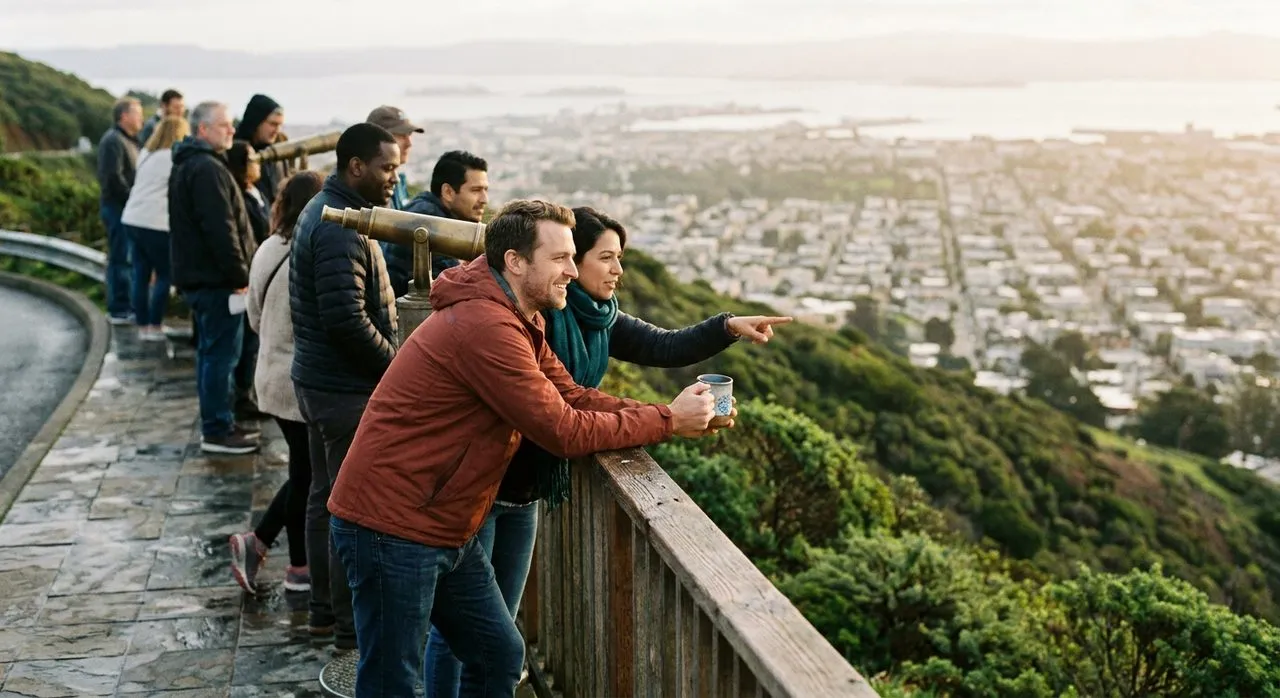
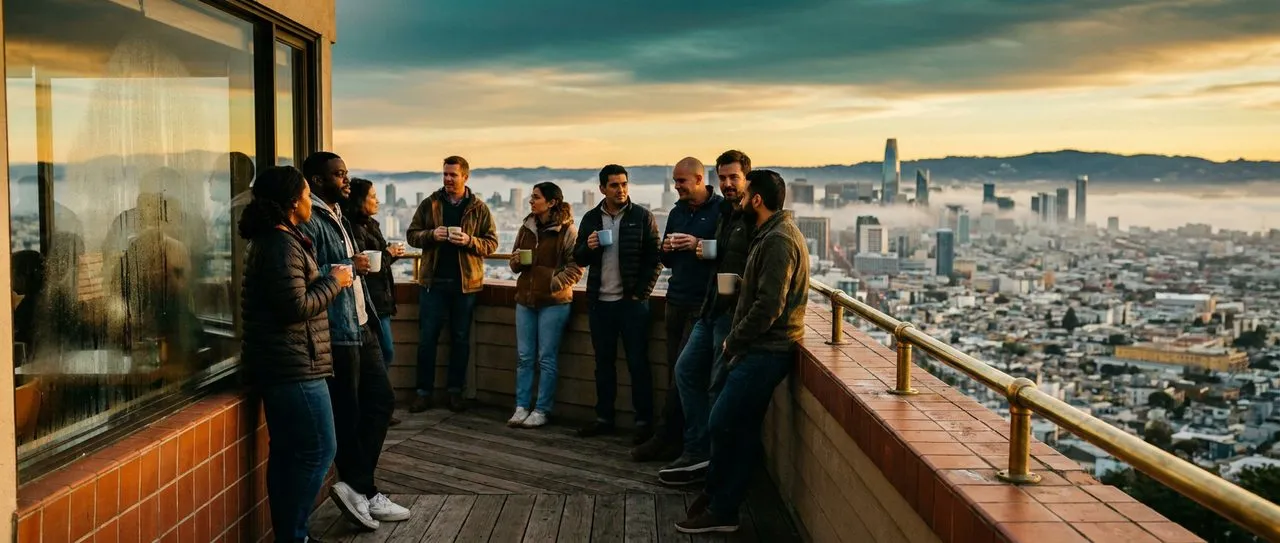
From the north peak's eastern edge, the view arranges itself in three distinct planes. Foreground: the geometric descent of Portola Drive and the pastel rectangles of the Sunset District. Middle distance: the Financial District's cluster, the Bay Bridge's suspension cables catching early light, Treasure Island's flat profile. Far plane: Mount Diablo's silhouette sixty miles east, visible only in the first hour when atmospheric clarity peaks.
Stand at the concrete marker labeled "North Peak 922'" and look northeast. The Transamerica Pyramid appears directly between the two towers of the Bay Bridge's western span—a sightline that only works from this exact spot. Locals call it "the needle through the eye." Three steps left or right, and the alignment breaks. Photographers discovered this angle in the 1980s, but it rarely appears in tourist literature because the timing requirement filters out casual visitors.
The fog's invasion pattern
Karl doesn't arrive uniformly. Watch the western horizon around 9:15am and you'll see the pattern: first, a thickening of the air above the Sutro Tower. Then a visible line forming over Golden Gate Park's tree canopy. By 9:40am, the fog reaches the base of Twin Peaks' western slope. It climbs the remaining 400 feet in approximately twelve minutes, moving faster when wind speed at Ocean Beach exceeds fifteen knots.
The SFPD's Park Station officers know the cutoff time for accident-free driving down the peak: 10:15am. After that, visibility on the hairpin turns drops below safe margins. They position a patrol car at the Portola entrance most summer mornings, ready to close access if the fog accelerates. On your way down, take the Clarendon Avenue route instead of retracing Christmas Tree Point Road. It drops you into the Inner Sunset with better sightlines.
Who else is up here
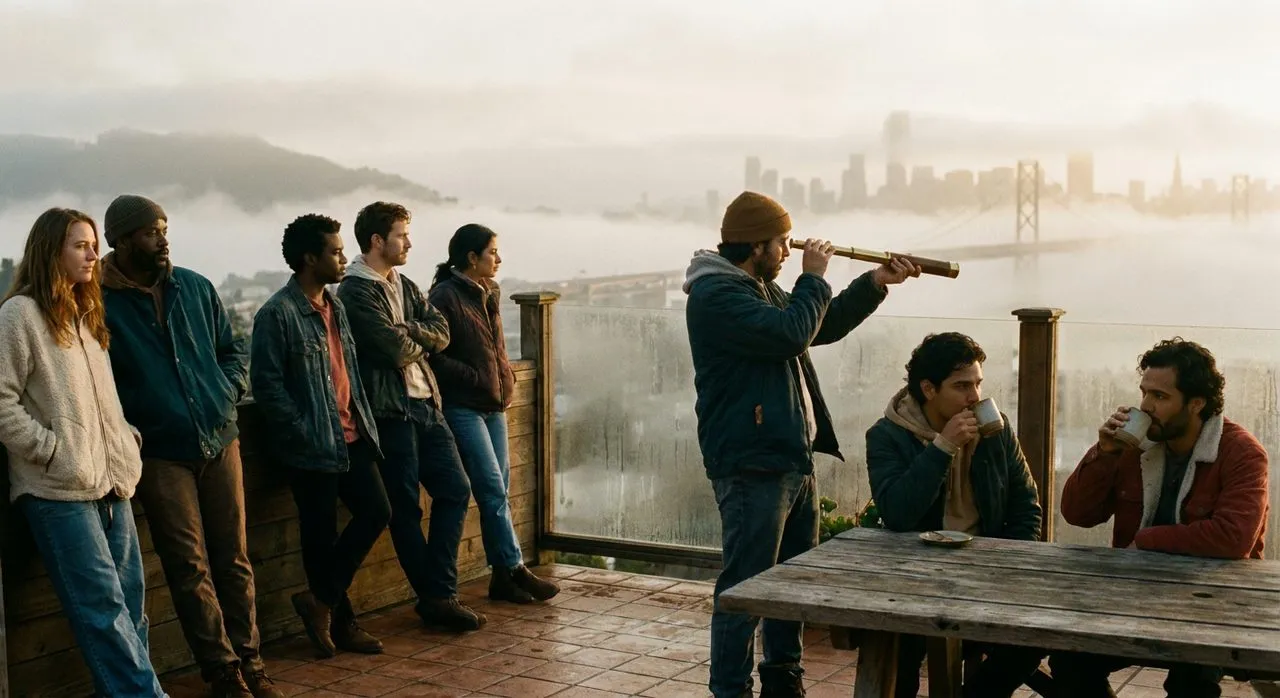
The morning population divides into three categories. First: the runners completing the brutal Twin Peaks loop, a 4.2-mile circuit gaining 650 feet. They summit between 6:45am and 7:30am, usually moving too fast to stop. Second: the photographers, arriving in Subarus and Priuses with California plates, carrying tripods and shooting in RAW format. They claim the north peak's best positions by 6:50am and pack up by 8:15am when the light flattens.
Third: the regulars. There's a man who arrives in a 1990s Volvo wagon every Wednesday and Saturday, parks in the same spot, and sits on the hood drinking coffee from a Stanley thermos. A woman who practices tai chi on the east-facing slope, her movements timed to the sun's arc. They don't acknowledge tourists. They're executing private rituals that require this specific elevation and this specific window.
The technical details matter
Cell service is excellent on the summit—all carriers maintain equipment on the peaks. The bathrooms at the main parking area open at 6am when the first park maintenance crew arrives. They're basic but functional. In summer, bring a windbreaker even if the temperature reads 62°F at street level; the summit runs eight to ten degrees cooler, and wind chill matters at 920 feet when you're standing still.
The lot holds forty-two vehicles. On weekday mornings, it fills to capacity around 8:30am when the first tour vans arrive from Fisherman's Wharf. Weekend mornings hit capacity by 7:45am. If you find it full, continue to the smaller pullout 200 yards south on Christmas Tree Point Road—it fits eight cars and offers nearly the same view with fewer people.
Why this window exists
San Francisco's microclimates create the margin. The Central Valley heats up after sunrise, pulling marine air through the Golden Gate. But that air takes time to warm enough to climb Twin Peaks' western slope. The peak sits just high enough to delay the fog's arrival by two to three hours compared to the Sunset District below. By 11am, the summit is fully socked in most days, visibility down to fifty feet. The margin closes until late afternoon, when the marine layer sometimes lifts for a second, briefer window around 4pm.
Meteorologists at San Francisco State University have tracked this pattern since 1974. Their data shows the morning window is most reliable in July and August, least reliable in June when the marine layer behaves unpredictably. September offers a compromise: slightly later sunrise, similar fog timing, warmer temperatures.
Practical notes
Twin Peaks is located at the end of Christmas Tree Point Road, accessible from Portola Drive or Clarendon Avenue. The summit is always open, no entry fee. Arrive by 7am in summer months to guarantee parking and optimal visibility. The north peak viewing area is a three-minute walk from the north parking lot—follow the paved path east. Bring layers; summit temperature averages 8-10°F cooler than downtown. No food vendors on site. Nearest coffee is at Hollow on Portola Drive (opens 7am) or Sunset Reservoir Brewing Company's cafe (opens 8am weekends). Muni's 37-Corbett line stops 0.8 miles from the summit—a steep walk. Driving is strongly recommended. Allow fifteen minutes from downtown, twenty-five from the Mission. The best months are July through September. October through April, the fog pattern becomes irregular and the morning window unreliable.
Tags: #TwinPeaks #SanFrancisco #KarlTheFog #SFViewpoints #MorningLight #SanFranciscoBay #BayArea #SFPhotography #GoldenHour #HiddenSF #SFMornings #CityViews #SFExploration #BayAreaAdventures #VisitSF
Sources consulted: Time Out · Atlas Obscura
All trademarks are the property of their respective owners.