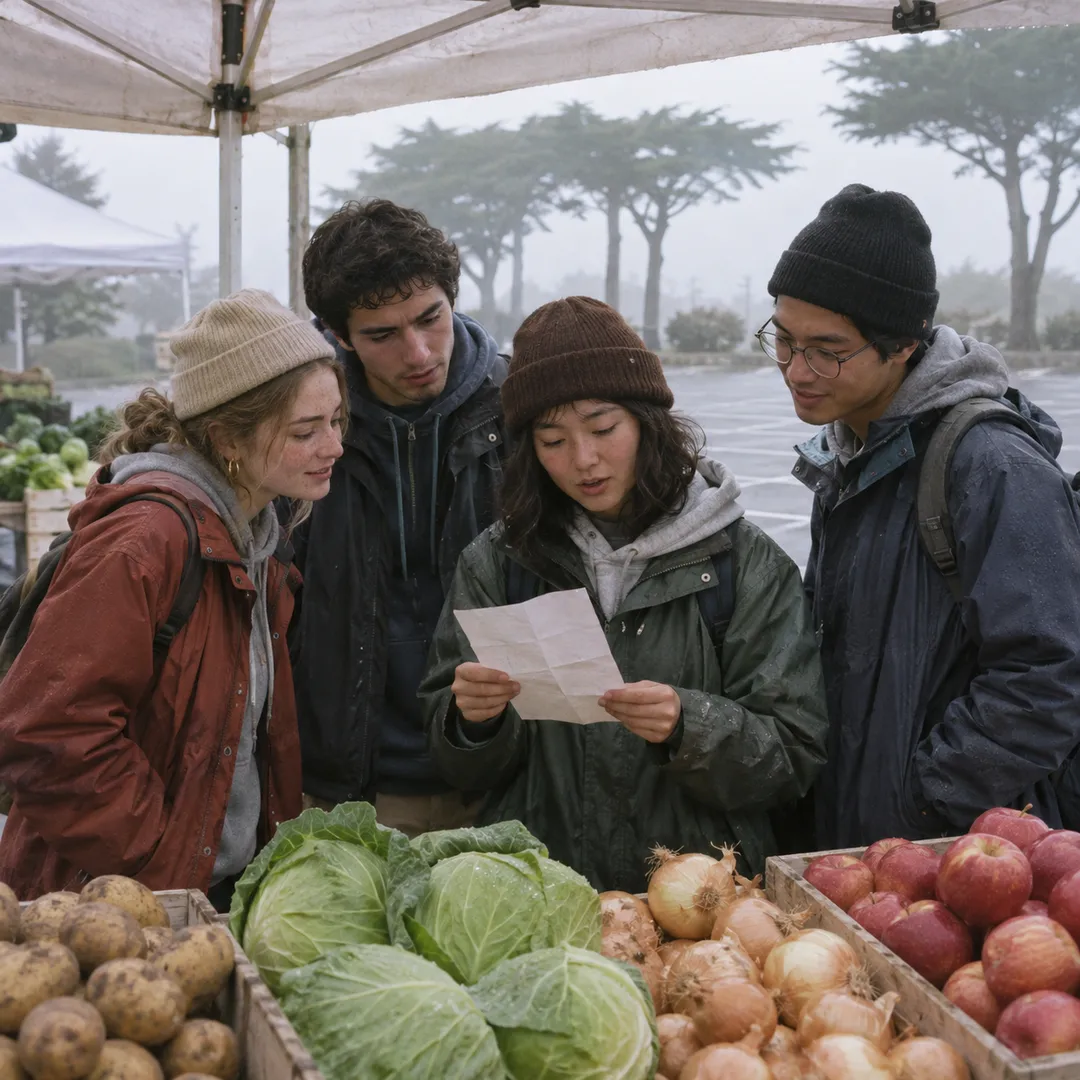
 Stonestown Winter Farmers Market Picker for Student Cooks
Weekend Plans

SF Thanksgiving Outing Planner for a 40 Minute Walk
Fit an SF post-dinner Thanksgiving walk into forty minutes by choosing a turnaround point, allowing for slower walkers, and protecting time to return home.
Dinner is finished, somebody suggests going outside, and the room suddenly divides between people reaching for coats and people who want another slice of pie. A short San Francisco walk can accommodate that moment if its boundaries are decided first. This Thanksgiving outing planner uses a hypothetical forty-minute window to show how to choose a turnaround, include different walking speeds, and get back without another event taking over the evening. Open the Karpo APP for nearby outing ideas, then select a walk that fits the time actually available.
Is forty minutes really available for walking?
Count from the moment the first person begins preparing to leave to the moment the group needs to be back inside. Finding coats, using the bathroom, taking dishes to the kitchen, and saying goodbye all occupy part of that window. If the group has forty minutes between commitments, forty minutes of walking is too ambitious. Ask what time everyone must be ready for the next part of the gathering, then work backward from that moment together.
For an illustrative allocation, allow five minutes to gather at the door, twenty minutes for moving, five for a pause, and ten for returning and settling in. Those numbers are a proposed household arrangement, not a measured San Francisco route. Change them to suit the people attending. A guest with a car departure or a child waiting at home may need more margin. The group should agree on the available time before choosing a destination that makes the schedule difficult.
Pick a shape before picking a sight
An out-and-back walk makes its halfway decision visible: when the agreed turnaround arrives, the group heads home. It can be useful when participants want to keep talking without discussing directions at every corner. Its limitation is that the return repeats the outward route. If the group is happy with that, there is no need to add a different street just to make the walk appear more elaborate. Repetition in a short walk can serve a practical purpose.
A small loop offers a changing view and returns to the beginning without retracing every step. It demands more confidence about the full route, including any slopes, crossings, or awkward sections. Do not choose a loop simply because its map distance looks short. A doorway-to-doorway route has to work at the group's pace. If the host does not know the area well enough to assess it, keep the proposed loop as an idea until its practical details are understood.

A pause close to the house is a third option. Walk a short distance, stand or sit together if suitable space is available, then return. This format suits a group that wants fresh air more than exercise. It also makes it easier for someone to join briefly. Avoid turning an unconfirmed bench or commercial stop into an essential promise. The plan can be complete with a short shared stretch outside and no destination that requires entry.
Let the slowest comfortable pace set the limit
Ask how people feel after the meal, using neutral language. Somebody may want a gentle stroll because they are full, tired, or simply enjoying the holiday. Another guest may need a flat approach or a shorter distance. Offer the low-effort option as the shared plan, then let energetic walkers extend separately if they wish. Nobody should have to disclose a health concern to stop the group from choosing an exhausting route in their name.
San Francisco outing requests benefit from stating a preference about slopes explicitly. Say whether the group wants to avoid hills, stairs, or prolonged standing. That information is more useful than describing everyone as “reasonably fit,” a phrase that different friends may interpret differently. For a wheelchair user or someone using another mobility aid, discuss the specific access needs they want considered. Do not assume that a recommendation establishes accessible surfaces or crossings. Evaluate the actual route before relying on it.
Use a turnaround rule people can remember
Agree that a named person will announce the return point and that the group will honor it. A time limit can work even when the destination is flexible: after the allotted outward time, turn around. A place-based limit can work when the host knows the route: reach a particular corner, pause, and head back. Either version should be explained before departure. An agreement made in the warm kitchen is easier to follow than a negotiation after someone has become tired.
Avoid making the return depend on stopping for dessert, buying a drink, or finding a ride. Those can add an unpredictable second activity to a brief walk. If the group wants a commercial destination, give it its own time and establish its Thanksgiving arrangements directly. Otherwise, let the original table be the return destination. Guests who stayed behind can continue their conversation, and walkers can rejoin without requiring everyone to move the whole gathering elsewhere.
Put the short window into the request
A suggested question is: “We have forty minutes between finishing Thanksgiving dinner and needing to be back at our San Francisco host's home. Suggest a gentle nearby walk with a clear turnaround. We want conversation, prefer to avoid steep slopes, and do not need a restaurant or shopping stop.” Add the actual starting area rather than an invented address. This gives Karpo a useful local question while leaving the route choice and timing decision with the group.
When reading suggestions, ask whether each one fits the complete window. If an idea sounds appealing but would require traveling to its starting point, save it for a longer outing. Explain that you want to leave on foot from dinner and return to the same place. If the proposed destination is still too much, ask for a smaller version. The follow-up should reduce the scope instead of encouraging the group to hurry through a route that was already too ambitious.
Practical Notes before anyone takes the first step
Make joining optional and tell the host who is leaving. Keep someone responsible for access to the home when the walkers return, particularly if the host is occupied with guests or food. People taking a separate extension should make that arrangement clear. These are ordinary coordination details, but they prevent a short walk from leaving someone waiting outside or wondering whether the whole group has changed its plans without them.
A satisfying after-dinner walk can end before anyone feels they have accomplished much distance. Its purpose might be a quieter conversation, a change in temperature, or a few minutes away from the table. Use the Karpo APP when local ideas would help, and keep the actual holiday window in every follow-up. If the group decides to stay indoors instead, the same discussion has still done useful work: everyone understands the choice, and nobody is being carried into an outing they did not want.
Illustrative generated pictures portray a neighborhood stroll and a seated pause, without establishing a specific walking route.
Ask Karpo for more information.
Keep reading
- Stonestown Winter Farmers Market Picker for Student Cooks
 Clement St Winter Farmers Market Picker for Lunar New Year
 Fort Mason Winter Farmers Market Picker for Citrus Bakers