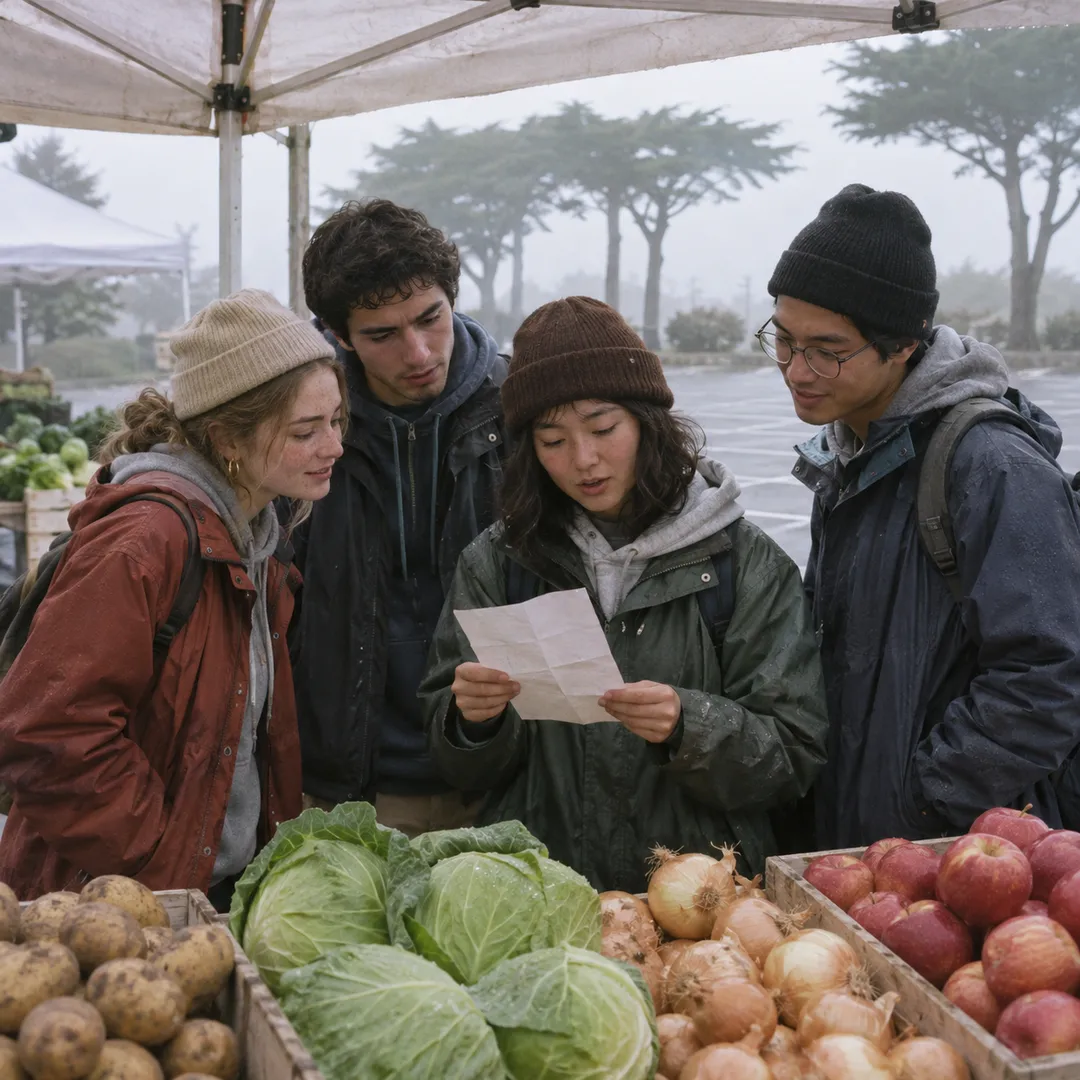
 Stonestown Winter Farmers Market Picker for Student Cooks
Weekend Plans

SF Thanksgiving Outing Planner: Rain Choices in 3 Steps
Compare indoor and outdoor SF Thanksgiving outing plans by exposure, effort, and commitment, then choose a weather backup that keeps your group together.
A weather backup becomes useful when it tells a San Francisco Thanksgiving group what to change. Will the outing move indoors, become shorter, or wait for another day? Those are different decisions. This Thanksgiving outing planner uses three steps: choose the experience the group wants, compare its exposure and commitment, and set a practical decision point. Take the question that remains into the Karpo APP for local ideas. Keep weather judgments with the people going, and treat each suggested location as a possibility until its arrangements have been established.
Step one: name what you want to preserve
Begin with the part of the outing that matters emotionally. A visitor may want to see something of San Francisco, a host may want a break from the kitchen, and friends may simply want uninterrupted conversation. Rain affects those wishes differently. Conversation can move to a living room, while seeing a particular outdoor landscape involves a genuine tradeoff. Ask each person what they would be disappointed to lose. That answer gives the backup a purpose beyond escaping unpleasant weather.
Separate the experience from the setting when possible. If the wish is learning something together, an indoor activity might satisfy it. If the wish is fresh air, shortening the outdoor portion may preserve more of the original plan than replacing it with an entire afternoon inside. Do not assume that “indoors” is everybody's preferred answer. A useful alternative should retain the reason people accepted the outing, even if the view, route, or amount of time outside changes.
Step two: compare exposure, effort, and commitment
Exposure means more than whether an activity happens outside. Discuss how long the group would stand still, whether belongings must stay dry, and how much walking comes before the intended activity. An indoor destination can still involve an uncomfortable approach. An outdoor walk might allow an easy return after a few minutes. Describe the whole outing from departure to arrival home, then compare the two versions using that complete experience. Avoid judging only the photograph of the destination.
Effort includes clothing, food, luggage, and the needs of the slowest traveler. Someone carrying prepared dishes to a Thanksgiving meal may have little appetite for a spontaneous detour. A guest who has brought only light shoes might want a different surface or a much shorter walk. Ask what people can comfortably manage using what they have with them. The aim is to find a suitable choice, rather than turn a relaxed holiday into a test of who planned their packing well.

Commitment covers the obligations attached to the chosen activity. A timed admission, deposit, or advance cancellation policy can affect whether a backup is genuinely interchangeable. Read the selected provider's terms before treating two ticketed plans as options you can swap freely. If the group wants flexibility, consider whether only one version should involve a booking. This article gives no venue availability or cancellation claims. It helps identify which questions need answers before money or a fixed arrival time becomes part of the plan.
A comparison that produces a real choice
Imagine a group meeting after lunch with an indoor gathering available at a friend's home. Its outdoor version could be a modest neighborhood walk followed by the same gathering. Its indoor version could begin at home with an activity guests bring themselves. Both protect conversation and a manageable afternoon. The outdoor version adds a change of scene, while the indoor version reduces moving around. That is a meaningful comparison because each version can stand on its own without an unspecified commercial rescue stop.
A different group may care about a particular attraction. In that case, compare keeping the attraction with rescheduling it, rather than inventing a second attraction that supposedly has spare holiday capacity. If the selected attraction requires admission, resolve that through the provider. Someone may prefer saving the outing for a suitable day and using Thanksgiving for time with friends. Include that option openly. A weather decision should not force people into an activity they never wanted simply because it occupies the same hours.
Step three: agree when the group will choose
Select a decision moment that leaves everyone time to act. Friends bringing food or traveling from different neighborhoods need a clear destination before departure. The host can say when they will send the final meeting arrangement and who should reply. Avoid a chain in which every person waits for someone else to make the first move. Assigning one coordinator is a social agreement among the group, not a claim that an app will automatically notify or monitor everybody.
Decide what information will matter at that moment. Participants can look at conditions themselves and state whether they feel comfortable with the outdoor portion. They can use an official weather source if that helps their judgment. There is no need to pretend that an outing page provides a live forecast. Where severe weather or an official warning affects travel, follow the relevant official guidance and choose a safer occasion. The plan's convenience is secondary to the people making the trip.
Ask for ideas inside the chosen boundary
A focused Karpo request might read: “We want a Thanksgiving outing in San Francisco that preserves time for conversation. Give us ideas for a short outdoor beginning and a mostly indoor alternative. We start in the same neighborhood, prefer little standing, and need to return for our evening gathering.” Supply your actual neighborhood and constraints. Ask for ideas that fit the branch you are considering, rather than expecting the product to watch the weather or change the itinerary on your behalf.
After discussing the suggestions, identify the one question preventing a choice. It could be the amount of walking, the need for a seated break, or the burden of carrying belongings. Ask that question next. If a reply proposes an unwanted setting, say what the group wants to preserve and request another approach. Resist restarting with a vague request for everything available in the city. A smaller conversation makes it easier to judge whether the alternatives solve the problem that brought the group together.
Practical Notes for switching the setting
Keep both versions written in ordinary language: where people meet, what happens first, what they need to bring, and where the outing ends. Mention which parts depend on a provider and which are arrangements made by the host. Do not present speculative venue hours as settled facts. If the indoor option is someone's home, ask permission before adding guests or extending the afternoon. That courtesy belongs in the backup just as much as weather protection does.
The finished plan should let a participant explain the change in one sentence. For example, the group might keep the same meeting neighborhood but skip the walk and begin at the host's home. Another group might shorten the outing and save the attraction for later. Choose the version that preserves the occasion's purpose with acceptable effort. Open the Karpo APP when you need help finding ideas within that decision, then make the final arrangement with the people who will share the day.
Rainy waterfront and indoor conversation images were generated to illustrate the two planning settings, rather than to report conditions on a holiday.
Ask Karpo for more information.
Keep reading
- Stonestown Winter Farmers Market Picker for Student Cooks
 Clement St Winter Farmers Market Picker for Lunar New Year
 Fort Mason Winter Farmers Market Picker for Citrus Bakers