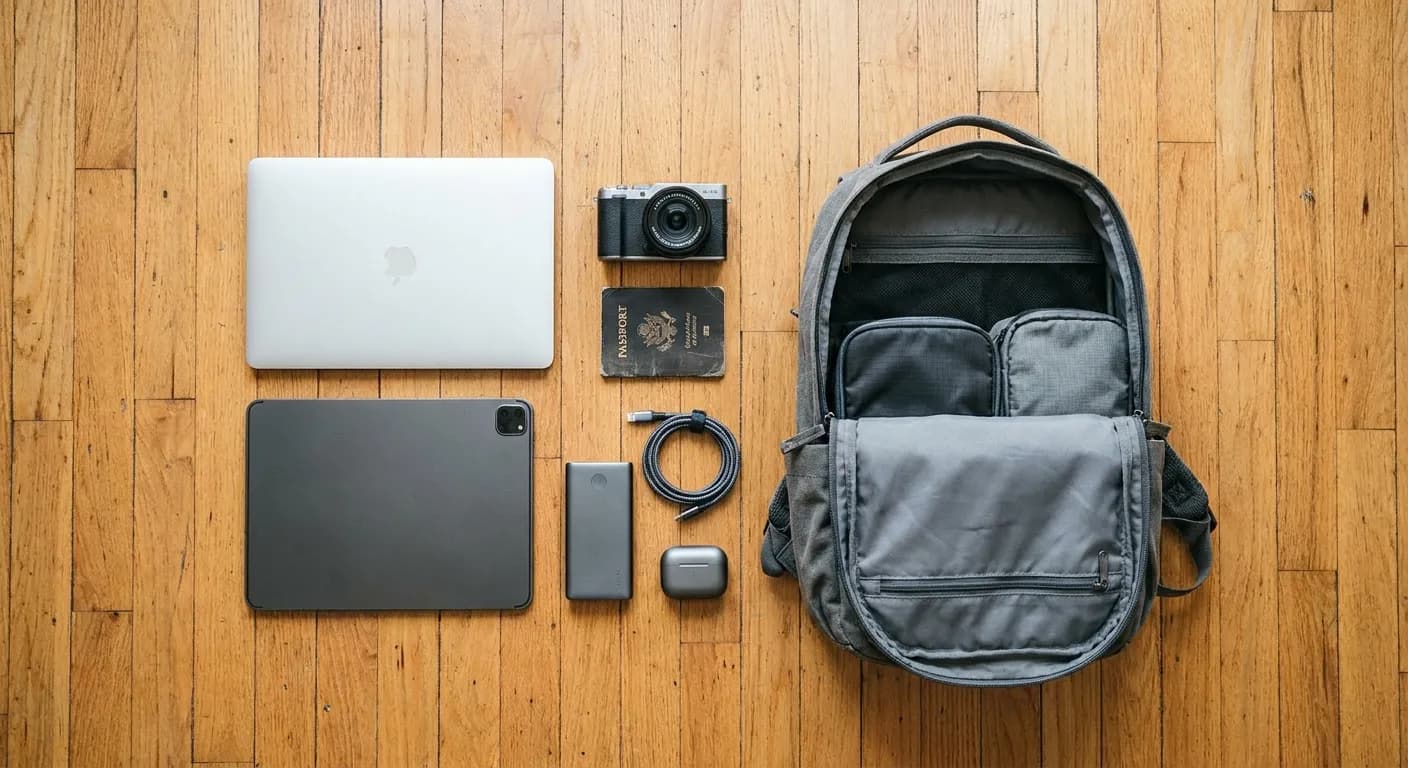
The San Francisco carry-on is its own genre: a laptop and its charger, a tablet that came "just in case," a camera or a drone, noise-canceling everything, a watch, earbuds, and at least one power bank with the gravitational presence of a paperback. In a year when battery rules tightened across airlines and 58 lithium incidents made the federal count by August, that bag deserves a system rather than a scramble. Here is the checklist version — build it once, and every SFO departure becomes a repeat performance.
Karpo can turn this checklist into your checklist — matched to your devices, your airline's current rules and your trip length — and remind you the night before you fly. Text Karpo and never re-derive your packing from scratch again.

The battery layer
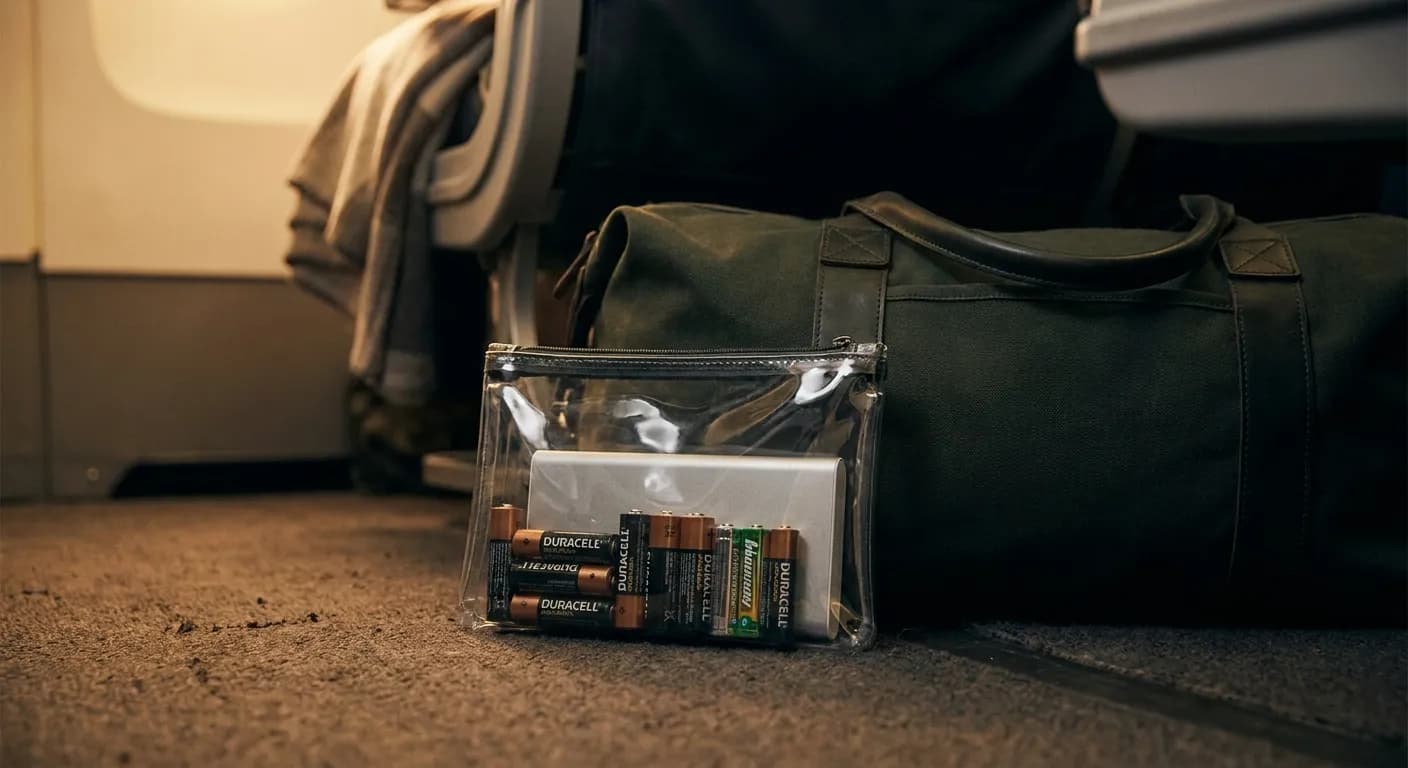
Start where the rules are strictest. Every spare battery and power bank rides in the cabin bag — never checked — with terminals protected and labels legible. The workhorse pick is a certified power bank under 100 Wh (the 20,000 mAh class clears it comfortably), which flies without approval on any airline. Keep all batteries in one dedicated pouch, ideally clear-sided: security abroad appreciates it, and you always know your total inventory. The pre-trip audit is thirty seconds — nothing swollen, nothing unlabeled, nothing you inherited from a conference in 2019. Vape users: the device is cabin-only by law and unusable onboard; pack accordingly.
In 2026's tightened environment, add one habit: keep the battery pouch under the seat, not overhead. A growing set of carriers requires exactly that, and it is good practice on all of them.
The device layer
Laptop and tablet travel in the cabin, both for battery law's preference and for the unglamorous reasons of theft and turbulence. Cameras and drones ride with you too — drone batteries are cabin-only, and a drone without batteries is luggage. If anything must go below in a pinch, it goes fully powered off (not asleep), padded, and battery-installed rather than loose. The organizational trick that survives every security line: electronics in one layer of the bag, retrievable in a single motion, so the bin dance at SFO takes ten seconds instead of a full unpack.
The power layer
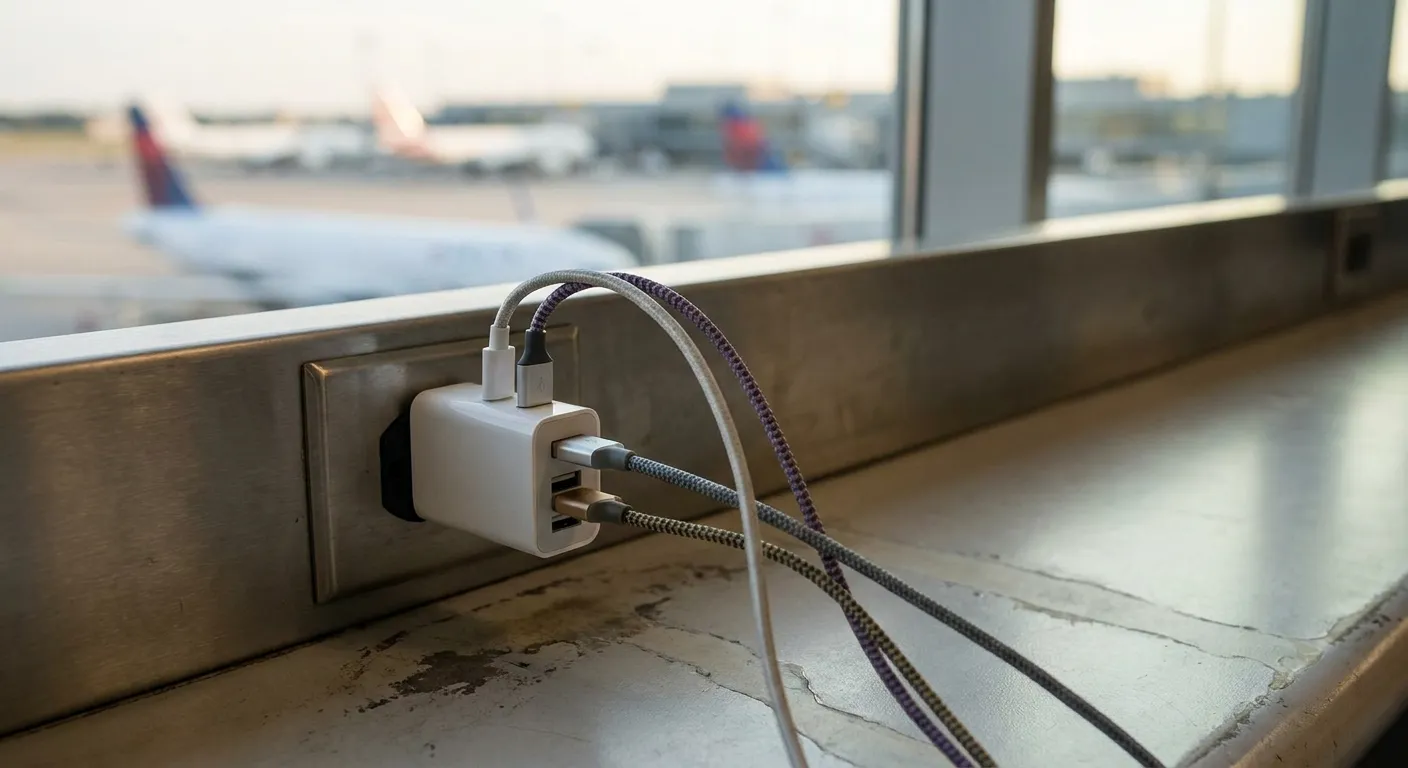
Cables multiply and adapters vanish; fight both with consolidation. One USB-C cable per two devices is the realistic ratio, plus the one legacy cable your oldest gadget demands. A single multi-port charger replaces three bricks and clears security without commentary. For international trips, one universal plug adapter beats a pouch of regional ones. And the ritual that makes in-flight rules irrelevant: board with everything full. SFO's gates are generous with outlets; use the boarding wait as your charging window and the power bank becomes insurance rather than infrastructure — which, on airlines that now restrict in-flight power-bank use, is exactly the role it should play.
The five-minute preflight
The night before: skim your airline's battery page (it may have changed since spring — many did), run the battery audit, charge the fleet, and stage the bag by the door. At the airport: batteries under the seat, devices reachable, temperature awareness on anything charging. That is the entire discipline. It costs five minutes per trip and buys immunity from essentially every battery-related travel failure mode 2026 has invented — confiscation, gate-side repacking, and the genuinely bad outcomes that make the news.
Practical notes
Core rules baked into this checklist: spares and power banks cabin-only, under 100 Wh unrestricted, terminals protected, damaged batteries grounded; devices checked only if fully off and padded; vapes cabin-only and never used onboard. Airline-specific in-flight use rules vary and tightened during 2026 — check your carrier before each trip. Federal reference: FAA PackSafe; screening specifics: TSA's what-can-I-bring pages; airport logistics: flysfo.com.
Tags: #karpo #sanfrancisco #sfo #carryon #packinglist #techtravel #powerbank #batteryrules #travelchecklist #travel2026
Sources consulted: faa.gov · tsa.gov · flysfo.com
All trademarks are the property of their respective owners.
Ask Karpo first
Want this checklist personalized, or a reminder rigged to your next SFO departure? Ask Karpo — the best carry-on is the one you never have to think about at 5 a.m.