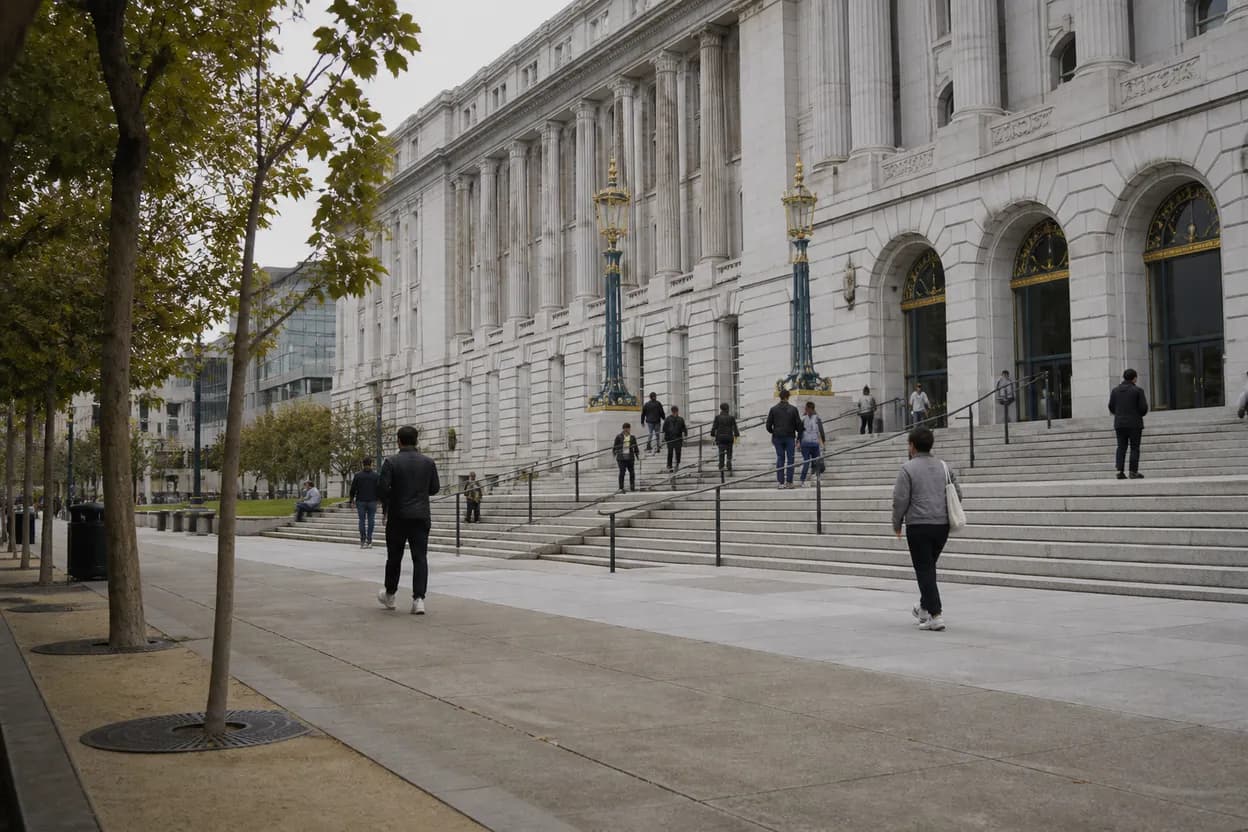
A name moving through search can feel urgent when school starts, but San Francisco students have better options than copying the first result. If you are trying to understand chandler hendry for a class prompt, media literacy exercise, or personal curiosity, begin with public learning tools that separate confirmed records from rumor. The most practical first stop is San Francisco Public Library’s Main Library at 100 Larkin Street, close to Civic Center/UN Plaza BART and Muni. This plan keeps the work local, daytime, and easy: gather context, ask a librarian, check archive indexes, compare reputable databases, and stop when a claim cannot be verified.
Want a tighter Civic Center research route? Text Karpo before you go for nearby library steps, transit checks, and backup source ideas tied to San Francisco student schedules.

SFPL Main Library at 100 Larkin Street
Start at the Main Library because it combines broad public access with specialist collections in one Civic Center building. SFPL lists the Main Library at 100 Larkin Street with phone support at 415-557-4400 and posted weekly hours that vary by day. For a student, the advantage is pacing: use the catalog first, then move to reference help or subject floors instead of wandering through search results with no source hierarchy.
The tradeoff is that a public library will not confirm private details about an individual unless those details exist in reliable, lawful, publicly accessible sources. Treat the name as a research subject, not a target. Bring a school ID if you have one, a notebook, and the assignment prompt. If the catalog or databases return nothing useful, record that absence clearly rather than stretching weak matches into facts.
Ask a Librarian Text and Chat Desk
SFPL’s Text and Chat Reference Service is useful for short questions during Main Library open hours, and in-depth questions may be forwarded to subject specialists by email. That makes it a good first move when you need help choosing databases, not when you want someone to investigate a person for you. Ask precise questions such as which newspaper, biography, or public-record indexes are appropriate for a student project.
A failure mode is asking too broadly: “Who is this person?” gives a librarian little to work with and may raise privacy concerns. A better question is, “I need reputable sources to verify whether this name appears in public news, school, archive, or author records.” If chat is offline or the question needs more context, use email and expect that timing may depend on staff availability.
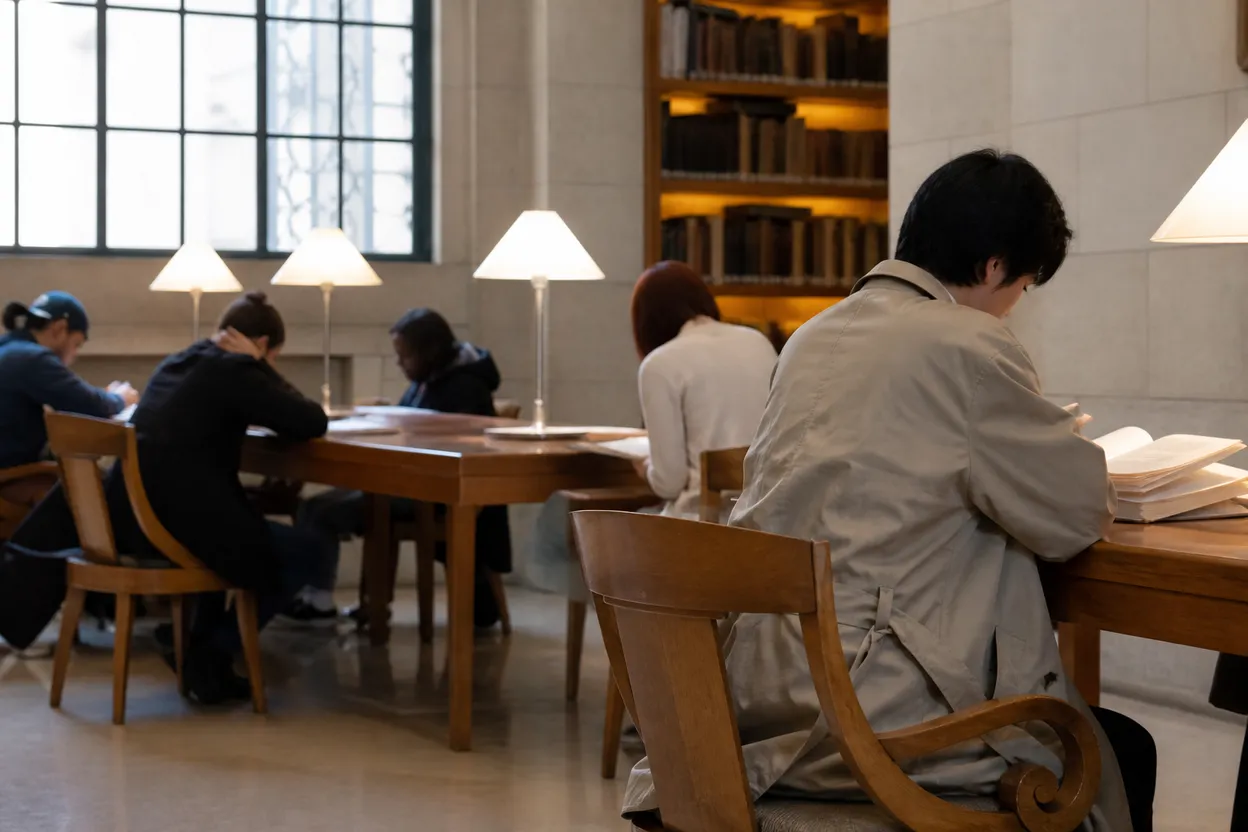
San Francisco History Center on the 6th Floor
The Daniel E. Koshland San Francisco History Center, located on the sixth floor of the Main Library, holds books, newspapers, magazines, photographs, maps, manuscript collections, posters, and ephemera documenting San Francisco life and history. It is strongest when your research question has a city connection: a neighborhood, school, public event, organization, building, publication, or local historical trace that can be checked against collections.
Use this floor after you have a specific lead, not as a first blind search. The center notes that some materials are in the SFPL catalog while others require asking staff about card indexes, folder lists, or descriptive guides. If nothing appears under a name, try verified adjacent terms from your assignment, but do not infer that a same-name result is the same person without corroborating details.
SFPL eLibrary Articles and Databases
SFPL’s eLibrary organizes articles, databases, eLearning, eBooks, magazines, newspapers, journals, digital collections, and accessibility resources. For students, that means you can move beyond open web snippets into publications and reference tools that are easier to cite. If you have a San Francisco library card, check which databases are available remotely and which require in-library access before building your work session around them.
The best use is comparison: search the exact name, then search quoted variants, then search relevant topic terms without the name. Save citation details for every source you use, including title, publication, date, database, and URL when available. If a database result conflicts with a social post or unattributed webpage, prefer the source with an editorial process and make the conflict visible in your notes.
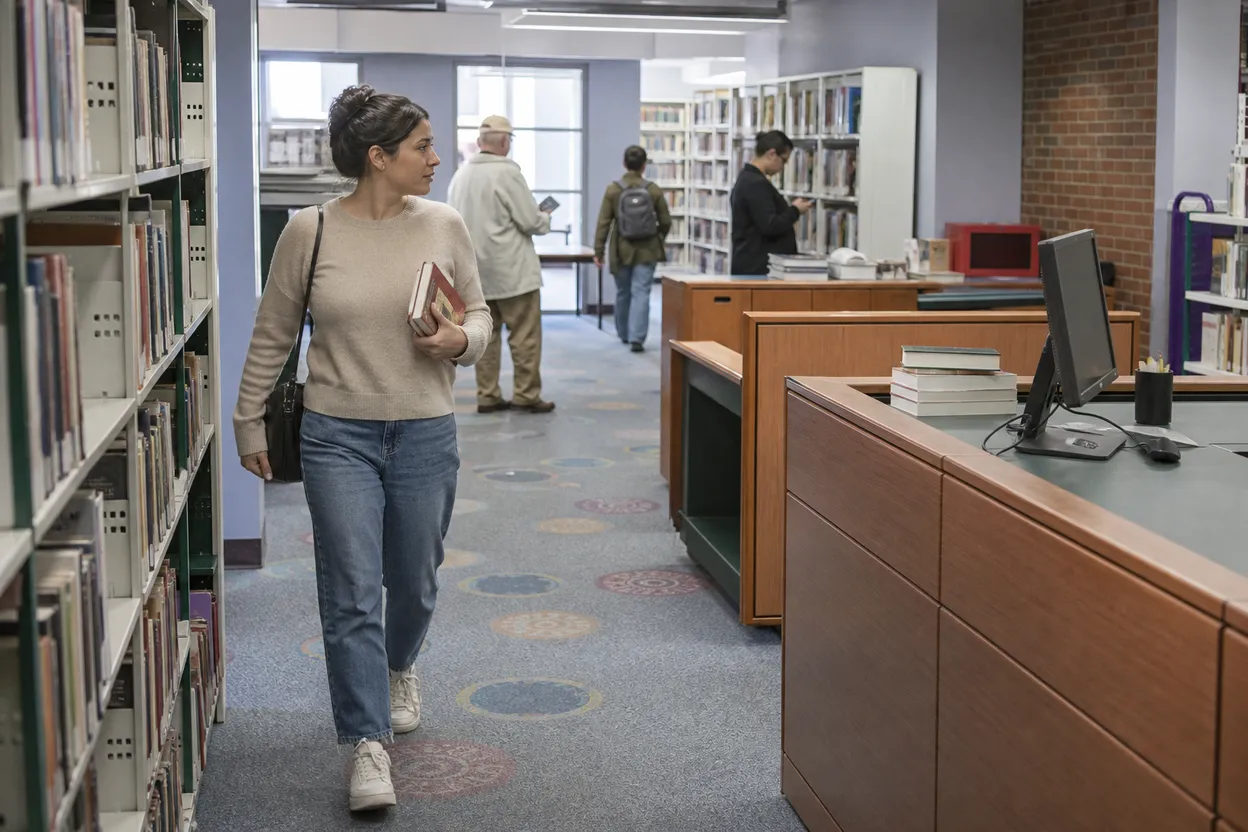
Civic Center BART and Muni Backup Route
Transit is part of the research plan because school-day time disappears quickly. BART lists Civic Center/UN Plaza Station at 1150 Market Street and notes it is near the Main Branch of the San Francisco Public Library. The station serves multiple BART lines, connects with San Francisco Muni, and has no station parking, so plan as a pedestrian, transit rider, or drop-off visitor rather than counting on easy parking.
Accessibility checks matter before leaving home. BART’s station page lists elevator information and service-alert links, while SFPL says Main Library accommodations can be requested through accessibility contacts. If an elevator outage, protest, event, or schedule change affects Civic Center, switch to remote SFPL databases, SFPL text reference, or a neighborhood branch for general catalog help, then reserve the Main Library visit for archive-specific work.
J. Paul Leonard Library at SF State
If SFPL does not settle the question, San Francisco State University’s J. Paul Leonard Library offers another reputable learning stop at 1630 Holloway Avenue in the southwest part of the city. Its public visitor guidance says members of the general public may use open-shelf print materials in person, OneSearch kiosks, and certain on-campus database access. This helps students compare academic catalog records with public library results.
The limitations are important. Off-campus electronic access is generally for current SF State students, staff, and faculty, and borrowing requires eligibility or a community borrower arrangement. Do not assume a high school student can use every tool there. Use the library for on-site checking, research guides, and help-desk direction, then return to SFPL or your school library for borrowing, printing, or follow-up if access narrows.
Check Source Dates Before You Cite
Before you turn research into a class answer, run a final verification pass. Confirm the source type, publication date, author or institution, city relevance, and whether the source actually refers to the same person or just the same name. For a public learning project, it is acceptable to write that no reputable San Francisco source confirmed a claim as of Monday, August 10, 2026.
End by checking current hours, service alerts, and access rules on the official SFPL, BART, and library pages the day you go. If your assignment requires biographical certainty, ask your teacher whether unverified names should be treated as search literacy examples rather than profiles. The strongest student answer may be a careful method, a short source table, and a clear note about what could not be confirmed.
Tags: #SanFrancisco #SFPL #MainLibrary #CivicCenter #StudentResearch #BackToSchool #LibraryResources #MediaLiteracy #PublicRecords #AcademicResearch #BayAreaStudents #TransitTips #AskKarpo #BeforeYouGo
Sources consulted: Source 1: sfpl.org · Source 2: sfpl.org · Source 3: sfpl.org · Source 4: bart.gov · Source 5: library.sfsu.edu
All trademarks are the property of their respective owners.
Ask Karpo first
Tell Karpo your date, group size, budget, and starting point. We’ll check current access, timing, transit, and the cleanest San Francisco plan for San Francisco Public Library - Main Branch before you head out.


