 Bernal Heights Pottery Glaze Supply Browsing Route: Walk
Hidden Gems & Odd Finds
Washi and Origami: A Specialty Paper Store Japantown Plan
For washi and origami paper in SF, Japantown is the plan: Paper Tree on Buchanan Mall for folding sheets, then Kinokuniya and Maido inside Japan Center.
Washi and origami paper are the specialty papers San Francisco does best, and nearly every search for them leads to Japantown. Paper Tree, the origami shop the Mihara family opened on Buchanan Mall in 1968, carries folding packs and full chiyogami sheets, while Kinokuniya and Maido inside Japan Center stock Japanese notebooks and writing paper. This plan strings the three together into one walk, with tips for choosing paper by project and carrying delicate sheets home intact.
Know Which Japanese Paper You Need
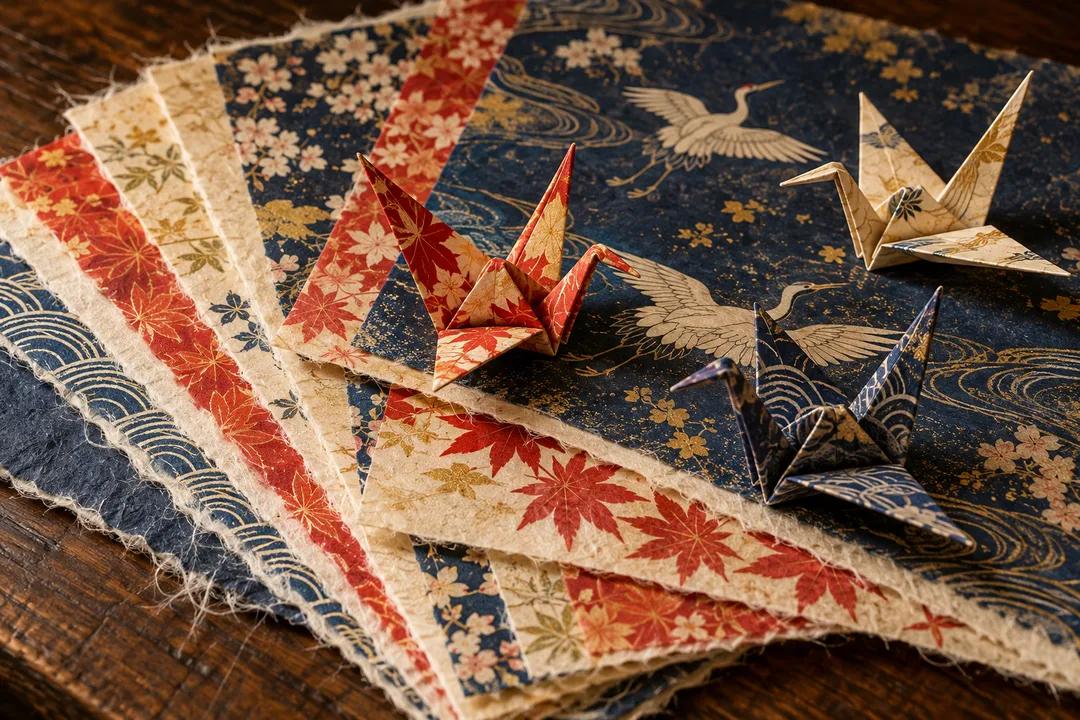
Washi is a broad word for Japanese paper made from long plant fibers, usually kozo mulberry, and it covers everything from tissue-thin sheets to tough wrapping paper. Kami is the thin, colored square most people picture when they think of origami. Chiyogami and yuzen are decorated washi printed with repeating patterns such as waves, cranes and maple leaves. Each one suits a different job, so start by naming yours.
Folding cranes for a wedding garland calls for many thin squares in matching colors. A complex insect model needs strong, crisp paper that holds a sharp crease. Covering a box or making book endpapers calls for full decorated sheets. Writing letters asks for smooth Japanese stationery instead. Decide which of these you are shopping for and the rest of the visit becomes simple.
Paper Tree on Buchanan Mall
Paper Tree is the heart of the trip. The shop has been run by the same family for decades, and origami artist Linda Mihara, daughter of the founders, has designed folded installations far beyond San Francisco. Folded sculptures hang from the ceiling, origami packs fill rows of cubbies, and larger decorated sheets live in racks toward the back. It feels as much like a small gallery as a store.
Staff know their paper unusually well. Ask which sheet will survive wet-folding, which squares hold crisp creases for a tricky model, or which pattern works as an endpaper. Describe the project rather than pointing at a pretty print. Beginners who say they are folding their first crane usually leave with a sensible small pack instead of an expensive sheet they would be afraid to crease.
Handling Delicate Sheets in the Shop
Decorated washi is thin and surprisingly easy to crease while you browse. Lift sheets with both hands by the corners, keep them flat over the rack rather than waving them in the air, and ask staff to reach anything stored high. Never touch the hanging folded models, some of which take many hours to make from a single uncut square.
When you have chosen, ask for your sheets to be rolled rather than folded. A roll protects the pattern and stops a crease from running straight through a crane or a wave. If you are carrying several sheets, keep them in one roll instead of separate tubes. One sturdy roll under the arm survives a crowded Muni bus far better than a handful of loose papers in a tote.
Writing Paper Inside Japan Center
Across Post Street, Japan Center holds two more paper stops. Kinokuniya Books, the San Francisco branch of the Japanese bookstore chain, keeps a stationery section beside its books and manga, with pens, notebooks and writing pads imported from Japan. Maido Fine Stationery nearby leans further into Japanese pens, planners and paper goods. Both reward slow browsing after the more tactile visit to Paper Tree.
Shop these two for everyday writing: smooth notebooks that take fountain-pen ink, memo pads, letter sets and planners. Skip duplicating anything you already bought on Buchanan Mall, because the decorative sheets there serve a different purpose. A good split is folding and craft paper from Paper Tree, writing paper from Japan Center, and one small treat such as a brush pen to tie the haul together.
Who Folds in Japantown
On a typical afternoon you might see a parent and child choosing their first crane pack, a teacher buying modular origami paper for a geometry lesson, a bride's friend counting colors for a thousand-crane garland, and a bookbinder holding chiyogami up to the light. The shared rule is patience. People take time choosing patterns, so wait your turn at the racks and do not reach across someone mid-decision.
Weekends and festival days bring families and visitors onto Buchanan Mall, and the small shops fill up. If you want time to talk with staff about paper grain or folding difficulty, a weekday visit is much calmer. If Paper Tree is crowded when you arrive, start in Japan Center and come back after a snack. The order of the loop matters less than having room to choose.
Plan B for Big Projects
Thousand-crane projects eat through paper quickly, and a favorite color can run low. If the exact shade is gone, buy a neighboring color and build it into the garland as a gradient, which often looks better than a single flat tone. For huge quantities, ask whether the shop can order more or suggest a comparable pack.
For crafts that need plain heavy paper rather than decorated washi, such as a sturdy box base, FLAX Art and Design at Fort Mason carries broader art and design papers. Pair a decorative Japantown sheet with a plain structural board from there. Ask Karpo in the Karpo APP for the quickest route between the two if you want to finish both errands in one afternoon.
Fold Your First Model Nearby
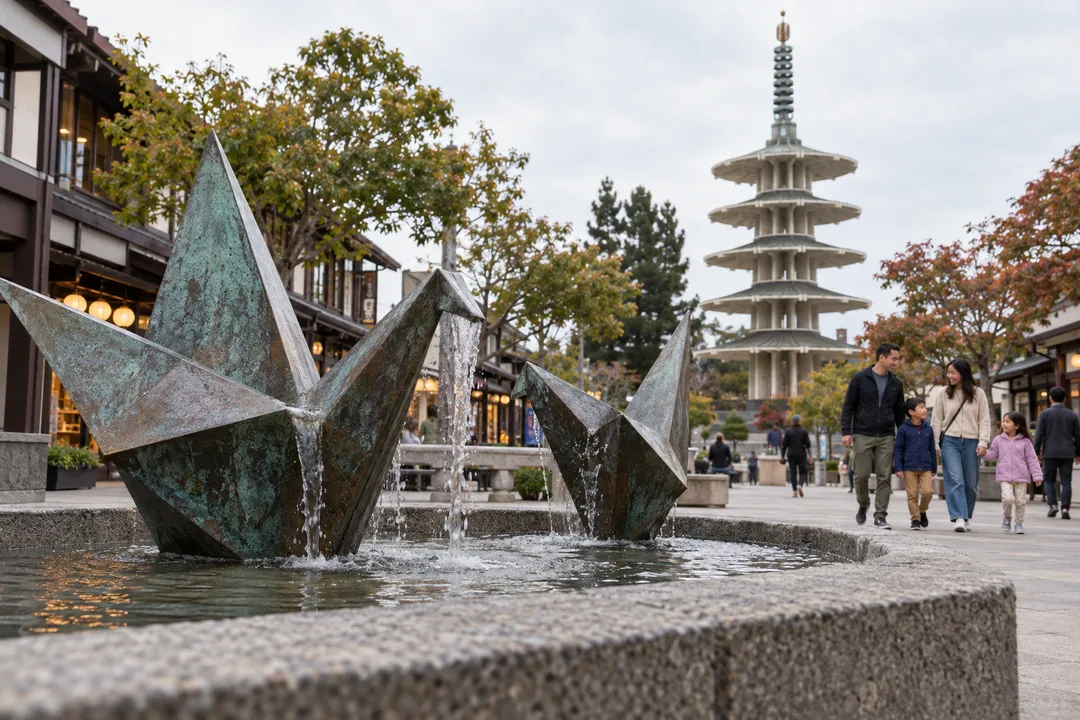
Step outside onto Buchanan Mall and you will find the origami-inspired fountains designed by Ruth Asawa, a fitting first stop with new paper in hand. Sit nearby and fold a single crane before you go home. Finishing one model the same day tells you whether the paper creases the way you hoped and gives you a small reward for the trip.
A short stroll leads to the Peace Plaza and its five-tiered Peace Pagoda, a gift to the city from Osaka in the 1960s. Japan Center's covered malls are full of tea shops and dessert counters for a break on a foggy afternoon. Settling in with a hot drink and a pack of kami is a lovely way to spend an hour, and it fixes the new technique in your hands.
Practical Notes
Japantown sits between Pacific Heights and the Western Addition, and the 38 Geary and 22 Fillmore Muni lines both stop within a short walk. Bring a cardboard tube or a flat folder for large sheets, and keep folding packs in a zip bag so humidity does not curl the edges. Paper Tree's own site is the best place to look up what the shop stocks and its classes.
Keep a note of every paper you liked, with its size and finish, since many packs look alike once they leave the shop. That small record makes the next Japantown visit fast and focused. Above all, fold the paper. A stack of beautiful washi stored in a drawer teaches nothing, while a dozen imperfect cranes on the windowsill means the trip was worth it.
Ask Karpo for more information.
Keep reading
- Bernal Heights Pottery Glaze Supply Browsing Route: Walk
 Potrero Hill Pottery Glaze Supply Browsing Route: Walk
 Mission Pottery Glaze Supply Browsing Route: Studio Walk