 Bernal Heights Pottery Glaze Supply Browsing Route: Walk
Hidden Gems & Odd Finds

Bookbinding Paper Plan: Specialty Paper Store Trip From SoMa
Planning a hand-bound book in SF? Start at the American Bookbinders Museum in SoMa, then shop text paper, endpapers and thread at specialty paper stores.
A hand-bound book needs three kinds of specialty paper, and buying them in the wrong order is how beginners end up with a text block that will not fold. The smartest first stop is not a store at all but the American Bookbinders Museum on Clementina Street in SoMa, where old sewing frames and presses show how the pieces fit together. This plan takes you from that museum to the right paper counters across the city, with a shopping list built around one simple sewn book.
Learn the Structure Before You Buy
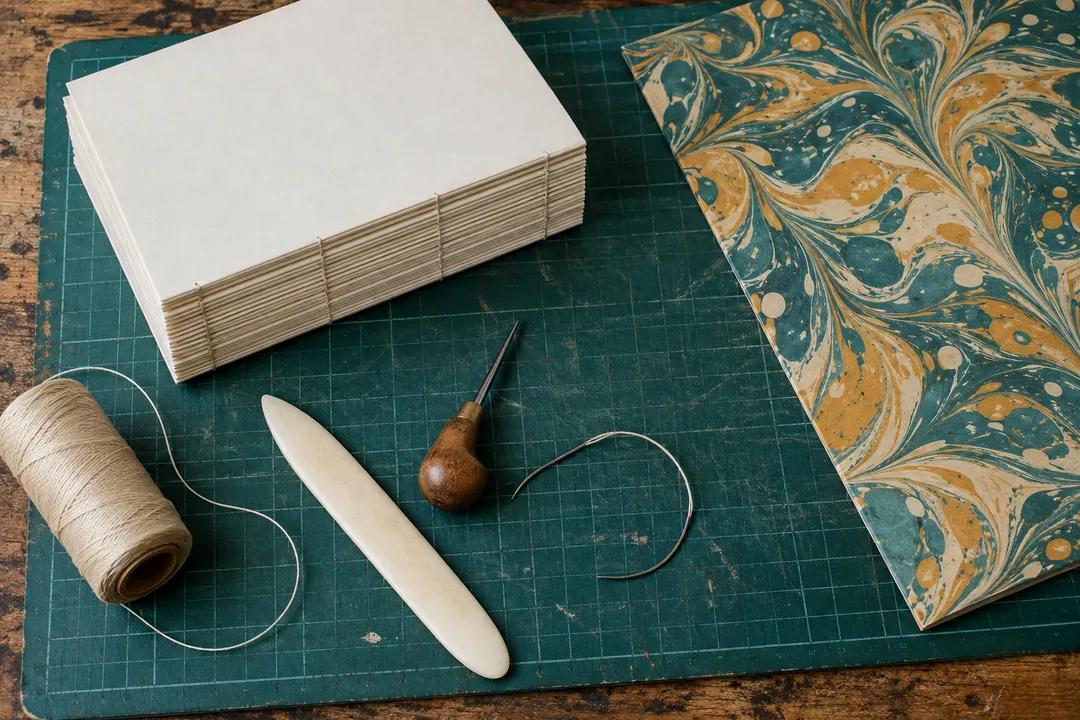
Every simple hardcover has the same anatomy: folded sections of text paper called signatures, sewn together with thread, attached to boards, covered with cloth or decorated paper, and joined to the cover with endpapers. Each part wants a different sheet. Seeing the parts laid out in front of you makes the shopping list obvious, which is why the museum comes first.
The American Bookbinders Museum walks through hand tools, sewing frames and nineteenth-century machinery, and it shows decorative work such as marbled papers and tooled covers. Spend time with the sewing frames and the finished examples. Look at how the spine flexes, where the endpaper hinges, and how the grain of each sheet runs. Those details become your buying criteria later.
Text Paper and the Grain Rule
The single most important rule in bookbinding is that paper grain must run parallel to the spine. Paper folds smoothly along the grain and cracks or fights you across it. A book sewn with cross-grain pages will not lie flat and may warp as the seasons change. When you shop, ask staff which direction the grain runs on a sheet, or bend it gently both ways at the store and feel which side resists less.
For a first book, choose a medium-weight drawing or text paper that folds cleanly. Heavy watercolor sheets make a beautiful sketchbook but are difficult to sew for a beginner, while thin printer paper feels flimsy in a hardcover. ARCH Art Supplies in Potrero Hill and FLAX Art and Design at Fort Mason both carry drawing and design papers sold by the sheet, which lets you buy a small, controlled quantity.
Endpapers Are Where Personality Shows
Endpapers are the decorated sheets inside the front and back covers, and they are where most binders let themselves splurge. Japanese chiyogami from Paper Tree in Japantown is a favorite among San Francisco binders because the printed patterns are strong and the washi fiber is tough enough to hinge a cover. A single full sheet can make endpapers for a small book or two.
Marbled papers are another classic choice, and the museum's examples will show you how dramatic they can look. Skip glossy wrapping paper for this job. It cracks at the hinge, resists glue and peels away from the board within months. Choose a paper with real fiber, test it with a little paste on a scrap at home, and let it dry overnight before committing to the real book.
Thread, Board and Tools
Waxed linen thread is the standard for sewing signatures because it is strong and grips itself as you pull each stitch tight. You will also need binder's board or another rigid board for covers, a bone folder for creasing, an awl for punching sewing holes and a curved or straight needle. Many of these live in bookbinding sections at the larger art stores.
If you want to keep costs low, SCRAP in the Bayview is a creative reuse center where donated board, cloth and paper turn up regularly. Board offcuts from SCRAP make perfectly good practice covers. Pair them with new text paper, so the parts that bend and fold are reliable while the covers stay inexpensive. A practice book built this way costs little and teaches nearly everything.
A Simple Day Plan
Begin with the museum in SoMa and give yourself enough time to look closely rather than rushing through. Take notes or quick sketches of a binding structure you want to copy. Then decide which neighborhood to shop in based on your list: Japantown for endpapers, Potrero Hill or Fort Mason for text paper and board, the Bayview for cheap reuse finds.
Most people cannot reach every stop in one day, and that is fine. Pick the neighborhood that covers the most items on your list and leave the rest for a second trip. Ask Karpo in the Karpo APP to sketch the order and transit between the stops you choose, so the paper run fits into an afternoon instead of eating the weekend.
Who You Meet in This Hobby
Bookbinding draws a quietly enthusiastic crowd. At the museum you may share a room with retired printers who remember working presses, design students studying structures for a class, and journal makers planning their next notebook. Around paper racks you will meet people holding sheets up to the light to check grain, which is a good sign you are in the right place.
Ask questions. Binders tend to be generous with advice about which paste to use or how many signatures make a sturdy first book. Keep museum etiquette in mind, though. Leave machinery alone unless staff invite you to try a demonstration, and give other visitors room around the display cases. Most demonstrations are short, and listening to one is often more useful than an hour of online videos.
Walk SoMa Before You Shop
The museum sits a short walk from Yerba Buena Gardens, a green pocket between Moscone Center and the downtown museums. Take your notes to a bench there and sketch the binding you plan to make. The Martin Luther King Jr. Memorial waterfall and the surrounding gardens are calm enough for a quiet planning session even on busy days.
SoMa's older alleys still hold brick warehouses and loading docks from its industrial printing past, which makes the neighborhood a fitting starting point for a book project. Walking a few blocks among those buildings before heading off to shop adds context to what you just saw in the museum. It is a reminder that books were once made by hand in rooms like these.
Practical Notes
Carry a tube or flat folder for loose sheets and a small zip bag for thread and needles. Write the grain direction on the corner of every sheet in pencil as soon as you get home, because it is easy to forget once sheets are trimmed. The museum's own website lists visiting details and any workshop programs, so start there when planning the first stop.
For a first project, aim for a small sewn notebook with a few signatures rather than a large journal. Finishing a small book quickly builds skill and confidence for bigger structures later. Keep a record of the papers you used, and you will know exactly what to buy next time. The real test of any bookbinding paper is a finished book that opens flat.
Ask Karpo for more information.
Keep reading
- Bernal Heights Pottery Glaze Supply Browsing Route: Walk
 Potrero Hill Pottery Glaze Supply Browsing Route: Walk
 Mission Pottery Glaze Supply Browsing Route: Studio Walk