There's a particular satisfaction to claiming a solo counter seat on a Saturday morning in late May, when the fog lifts late and the city smells of steamer baskets and fresh jasmine. You're not waiting for anyone. You're not negotiating the lazy susan. You order what you want—three har gow, one char siu bao, a bowl of jook—and you eat at your own pace, eavesdropping on Cantonese gossip two stools over. San Francisco's dim sum landscape has always accommodated the group feast, but spring 2026 has quietly sharpened its solo infrastructure: counters purpose-built for one, service rhythms that never make you feel like a placeholder, and a few all-day yum cha spots that locals guard like speakeasy addresses.
Chinatown's lunch counter inheritance
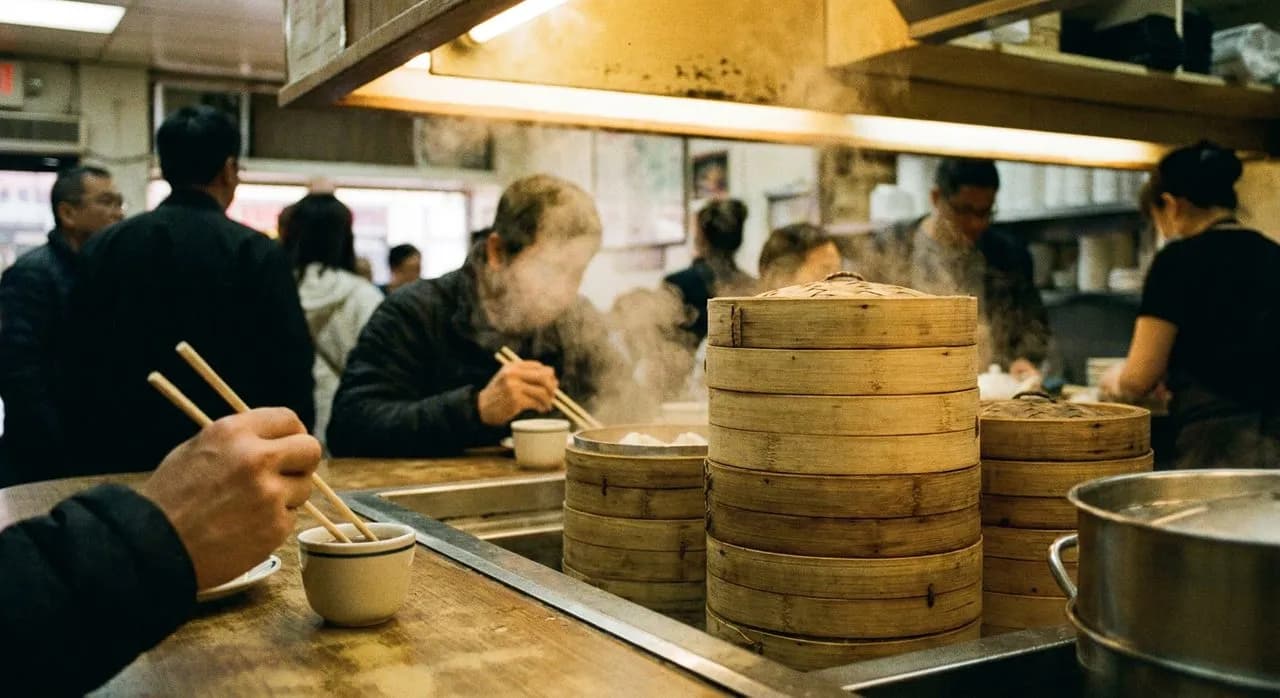
Chinatown's narrow storefronts have always understood counter culture. The old bakery-café hybrids along Stockton Street and the side alleys off Grant still set up a half-dozen stools facing steamer stacks, and by 10 a.m. they're full of retirees reading newspapers and twenty-somethings scrolling between bites. These aren't designed for lingering—the turnover is brisk, the lighting fluorescent—but they're engineered for efficiency and a certain unbothered solitude.
You'll find the rhythm quickly: point at what you want through glass or from a passing cart, nod when the server raises an eyebrow at your single teacup, settle your check within thirty minutes. The stools are often backless molded plastic, the counters Formica-topped and scarred from decades of soy sauce bottles. It's not precious. It's exactly right. And in late May, when the morning light finally breaks through the fog and slants across the counters around eleven, you taste the shrimp in your dumpling more clearly than you would at a lazy-susan table with five friends debating the check.
The all-day yum cha room locals whisper about
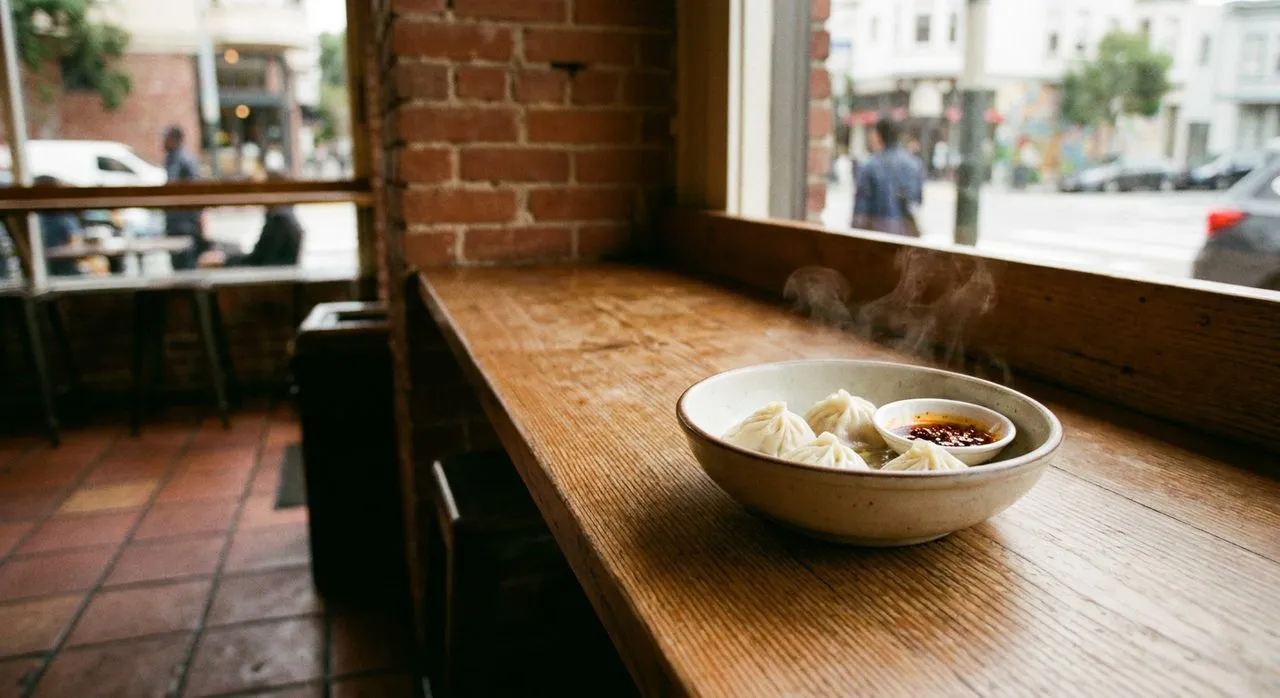
There's one spot—no one names it in guides, and you won't find it on the main drags—that serves dim sum from 11 a.m. until 9 p.m., every day, with a six-seat counter facing an open kitchen. Regulars book the counter a week out for weekend slots, though weekday afternoons sometimes yield a walk-in stool. The space is small, wood-paneled, almost austere, with a single shelf of Chinese tea tins and a kitchen window where you watch hands pleat dumplings in real time.
The menu rotates by the chef's mood and the morning's market run—snow pea shoots when they're sweet, a custard bao that's only available after 3 p.m., shrimp and chive dumplings so delicate they threaten to dissolve on the spoon. You order in waves, one or two items at a time, and the kitchen sends them out still steaming. It's the kind of place where you bring a book but never open it, where the solo seat becomes a front-row ticket to craft. By late May 2026, word has spread just enough to make weekends tricky; locals now come on Tuesday afternoons, when the room is quiet and the chef sometimes adds an off-menu experiment.
Mission small-plate counters that happen to do dumplings
The Mission's approach to solo dim sum is less traditional and more improvisational. A handful of small-plate spots along Valencia and the side streets toward Guerrero have added dumpling programs—some Shanghainese, some Sichuan-leaning, some vaguely pan-Asian—that work beautifully for the single diner who wants variety without commitment. These places lean into natural wine, low lighting, and soundtracks that skew indie. The dumplings share menu space with tinned fish, fermented vegetables, and occasionally a steak tartare.
You sit at a blonde-wood counter or a marble bar top, order three dumplings and a glass of skin-contact wine, and no one blinks. The servers are conversational, the vibe is unhurried, and the dumplings—though not always classically executed—are usually very good. It's a different energy from Chinatown's утилitarian efficiency, more about the hang than the transaction. On a late-May Saturday, when the Mission's sidewalks are crowded with farmers' market overflow and the air smells of strawberries and coffee, these counters offer a kind of urban decompression: solo, social, satisfyingly in-between.
What makes a counter work for one
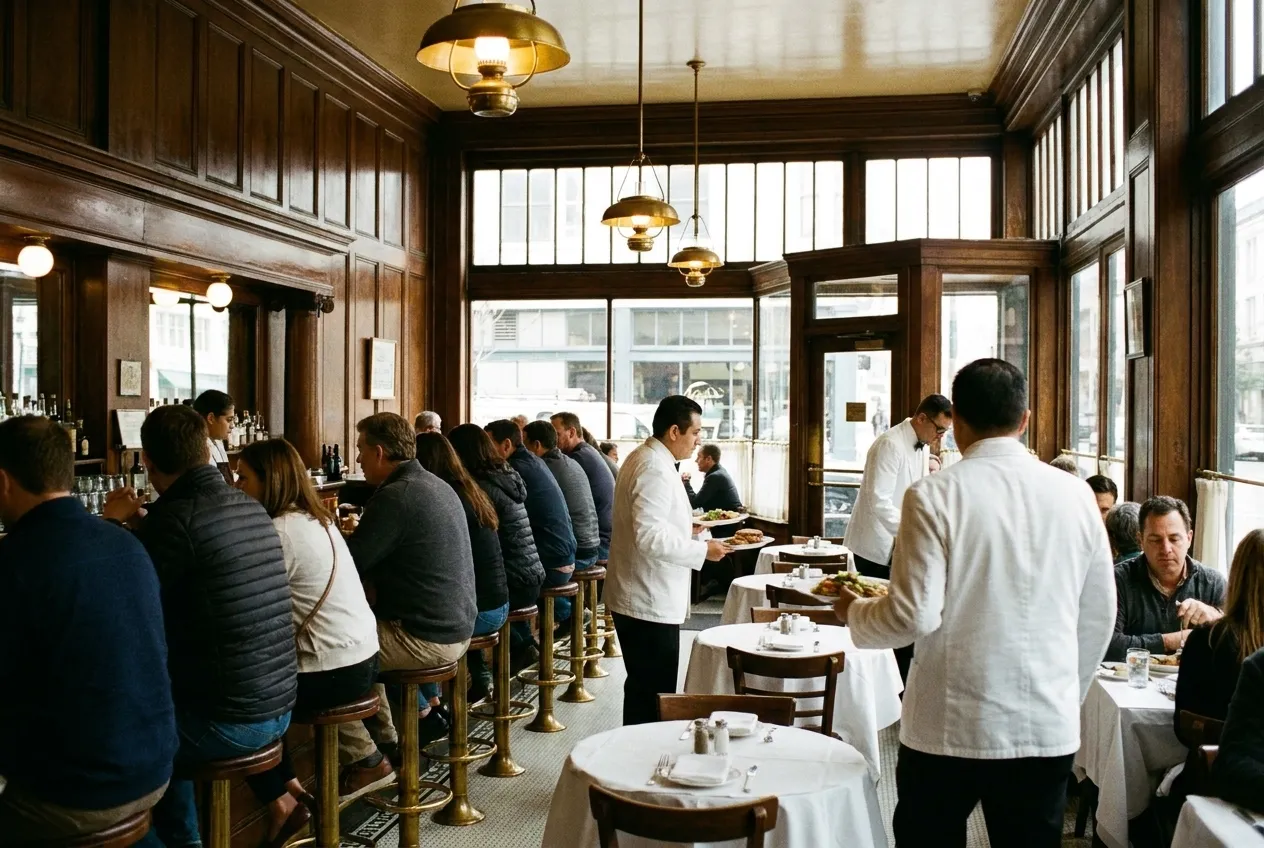
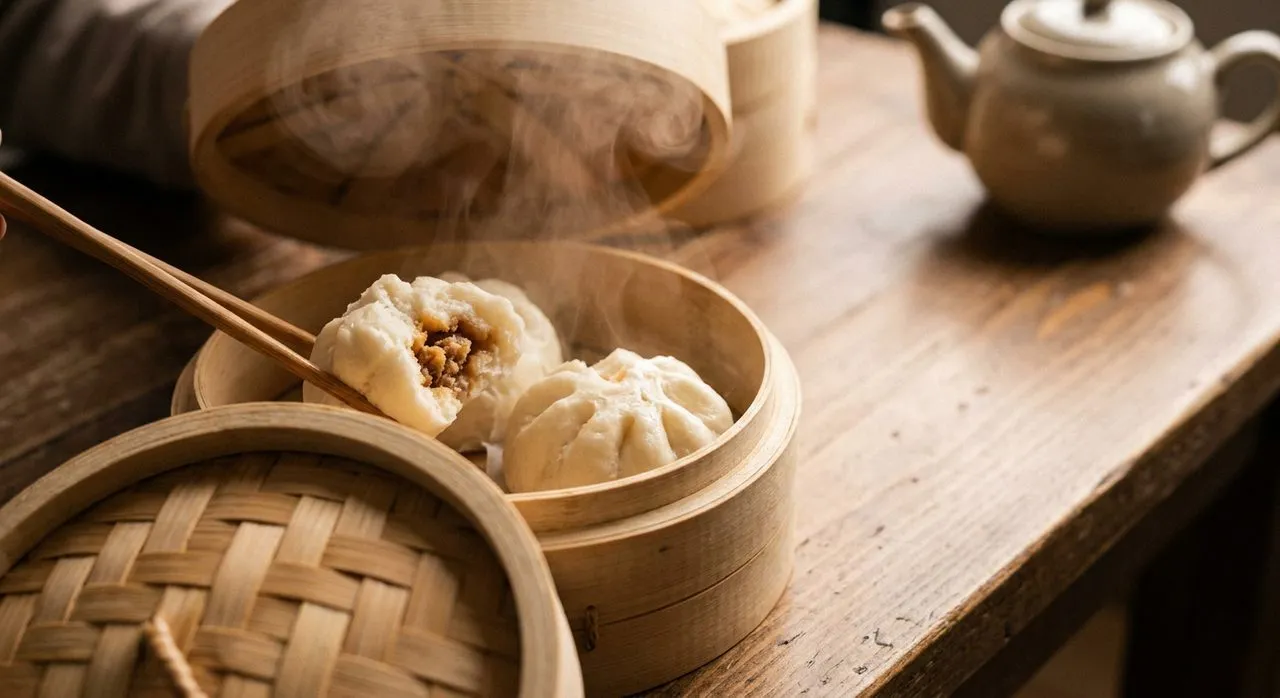
Not every counter is built for solo comfort. The best ones share a few qualities: stools that swivel or at least offer lumbar mercy, sight lines into the kitchen or out a window, and service that reads your tempo without hovering. You want to feel neither rushed nor forgotten. You want the menu to allow small portions or a build-your-own progression, so you're not stuck with a family-style platter of turnip cake you'll never finish.
The light matters too. Harsh overhead fluorescents can feel punishing when you're alone with your thoughts and a plate of shumai; dim Edison bulbs can make the solo experience feel melancholy rather than meditative. The sweet spot is diffuse daylight or warm pendant lighting that pools on the counter without glaring off your phone screen. And noise—there's a Goldilocks zone. Too quiet and you're overhearing every conversation; too loud and you're exhausted by the end of your meal. The best solo counters hum at a frequency that lets you think, or not think, as needed.
Ordering strategy for the table of one
Start with two or three items, not five. You can always add. Pace yourself with tea—oolong or pu-erh if it's offered—and resist the urge to fill silence by scrolling. Let yourself be bored for thirty seconds. Watch the kitchen. Notice the regular two stools down who orders the same thing every week. Dim sum at a counter is a practice in presence, and the solo format amplifies that if you let it.
Steamed items arrive hotter and more fragile than fried, so eat those first. If you're at a cart spot, make eye contact and smile when the server approaches; solo diners sometimes get skipped if they look too absorbed in their phones. And if you're genuinely still hungry after your first round, order one more thing—not three. The beauty of the solo counter is that you're never over-full, never waiting for someone else to finish, never compromising on the last shrimp dumpling.
Late spring timing and what to bring
Late May in San Francisco means morning fog that burns off by noon, and the counter spots in Chinatown are warmest and brightest between 11 a.m. and 1 p.m. The Mission's small-plate counters don't hit their stride until after 5 p.m., when the natural light through west-facing windows turns golden and forgiving. Bring layers—interiors can be drafty—and bring cash for the older Chinatown spots, though most Mission places prefer cards.
A small notebook is better company than your phone, but a phone works too. Don't bring a laptop; it reads poorly at a dim sum counter. And if you're planning to visit the all-day yum cha spot that locals book quietly, call ahead midweek and ask for a counter seat—mentioning you're solo often helps. The best solo dim sum mornings are the ones where you arrive with no agenda beyond hunger and a little curiosity, and you leave an hour later fed, warm, and surprisingly content.
Practical notes
Chinatown's counter spots cluster along Stockton Street between Clay and Broadway, with side alleys yielding surprises; nearest transit is Powell Street BART (walk north). Street parking is scarce; use the Portsmouth Square Garage if available. Most open by 9 or 10 a.m. and close by 4 p.m.; verify hours directly. Mission small-plate counters are concentrated along Valencia between 16th and 20th Streets; 16th St./Mission BART is closest. Many Chinatown counters are not ADA-accessible—narrow doorways, high stools—but Mission spots tend to have level entries and accessible seating. Bring cash for Chinatown, cards for the Mission. Expect to spend fifteen to thirty dollars for a solo dim sum meal, more if you're adding wine in the Mission.
Tags: #SFDimSum #PullUpAChair #SoloSF #ChinatownSF #MissionDistrict #SFEats #CounterCulture #DumplingsForOne #SanFranciscoFood #YumCha #SoloTravel #SFSpring2026 #LateSpring #BayAreaEats #QuietTables
Please drink responsibly. Must be of legal drinking age.
Sources consulted: Dim Sum · San Francisco Chinatown · San Francisco Travel · Eater SF · Time Out San Francisco Restaurants
All trademarks are the property of their respective owners.