 Bernal Heights Pottery Glaze Supply Browsing Route: Walk
Hidden Gems & Odd Finds
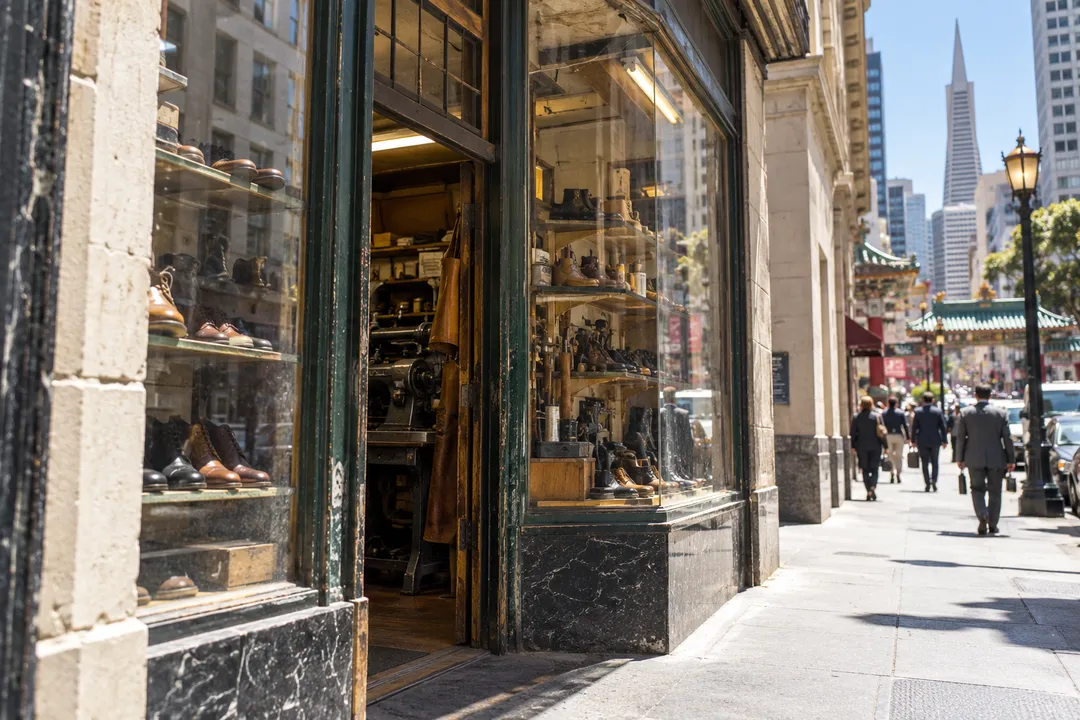
Anthony's Shoe Repair Shop: Kearny Fixes Without The Wait
Anthony's Shoe Service at 340 Kearny St is a downtown repair stop for worn heels and daily shoes. Bring both shoes so the counter can compare wear and fit.
Anthony’s Shoe Service is at 340 Kearny St, San Francisco, CA 94108, in the busy seam between the Financial District, Chinatown, and the older downtown retail grid. That is the useful fact about this shoe repair shop: it sits where a repair can be folded into a day already built around errands. The official site, anthonysshoeservice.com, gives the business its clearest identity. The shop makes sense for a commuter whose heel has started slipping, a traveler with a damaged sole, or anyone who wants a worn pair assessed before buying another one.
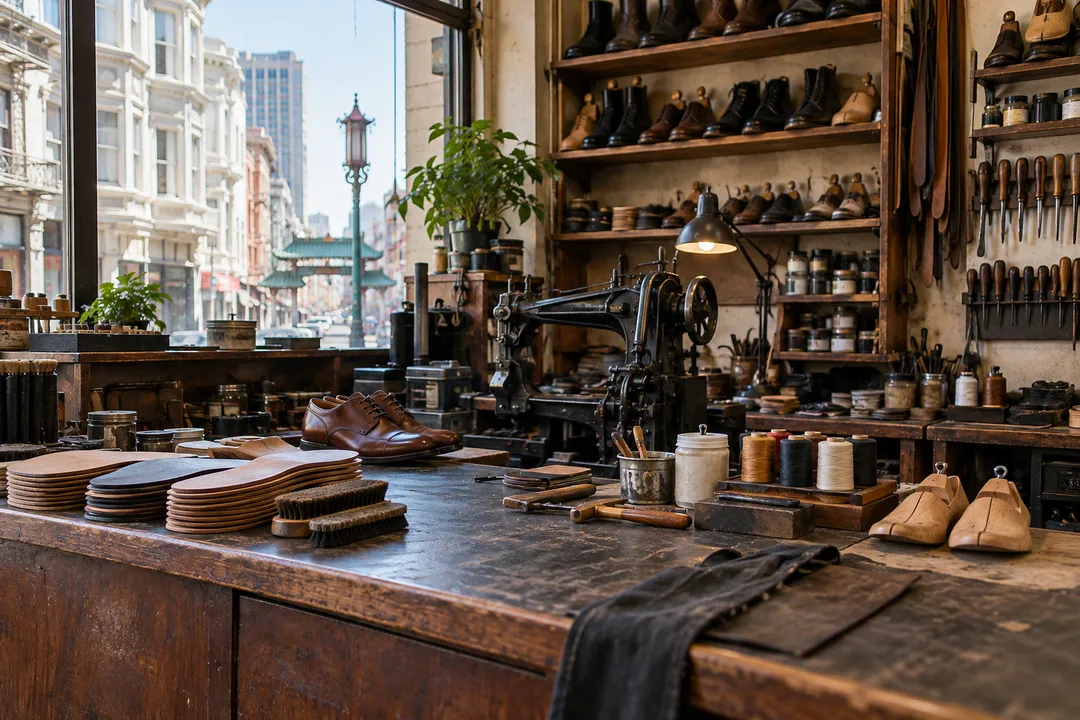
Kearny Street In The Middle Of The Errand
Kearny is not a quiet street, so arrive with the problem already described. 'The shoe feels loose' is a start; 'the right heel rocks when I step off a curb' tells the counter more. A repair shop sees the evidence in person, but the customer supplies the use case. A pair worn on hard office floors has a different life from a boot used on steep sidewalks, and the best recommendation begins with that distinction.
Kearny repairs are easiest to plan when the customer separates the pair’s public role from its private value. A daily loafer may need a quiet, durable finish, while a wedding shoe may justify more attention to color and trim. Mention whether the pair must remain office-appropriate, weather-ready, or comfortable for standing. That small description gives the counter a clearer brief than a brand name or a photograph alone.
A Better Handoff At The Counter
Bring the complete pair, even when the damage is on one side. Comparing the left and right shoes helps identify uneven wear, collapsed counters, mismatched heel heights, and an upper that has stretched beyond a simple sole fix. Include spare laces, buckles, or detached pieces in a small envelope. A quick photograph before drop-off also records the finish and helps when several black or brown pairs are being handled at once. Those are small habits, but they turn a rushed handoff into a usable repair brief.
Anthony’s is most useful when the customer separates the desired result from the repair method. Say whether the priority is comfort, appearance, water resistance, or another season of hard wear. Then let the repairer match the material to the shoe. A dress shoe can need a discreet heel replacement; a work boot may need a more durable contact surface. The same request—'make it last'—means different things to someone walking two blocks and someone crossing San Francisco on foot every day.
Rules For A Busy Downtown Shop
Treat the order ticket as part of the repair. Write the name and contact information legibly, keep the ticket somewhere dry, and note any deadline before leaving the pair. If the shoe is for a trip, bring it with enough margin for a second fitting or a small adjustment. If the shoe is sentimental, say that too. A repair can preserve function while leaving a scar, color difference, or old crease visible. Honest expectations protect the customer from a disappointing idea of 'brand new' and protect the craftsperson from an impossible promise.
Do not assume a familiar-looking problem has a one-minute solution. A loose heel cap may be quick; a separating sole, damaged welt, or stretched upper needs closer inspection. The polite approach is to ask what the shop can take on, then listen to the sequence: diagnosis, bench work, pickup, and a test walk. If a repair is urgent, say exactly when the shoes are needed rather than demanding an immediate answer. The clearer the deadline, the easier it is to decide whether this pair belongs in the current queue.
Choosing The Right Pair To Save
A repair usually makes the most sense when the upper and the fit still work. Look for leather that is supple rather than splitting, a lining that has not shredded across the heel, and a sole problem that is localized. Anthony’s can then become the place where a favorite pair gets a sensible second life. If cracks run through several flex points or the shoe has already lost its shape, the conversation should include whether the money and time are better spent elsewhere. Repair is not automatically the right answer for every old shoe.
For a first visit, ask the counter to compare a cosmetic fix with a structural one. Edge color can make a pair look sharper, but it does not repair a weak seam. A replacement heel can restore balance, but it does not correct a collapsed counter. The practical customer wants the order to solve the cause, not just hide the mark. That is why bringing the whole pair matters: the shop can see the wear pattern instead of making a decision from one damaged corner.
Pairing Kearny With A Short Walk
Kearny Street gives you a compact post-drop-off route. Walk toward Chinatown for a change in storefronts, signs, and pavement, then loop back through the downtown blocks rather than committing to a long uphill trek. That is a gentle way to test a repaired pair after pickup. Take several ordinary steps, turn, and use a curb. A new heel should feel balanced, and a fresh sole should flex without making you compensate. If something feels wrong, you are close enough to return to the counter while the detail is still clear.
The neighborhood also gives the errand a human scale. A customer can combine the shoe repair with lunch, a market stop, or a short architectural walk without turning the day into a marathon. Keep the route short on the first outing, especially for leather that has been reshaped. The best practical tip is not glamorous: test the shoes before you leave the area. A small adjustment downtown is easier than discovering a problem after a long ride home.
Practical Notes For Anthony’s Shoe Service
Navigate to 340 Kearny St, San Francisco, CA 94108, and use the official business site at anthonysshoeservice.com as the primary identity source. Bring both shoes, any loose parts, and a clear statement of how the pair is used. Keep the ticket, photograph the condition, and leave a margin if the shoes are needed for travel. This guide does not add a phone number or price that is not supported by the supplied source; the value of the visit is in a clear diagnosis and an appropriate repair plan.
My honest take: Anthony’s suits people who want a downtown fix without turning a shoe problem into a shopping expedition. The shop is especially practical for work shoes and well-used pairs whose fit is already right. Skip the visit if the upper is failing everywhere and the shoe has no emotional or construction value. For a localized heel, sole, stitch, or finish problem, Kearny’s compact street grid makes drop-off, a short walk, and pickup a manageable sequence.
Ask Karpo for more information.
Keep reading
- Bernal Heights Pottery Glaze Supply Browsing Route: Walk
 Potrero Hill Pottery Glaze Supply Browsing Route: Walk
 Mission Pottery Glaze Supply Browsing Route: Studio Walk