San Francisco does seafood like a city with a memory: standing-room counters, fast shucking, and a strong belief that the best shell is the one served cold and close to the moment. These four places show the range. Swan Oyster Depot is the old-school ritual. Hog Island Oyster Co. gives you ferry light and a farm-first point of view. Anchor Oyster Bar keeps the Castro honest. Waterbar turns the whole thing into a polished bay-view meal. If you want seafood with local logic, start here.
Karpo turns this into a shellfish route with the right order at each stop, the best times to arrive, and the easiest way to move between neighborhoods without wasting a bite.

The Old Counter Rules
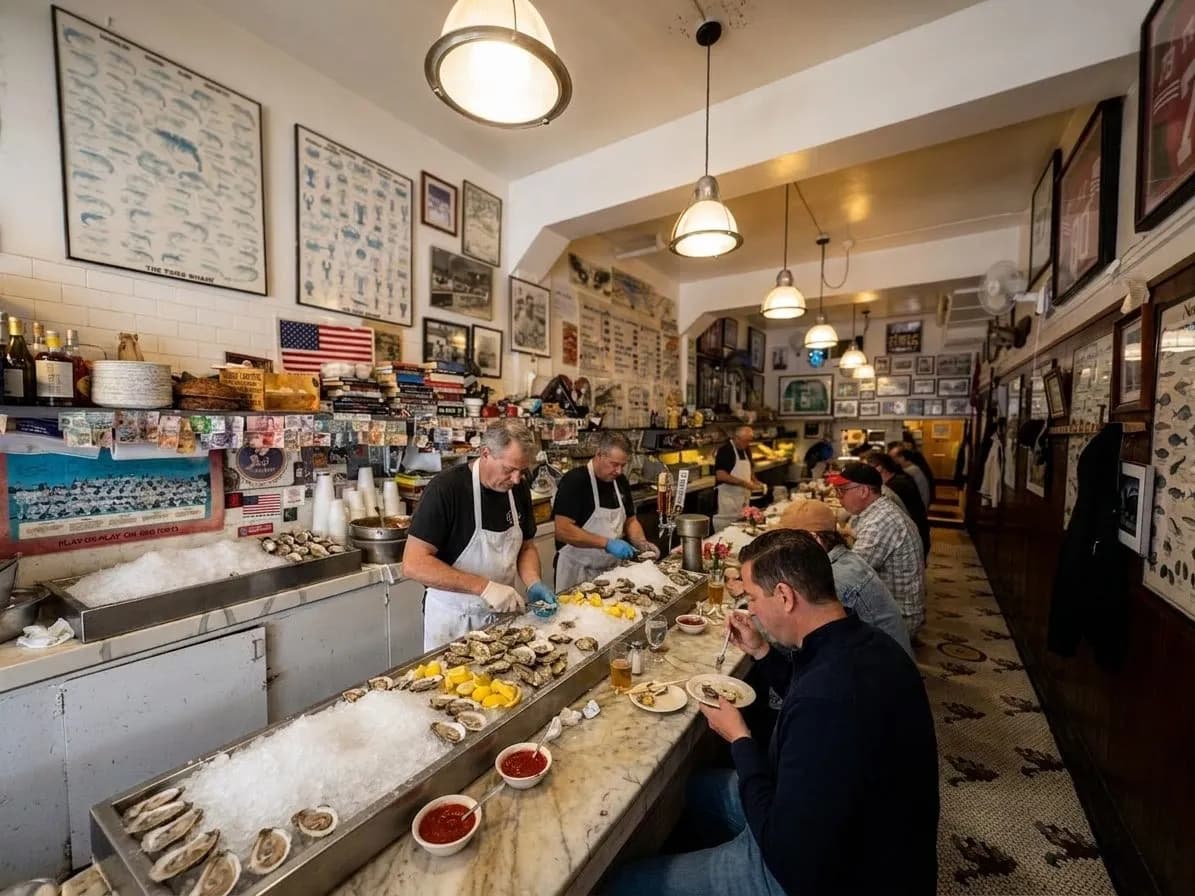
Swan Oyster Depot is the place where San Francisco seafood turns into a standing-room ritual. In Polk Gulch, the room is tiny, the counter is the show, and the mood is all business. You come for oysters, yes, but also for the old-city feeling of seeing crab, smoked fish, and seafood salads move past at lunch speed. It is not precious, which is exactly why it still matters. The best first impression here is not a fancy plate; it is a fast, confident order and a willingness to share space.
Treat Swan like a lunch mission, not a leisurely brunch. Know what you want when you reach the front, keep your bag and coat compact, and let the staff keep the rhythm. The house can move quickly when people are decisive, and that pace is part of the charm. If you are with a larger group, expect the wait to stretch. If you are alone or with one other person, you may get seated sooner and eat better because you are not negotiating every forkful.
Ferry Building, Raw And Bright
Hog Island Oyster Co. sits in the Ferry Building like a bright, salt-washed counterpoint to Swan’s old bones. The setting matters: bay light, market energy, and a menu that makes oysters feel current without turning them into a trend. This is the stop for people who like their seafood with a little air around it. Order raw oysters if you want the cleanest read on the day, then add something cooked so the meal has shape. The vibe is casual enough for a solo lunch and polished enough to feel like a plan.
The best local move is to ask what the kitchen is shucking that day instead of locking onto one oyster name. Different farms, different waters, different levels of brine; the point is freshness, not a fixed script. Weekday lunch is usually calmer than the weekend crush, and if you show up around the market’s edges, the line can feel much kinder. A mixed dozen is smart when the list looks strong, but leave room for a cooked dish so you get the full Hog Island range, not just the raw bar headline.
Castro Comfort, Not Just A Detour
Anchor Oyster Bar is the neighborhood oyster stop that reminds you seafood does not need a dramatic view to feel essential. In the Castro, the room is compact, the regulars know the rhythm, and the food lands with the confidence of a place that has fed the same city for years. This is where you go when you want oysters, crab, or a bowl that leans deeper than raw shellfish alone. The tone is unfussy but exacting, which is a very San Francisco combination when it works. It is one of the city’s best proofs that a good counter can carry a whole lunch.
Because the room is small, the smartest order is not the biggest one. Start with oysters or a seafood plate, then add a second wave if the table still feels hungry. That pacing keeps everything colder and sharper, and it keeps you from making a noontime meal too heavy too quickly. Anchor rewards people who arrive with a plan and a little patience. It is also a better stop earlier in the day, when the room feels more like a neighborhood habit than a dinner scramble.
Waterbar At Golden Hour
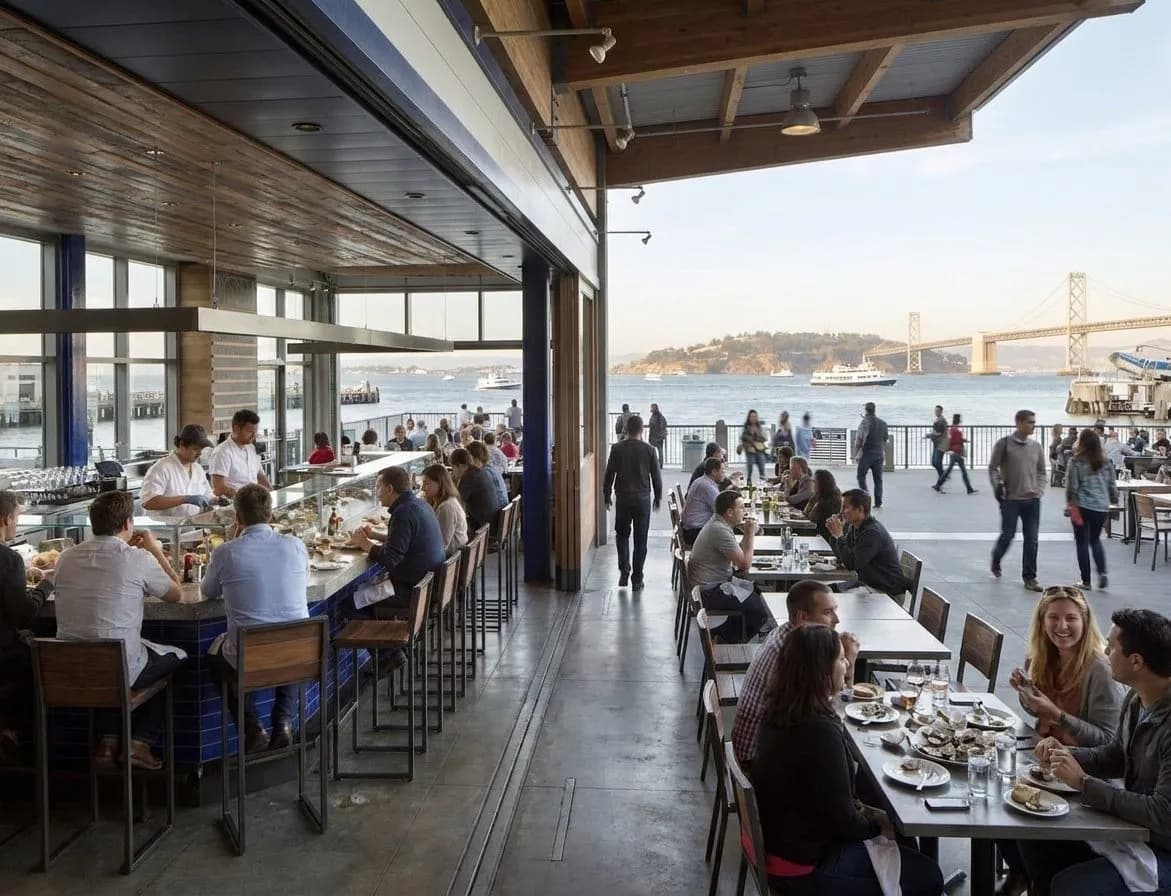
Waterbar on the Embarcadero is the version of San Francisco seafood that likes a little theater. The Bay Bridge is right there, the dining room feels sleek rather than old-school, and the oyster selection is built for people who enjoy comparing brine, mineral edge, and size with the seriousness of wine people. It is the prettiest stop on this list, but it is not just for the view. If you care about shellfish, the menu lets you taste the city’s coastal range in one sitting, especially when the day’s selections are strong.
The trick is not to arrive only for the most crowded sunset window unless you genuinely want the scene. Earlier seatings can feel calmer and make the food read better, because you are not splitting attention with every table chasing the same light. Order oysters first, then something with more body if you want a balanced meal. Waterbar is the place for pairing texture with scenery, not for rushing through a checklist. When you sit down with time, the room feels like a final chapter rather than a detour.
How To Make It A Crawl
If you want the full San Francisco seafood story, think in moods, not just in restaurants. Swan Oyster Depot is for standing-room history. Hog Island is for ferry-adjacent brightness. Anchor Oyster Bar is for neighborhood loyalty. Waterbar is for polished bay-front drama. Together, they map the city’s shellfish personality better than any single plate could. You do not need to hit all four in one day, but if you do, start light and move toward the bigger, more scenic stops as your appetite settles in. That order keeps the crawl from feeling rushed.
Oyster season is part timing, part temperature, and part trust. The colder months can bring the cleanest, most convincing shells, but the real local habit is to ask what looks best that morning and let the house steer you. Keep the first stop small, drink water, and alternate raw oysters with at least one cooked dish along the way. That way the palate stays sharp and the crawl stays interesting. In San Francisco, the best seafood itinerary is the one that feels easy enough to repeat.
Practical notes
For the smoothest crawl, start earlier in the day and keep your first stop light. Swan Oyster Depot and Anchor Oyster Bar are easiest before the main lunch wave; Hog Island works especially well on weekdays and around the Ferry Building’s calmer edges; Waterbar rewards anyone who can linger instead of sprinting. Oyster lists change with the day and the season, so ask what arrived most recently rather than chasing one fixed variety. Travel with a small bag, expect counter service to move quickly, and leave room for one cooked dish so the meal does not flatten out.
Tags: #sanfrancisco #sffood #seafood #oysters #rawbar #ferrybuilding #castro #polkgulch #embarcadero #nobhill #southbeach #dungenesscrab #cioppino #hiddengems #foodguide
Please drink responsibly. Must be of legal drinking age.
All trademarks are the property of their respective owners.
Ask Karpo first
Ask Karpo to turn this into a live oyster route with current openings, the least painful line times, and the cleanest public-transit hop between Polk Gulch, the Ferry Building, the Castro, and the Embarcadero. Keep it public, respectful, and easy to follow in one afternoon.