 Bernal Heights Pottery Glaze Supply Browsing Route: Walk
Hidden Gems & Odd Finds
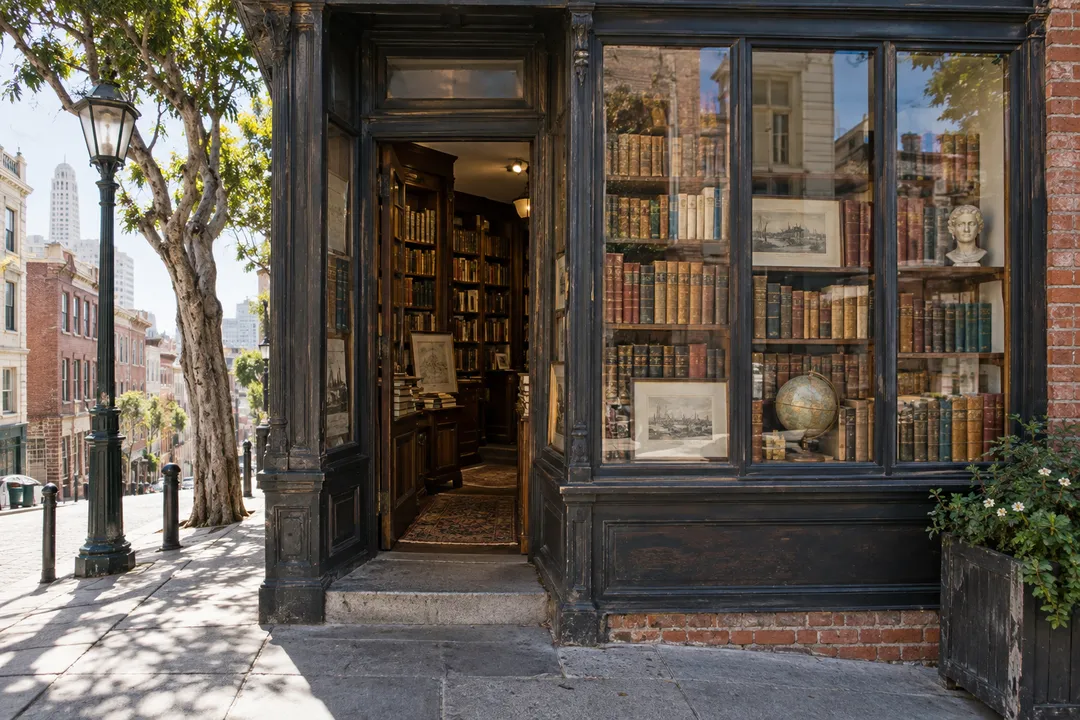
William Stout Rare Bookstore: Jackson Square Design Finds
William Stout Architectural Books at 804 Montgomery Street is a Jackson Square rare bookstore for architecture, design, and illustrated reference books.
William Stout at 804 Montgomery Street is the rare bookstore for a reader who wants architectural, design, illustrated, film, or visual-culture material rather than a broad shelf of general used fiction. The Jackson Square setting makes the visit feel like a specialist stop in a gallery district: the books are part research tool, part image archive, and part physical design object. Come with one collecting question—mid-century architecture, film design, comic art, prehistoric illustration, or a particular illustrator—and the inventory becomes much easier to read. The best visit is focused, curious, and unhurried.

Arrive With A Design Brief
At 804 Montgomery Street, the address itself helps establish the mood. Jackson Square’s historic commercial buildings and galleries create a slower visual rhythm than a standard retail corridor. Before entering, write down the names, subjects, or periods that matter to you. A vague request for “something rare” is hard for any bookseller to interpret, while “illustrated books about early modern buildings” or “film-design books with strong production drawings” gives the conversation a useful edge. You are not walking into a supermarket of titles; you are entering a room where context improves the search.
A Jackson Square Setting
William Stout’s wider body of work connects themed entertainment, film design, comic art, book illustration, posters, and reconstructions of prehistoric life. That range explains why a design-minded reader may find a better lead by following an image, a studio, or a format instead of a conventional author list. Look for books with strong plates, unusual typography, visual references, and production history. A beautiful cover is an invitation, not proof of importance. Turn the object over, read the publication details, and ask what kind of visual record it contains.
What The Inventory Rewards
A useful question is, “What does this book show that a normal history cannot?” For an architecture volume, the answer may be plans, photographs, material studies, or a vanished building. For a film book, it may be set drawings, costume references, or the logic behind a creature design. For comic or poster material, it may be process, reproduction, and the relationship between original art and printed page. These questions help you distinguish a handsome coffee-table book from a genuinely useful reference. They also give the bookseller a clear path toward a recommendation.
Ask About The Object Behind The Cover
Large illustrated books need more room than a paperback. Keep the edge of the counter clear, support the binding with both hands, and avoid pressing a stiff spine flat. Check that plates, foldouts, dust jackets, and captions are present before you make a decision. If a book has a former owner’s stamp or a small tear, ask whether it changes the object’s value or simply records use. The point is not to treat every book as fragile museum property; it is to notice which physical details explain why a particular copy is interesting.
Handle Large Illustrated Volumes Slowly
This is a specialist visit, so plan around conversation rather than a timed retail loop. If your subject is narrow, email or call ahead with a short note that names the author, period, or format. That gives the bookseller a chance to understand the request and keeps your time in the room productive. There is no advantage in arriving with a ten-item shopping list you cannot explain. Bring two or three priorities, then allow a recommendation to redirect you. A serious book hunt often improves when the first answer is not the final answer. If you are traveling with a designer or student, agree on one shared theme before you enter so the conversation stays useful without becoming a scavenger hunt for every possible category.
The Right Appointment Mindset
Before buying, record the full title, publisher, year, edition statement, binding, illustration process, and any provenance note. A notebook is more useful than a quick photograph because it lets you compare two visually similar books later. If the book is for a design practice, research project, or collection, note why this copy differs from another edition. My honest skip is buying a large volume only because the jacket looks dramatic. Choose the book whose images, structure, or documentation will still be useful after the first burst of visual excitement fades.
Build A Shortlist Before Buying
After the appointment or browse, stay in Jackson Square and make the walk part of the research. Nearby galleries, old facades, and the blocks around Montgomery and Sansome offer a visual continuation without requiring another major destination. Keep the route short if your book is oversized. One gallery or architectural detail is enough to test how the book changed your eye; five stops can turn the afternoon into a checklist. The best pairing is a quiet walk where you can remember a plate, drawing, or binding detail before it blurs into the rest of the city.
Walk The Gallery District
William Stout is for collectors, designers, illustrators, film enthusiasts, architects, and readers who want a book to function as an object with evidence inside it. It is less suitable for someone seeking a casual pile of inexpensive novels or a guaranteed specific bestseller. If you arrive with a clear interest, the specialist setting becomes an advantage. If you arrive without one, take a few minutes to look at the visual language of the shelves before asking for help. The room rewards attention more than speed, and the right find often begins with a question about an image.
Who Should Make The Trip
Practical Notes: William Stout’s bookshop is associated with 804 Montgomery Street in San Francisco’s Jackson Square, and the official William Stout site is williamstout.com. The inventory is specialist rather than a general walk-in chain, so bring author names, subjects, dates, or formats and allow time for handling guidance. Prices are omitted because antiquarian design books vary by edition and condition. Plan a short gallery-district walk afterward, and ask Karpo in the Karpo APP for nearby architecture, art, or coffee stops that fit your research theme.
Practical Notes
A final practical habit is to photograph or transcribe the bibliographic details only after the bookseller permits it. A clean record protects you from confusing two editions later and makes the visit useful even when the right volume stays on the shelf.
Ask Karpo for more information.
Keep reading
- Bernal Heights Pottery Glaze Supply Browsing Route: Walk
 Potrero Hill Pottery Glaze Supply Browsing Route: Walk
 Mission Pottery Glaze Supply Browsing Route: Studio Walk