 Bernal Heights Pottery Glaze Supply Browsing Route: Walk
Hidden Gems & Odd Finds
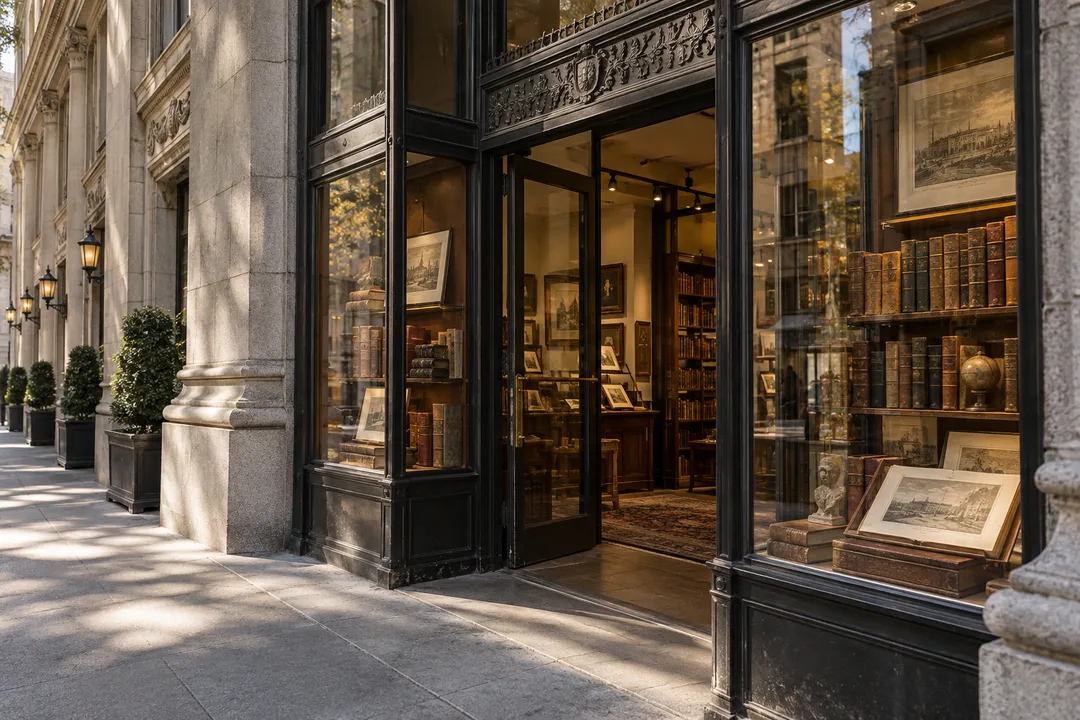
Brick Row: Downtown Rare Bookstore Finds On Geary
Brick Row Book Shop at 49 Geary Street is a downtown rare bookstore for collectors who want focused shelves, specialist knowledge, and quiet browsing.
If you type “rare bookstore near me” while downtown, Brick Row Book Shop is the kind of answer that rewards a slower afternoon. The shop occupies Suite 230 at 49 Geary Street, inside the city’s famous art-gallery district, and its identity is closer to an antiquarian dealer’s rooms than to a general retail bookstore. Founded in 1915, Brick Row specializes in first editions, rare books, and manuscripts spanning the sixteenth through twentieth centuries. You come for the possibility of a serious find, but you stay for the physical pleasure of comparing bindings, paper, provenance, and editions.
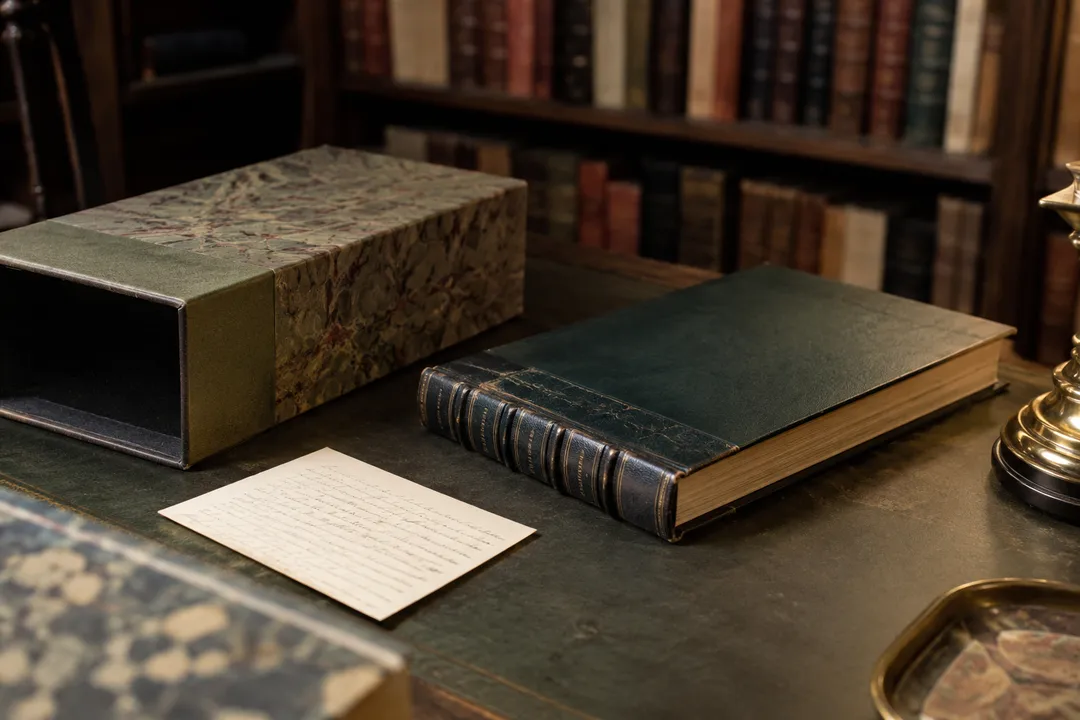
A Century-Old Dealer In The Gallery District
The building matters. 49 Geary is a vertical arts address where several galleries and specialist businesses share a polished, quiet rhythm, so Brick Row feels naturally connected to San Francisco’s collecting culture. Start by finding Suite 230 rather than expecting a street-level shop window packed with bargain tables. Once inside, allow the atmosphere to recalibrate your expectations: this is a place for careful looking, not a quick browse between errands. Shelves and cases are arranged for subject knowledge, and a bookseller can often take a broad interest—English literature, travel, history, or illustrated books—and turn it into a more useful conversation.
How To Browse A Specialist Inventory
Brick Row’s long history is part of the experience, but the store is not a museum frozen in 1915. The business trades in the active language of collecting: first editions, association copies, signed books, manuscripts, and material where condition changes the meaning as much as the text. A good visit begins with one question. Ask about early California, a favorite author, a specific press, or a subject you have been researching. The narrower the starting point, the more easily the bookseller can show you a shelf or case you might miss on your own.
Handling Editions, Plates, And Bindings
The most rewarding browsing habit here is to read the labels, then look beyond them. A first-edition shelf may lead to a publisher’s binding; a manuscript may open a route into a writer’s correspondence; an illustrated volume may reveal a printer, artist, or private press worth following. Take notes on author, date, edition statement, binding, and condition instead of relying on memory. That small discipline helps you understand why two copies of a familiar title can sit worlds apart in value without either being “better” as a reading copy.
What To Ask The Bookseller First
There are quiet rules to this kind of shop. Keep drinks and food outside the browsing area, support older bindings from underneath, and ask before removing a book from a glass case. Clean, dry hands are the right default; gloves are not automatically better for every paper object, so follow the bookseller’s lead. Never flatten a volume or force a stiff opening. If you want a photograph for research, ask first. The etiquette is not fussy for its own sake—it protects fragile paper and keeps the conversation focused on the object in front of you.
Quiet Rules For Fragile Paper
There is no ticketed queue, but timing still changes the quality of the visit. A weekday daytime stop gives you the best chance of a calm conversation and enough room to study a display without feeling rushed. If you are coming from a gallery opening or a Financial District lunch, build in more time than a normal bookstore stop. A want list on your phone is useful, but a short handwritten list can be easier to consult while your hands are occupied with a catalog or a book. The practical strategy is patience, not speed.
Timing The Visit
Brick Row is especially strong for readers who want the material history around a text. Travelers can look for books that turn maps, voyages, cities, and landscapes into objects. Literary collectors can ask about first editions and authors’ working lives. Designers and artists may find illustrated books, private-press production, or unusual bindings that make a better souvenir than a conventional gift. Because the inventory is inherently changeable, the most honest way to shop is to come with a subject and leave room for a discovery that was not on your original list.
Finds Worth Carrying Home
After the visit, keep the downtown walk compact. The 49 Geary building sits close to Union Square, Maiden Lane, Chinatown, and the edges of Jackson Square, so you can move from books to galleries without needing a car. Walk east toward Chinatown for tea and small restaurants, or south toward the contemporary galleries around downtown. The route works because Brick Row is not isolated in a shopping strip; it is one specialist stop in a dense arts circuit where a book, a print, and a gallery wall can inform one another.
A Walk Beyond The Shelves
A few practical notes make the outing smoother. The address is Brick Row Book Shop, Suite 230, 49 Geary Street, San Francisco, California 94108. Treat the visit as a specialist appointment even when the door is open: carry a subject list, leave bulky bags out of the way, and budget time for a real conversation. Do not invent a price expectation before you see the book; antiquarian value depends on edition, condition, scarcity, and provenance. Use the official Brick Row site for its catalog and contact path, then ask Karpo in the Karpo APP to pair the stop with nearby galleries or a quiet lunch.
Practical Notes
A useful collector’s exercise is to compare how the same author appears in different forms: a first edition, a later reading copy, a signed presentation copy, or a manuscript reference. Notice how the catalog language separates scarcity from condition, and how a small ownership mark can add historical interest without automatically making a book more valuable. If you are new to antiquarian books, say so. A good specialist shop can explain the vocabulary without making the visit feel like an exam, and that generosity is one of the reasons Brick Row remains memorable.
Who This Shop Is For
Brick Row suits a reader who wants a rare bookstore near me experience with genuine historical depth rather than a generic used-book aisle. It is a particularly good choice for collectors, researchers, travelers building a California library, and anyone curious about how books become artifacts. Even if you leave without buying, the visit can sharpen your eye: you learn to notice edition statements, paper, bindings, ownership marks, and the clues that make a book belong to a particular time. That is the real souvenir of a century-old antiquarian shop.
Ask Karpo for more information.
Keep reading
- Bernal Heights Pottery Glaze Supply Browsing Route: Walk
 Potrero Hill Pottery Glaze Supply Browsing Route: Walk
 Mission Pottery Glaze Supply Browsing Route: Studio Walk