 Stonestown Winter Farmers Market Picker for Student Cooks
Weekend Plans

SF Rainy Day Museum Planner: 3 Civic Center Cultural Venues
Civic Center packs three rainy-day stops into one block and a plaza: the Asian Art Museum, the Main Library's History Center and the rotunda of City Hall.
Civic Center is not the neighborhood most visitors seek out, but in heavy rain it does something no other part of San Francisco can: three grand public buildings stand within a few minutes of each other, directly above a BART station. The Asian Art Museum occupies the city's old Main Library, the current Main Library stands across Fulton Street from it, and City Hall faces both across the plaza. This rainy day museum planner strings them together for a day that costs little and keeps you out of the wind.
How the Day Is Built
Think of it as one paid museum and two free buildings. The Asian Art Museum is the anchor and deserves two to three hours. The library and City Hall are lighter, so you can lengthen or shorten them depending on when the rain lets up. Everything sits within one block and the plaza, so if the weather turns nasty halfway through, you are never more than a few minutes from a dry door or the station entrance.
Morning in the Old Library: Asian Art Museum
The Asian Art Museum moved into the 1917 Beaux-Arts building that had served as the city's Main Library. Architect Gae Aulenti converted it, and the museum reopened here in 2003. The old grand staircase and the inscriptions carved into the stone remain, and the galleries now hold one of the largest collections of Asian art in the Western world, with work from across South Asia, the Himalayas, China, Korea, Japan and Southeast Asia.
In 2020 the museum added the Akiko Yamazaki and Jerry Yang Pavilion, a column-free exhibition hall for contemporary shows, and an art terrace on its roof. On a rainy day the terrace is best skipped, but the permanent collection floors are calm and well lit, with plenty of benches. The Chinese jades and bronzes and the Japanese screens are good places to slow down, and the galleries tend to be quieter in the morning than after lunch.
Midday Across Fulton Street: the Main Library
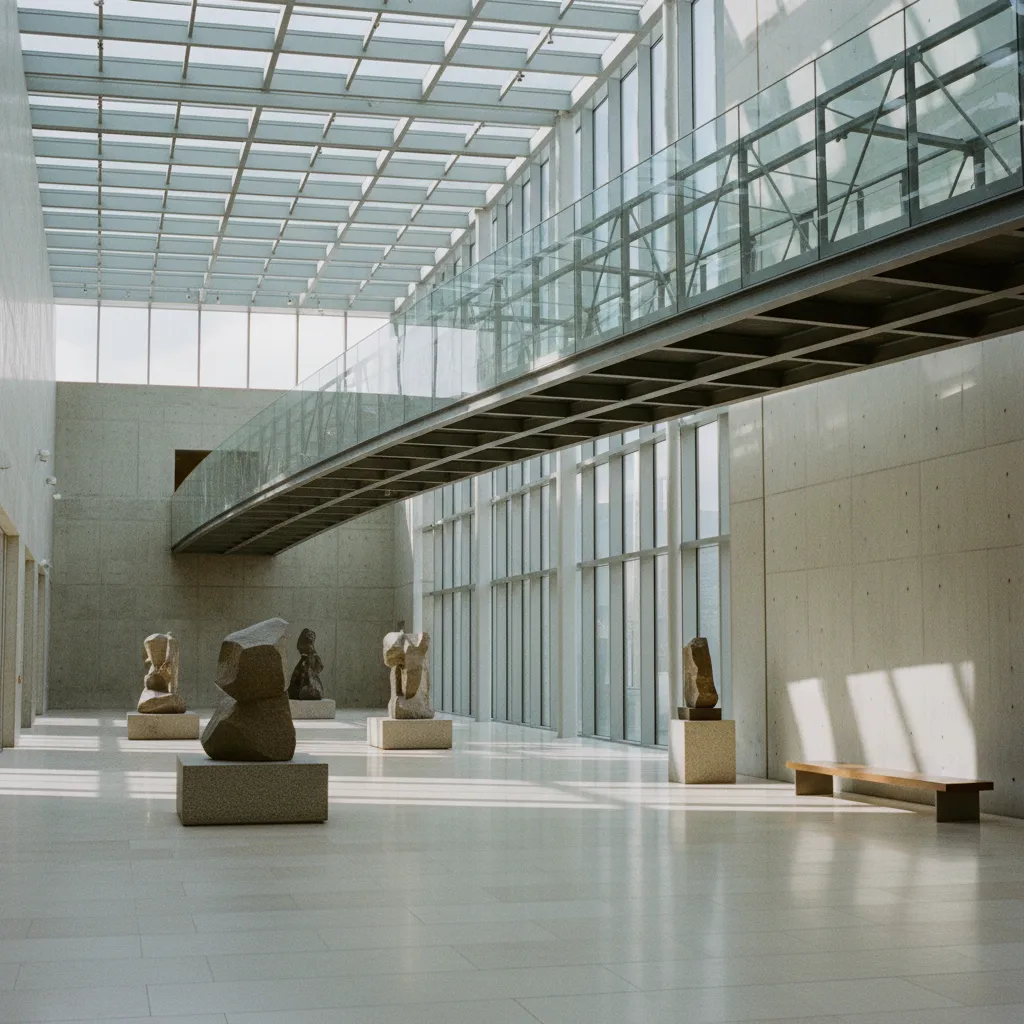
The current San Francisco Public Library main branch opened in 1996, and it is a building made for a wet afternoon. A skylit atrium rises through the center, staircases cross it at angles, and the light stays soft even under heavy cloud. Anyone can walk in without a library card.
Take the elevator to the sixth floor for the San Francisco History Center, where the library keeps historic photographs, maps, city directories and an archive of the city's past. The reading room is open to the public, and there are often small exhibitions in the corridors and on the lower floors. For families, the children's center on the second floor is one of the best free indoor spaces downtown. Keep voices down in the reading rooms and leave food in your bag.
Afternoon Under the Dome: City Hall
Cross the plaza to City Hall, completed in 1915 to a design by Arthur Brown Jr. as a symbol of the city's recovery after the 1906 earthquake and fire. Its dome is often said to be taller than the one on the U.S. Capitol, and the view up from the rotunda floor, with the grand staircase spreading below, is the best indoor architecture in the city. City Hall is a working government building, so you pass through a security screening at the entrance.
Free docent-led tours run on weekdays and cover the rotunda, the light court and the history of the building, including the civil weddings that often take place on the grand staircase. If no tour lines up with your timing, a slow lap of the rotunda and the second-floor balconies on your own is still worth half an hour. Weekend visits are limited because City Hall's public hours follow the working week, so this route works best Monday to Friday.
Who This Route Suits
This is a good day for travelers interested in architecture and history more than blockbuster exhibitions, and for anyone on a budget, since two of the three buildings cost nothing. It also suits a mixed group: one person can stay with the jades and screens at the museum while another heads to the History Center to look up old photographs of a family address or a favorite street. Small children tend to do best with a shorter museum visit followed by the library's children's center. The route suits a weekday most, when City Hall is open and the plaza is busy with office workers rather than empty.
Arriving and Leaving
Civic Center station serves BART and the Muni Metro lines, and its exits come up on Market Street a short walk from the Asian Art Museum's entrance on Larkin Street. The F-line streetcar runs along Market as well. The blocks around the station can be busy and gritty, especially near United Nations Plaza, so walk straight between the station and the buildings and keep your phone and bag close.
Hayes Valley, a few blocks west past Davies Symphony Hall and the opera house, is the closest neighborhood for a warm lunch or coffee, with cafés and restaurants along Hayes Street.
Practical Notes
The Asian Art Museum sells tickets online and at the door, and it offers free admission on the first Sunday of the month. The library and City Hall are free. Bags are inspected at City Hall and large bags are checked at the museum, so a small backpack and a compact umbrella are the easiest kit.
The plaza between the buildings is wide open and catches the wind, and the stone steps at all three buildings get slippery in the rain. Shoes with grip and a hooded jacket make the plaza crossings more comfortable than an umbrella will.
Planning the Day with Karpo
Tell Karpo in the Karpo APP that you want a rainy day in Civic Center, whether it is a weekday or weekend and how long you have, and it can suggest an order for the three buildings, compare it with a museum-only morning, and find a lunch spot in Hayes Valley. Tour times and museum ticketing come from the institutions themselves.
Ask Karpo for more information.
Keep reading
- Stonestown Winter Farmers Market Picker for Student Cooks
 Clement St Winter Farmers Market Picker for Lunar New Year
 Fort Mason Winter Farmers Market Picker for Citrus Bakers