 Stonestown Winter Farmers Market Picker for Student Cooks
Weekend Plans
Planetarium Near Me in Golden Gate Park: Morrison Planetarium Dome
A Golden Gate Park guide to Morrison Planetarium inside the California Academy of Sciences, featuring all-digital dome tickets, astrophysics visualization, and Concourse strolls.
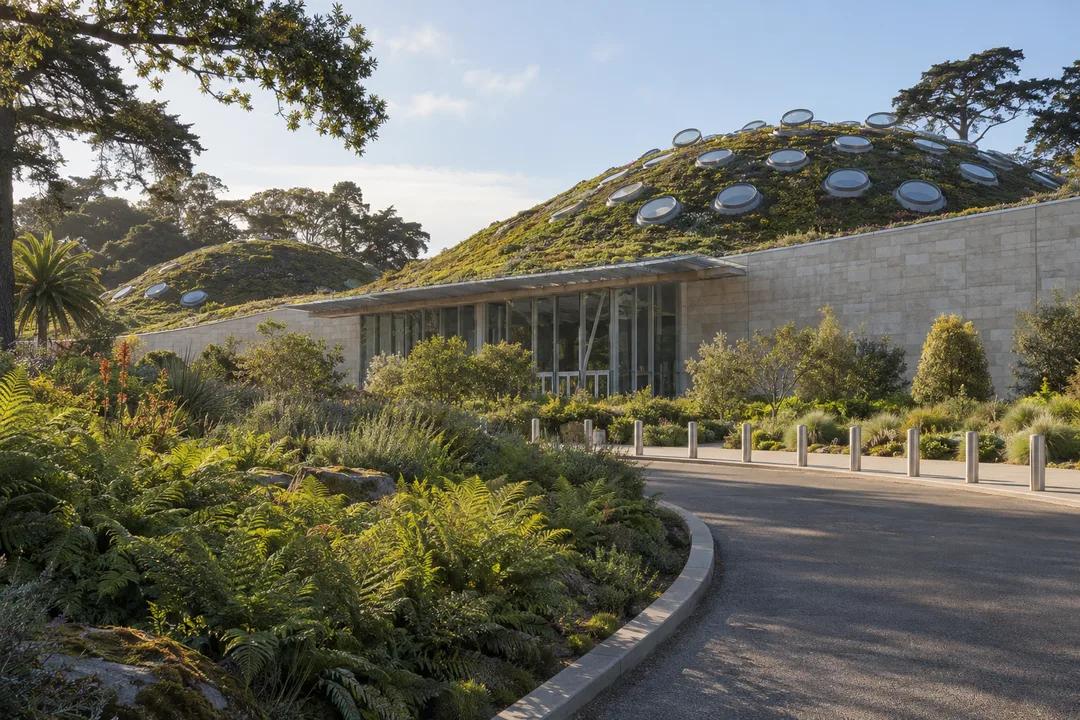
Locating a premier planetarium near me in San Francisco directs skywatchers straight to the heart of Golden Gate Park, where the Morrison Planetarium anchors the California Academy of Sciences. Situated at 55 Music Concourse Drive between the de Young Museum and the Japanese Tea Garden, this world-renowned scientific theater stands as one of the most technologically advanced planetarium facilities on the Pacific Rim. Originally opened in 1952 with an ingenious star projector handcrafted by Academy instrument makers, the planetarium underwent an extraordinary transformation in 2008 within Renzo Piano's landmark green-roofed museum complex, housing a state-of-the-art seventy-five-foot dome that plunges spectators into deep space.
Reaching 55 Music Concourse Drive is straightforward through San Francisco Municipal Railway transit lines. The N Judah light rail train stops along Irving Street at 9th Avenue, offering an easy four-block stroll north across the leafy fairways of Golden Gate Park into the Music Concourse. Crosstown visitors can board the 44 O'Shaughnessy bus, which stops directly in front of the Academy museum entrance, or catch the 5 Fulton bus along the park northern boundary at 8th Avenue. Drivers find convenient subterranean parking beneath the Music Concourse garage accessed via Fulton Street or Lincoln Way, though weekend vehicle stalls fill quickly before noon.
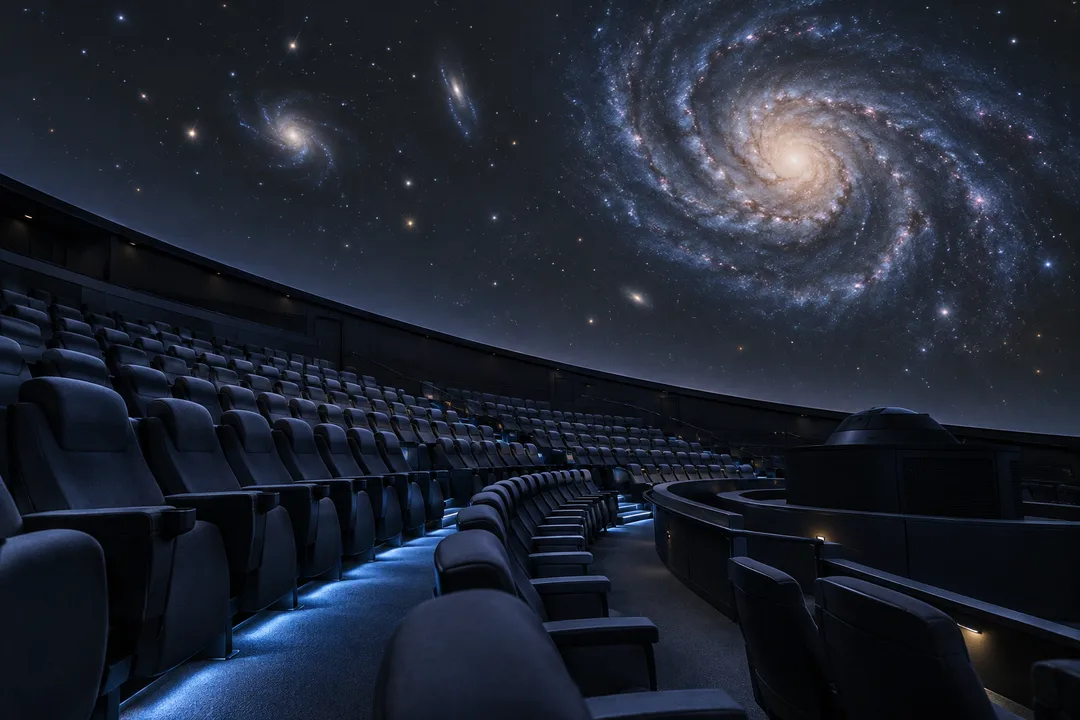
The architectural spectacle of Morrison Planetarium centers on its massive spherical pavilion tilted at a thirty-degree angle. This dramatic orientation mimics the natural tilt of planet Earth on its rotational axis, matching human peripheral vision to produce a boundless cosmic panorama. The theater dome spans twenty-two point nine meters in diameter, wrapped in high-gain perforated aluminum projection surfaces that hide a cutting-edge Sony high-resolution laser display system. Coordinated Meyer Sound multichannel surround arrays pump deep bass frequencies and crisp spatial audio across the auditorium, reproducing gravitational rumbles and planetary atmospheric hums with spine-tingling acoustic realism.
Ticketing for the Morrison Planetarium requires understanding museum admission bundles. General admission to the California Academy of Sciences, which includes one reserved planetarium pass, costs $42.50 for adults, $33.50 for youth ages three to seventeen, and $36.75 for seniors. Academy members and children two and younger enter free. For adult visitors seeking an evening experience, the popular Thursday NightLife series offers admission for $23.25, granting entry to special themed after-hours space shows accompanied by cocktails, guest DJ sets, and twilight access to the indoor rainforest.
Inside the upper hemisphere, the Space Theater screens narrative astronomical journeys that translate dense astrophysical probe observations into dazzling visual epics. Signature shows like Spark: The Universe in Us, narrated by award-winning storytellers, trace the elemental origins of carbon and iron from exploded supernovae into human biology. Another perennial favorite, Passport to the Universe, swoops viewers past orbital space stations, asteroid belts, and luminous nebulae out to the cosmic microwave background radiation. Audiences recline backward in plush contoured seats as orbital telemetry collected by NASA and European Space Agency spacecraft swirls across the overhead hemisphere.
The auditorium interior accommodates two hundred and ninety guests across raked concentric tiers. Because planetarium seating operates on an unreserved basis, arriving at the boarding ramp ten minutes before curtain time grants visitors their choice of prime sweet-spot seats in the upper rows. These elevated central positions provide the most distortion-free sightlines across the dome apex, letting viewers look upward without straining neck muscles. The climate-controlled theater maintains an ambient temperature of sixty-eight degrees Fahrenheit, creating a cozy and restful environment ideal for focused celestial immersion.
Planning your visit around peak operational windows helps avoid midday crowds. The California Academy of Sciences opens Monday through Saturday at 9:30 am and Sunday at 11:00 am, operating until 5:00 pm daily. Morning showings between 10:30 am and 12:00 pm generally offer lighter attendance than crowded weekend afternoon matinees. Upon entering the main museum lobby, guests should immediately scan the digital QR codes displayed at the planetarium kiosk to reserve their preferred showtime, because space theater passes frequently run out by early afternoon on holiday weekends.
Entering the planetarium follows clear visitor guidelines designed to preserve visual darkness and acoustics. Once the airlock doors seal and the lighting dims to complete blackness, ushers enforce a strict no-entry policy to protect audience night vision. Mobile phones, smart watches, and illuminated devices must remain completely dark and silent throughout the show. Large backpacks, open beverage cups, and umbrella strollers must be stowed in the lower level coat room before ascending the theater boarding ramps.
Outside the planetarium sphere, the Academy surrounding exhibits deepen the space science journey. The Kimball Natural History Museum explores solar dynamics, asteroid impact craters, and cosmic evolution through hands-on tactile models. Visitors can touch genuine nickel-iron meteorite fragments discovered in Arizona, examine planetary core samples, and study seismic monitoring charts tied to real-time earthquake sensors. Directly across the indoor concourse, the Steinhart Aquarium and four-story Osher Rainforest glass biosphere showcase terrestrial biodiversity, seamlessly linking celestial physics with Earth thriving ecosystems.
The institutional pedigree of Morrison Planetarium is steeped in northern California intellectual history. Founded in 1952 to replace historic equipment lost during World War II, Academy engineers designed and built their own star projector from scratch in local machine shops, creating a legendary apparatus dubbed the Academy Projector that functioned flawlessly for half a century. Today, under the direction of prominent astrophysicists and digital visualizers, the institution continues pioneering fulldome data science, transforming real-time supercomputer cosmological models into public educational art.
Pairing a planetarium screening with a stroll through Golden Gate Park creates an idyllic San Francisco weekend outing. Step outside into the pedestrianized Music Concourse plaza to admire the historic Spreckels Temple of Music and rows of pollarded London plane trees. A five-minute walk west brings you to the tranquil Japanese Tea Garden, where arched drum bridges cross koi ponds framed by dwarf maples. Alternatively, wander north toward the de Young observation tower for panoramic views stretching across the Golden Gate Strait and Marin Headlands.
A short stroll south onto 9th Avenue leads directly into the vibrant dining district of the Inner Sunset. Visitors can refuel with warm freshly baked sourdough croissants, savory Japanese ramen bowls, or hand-pulled espresso from independent neighborhood roasters along Irving Street. This cozy commercial strip retains an authentic neighborhood pulse, packed with vintage apparel shops, local bookstalls, and outdoor dining parklets where friends gather over hot boba teas to discuss cosmic relativity and deep space discoveries.
Practical arrangements ensure a smooth and worry-free museum outing. The Morrison Planetarium entrance is located inside the Academy at 55 Music Concourse Drive, San Francisco, CA 94118. The institution provides complete ADA accessibility, including wheelchair companion locations in the Space Theater, assistive listening headsets, and accessible elevator connections between all exhibit floors. Locker rentals, clean restroom facilities, and casual family dining cafes operate along the lower concourse.
Planning Your Golden Gate Park Planetarium Outing
The Morrison Planetarium stands as a premier beacon of scientific wonder in the Bay Area, uniting cutting-edge digital visualization with deep institutional history. Whether you are treating your family to a breathtaking journey across Saturn rings or planning a romantic Thursday evening under simulated starlight, the experience captivates travelers of every age. Let the Karpo APP guide your weekend adventures, map out scenic Golden Gate Park walking routes, and discover the best nearby dining spots.
Ask Karpo for more information.
Keep reading
- Stonestown Winter Farmers Market Picker for Student Cooks
 Clement St Winter Farmers Market Picker for Lunar New Year
 Fort Mason Winter Farmers Market Picker for Citrus Bakers