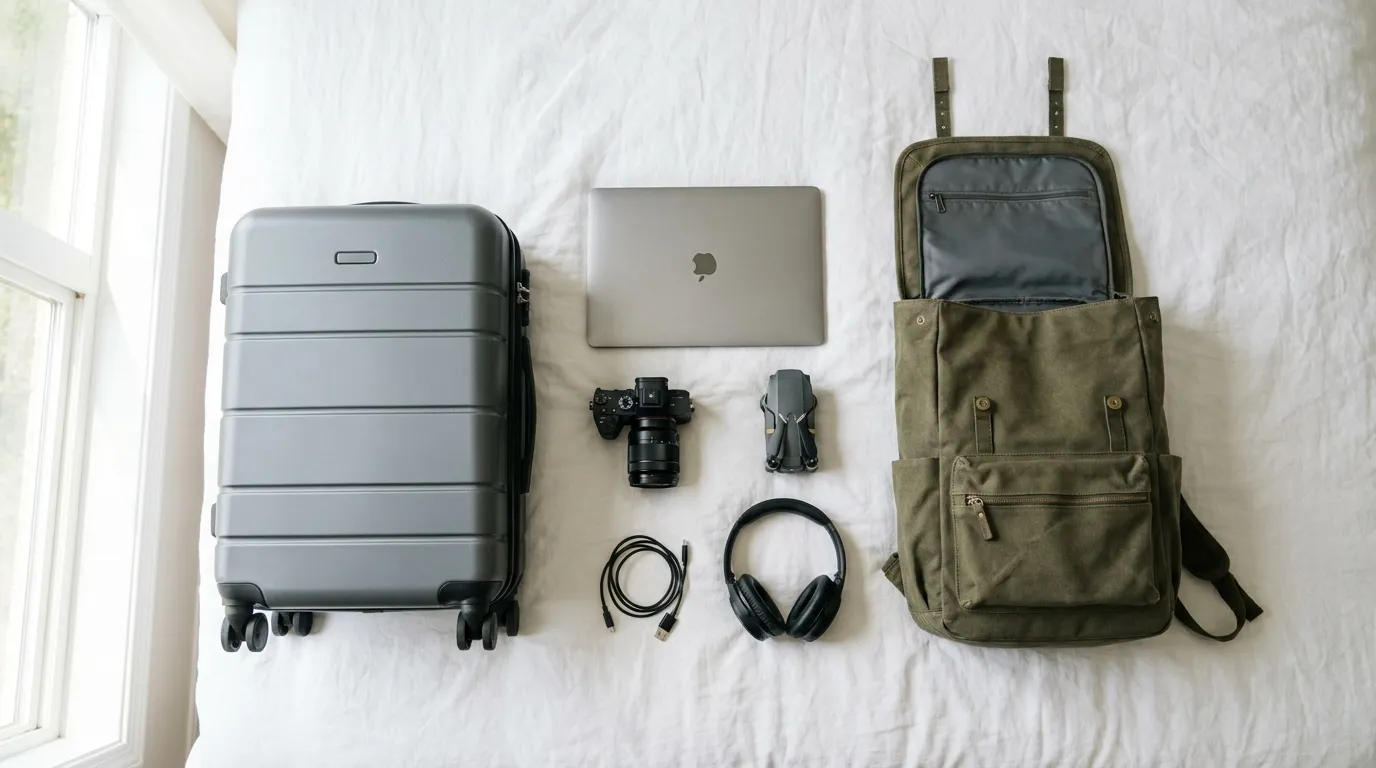
Every SFO departure gate hosts the same quiet sorting problem: a traveler with a laptop, a tablet, a camera, headphones, two power banks and a drone, deciding what goes where. In a year when a mid-flight laptop fire made national news and regulators have counted dozens of battery incidents on US flights, the cabin-or-checked question has a sharper edge than it used to — and the rules, once you see the logic, sort every device in seconds.
Karpo can turn your gear pile into a packing plan — what must ride with you, what can go below, and what your airline currently restricts. Text Karpo your trip and pack once, correctly.

The sorting rule
One principle decides almost everything: loose energy stays with you. Spare batteries, power banks, and any lithium cell not installed in a device are cabin-only, no exceptions — in the hold, a failing battery has no one to notice it. Devices with installed batteries (laptop, tablet, camera, e-reader) are allowed in checked bags under the rules, but the official preference and every professional's practice is to carry them: if checked, they must be completely powered off, not asleep, and packed so they can't switch on or get crushed. The cabin is where batteries belong; the hold is for things that can't combust ambitiously.
The corollary surprises people: it is the spare that is regulated hardest, not the device. Your laptop is welcome in the cabin without a thought; the identical battery outside the laptop is treated as hazardous cargo.
Device by device
Laptop and tablet: carry on, both for the battery logic and because checked-bag turbulence and theft are real. Camera bodies: carry on; their spare batteries are cabin-only by rule, in original packaging or with taped terminals so they can't short against keys and coins. Drones: the aircraft itself can technically be checked, but its batteries cannot — and since a drone without batteries is a paperweight, the whole kit rides with you; most drone batteries fall under 100 Wh, but the big cinematic rigs need a label check. Headphones, wearables, e-readers: cabin, trivially. Power tools with lithium packs — the remodel-project special — follow the same split: tool can check, battery can't.
Smart luggage gets its own sentence: bags with built-in battery packs must have the battery removed if the bag is checked, and non-removable-battery bags have been refused outright by carriers. If your suitcase charges your phone, know how to eject its battery before you reach the counter.
Packing craft
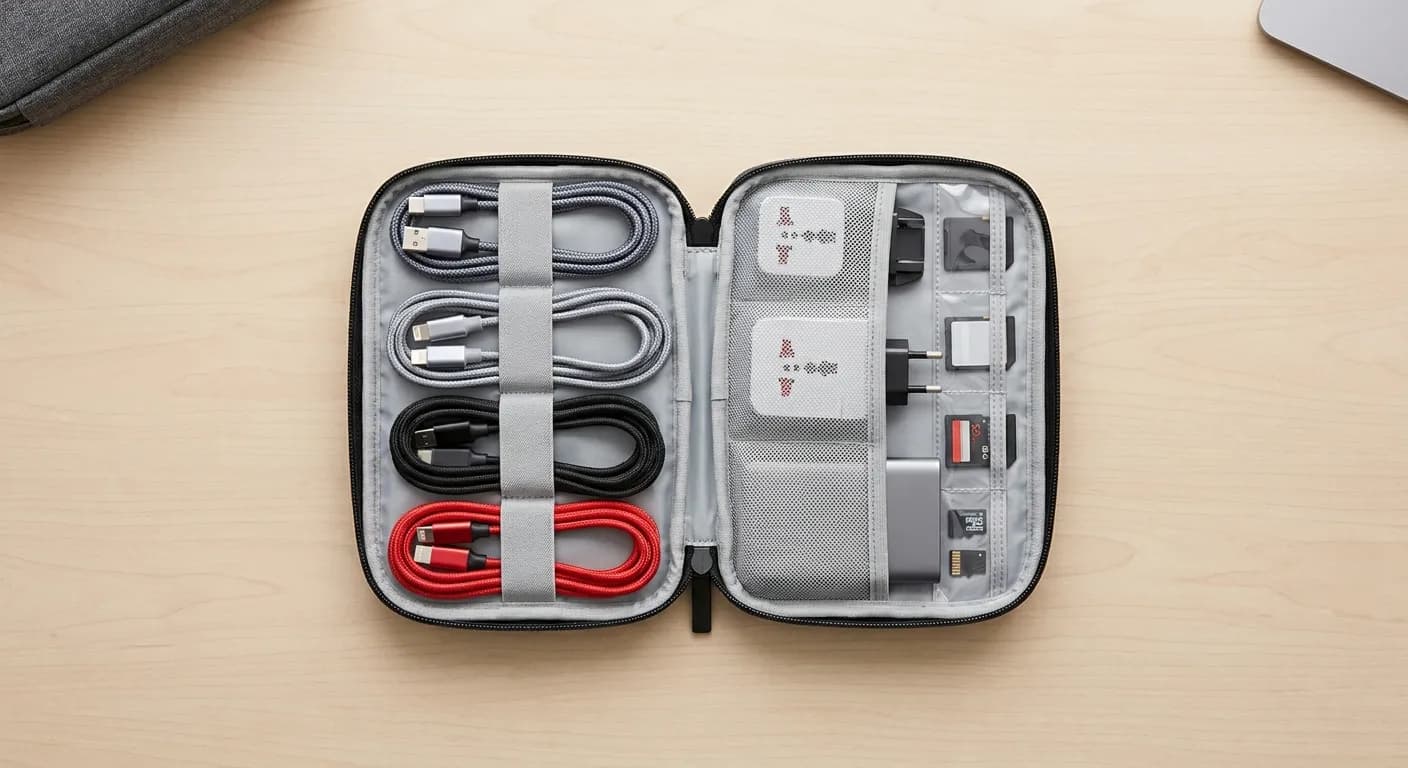
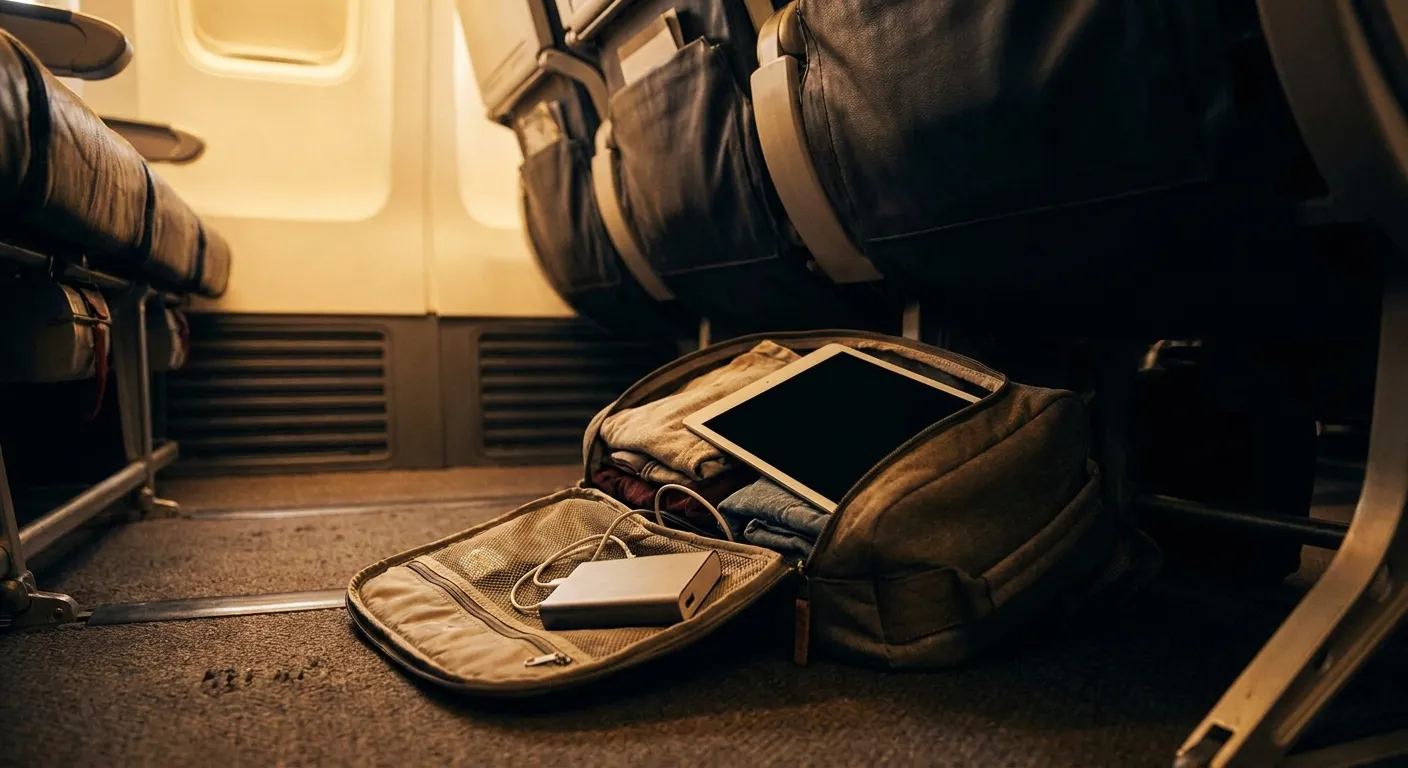
Beyond legality, there is technique. Terminals are the enemy: loose batteries in a pocket with keys and coins is how packing mistakes become incident reports, so use the plastic caps, a battery case, or a strip of tape. Keep every battery where you could reach it in flight — under-seat bag, not the overhead — because a device you can touch is a device whose temperature you know. Pad the corners: batteries dislike crush and puncture more than anything, and a hard-shell pouch costs less than any of its contents. And run the pre-trip audit: anything swollen, dented or mysterious stays in San Francisco, ideally at an e-waste drop rather than a junk drawer.
The SFO reality check
San Francisco travelers carry more battery capacity per person than probably any airport population on Earth, which is why the 2026 tightening lands here first and hardest. Several airlines — international carriers especially — now restrict charging power banks in flight or require them kept in sight rather than binned overhead, and policies keep moving. The habit that survives every rule change: batteries visible, devices reachable, spares labeled, airline's battery page skimmed the night before. Thirty seconds of reading beats a gate-side repack every time.
Practical notes
Cabin-only: power banks, spare lithium batteries, e-cigarettes and vapes, smart-luggage batteries. Cabin-preferred, checked-permitted if fully off and protected: laptops, tablets, cameras, devices with installed batteries. Batteries over 100 Wh need airline approval; over 160 Wh don't fly on passenger aircraft. Protect terminals on all spares. Airline policies on in-flight battery use vary and tightened during 2026 — confirm your carrier's current rules before flying out of SFO; federal guidance is on the FAA PackSafe pages.
Tags: #karpo #sanfrancisco #sfo #packingtips #carryon #checkedbag #electronics #travelsafety #powerbank #drone #travel2026
Sources consulted: faa.gov · tsa.gov · flysfo.com
All trademarks are the property of their respective owners.
Ask Karpo first
Packing a camera kit, a drone and three power banks for one trip? Ask Karpo to sort the pile into cabin and checked before you zip anything — and to flag what your airline changed since your last flight.