 Bernal Heights Pottery Glaze Supply Browsing Route: Walk
Hidden Gems & Odd Finds
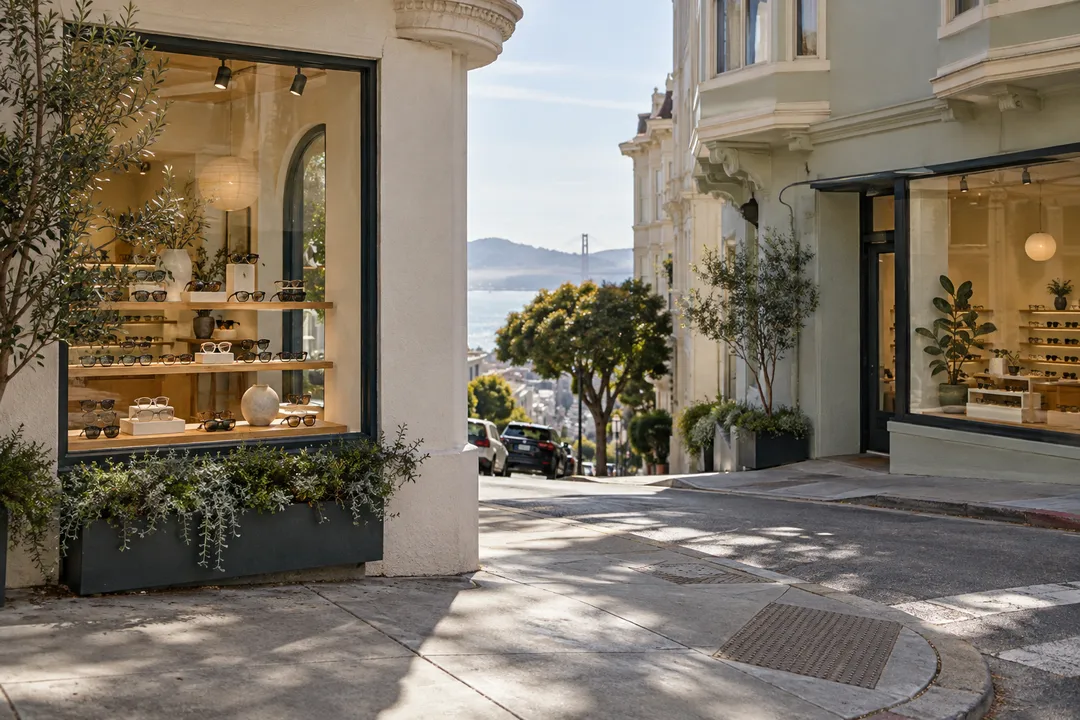
SF Optical Boutique: Plan a 2-Stop Fitting Route
Plan an SF optical boutique trip with two purposeful stops, a clear fitting goal, and room between visits to compare what you learned before buying.
Plan two San Francisco optical boutique visits around different questions, rather than trying to browse the whole city in one afternoon. Give the Karpo APP your starting neighborhood, the kind of frames you want, and the point where you need to finish. Use the resulting local options to choose a first fitting and a purposeful second comparison. Leave time between them to decide what you learned before making the next request or committing to a purchase.
Decide what the afternoon needs to achieve
Choose a single main outcome. You might want to discover a frame shape, compare two complete proposals, or find a shop where you feel comfortable arranging a fitting. These are different afternoons. If you try to do all three while also arranging an eye examination, the route can become a series of unrelated obligations. Give the search a clear purpose so that each stop has a job and you know when you have made enough progress.
Write an endpoint as well as a starting point. Perhaps you need to be home afterward, meet someone in another neighborhood, or return to work. You can explain those constraints without assigning exact journey times in advance. A route brief that respects the finish is easier to use than one built entirely around the first attractive store. It also helps you decide which candidate belongs on another day's list instead of this particular trip.
Ask for options inside a sensible search area
A useful request could be: “Help me find optical boutiques in San Francisco for a two-stop frame-shopping afternoon. Start around Hayes Valley, keep the second stop practical, and help me compare a subtle frame with something more expressive.” Replace the location and styles with your own. The purpose of the request is to surface local options and make the comparison clearer, not to assume that a shop holds a particular model for you.
Read the reasons attached to each suggestion before arranging the order. If one option is far outside the area you intended, refine the conversation with a tighter boundary. You can ask for a smaller set rather than adding more stops. Keep the final journey in your own route planner or the travel information you use for the day. An editorial shopping sequence is not a live traffic forecast or a guarantee about transit connections.

Give the first stop a discovery question
Make the first visit answer something concrete: which silhouette you like, whether your usual color preference still appeals, or what kind of fitting arrangement suits you. Tell the person helping you what you are trying to learn. This gives the browsing a direction without requiring an immediate purchase. You can leave with a useful observation even if none of the display frames becomes the pair you eventually choose.
Ask before taking pictures and record details about the specific frames you consider. A short description is enough to preserve the comparison: dark rounded front, translucent rectangle, or a slimmer metal shape. If a frame feels uncomfortable, note your experience and discuss it with the fitting professional. Do not turn a brief try-on into your own technical diagnosis. Your observation should help the next conversation, while the assessment of the pair stays with the person responsible for it.
Put a decision pause between the visits
After the first stop, make time for a pause somewhere that suits the day. You do not need a named cafe reservation to build reflection into the route. Look at your notes and write one sentence about what worked, then another about what remains unresolved. If the first shop already answered the important question, the second visit can become optional. The route is there to support a decision, not to force you to complete an itinerary.
If your preferences changed, revise the Karpo brief before continuing. For example: “I liked the smaller shape but want a less prominent color. Help me narrow the remaining local options around that preference.” This makes the second search responsive to something you actually learned. It avoids the common shopping loop in which every new window resets the task and you finish with more impressions but no clearer reason to choose.
Make the second stop test one alternative
Pick an alternative that is meaningfully different. It could be a quieter interpretation of the same shape, a different service arrangement, or another complete proposal for the purchase you intend. Give the second shop the same core requirements when comparing costs. If the proposed frame or lenses differ, record that difference before weighing the totals. You want a comparison that you can explain, rather than a competition between two numbers describing different orders.
Skip a third stop added only because you have not bought anything yet. Learning that you need a different style or a separate examination is already a useful outcome. A tired final browse can encourage a decision based on the desire to finish the trip. Keep the extra candidate for another day when it answers a specific remaining question. That preserves the value of the first two visits and gives your notes a purpose afterward.
Arrange services with the shops you select
If a visit requires an appointment, contact the business and use its own process to arrange the service. An eye examination may need its own appointment and preparation, separate from looking at frames. Follow the instructions of the practice providing it. The plan in Karpo is a way to organize local discovery and preferences, while each shop controls its appointments, its opening arrangements, and the work it agrees to carry out.
When a frame becomes a serious contender, ask for the applicable purchase terms and a complete proposal. Keep collection and follow-up arrangements alongside the price in your own notes. Those practical details may affect which shop you choose, particularly if returning there would require a separate journey. It is reasonable to value an easy follow-up as well as an appealing frame, as long as you understand the terms that apply to the actual order.
Practical Notes for keeping the route flexible
Before leaving, pack your usual glasses and any information requested for the services you have arranged. Decide how much of the afternoon you want to spend shopping, including the pause between stores. Use the travel information appropriate to your chosen day and route. Avoid filling every gap with another destination. A little unassigned time gives you room to think, ask a question, or finish early when the task is already resolved.
At the end, choose one next step: proceed with a clear proposal, arrange a focused return visit, or update the search with what you learned. Keep the two shops' information distinct so the details of one order do not drift into the other. In the Karpo APP, a follow-up request works best when it names the remaining decision. A successful two-stop route leaves you with fewer unanswered questions and a realistic next action, whether or not you buy that afternoon.
Ask Karpo for more information.
Keep reading
- Bernal Heights Pottery Glaze Supply Browsing Route: Walk
 Potrero Hill Pottery Glaze Supply Browsing Route: Walk
 Mission Pottery Glaze Supply Browsing Route: Studio Walk