 Bernal Heights Pottery Glaze Supply Browsing Route: Walk
Hidden Gems & Odd Finds

SF Optical Boutique: 4 Checks for Commuter Glasses
Find an SF optical boutique for commuter glasses by describing your journey, comparing practical needs, and taking four questions to a focused fitting.
Build your San Francisco optical boutique search around the journey your glasses will make with you. A walk to transit, a crowded bag, and an afternoon at a desk create a more useful shopping brief than “a modern pair.” Tell the Karpo APP which part of the city fits your routine and what frustrates you about your current glasses. Then take four practical questions to the fitting: comfort, carrying, changing settings, and getting back for adjustments.
Describe an ordinary working day
Picture a normal morning rather than a special occasion. You leave home with a bag, walk a few blocks, board transit, and arrive at work. If your glasses slip during the walk or feel awkward with the headphones you use, put that experience into the request. A shop recommendation becomes easier to assess when it relates to a task you recognize. You can explain that task without entering medical information into a shopping conversation.
Include the return trip as well. Some people change from contact lenses to glasses before leaving the office, while others want one pair for the entire day. State your own routine instead of choosing a category because it sounds technical. For clinical questions about your vision or your prescription, speak with the appropriate qualified professional. The shopping brief concerns the circumstances in which you want to use the finished pair.
First check: comfort through the whole journey
Ask Karpo for optical boutiques in San Francisco that fit your area and the kind of fitting you want. A sample request could be: “I want a simple everyday frame for my commute. My current glasses press when I wear headphones. Help me find a few local places to start, near my home or office.” Specify one starting area so the response is easier to turn into a visit.
At the counter, explain the discomfort and bring the items that affect your normal use when practical. The professional handling the fitting can help you assess the actual frame. Ask before trying it with a hat or headphones, and describe what you notice rather than guessing at the cause. A frame that looks unobtrusive in the mirror still deserves a careful fitting conversation if it will be part of a long working day.
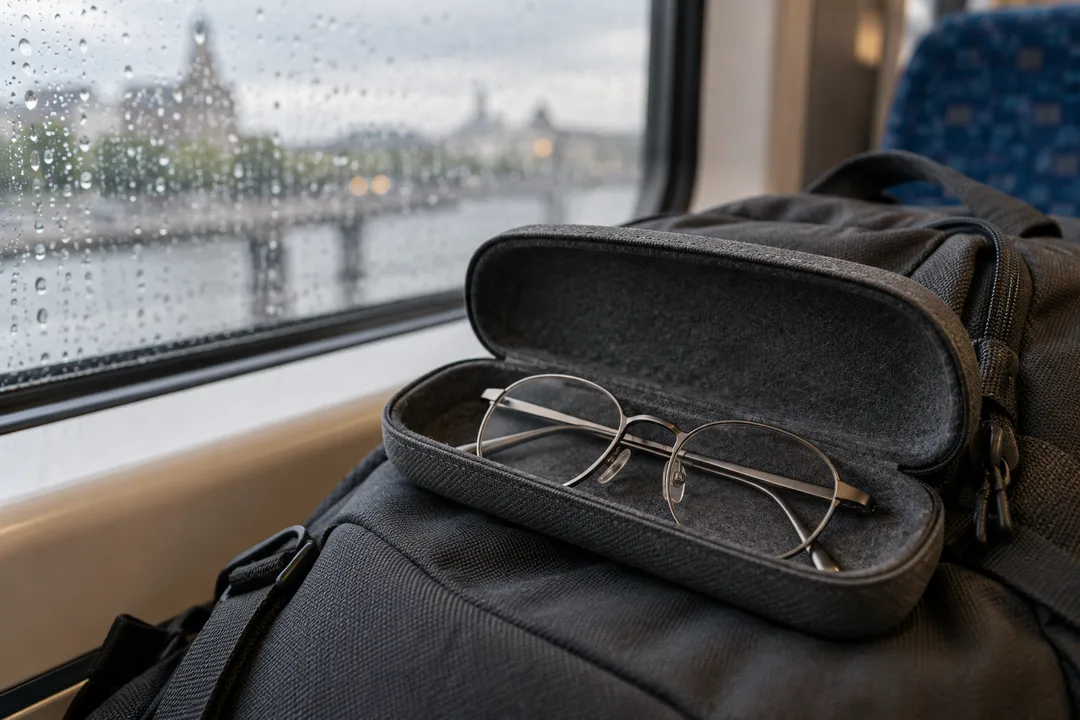
Second check: where the glasses go in your bag
Think about the moments when the pair is off your face. Perhaps you change glasses at your desk, put sunglasses away after the walk, or carry a spare for the journey home. Decide where the case will live before shopping. That small decision helps you explain whether portability, an easy routine, or a particular style of case matters to the purchase. It also keeps accessories connected to a real use rather than an attractive display.
If you like a frame but dislike the carrying arrangement, ask the shop about suitable options for that specific pair. Avoid choosing a case only from its appearance. You want the glasses and the case to work together in the bag you actually carry. This is a useful comparison to make in person, especially when a bulky object competes with the things already in your daily backpack or small shoulder bag.
Third check: transitions between your settings
Write down where you expect to use the pair: outdoors on the way in, under workplace lighting, and during the return trip. Explain those settings to the practitioner or optician responsible for the order. Ask them to describe the relevant lens choices for your use. The article does not choose a lens technology for you, and a generic commuter label does not settle which optical setup is appropriate.
If you are considering separate everyday glasses and sunglasses, keep the two decisions visible in the proposal. Compare what you would carry, how you would change pairs, and what each item contributes to the routine. A single elegant solution is not automatically better than two simple ones, or the reverse. Your task is to understand the arrangement being offered and decide whether it fits the way you travel and work.
Fourth check: returning for help after purchase
Location matters beyond the first visit. A boutique near your regular route may be easier to revisit than one that requires an entirely separate trip. In your Karpo request, explain whether home, work, or a familiar transfer point is the useful anchor. Ask for fewer options if the initial search spreads across too many neighborhoods. The best starting area for this task is the one that fits the routine you have described.
Ask the chosen shop about its adjustment and follow-up arrangements before placing an order. Write down the terms that apply to your purchase, along with any collection arrangements. You are not assuming that every boutique offers the same service or that every adjustment is included. A clear answer helps you weigh convenience against a frame you particularly like at a less convenient location. It is part of the purchase comparison, not an afterthought.
Choose a shortlist that tests a real difference
Keep one candidate because it seems relevant to your style and another because its location fits your journey. If a third option adds nothing different, drop it. Then ask Karpo to refine the remaining local search around the priority you have chosen. This is more useful than repeatedly requesting the highest-rated optical shop without explaining what makes the commute awkward. You are using a preference to reduce the list, rather than collecting rankings.
Skip a rushed fitting on a day when you cannot explain or test your main concern. A short browsing visit can help you discover shapes you like, but it need not end in an order. If you have only enough time to look, treat the result as new information for the brief. You can return with a clearer purpose instead of committing to a frame because you feel the trip should produce a purchase.
Practical Notes before leaving home
Take your current glasses, the bag or accessory that affects your comfort, and the paperwork requested for any arranged service. Keep four lines in your notes, one for each check, and add what you learn during the visit. Leave exact journey times to the route information you use for that trip. A suggested neighborhood or a shopping sequence alone does not establish a live transit connection or an appointment with the boutique.
Finish by choosing the next useful action: arrange a fitting, ask for a complete proposal, or revise your preferences after browsing. The Karpo APP supports the conversation about where to begin and how to narrow local options. The shop supplies its service terms and handles the order, while the fitting professional addresses the actual pair. A commuter search succeeds when that next action feels clear and the glasses are being considered in the context of an ordinary day.
Ask Karpo for more information.
Keep reading
- Bernal Heights Pottery Glaze Supply Browsing Route: Walk
 Potrero Hill Pottery Glaze Supply Browsing Route: Walk
 Mission Pottery Glaze Supply Browsing Route: Studio Walk