 Bernal Heights Pottery Glaze Supply Browsing Route: Walk
Hidden Gems & Odd Finds
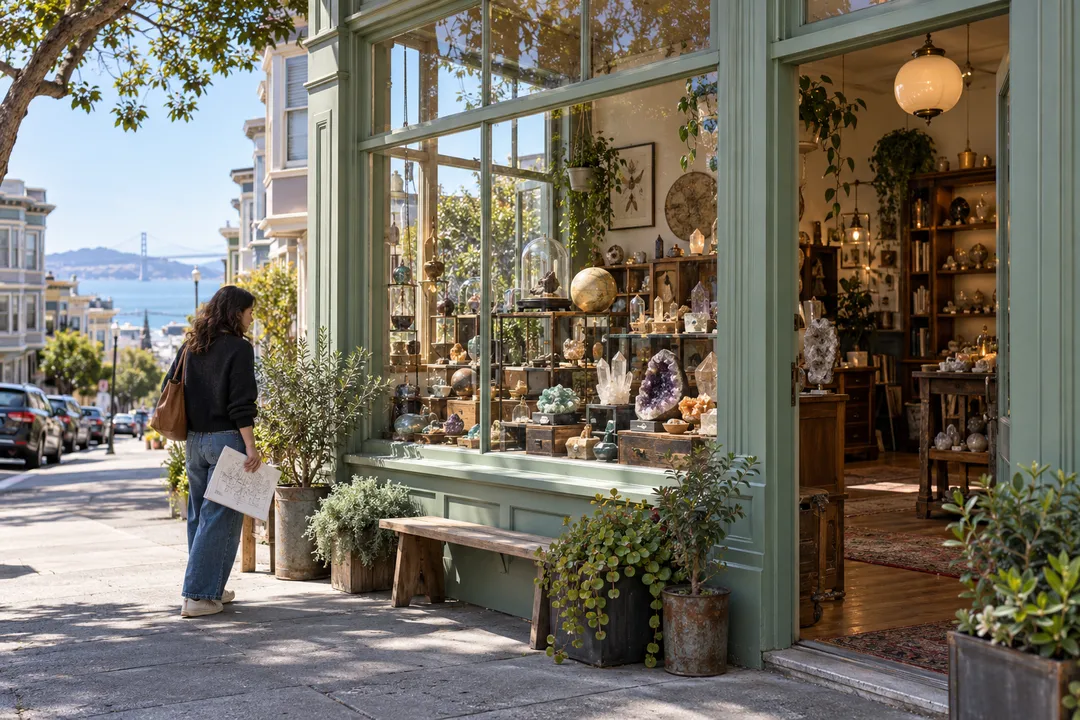
SF Oddities Shop: Map A Curious Saturday Route
Plan a Saturday oddities shop route in San Francisco with one anchor visit, an optional detour and a relaxed finish that still works without a purchase.
A San Francisco oddities shop route works better when the return journey is decided before the first browse. Give Saturday one anchor stop, a movable second stop and a finish you would enjoy even without buying anything. Use the Karpo APP to describe that shape, your starting neighborhood and the kinds of objects you want to see. The result to ask for is a short, explainable itinerary, with the reason for each detour visible beside the suggestion.
Choose the ending before drawing the loop
Begin with the last obligation on your calendar. Dinner with a friend, a train home and an afternoon entirely to yourself produce different routes. Write down when you need to be at that endpoint, then work backward through travel and browsing. A shopping afternoon should not borrow its return time from the final few minutes inside a store. For this exercise, the deadline is yours to set, rather than a prediction about how quickly a business serves visitors.
Next choose what would make the outing worthwhile without a purchase. Perhaps you want to learn the difference between a cast and an original, notice display methods or find a material you have never considered collecting. That intention keeps an empty shopping bag from feeling like a failed trip. It also gives the assistant a basis for choosing between a broad antique browse and a more specialized curiosity search.
Write a request with geographic boundaries
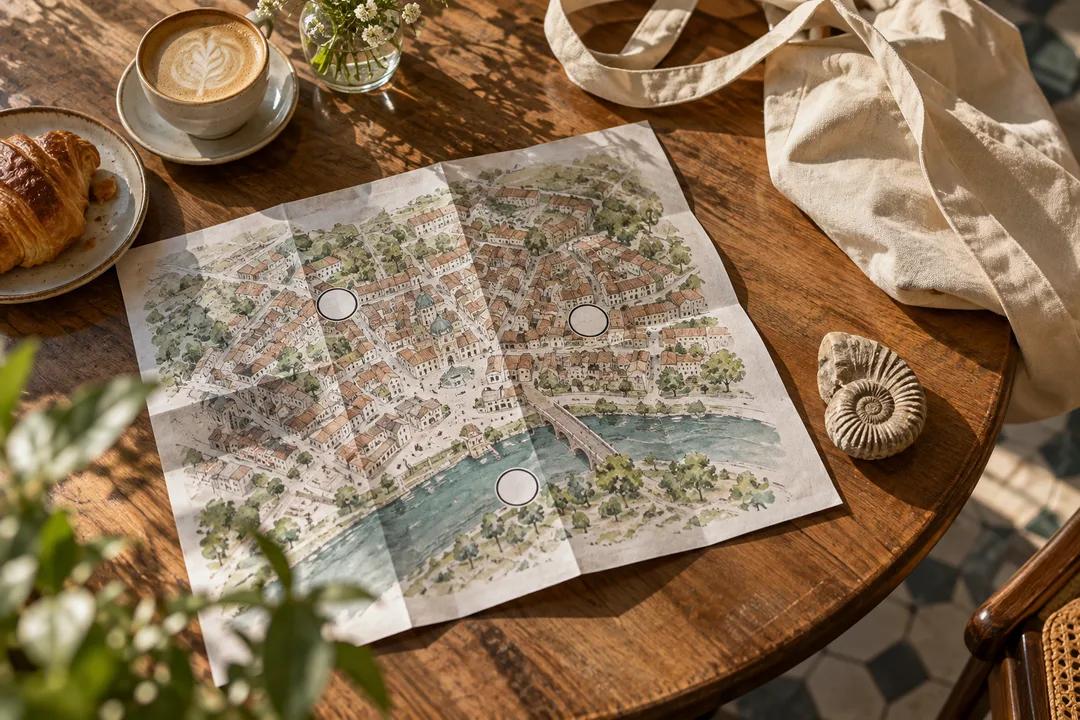
Try this conversational brief: “Help me plan a Saturday oddities shop browse in San Francisco. Start near my accommodation, finish by my evening meeting and keep the stops in one connected area. I prefer mechanical curiosities and small decorative casts. Give me a main visit and an optional extension.” Replace the personal locations before sending it. Neighborhood names are useful here, but your precise home address is unnecessary for an early shortlist.
Ask for the explanation behind the grouping. Two suggestions can look close on a small map while requiring a route you would rather avoid. State your own tolerance for hills, transfers and time on foot, and request alternatives when those conditions are not supported by the available details. A recommendation can help organize a decision. It does not establish the condition of a pavement or the accessibility of an entrance.
Make one stop earn its place
Read the proposed anchor as if you could visit only that business. Does its described selection answer your interest in mechanisms, specimens, unusual design or antiques? Is the suggestion supported by an identifiable business page? A striking name is a weak reason to cross the city. Favor the lead with a clear connection to your collecting interest, even when another recommendation sounds more dramatic in a paragraph.
The second stop has a different job. It should add something absent from the anchor, such as a contrasting material or a quieter type of browsing. If it merely repeats the same appeal, remove it and keep the time for looking carefully. This is where a compact route becomes more enjoyable than a directory. Each addition needs to improve the afternoon enough to justify the movement it introduces.
Keep route order separate from enthusiasm
Rank the candidates by interest first, then arrange the actual journey. The shop you most want to see does not automatically belong at the end. A fixed appointment, a supported access restriction or your own return deadline may control the sequence. Ask Karpo to explain those ordering choices in ordinary language. A route that comes with its reasoning is easier to shorten when the first visit lasts longer than expected.
Keep estimated travel separate from time you deliberately reserve for browsing. You can allocate half an hour to a display without claiming that every visitor needs half an hour. Likewise, the presence of a transit option does not tell you how quickly you will reach it while carrying a package. Treat the first itinerary as a proposal you can edit, and make your most demanding personal constraint the controlling one.
Leave space for the object that slows you down
An interesting object changes the pace. Reading a label, asking permission to handle a piece and discussing its condition can absorb the time intended for the optional stop. Let that happen if it serves the reason you came. Before leaving the counter, request the item's dimensions and packaging details from the seller. Those answers determine whether continuing the route is comfortable, especially when the purchase needs to stay upright.
Agree on a departure signal if you are browsing with someone else. A simple “one more display, then outside” avoids negotiating the entire afternoon in front of a counter. Companions can want different things from the same visit, and neither interest needs to consume every remaining stop. After the anchor, take a short pause together and decide whether the extension still offers enough value to keep.
Change the route without rebuilding the day
When a candidate has insufficient visit information, take it out of the itinerary and retain the finish. This produces a usable shorter day immediately. You can then ask for another option within the same geographic boundary, instead of widening the search across San Francisco. The boundary matters more than preserving an arbitrary number of stops. One satisfying browse and a relaxed ending can be the full plan.
Weather or fatigue can also make the return leg the most attractive next step. Tell Karpo which condition changed and ask to remove the optional detour. Keep the explanation narrow: “I want less outdoor walking now” is easier to act on than restarting with “find something better.” Your original interest, arrival point and endpoint remain useful context for the next reply.
Practical Notes for a Saturday browse
Before departure, save a compact itinerary with the anchor, the optional visit and the finish written separately. Include the business page attached to each recommendation and any actual booking instructions supplied there. Keep photographs of objects distinct from the itinerary so a beautiful display image does not become mistaken evidence of a particular item being available. The planning goal is an intelligible trip, with product availability left to the seller's actual information.
At the end, record one detail you enjoyed and one route decision you would change. You might prefer fewer transfers, more time at a single display or a different balance between looking and buying. Use that specific feedback in your next Karpo conversation. A successful Saturday can leave you with better collecting vocabulary and a route you would happily repeat, whether the object you imagined ever appeared or not.
Ask Karpo for more information.
Keep reading
- Bernal Heights Pottery Glaze Supply Browsing Route: Walk
 Potrero Hill Pottery Glaze Supply Browsing Route: Walk
 Mission Pottery Glaze Supply Browsing Route: Studio Walk