 Bernal Heights Pottery Glaze Supply Browsing Route: Walk
Hidden Gems & Odd Finds
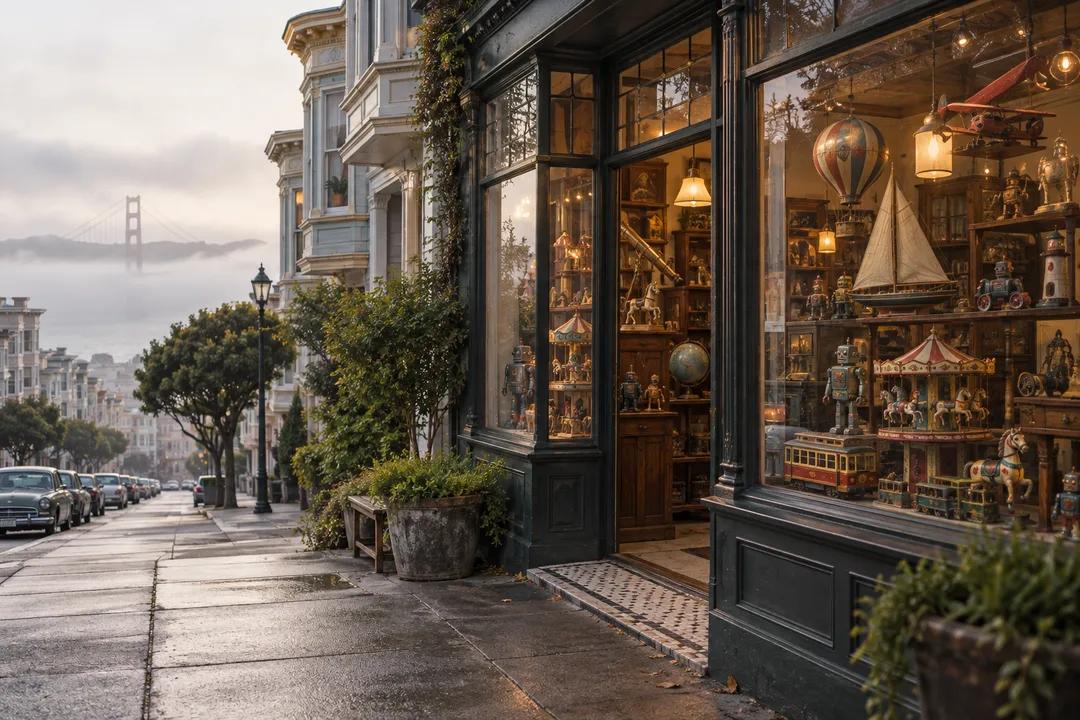
SF Oddities Shop: Plan One Neighborhood Without Rushing
Build an SF oddities shop outing around one neighborhood, your object interests and a clear finish, then refine a compact shortlist in Karpo.
Build an SF oddities shop outing around one neighborhood, one collecting interest and a place to finish. That gives a browseable afternoon a clear shape without filling it with distant stops. Tell the Karpo APP what draws you to unusual objects, where you are starting and how much walking feels comfortable. Ask for a compact shortlist and an explanation of the route order. This page helps you turn those preferences into a practical request, compare the suggestions and leave room for the object or street that deserves a little more attention.

Pick the experience before drawing the route
A curiosity-shopping afternoon can be about a gift, a display object, a collection or simply looking closely at unfamiliar things. Choose the purpose that matters today. If you want inspiration for a shelf, the shape and scale of objects may matter more than their historical age. If you are searching for a particular material, say that first. Broad searches for strange shops can include places that are visually interesting yet irrelevant to the purchase or browsing experience you actually have in mind.
Write down two interests that belong together. Small mechanical toys and desk objects make one coherent brief; mineral specimens and geological displays make another. You do not need to combine every unusual category into the same afternoon. Keep a secondary interest available for an optional stop, but let the main one decide which recommendations deserve attention. This approach also makes it easier to explain why a suggestion missed the mark. “More objects to examine, fewer general souvenirs” is a useful refinement you can send immediately.
Let the starting point do some of the work
Use the place you will actually depart from rather than a vague reference to central San Francisco. That may be your accommodation, a transit arrival point or the end of another activity. Supply a neighborhood or intersection you are comfortable sharing. An accurate starting area helps shape recommendations around your day. It does not give the app permission to assume your exact location, and you should not need to provide a private home address to explain the kind of outing you want.
Add the endpoint in the same message. If dinner, a friend or a return journey matters, the route should support that commitment. A pleasant sequence on a map is less useful if its last stop takes you away from where you need to be. Tell Karpo whether the endpoint is fixed or flexible, and distinguish a personal deadline from a business's hours. Those are different inputs. Your available afternoon does not establish a visiting window for any shop in the shortlist.
Define comfortable distance in your own terms
Give a walking preference that reflects your pace, mobility and company. “Keep outdoor walking short and avoid unnecessary backtracking” communicates more than “nearby” alone. If slopes or stairs affect the plan, include that information rather than assuming that a short distance means an easy connection. Ask for the proposed order to be explained, then decide whether it sounds comfortable for you. This article does not claim a particular street is level, accessible or covered. Those details belong to the specific route you evaluate.
A trip with a child, a visitor carrying luggage or a friend who wants frequent breaks needs a different rhythm from solo browsing. Describe the people and constraints that affect the route without turning them into an invented account of a shop's facilities. Request fewer stops when that will improve the outing. You can ask for a transit-linked alternative if appropriate, but keep transport choices separate from a guarantee of service or travel time. Planning estimates should leave space for what happens during the day.
Send a neighborhood-first shopping brief
Try this request: “Help me plan a compact SF oddities shop afternoon from my starting neighborhood. I like small mechanical objects and unusual decorative pieces, prefer one main shopping stop and want to finish near my evening plans. Keep walking comfortable and explain any tradeoff between relevance and distance.” Replace the starting point and endpoint with your own. Add a budget only if buying is part of the goal. The request asks Karpo to support discovery and planning without assuming it knows a shop's live inventory.
The first answer gives you something to refine. Ask which recommendation best matches the object category and which offers the simplest outing from your starting area. Those might be different places. Decide which quality matters more and say so. If the list includes a museum when you want a retail shop, request that distinction explicitly. If you mainly want to browse rather than purchase, explain that too. Small corrections are more helpful than repeatedly asking for a completely new list without saying what was wrong.
Compare the shortlist on a few real questions
For each candidate, identify the advertised category, the stated visiting arrangement and the reason it belongs in the route. Keep a link to the source behind any factual description you rely on. Separate a public shop from an appointment-based showroom or an online seller. An attractive recommendation is not evidence that every kind of visit is possible. When there is no clear match, shrink the list rather than filling a route with loosely related destinations just to make the afternoon appear complete.
Skip numerical ratings you cannot explain. A candidate with an excellent visual match and a less convenient location is not automatically worse than a nearby general gift store. Describe the tradeoff in ordinary language and choose deliberately. Likewise, missing information should remain missing in the comparison. A planning conversation should not turn an unanswered question about materials, services or access into a confident claim. You can still make a useful shortlist from a few well-described candidates without pretending it is exhaustive.
Give the neighborhood some breathing room
Keep a nearby break or an outdoor stroll as an optional part of the outing. Ask for it after the main shopping stop is chosen, so it supports the route rather than pulling the afternoon in another direction. If you spend longer browsing, remove the extra without losing the purpose of the day. A plan with one satisfying shop and time to enjoy the area can be more successful than a chain of stops you leave before you have looked closely.
If you purchase something, reconsider the next segment around the packed object. A bulky box or delicate piece can make a long walk less appealing. Ask the seller about handling and packaging for the item, then adjust your route accordingly. This is a suggested decision step, not a claim about services offered by any named business. Keep the route flexible enough that a successful purchase does not become a reason to carry an inconvenient package through every remaining activity.
Practical Notes
Open the Karpo APP with your collecting interest, starting area, endpoint and comfortable walking preference ready to send. Request a main stop and a removable extra, and use the follow-up conversation to choose between category fit and convenience. Save source links for the specific descriptions that support the plan. No opening hours, prices or shop addresses are asserted here. The finished result is a neighborhood-focused outing you can understand and adapt, with time left to notice something unexpected rather than spending the whole afternoon trying to complete a list.
Ask Karpo for more information.
Keep reading
- Bernal Heights Pottery Glaze Supply Browsing Route: Walk
 Potrero Hill Pottery Glaze Supply Browsing Route: Walk
 Mission Pottery Glaze Supply Browsing Route: Studio Walk