 Bernal Heights Pottery Glaze Supply Browsing Route: Walk
Hidden Gems & Odd Finds
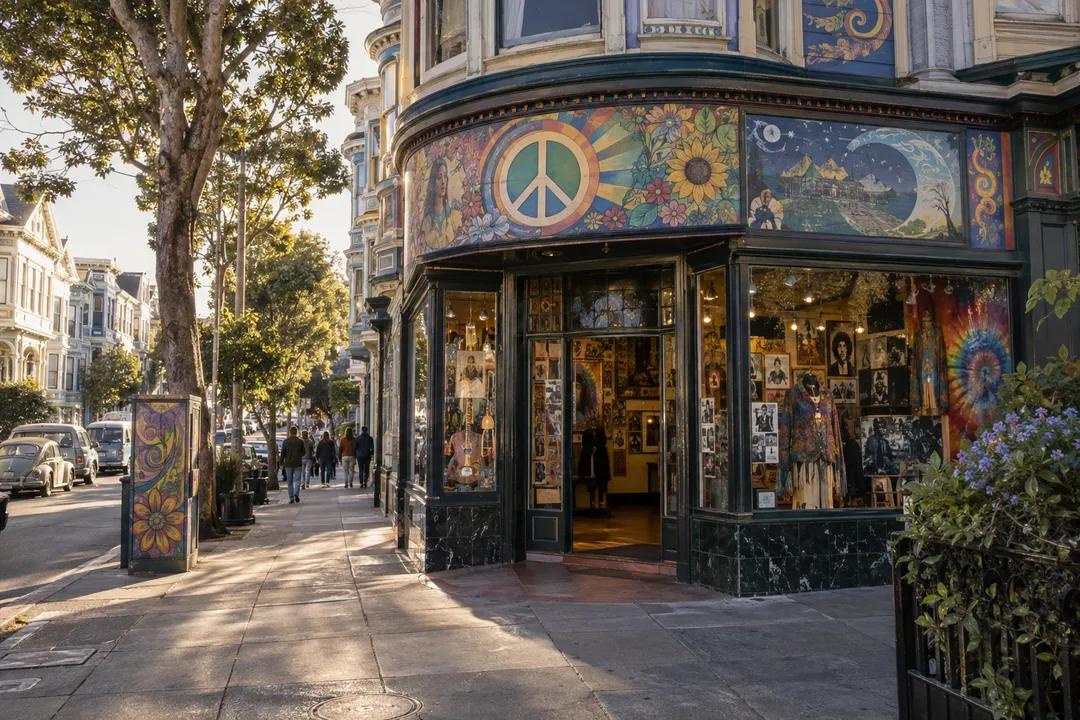
Oddities Museum Near Me: Counterculture Museum On Haight Street
Counterculture Museum at Haight and Ashbury assembles artifacts, books, music, and protest history from the movements that reshaped San Francisco and beyond.
For an oddities museum near me search in San Francisco, the Counterculture Museum puts the oddity directly at the famous Haight and Ashbury intersection. At 1485 Haight Street, the museum gathers artifacts, books, photographs, music history, and movement memorabilia to tell a story that stretches beyond the Summer of Love. The collection connects Beat writers, hippies, civil rights organizers, feminists, LGBTQ+ activists, anti-war voices, environmentalists, and musicians without pretending they all wanted the same thing.
The museum is easy to reach from the N Judah at Carl Street or the Muni buses that run along Haight Street. The building sits inside the neighborhood rather than in a remote cultural district, so the approach is part of the visit. Wednesday through Sunday hours are 11am to 6pm. Arrive early if you want time with the cases before the Haight fills with shoppers, tour groups, and street performers moving between the corner and Golden Gate Park.
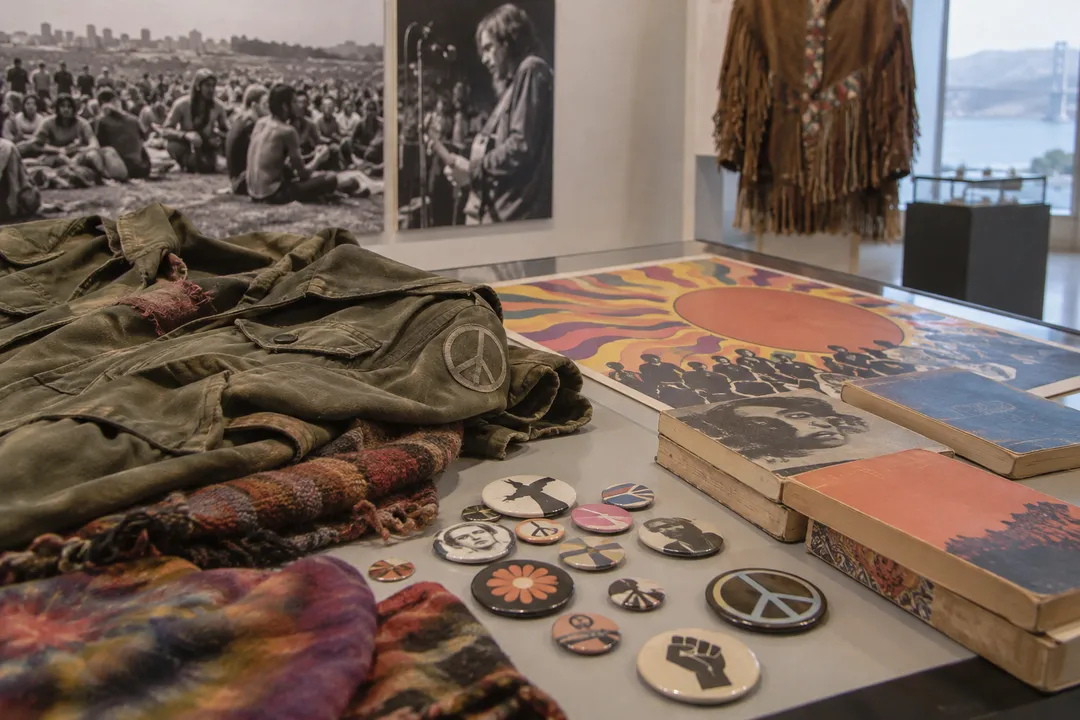
The collection feels unusual because counterculture is often remembered as a costume or a playlist. Here, the objects make the politics and labor visible. A concert handbill, a small press book, a protest button, a photograph, or a battered piece of clothing can show how movements spread through informal networks. The museum asks you to look past the familiar images and consider who printed, carried, wore, wrote, or risked something before it became an icon.
Start with the Beat Generation material, then follow the lines outward. Writers and poets helped establish a San Francisco culture of experimentation, but their work fed into later arguments about speech, sexuality, race, war, and community. The museum's value is in the overlap. A book can sit beside a music object, which sits beside a movement document, making the history feel like a series of conversations rather than a neat decade-by-decade timeline.
The music material has a different physical energy. Posters, album references, photographs, and small artifacts show how clubs, record stores, and neighborhood venues built a public around sound. Look for the practical side of the scene: how people learned about shows, how art circulated, and how a storefront became a meeting point. The collection is most interesting when glamour gives way to the handmade systems that let a local culture reach the world.
The museum also treats activism as material culture. Buttons, signs, printed statements, and personal effects show how public arguments were carried through a city before everything was searchable or instantly shareable. Notice the typography and production choices. A hand-lettered sign and a professionally printed poster may belong to different campaigns, but both reveal urgency, resources, and intended audience. Those details turn a familiar story into a study of how change is organized.
The visiting rules are simple: keep voices low around reading areas, give other visitors room at the cases, and ask staff before photographing restricted material. Tickets are valid all day from purchase until closing, so you can leave for lunch and return. The best line strategy is to arrive at 11am or use the middle of the afternoon, then reserve the Sunday guided tour if you want a more connected narrative. No long queue is needed on ordinary weekdays.
General admission is $10. Students, teachers, seniors, and military visitors pay $8, while the Sunday guided tour costs $25. Listed hours are Wednesday through Sunday, 11am to 6pm. Those prices let you choose between a quick self-guided look and a longer interpretation of the neighborhood's movements. Keep the receipt or ticket information handy if you plan to return after a meal, because the all-day validity changes how you can structure the afternoon.
The atmosphere is bright, street-facing, and deliberately communal. Large windows put the museum in conversation with Haight Street, while the objects inside ask visitors to slow down. That contrast matters. The neighborhood still sells versions of its own mythology, but the museum gives the mythology paperwork, names, and physical traces. It is not a dark cabinet of forbidden things. It is a public room for examining how rebellion becomes memory and then becomes merchandise.
The museum's larger story is still being written. Its founders built on years of collecting Beat memorabilia and wanted a space that could move beyond one generation toward a broader history of social change. That mission makes the museum feel less like a finished shrine and more like an evolving archive. Visitors may disagree with the balance between movements, but that disagreement is productive when the labels and objects encourage comparison rather than easy nostalgia.
Afterward, walk east toward the Panhandle and Alamo Square, or head west into Golden Gate Park for the de Young exterior, the Conservatory of Flowers, and the Haight's changing storefronts. Amoeba Music and independent clothing shops make an obvious continuation, while quieter side streets reveal Victorian houses and old community spaces. The best route keeps the museum's questions alive: who gets remembered, who gets sold back to us, and what remains outside the official story.
Practical Notes: Counterculture Museum is at 1485 Haight Street, San Francisco, CA 94117. The published schedule is Wednesday through Sunday, 11am to 6pm. General admission is $10, reduced admission is $8, and the Sunday guided tour is $25. Allow at least an hour, wear shoes for the neighborhood walk, and leave room for a second pass if you want to read the movement documents closely.
Choose this oddities museum near me when you want unusual objects tied to real social change rather than a nostalgic costume shop. It suits readers, music fans, local-history students, activists, design-minded visitors, and travelers curious about why San Francisco became a symbol. It is less useful for anyone seeking a single celebrity artifact. The reward is a more complicated map of the city, built from books, posters, voices, and the people who kept showing up.
Ask Karpo for more information.
Keep reading
- Bernal Heights Pottery Glaze Supply Browsing Route: Walk
 Potrero Hill Pottery Glaze Supply Browsing Route: Walk
 Mission Pottery Glaze Supply Browsing Route: Studio Walk