 Bernal Heights Pottery Glaze Supply Browsing Route: Walk
Hidden Gems & Odd Finds
Oddities Museum Near Me: Cable Car Museum's Underground Machinery
San Francisco's Cable Car Museum makes the city's moving streets visible, with working haulage machinery, historic cars, and a free look beneath Nob Hill.
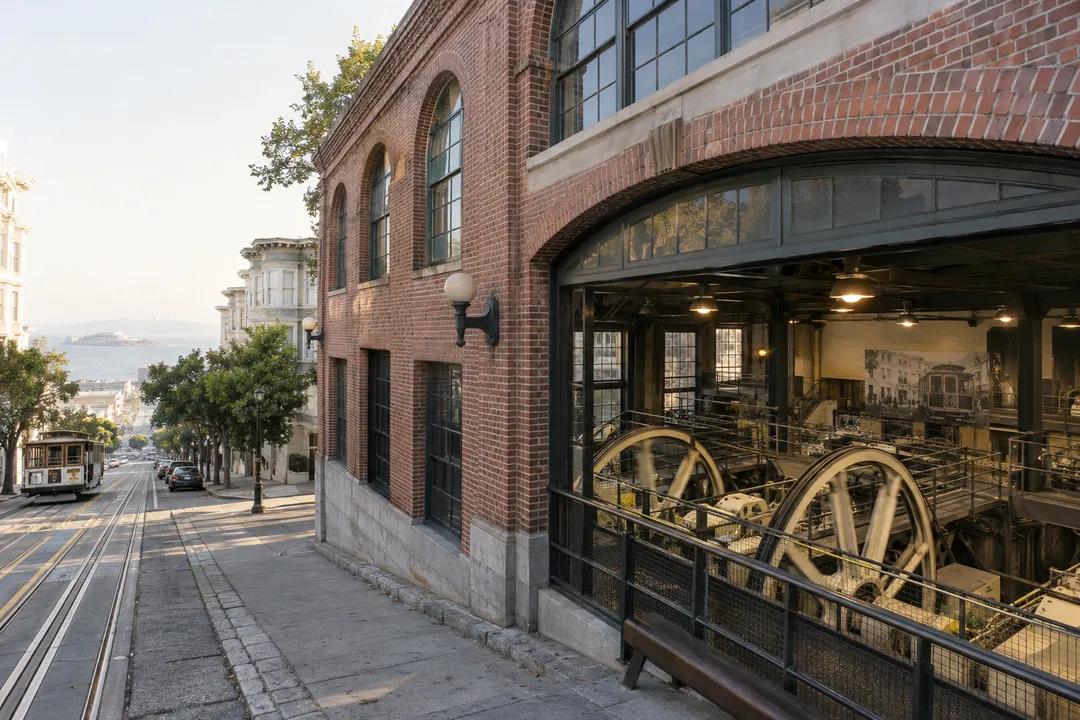
An oddities museum near me search does not have to lead to taxidermy or theatrical shock. In Nob Hill, the Cable Car Museum offers a stranger and more useful kind of curiosity: the hidden machinery that keeps San Francisco's famous cars moving. At 1201 Mason Street, a free museum occupies the original cable car powerhouse and explains the underground haulage system through working wheels, historic cars, photographs, and the physical sound of cables running beneath the floor.
The route is part of the experience. Take the California line or the Powell-Mason line to the neighborhood, then walk the final blocks uphill to Mason Street. The museum is close to Grace Cathedral, Huntington Park, and the steep streets that make the cable car system legible in person. It is open Tuesday through Sunday from 10am to 5pm and closed Monday, so a morning visit pairs naturally with a Nob Hill walk before the hills feel strenuous.
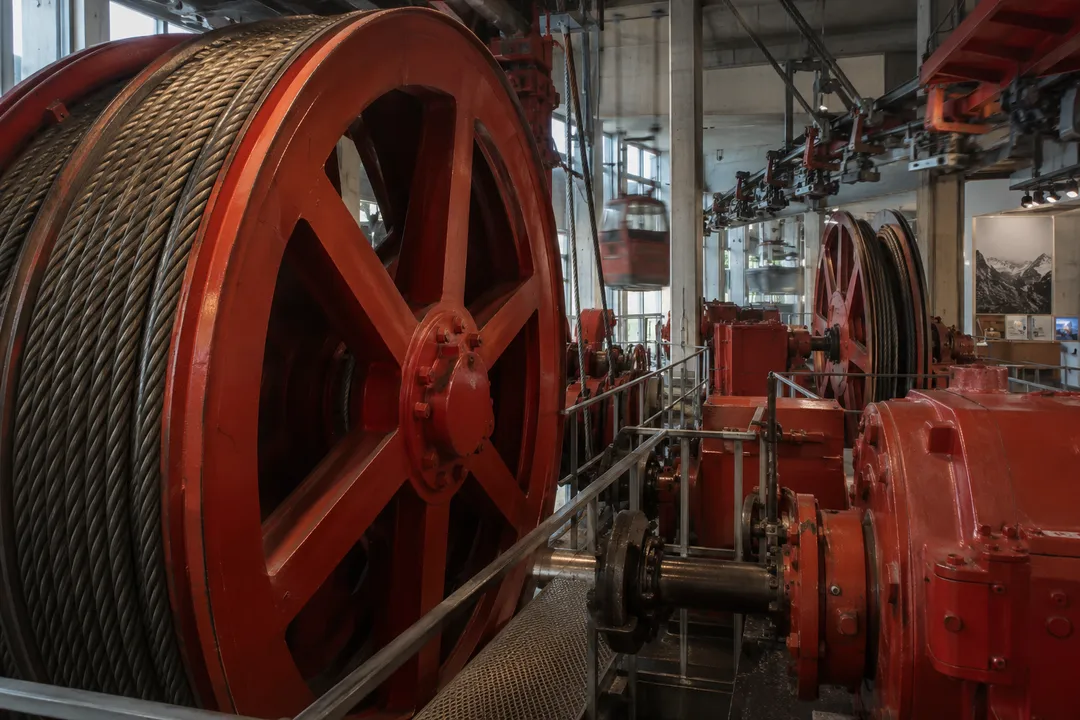
What makes the Cable Car Museum an odd find is the split between what visitors see above ground and what actually happens below. A cable car looks like a charming wooden vehicle, but its movement depends on a continuous mechanical system of grip, cable, wheel, brake, timing, and operator skill. The museum lets you stand over the haulage machinery as it runs. That turns a familiar tourist symbol into a working piece of urban infrastructure.
Begin at the viewing area over the giant winding wheels. Watch the cables change direction and listen to the machinery before reading the historical panels. The movement is slow enough to understand, yet complex enough to reward a second look. Notice the difference between a wheel rotating smoothly and a car responding to the grip. The museum is especially good at showing that public transit is never just the vehicle; it is the invisible system that makes the vehicle possible.
The historic cars add a human scale. Their wood, brass, painted surfaces, and handholds explain why the cable car remains visually distinctive even as other transit systems have become more standardized. Walk around the cars and look at the driver's position, the passenger arrangement, and the parts that connect the cabin to the cable. The details show how the city adapted transportation to topography rather than forcing the hills into a flat-grid model.
Photographs and diagrams fill in the harder-to-see history. Cable cars are often described as an icon, but the museum shows the work required to keep an icon alive: repairs, route changes, storms, fires, modernization debates, and the constant negotiation between preservation and daily service. That is the story worth taking home. San Francisco's most photographed transit line is also a maintenance project, and the museum gives the maintenance a proper stage.
The visiting rules are modest but real. Keep clear of the operating machinery, stay behind the marked viewing areas, and give the narrow viewing points room. Because admission is free, the museum can attract school groups and transit enthusiasts without a ticket barrier. Arriving close to opening is the easiest way to hear the machinery without a crowd. There is no need to queue for hours, but a short wait can form at the most popular overlook.
Admission is free, while a nearby cable car ride costs $8 for a single ride. That makes a museum-first itinerary practical: learn how the system works, then ride it with a better sense of what your grip operator is doing. The museum phone is (415) 474-1887. Bring a card for the wider neighborhood, but the museum itself does not require a purchase. The biggest cost is your walking energy on the surrounding inclines.
Inside, the museum feels more like a working utility building than a conventional gallery. The brick, timber, metal, and vibration are part of the interpretation. You are not looking at a model of a machine; you are standing beside the machine that still performs its job. That quality creates a rare kind of historical intimacy. A quiet room can suddenly fill with the sound of a wheel turning, and the past becomes physical rather than merely described.
The Cable Car Museum's city story is also a story of stubbornness. San Francisco could have retired the system when newer transit technologies arrived, yet residents and preservationists argued that the cars were more than decoration. The museum shows the practical consequences of that choice. Keeping a historic system alive requires standards, staff, parts, and care. The romance survives because a great deal of unromantic work happens underneath it.
For a neighborhood walk, leave through Nob Hill and continue to Grace Cathedral or Huntington Park, then descend toward Chinatown for bakeries, tea shops, and a very different street rhythm. Another route follows California Street toward the Financial District, where the cable car's hills flatten into office towers. If you plan to ride, use the museum as your orientation stop and then board at a less crowded point away from the end-of-line rush.
Practical Notes: the museum is at 1201 Mason Street, San Francisco, CA 94108, and the listed phone is (415) 474-1887. Hours are Tuesday through Sunday, 10am to 5pm, closed Monday. Admission is free. A nearby single cable car ride costs $8. The museum has industrial surfaces and narrow viewing areas, so keep children close and wear shoes suited to steep sidewalks. A morning visit leaves time for Chinatown or the waterfront afterward.
Choose this oddities museum near me when your idea of an odd find includes infrastructure, engineering, and the hidden anatomy of a city. It works for transit fans, families, architecture students, first-time visitors, and anyone who wants a free indoor stop with real mechanical movement. It is not a spooky attraction or a large object-filled hall. Its appeal is sharper: you leave understanding a familiar San Francisco image as a living machine.
Ask Karpo for more information.
Keep reading
- Bernal Heights Pottery Glaze Supply Browsing Route: Walk
 Potrero Hill Pottery Glaze Supply Browsing Route: Walk
 Mission Pottery Glaze Supply Browsing Route: Studio Walk