 Bernal Heights Pottery Glaze Supply Browsing Route: Walk
Hidden Gems & Odd Finds
Oddities Museum Near Me: American Bookbinders Museum Machines
American Bookbinders Museum in SoMa preserves the tools, machines, techniques, and material history behind how books were made by hand and industry.
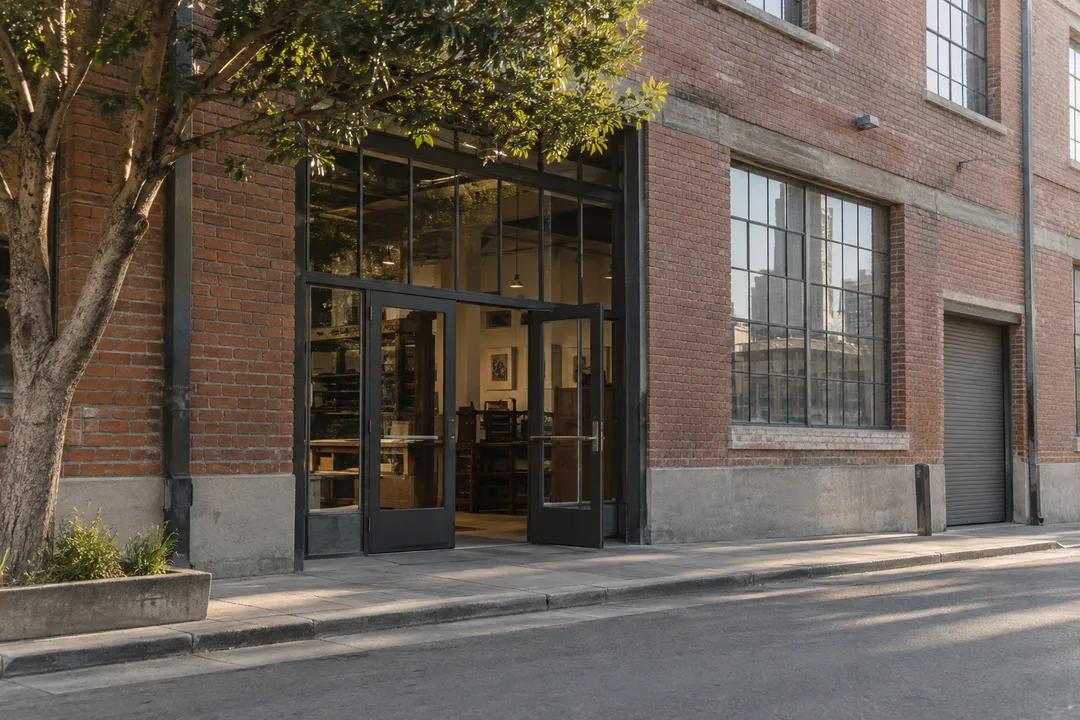
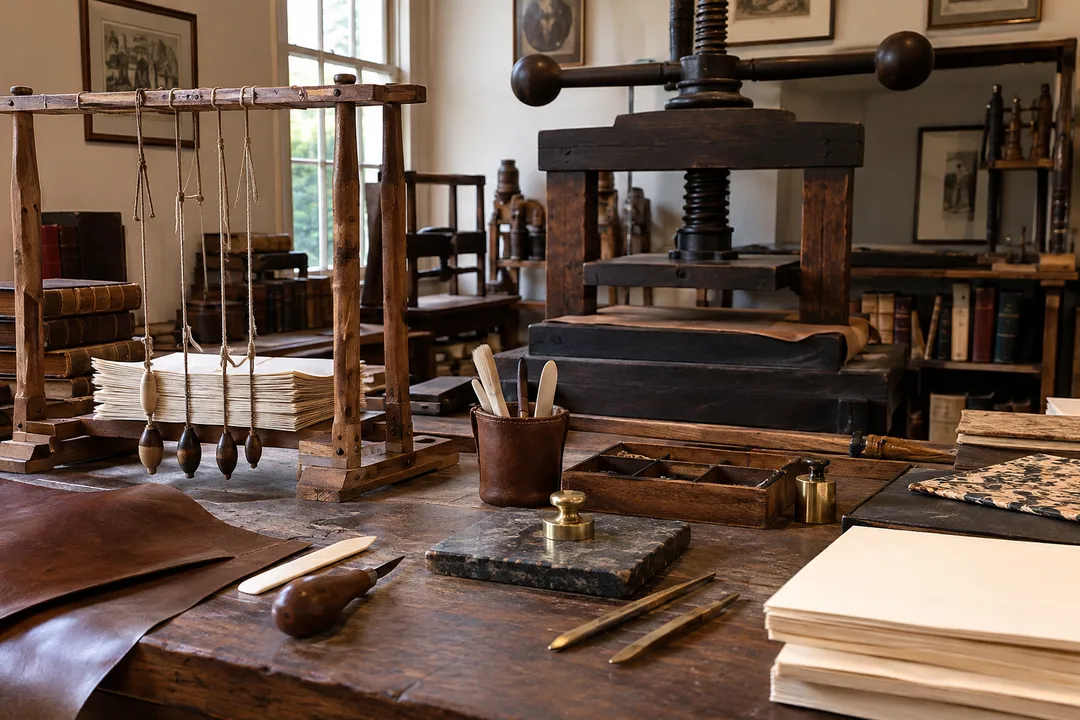
An oddities museum near me search in San Francisco can lead to the American Bookbinders Museum, a small SoMa institution devoted to the tools and decisions hidden inside an ordinary book. At 355 Clementina Street, the museum traces bookbinding from early hand work through nineteenth-century machines and industrial publishing. The objects are unusual because they reveal the physical labor behind knowledge: presses, sewing frames, boards, thread, leather, paper, and machines that look closer to sculpture than office equipment.
The museum is a short walk from Yerba Buena Gardens, Moscone Center, and the Powell Street transit hub. The T Third Street line, BART, and several downtown bus routes make the approach straightforward. It is open Tuesday through Saturday from 10am to 4pm, with walk-ins welcome. Arriving in the morning gives you time to use the audio tour and examine the machinery before the afternoon crowd of book lovers, students, and workshop visitors gathers.
The first surprise is how many separate skills a finished book contains. Folding, sewing, trimming, backing, covering, tooling, and decoration each require a different tool and a different kind of judgment. The museum makes those stages visible rather than treating a book as a single object. Once you see the sequence, a shelf of familiar volumes begins to look like a collection of engineered decisions held together by paper and patience.
Start with the older hand-binding tools. A sewing frame, paring knife, board shear, or finishing tool may look small, but each one carries the pressure of a hand and the memory of repeated work. Labels explain what the tools did, while the material surfaces show how often they were used. The oddity is not that the objects are obscure; it is that a whole trade can disappear from daily view even though its products remain everywhere.
The industrial machines change the mood. Heavy equipment from the nineteenth century demonstrates how book production moved from individual craft toward repeatable output. Look at the gears, feed mechanisms, rollers, and cutting surfaces, then imagine the noise and coordination of a working bindery. The museum does not frame industrialization as simply good or bad. It shows the trade-offs: faster circulation of books, new jobs, altered skills, and a different relationship between maker and finished volume.
The decorative examples deserve attention too. Marbling, tooling, paper decoration, and distinctive bindings prove that utility and beauty were never separate in the book trade. A cover can protect pages while announcing status, taste, subject, or ownership. The museum's rotating displays extend that story into contemporary work, showing that bookbinding is not a dead technique. It is a living way of thinking through material, sequence, touch, and structure.
Visiting rules are practical. Use the audio tour with headphones or borrow a tablet, keep hands off machinery unless a staff member invites interaction, and give demonstrations or educators room to work. Walk-ins are welcome, so there is no major queue, but the 10am opening is the calmest time for a full pass. Bags should stay controlled around delicate objects, and a stool or accessible route can be requested at the admissions console.
Self-guided admission is $15 for adults and $12 for seniors and youth ages 10 to 17. Children under 10 are free, and qualifying visitors can receive free access through Museums for All, IMLS Museums for All, and Blue Star programs. The ticket includes a 10 percent same-day discount in the museum shop. Those concrete savings make it easy to pair the visit with a book or paper purchase without turning the outing into a high-cost downtown attraction.
The atmosphere is focused and workshop-like. There is no grand lobby designed to overwhelm you; instead, the eye moves from a machine to a tool to a sample binding, following cause and effect. The space feels close enough for questions, which is useful because bookbinding vocabulary can be unfamiliar. Let yourself linger over the sound of a demonstration or the texture of a decorated paper. The museum rewards tactile imagination even when you cannot touch the collection.
The museum's history is connected to the American experience of changing book production. Early binders brought European traditions, local craftsmen adapted them, and industrial equipment altered the scale of publishing. That story links immigration, labor, technology, education, and access to information. The collection is therefore stranger and larger than its name suggests. It is a museum about how societies preserve knowledge, and about the people whose hands made preservation possible.
Afterward, walk through Yerba Buena Gardens to the San Francisco Museum of Modern Art, then continue toward the Ferry Building or Chinatown if you want a longer downtown loop. The nearby galleries and design shops keep the material theme going, while a coffee stop gives you a chance to look at the binding of the book you brought along. A good route ends at a bookstore, where the museum's machinery becomes visible in every shelf.
Practical Notes: American Bookbinders Museum is at 355 Clementina Street, San Francisco, CA 94103. Hours are Tuesday through Saturday, 10am to 4pm. Admission is $15 general and $12 for seniors and youth ages 10 to 17; children under 10 are free. Allow about an hour for the galleries and audio tour. The main floor is accessible, with seating, a ramp, and an accessible back entrance.
Choose this oddities museum near me when you like strange machinery with a clear connection to daily life. It suits readers, printmakers, designers, makers, historians, families, and anyone who has wondered how a book survives years of handling. It is not a fast selfie stop. The reward is a new respect for paper, thread, glue, and the precise human work that turns loose sheets into something meant to last.
Ask Karpo for more information.
Keep reading
- Bernal Heights Pottery Glaze Supply Browsing Route: Walk
 Potrero Hill Pottery Glaze Supply Browsing Route: Walk
 Mission Pottery Glaze Supply Browsing Route: Studio Walk