 Bernal Heights Pottery Glaze Supply Browsing Route: Walk
Hidden Gems & Odd Finds
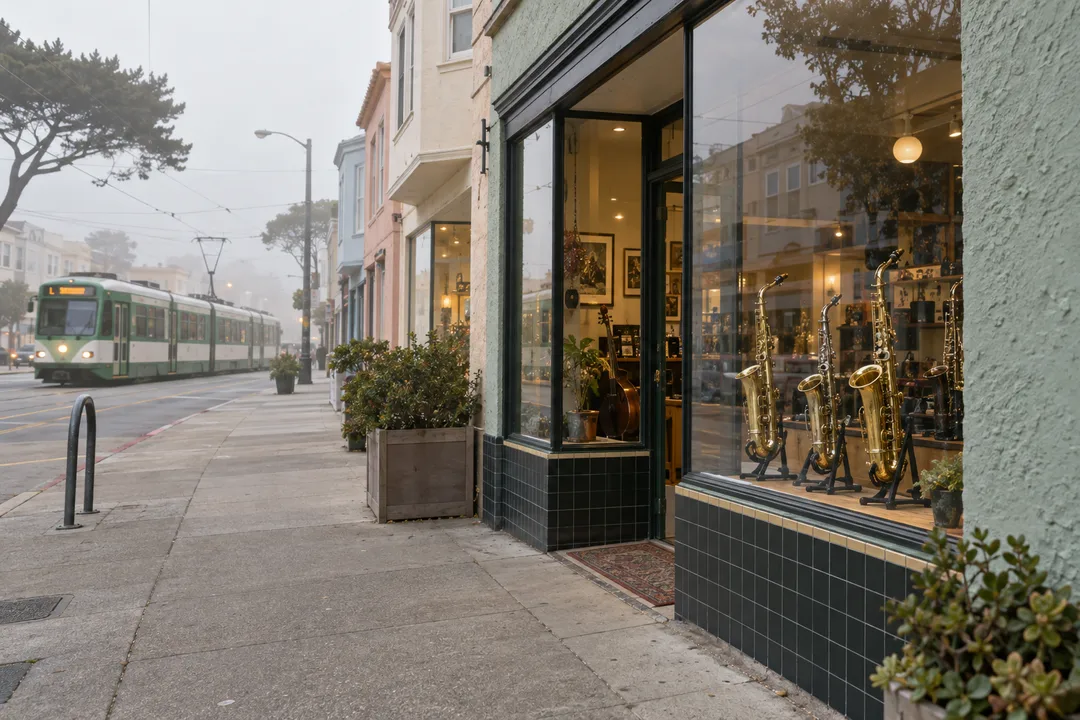
Sunset Musical Instrument Repair: Sax Pads at Lee's Sax Worx
Lee's Sax Worx at 1724 Taraval St repairs saxophones and clarinets Tuesday to Saturday, no appointment listed. Ride the L Taraval with the horn in its case.
Lee's Sax Worx has repaired saxophones and clarinets from a storefront at 1724 Taraval Street since 2003, and the doors are open Tuesday to Friday from 10 am to 6 pm and Saturday from 10 am to 4 pm. Among San Francisco's musical instrument repair benches it is the one horn players name first when a pad starts leaking.
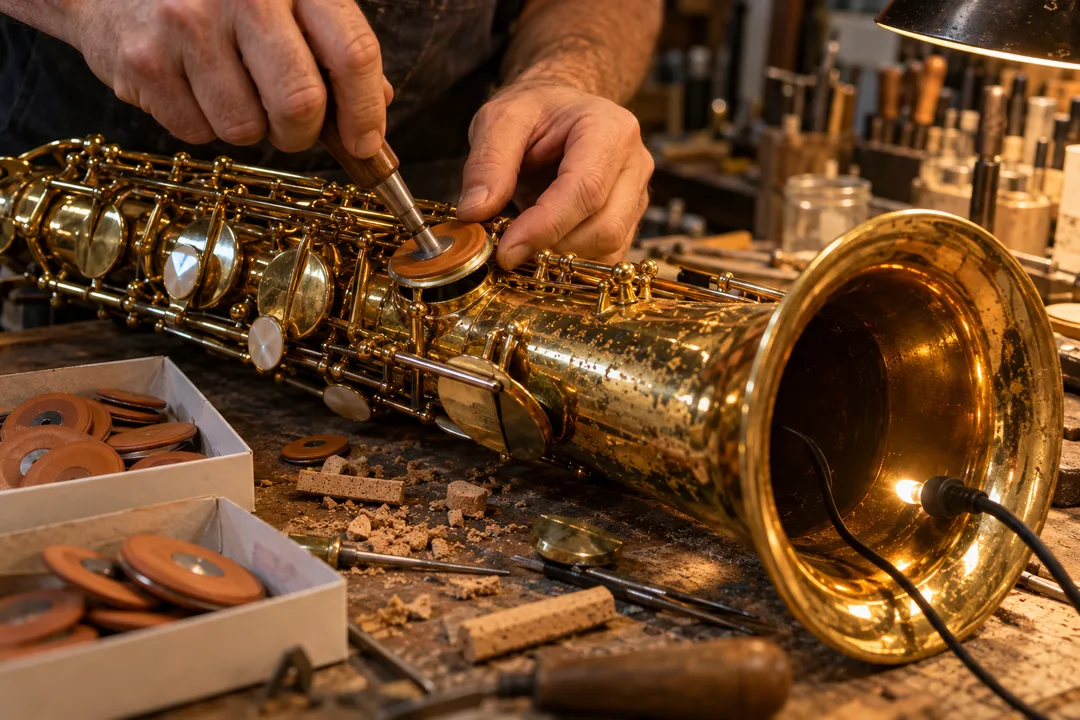
A Shop Built From the Burger Workshop
The lineage matters here. Lee Kramka grew up in Woodstock, Illinois, learned the trade under Julius Weissinger in Champaign, then spent twenty years at Erwin Burger's Woodwind and Brass Workshop in San Francisco. When Burger died in 1996, Kramka opened his own one-man shop on 17th Avenue in the Sunset. Don Millhauser joined as apprentice in 2002 and later ran the bench as chief technician until he retired in 2024. In 2003 the shop moved to its current Taraval storefront, which is why so many older players still describe it as the place out by the ocean.
Who Is at the Bench Now
James Miyashiro joined as an apprentice in 2012 and now holds the title of shop manager and chief technician. According to the staff page, he studied at UC Davis and worked in Las Vegas hospitality before discovering how satisfying it was to bring a horn back to life. Alex Edison came on in 2020 as apprentice technician. Kramka is still the name on the door. For a customer, that means the person who looks at your alto on Tuesday is likely the same person who will hand it back, and that continuity is rare in repair shops.
What They Fix and What They Sell
The scope is deliberately narrow: saxophones and clarinets, from a quick fix to a full overhaul. The services list names appraisals, pad replacements, reeds and supplies, and general repairs. That narrow focus is the reason to come. A tech who handles only these two families of instruments sees the same failure points every week, from a sticky G-sharp to a bent low B-flat guard. The shop also sells new and vintage horns, so a beginner can try a used student alto in the room where it was set up, instead of buying blind online.
Appraisals for the Horn in the Attic
Lee's runs an appraisal service, which the site pitches with a simple question: what is your horn worth, and is it insured? That makes it a sensible first stop for anyone who inherited a Selmer, a Conn or a Buescher and wants to know whether it is worth restoring. One testimonial on the site describes a 1927 Conn brought back to playing condition. Another player credits Kramka with an overhaul on a Mark VI tenor that lasted decades. Treat those as voices from customers rather than guarantees, but they show the kind of instruments that cross this counter.
Buying a Horn Off the Wall
The inventory page lists new and used saxophones for sale, and buying here has one practical advantage over a marketplace listing. The horn has already been on this bench, so pads, corks and springs have been checked by the people who will service it later. Bring your own mouthpiece if you have one you trust, play the low notes softly and the palm keys loudly, and ask which work was done before it went on the wall. A student alto that plays evenly from low B-flat up is worth more than a famous name that leaks.
Walk In, But Time It Well
The site lists walk-in storefront hours rather than an appointment system, so you can bring a horn during open hours. Tuesday is the day the bench is freshest after the weekend's gigs, and also the day a Saturday breakdown lands. A weekday mid-morning visit usually gives the tech more time to play-test the horn with you. Bring the instrument in its case with the neck, mouthpiece and ligature, and be ready to describe the symptom: notes that will not speak below low D, gurgling in the upper stack, or keys that click.
The Customers You Will Meet
The client page shows that touring and recording players use the shop, but the daily traffic is more local. You will see parents with a student clarinet that a younger sibling has dropped, and jazz players from the Mission clubs with tenors that need a pad or two before a weekend set. Retired players bring a vintage horn back out of the closet. A small events list on the site marks Ravi Coltrane's SFJAZZ run and the staff's birthdays, which tells you this is a neighbourhood shop where regulars know the techs by first name.
When to Go Elsewhere
Skip Lee's for flutes, oboes and bassoons, because the shop handles only saxophones and clarinets. For those, Deitch's Woodwind Workshop on Clement Street repairs every woodwind except saxophones and works by appointment. Guitars and mandolins belong with San Francisco Guitarworks on Potrero Avenue. Lee's does not post a price list, so if you need a firm number before committing, ask for an estimate at the counter. If the shop is closed on a Monday or Sunday, the honest plan is to wait for Tuesday rather than force a temporary fix with tape and rubber bands.
A Walk Down Taraval
The shop sits in the Parkside and Outer Sunset stretch of Taraval Street, a commercial strip of bakeries, dim sum counters and hardware stores. After drop-off, walk east to McCoppin Square, a neighbourhood park with a playground and open lawn, and the Parkside Branch Library on the same blocks. Or ride the L Taraval west to the end of the line near Ocean Beach and the San Francisco Zoo, where the wind and fog roll in off the Pacific. On a clear afternoon the beach walk is worth the extra stops.
Practical Notes
- Address: 1724 Taraval Street, between 27th and 28th Avenues, San Francisco, CA 94116. - Hours: Tuesday to Friday 10 am to 6 pm, Saturday 10 am to 4 pm.
Ask Karpo for more information.
Keep reading
- Bernal Heights Pottery Glaze Supply Browsing Route: Walk
 Potrero Hill Pottery Glaze Supply Browsing Route: Walk
 Mission Pottery Glaze Supply Browsing Route: Studio Walk