 Bernal Heights Pottery Glaze Supply Browsing Route: Walk
Hidden Gems & Odd Finds
SF Magic Shop: Restart With One Useful Kit Upgrade
Restart your hobby with an SF magic shop plan built around the equipment you own, one missing piece, and a useful next lesson, organized in the Karpo APP.
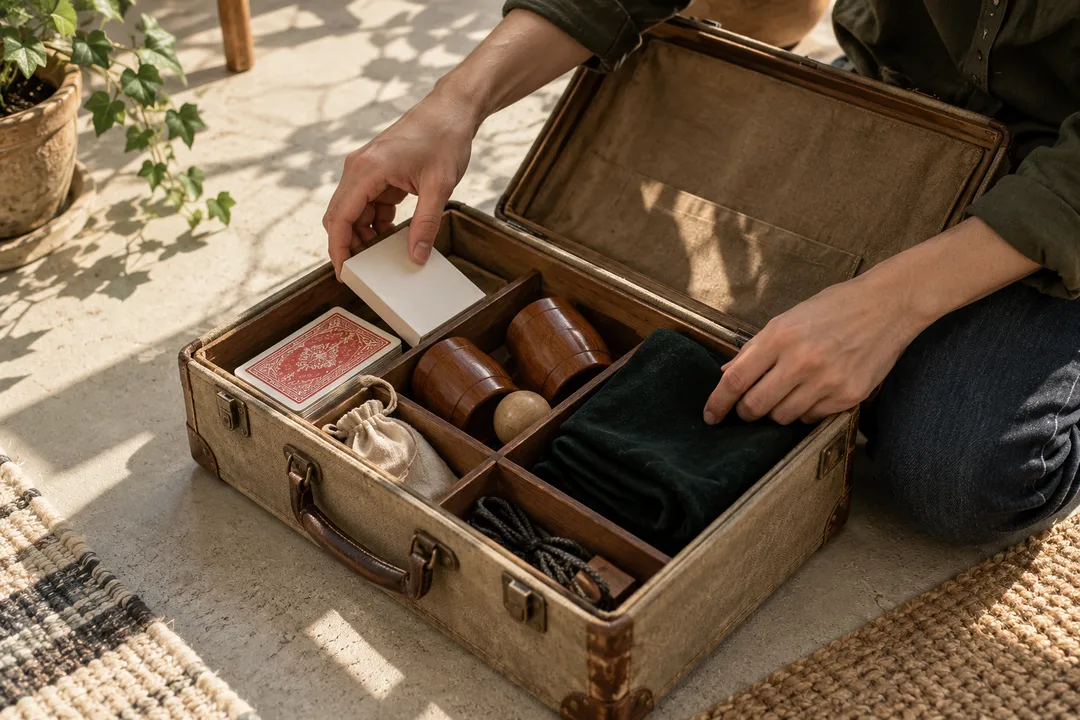
Restart an old magic hobby by opening the kit you already have before searching for an SF magic shop. Lay out the props, locate the instructions, and choose one routine you still want to perform. The most useful purchase may be a single replacement item or a clearer lesson. Use the Karpo APP to organize a San Francisco outing around that specific gap, with time afterward to decide whether the proposed addition earns a place in your case.
Open the case without making a shopping list
Sort the contents into equipment you understand, equipment with complete instructions, and equipment whose purpose you no longer remember. These groups can overlap. Keep related pieces together rather than arranging everything by appearance. A plain-looking accessory may belong to a particular set, and separating it can create a new problem. Photograph the layout for your own reference, keeping private instruction pages and methods out of anything you intend to share publicly.
Read the names on the packaging and note any edition or model information. Search your own files for receipts and legitimate media access details. If an explanation is missing, that is a specific question to resolve, not evidence that the equipment is useless. Avoid experimenting with a mechanism whose intended handling you do not understand. Set unfamiliar items aside while you work with a routine whose materials and instructions are complete enough to study safely.
Let the audience effect choose the project
Pick the routine you would most enjoy showing someone now. Your interests may have changed since you bought the kit. A large presentation that once appealed to you may be less inviting than a short piece for a few friends. Describe the effect without naming the secret or listing every object involved. That simple description helps you distinguish excitement about performing from nostalgia for equipment that has spent years packed away.
Walk through the instructions before trying to perform from memory. Notice whether your old difficulty was technical, practical, or presentational. Perhaps you lacked a suitable surface, rushed the ending, or never learned the opening position properly. Each diagnosis suggests a different next step. Skip a new prop when the obstacle is an unfinished lesson you already own. Returning to familiar material can be satisfying precisely because you now understand what you want from it.
Turn the missing piece into a useful question
Write a short description of the gap: a component is absent, the printed explanation is unclear, or a case no longer protects the equipment. Include the exact product name when you know it. If compatibility matters, collect the measurements or model information from your own item. Do not assume that two accessories with similar names are interchangeable. A precise question gives a seller a fair chance to explain what a potential replacement is designed to do.
Ask before taking an old prop into a shop for discussion, particularly if it is bulky or easily confused with display stock. A photograph and written details may be a more convenient starting point. Keep ownership and condition clear. If the conversation concerns repair, separate that inquiry from shopping for a replacement; an interesting retail destination does not automatically offer a repair service. Let the business describe its actual services and decide from that information.
Give Karpo the shape of the afternoon
Your planning message could say: “I am getting back into magic and want an SF outing focused on one kit upgrade. I have my old equipment and want a short browsing stop, then somewhere relaxed to think.” Add your starting neighborhood, travel mode, and finish time. Karpo can use those preferences to help organize a local discovery plan. Keep the technical product details in a separate note that you can bring to the relevant conversation.
Decide what would count as a useful result before leaving home. It could be identifying the correct replacement, choosing a new explanation, or concluding that your existing equipment is enough. This protects the outing from becoming an attempt to buy motivation. A pleasant afternoon does not need a large shopping bag. If you are meeting a friend later, make that appointment the natural finish rather than adding speculative stops whenever you feel undecided.
Compare a replacement with a new learning route
A replacement restores a known setup, while a different product asks you to learn its own requirements. Compare those commitments honestly. Consider the materials, available instruction, storage, and the kind of presentation each option encourages. You are not obliged to preserve an old routine simply because you once invested in it. Equally, a new package is not automatically a better route past a problem that you can already describe clearly.
When a demonstration is offered, explain what you remember and what you have actually practiced. Let the seller finish the presentation before asking questions. Avoid presenting yourself as more experienced than you feel, because that can lead the conversation toward material with unhelpful assumptions. Ask how the lesson develops and which preliminary skills it expects. The goal is a project that meets you at your current level, even if you once owned more advanced equipment.
Make the first session easy to begin
Back home, give the chosen project a small working area. Put its instructions and required pieces together so that setup does not require another search through the case. Begin with the opening sequence and stop to read when memory conflicts with the explanation. Familiarity can be misleading after a long break. Slow practice lets you discover which parts you remember accurately and which parts you have been reconstructing from an audience impression.
Write one observation after the session. It might concern a grip, a transition, or the sentence that introduces the effect. Keep the note short enough that you will read it next time. Do not set a comeback deadline around an upcoming party unless you already feel comfortable with the material. Treat showing a friend as an invitation you can accept later. Curiosity is a better reason to return to the table than pressure to prove you still have the skill.
Practical Notes for keeping the kit useful
Maintain a simple inventory with the product name, related pieces, and where its instructions live. Store delicate materials according to the care information supplied with them, and keep small components secured away from children and pets. Retain new receipts alongside the relevant packaging. These ordinary habits save you from repeating the same missing-item search several months later, especially when a routine uses accessories that resemble everyday household objects.
After several sessions, decide whether another outing would solve a real problem. Describe what you learned in the next Karpo request: you enjoy a particular kind of effect, need a different teaching format, or want a social afternoon around the hobby. That gives the next city plan a fresh purpose. The successful restart is the moment your case contains a project you understand and want to practice, with each new addition serving that interest.
Ask Karpo for more information.
Keep reading
- Bernal Heights Pottery Glaze Supply Browsing Route: Walk
 Potrero Hill Pottery Glaze Supply Browsing Route: Walk
 Mission Pottery Glaze Supply Browsing Route: Studio Walk