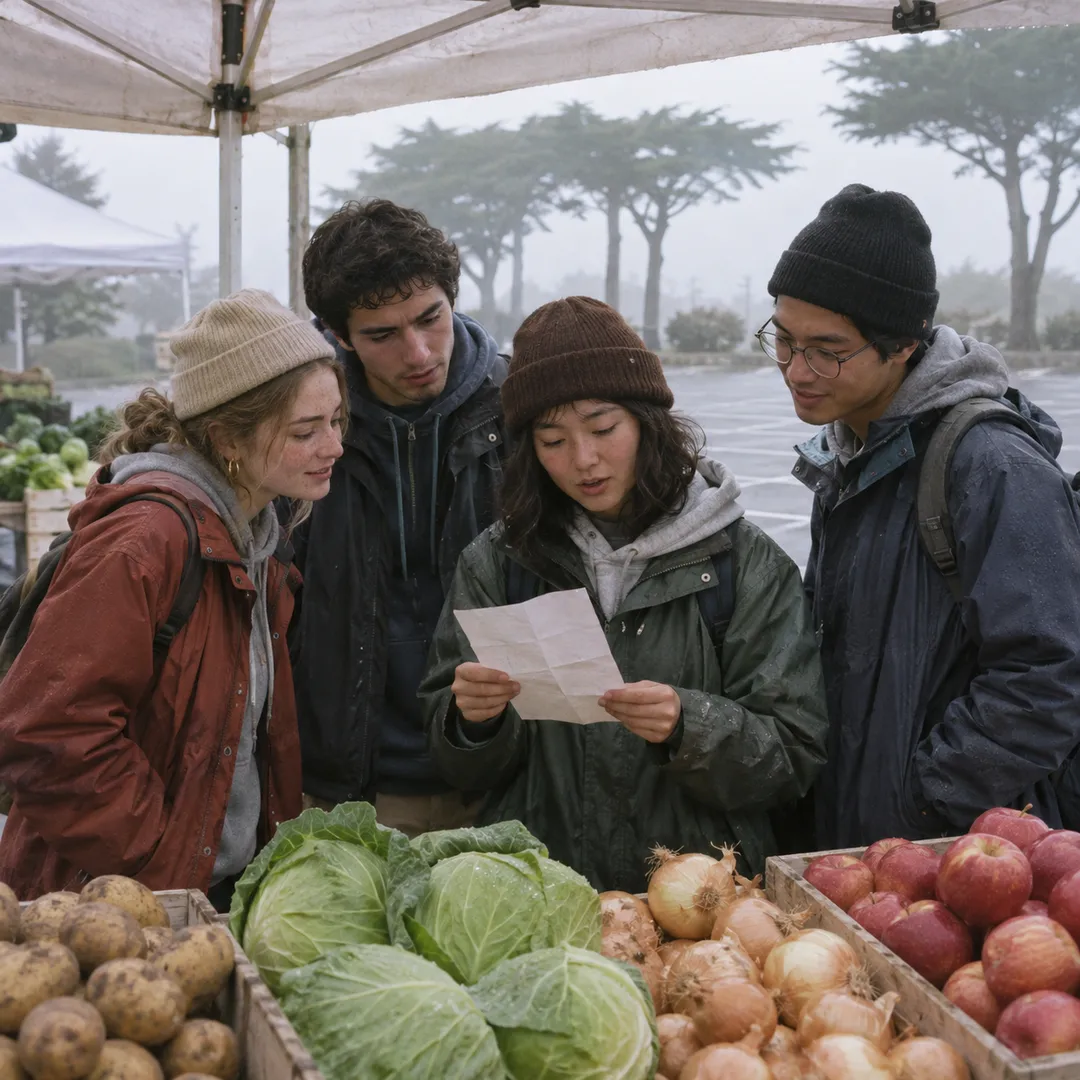
 Stonestown Winter Farmers Market Picker for Student Cooks
Weekend Plans

SF Local Event Finder: 3 Clues For Repeat Gatherings
Find SF gathering ideas that could become a routine by describing your interests, weekly availability and the kind of repeated participation you enjoy.
Finding one interesting SF event and finding a gathering you might return to are different tasks. For the second, ask your local event finder about the pattern of participation as well as the subject. A spectacular one-off can make a good afternoon without helping you build a routine. In Karpo APP, describe an interest you want to pursue repeatedly and the time you can realistically give it. The examples here explain a search method, with no named group or advertised session.
A routine begins with the week you actually have
A newcomer can be tempted to keep every evening available for discovery. That makes the calendar look flexible while making it difficult to return to anything. Pick one realistic window first. It might be a weekday after work or part of a weekend afternoon, but it should fit your ordinary responsibilities. You are looking for something you could choose again on an unremarkable week, not only during the unusually energetic first days after moving.
Write down what you want to do when you get there. Drawing beside other people, discussing books and practicing a language create different forms of contact. “Meet people” is an understandable wish, but an activity gives that wish a workable shape. Choose something you would enjoy even if conversation stayed brief on the first visit. That reduces the pressure to turn a single event into an instant social circle and gives a future return its own reason.
Consider the difference between a series and an open ongoing group. A series can require enrollment from the beginning, while an advertised recurring gathering may describe how new participants join. Do not infer one from the other. Read the organizer's wording for the actual session and its intended audience. The useful clue is a documented way to participate again, not simply a familiar name appearing repeatedly on an event calendar.
Clue one: the activity has room for a return
A repeatable gathering gives you something to notice or practice over time. You might continue a project, learn how a discussion is run or become more comfortable with a skill. Ask Karpo for ideas organized around that kind of participation. An event can be social without providing continuity, and continuity can come from an activity even before you know anyone's name. Keep those possibilities separate as you compare what a candidate offers.
Look for the format in the organizer's information. Does it describe independent work, facilitated discussion, a fixed course or an introductory session? Each asks for a different commitment. A beginner introduction might be a useful first step without admitting you to every later meeting. Retain that distinction in your notes. You want to understand the pathway the organizer actually describes, with no assumption that one ticket creates ongoing membership or access.

A useful first request might be: “I am new to San Francisco and want a recurring creative gathering rather than a single spectacle. I can make the weekly window below. Suggest ideas where a newcomer can understand how participation works, and explain the difference between one session and an ongoing commitment.” Add a genuine interest and your available date. This is proposed wording, not evidence that an appropriate group has already been found.
Clue two: getting there remains reasonable next week
The first trip can feel adventurous enough to hide an inconvenient journey. Imagine making the same trip when work is tiring or the weather is less inviting. Tell Karpo your starting neighborhood and what makes a journey sustainable for you. A longer direct trip can suit one person while another needs something close to home. Avoid treating distance on a map as a universal measure of convenience, particularly when you are deciding whether to return regularly.
Your chosen window needs to include the approach and the trip home. A program beginning soon after you finish work may create a weekly rush you will eventually resent. Set a personal buffer instead of assuming you can arrive at the final moment. If the gathering has a fixed start, respect that format. A routine becomes easier when it fits the pace of your week rather than repeatedly depending on a perfect sequence of connections.
Skip the most impressive candidate if the journey makes it an occasional expedition. You can keep it as a separate outing for another day. For a potential routine, convenience has real value because it lowers the effort of coming back. Ask for a comparison that explains this tradeoff plainly. The candidate with the strongest subject matter and the candidate with the strongest repeatability might be different, and you should be able to see why.
Clue three: the first visit has understandable rules
Newcomers need to know what to bring, whether registration is required and how the session begins. Those instructions help you participate without guessing the room's customs. They do not need to promise instant friendship. Read the actual entry and participation terms for the date you choose. A group photo full of smiling people tells you less about joining than a short paragraph that clearly describes what first-time attendees are expected to do.
If you are uncertain about experience level, make that a specific question. You can ask whether the advertised session is intended for complete beginners or whether it assumes familiarity with the activity. Avoid asking an organizer to guarantee that you will feel comfortable or meet particular people. Those are personal outcomes. A useful decision rests on whether the structure suits you and whether the available information explains how to enter it respectfully.
Keep the rest of the outing simple on the first visit. A short walk around the surrounding neighborhood can help you understand the route, but you do not need an additional named stop. Leave room to arrive, take part and head home with a clear impression of the activity. You can decide about returning afterward, based on your own experience rather than on the amount of planning effort you invested before going.
Practical Notes for trying a future routine
Treat the first session as a chance to learn whether the format fits your interests and weekly life. Complete any required registration through the organizer's stated channel, and distinguish that transaction from a suggestion in Karpo APP. Keep the relevant date and arrival information together. No example in this article establishes a group's schedule, remaining capacity or membership terms. Those belong to the specific program you eventually select.
After attending, note what you enjoyed doing and what made participation easy or difficult. Bring that observation into your next request instead of starting again with a generic search for local events. You might discover that a quieter format, a different day or a more practical journey matters most. The goal is to recognize an activity you want to return to, with a place in the week that makes returning possible.
Ask Karpo for more information.
Keep reading
- Stonestown Winter Farmers Market Picker for Student Cooks
 Clement St Winter Farmers Market Picker for Lunar New Year
 Fort Mason Winter Farmers Market Picker for Citrus Bakers