 Stonestown Winter Farmers Market Picker for Student Cooks
Weekend Plans
SF Local Event Finder: 3 Choices For Listening Nights
Find SF music event ideas by stating whether you want a seated listening session, room to move or space to talk, then compare the advertised format.
A listening night in SF begins with deciding how you want to hear the music. Seated attention, room to move and conversation with music nearby are three different choices for a local event finder. Ask Karpo APP for ideas around one of those formats rather than asking for live music as though every room works the same way. This article compares hypothetical preferences and search steps. It does not identify an actual performance, claim a venue's sound level or offer tickets.
Choice one: make listening the main activity
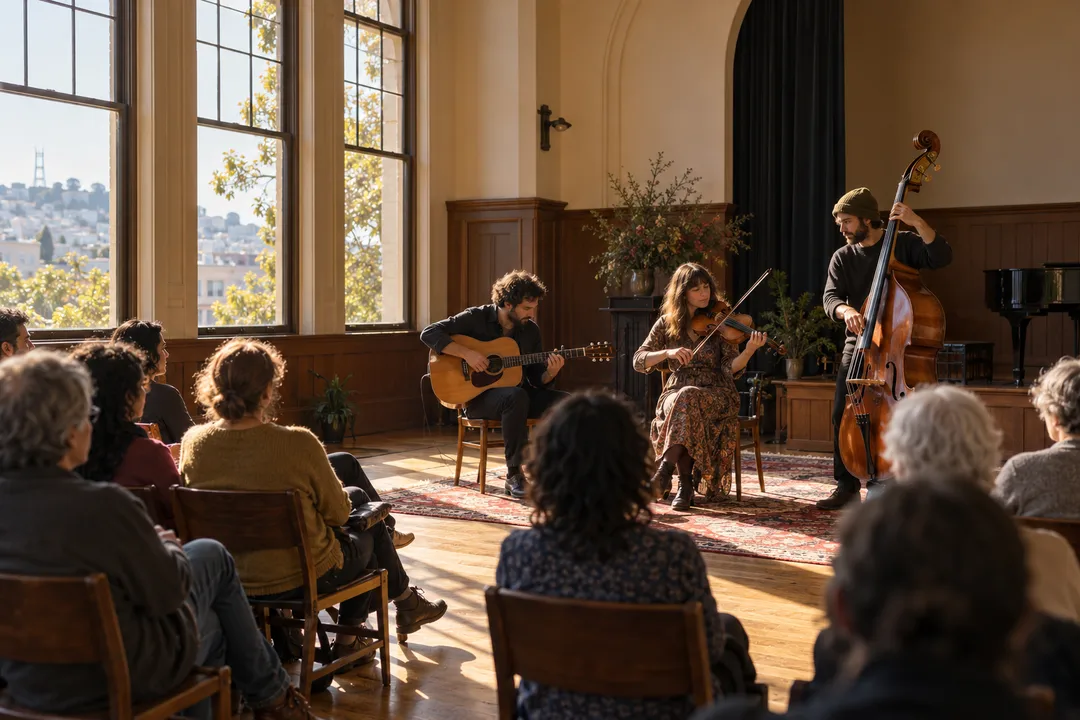
If you want to give the performers your attention, say so at the start. You might prefer a seated program, a clear beginning and an audience format that supports concentration. Those are conditions to look for in the advertised session. They should not be inferred from a photograph of chairs or a description of an intimate atmosphere. A venue can arrange the same room differently for different programs, so the particular date matters.
Think about the style of listening you enjoy. A short introduction from the performer, an uninterrupted set and a discussion after the music can create quite different experiences. You do not need technical vocabulary to describe a preference. Tell Karpo whether you want to hear familiar material, encounter something new or understand more about a musical tradition. That gives a recommendation a purpose beyond identifying the nearest stage.
Invite a companion with the listening expectation made clear. Someone hoping to catch up throughout the evening might prefer another format. You can plan conversation before or after the program without making it compete with the performance. Respecting an attentive audience arrangement can be part of what makes the outing enjoyable. Choose a different candidate if the event's stated format conflicts with the way you and your companion want to spend the time.
Choice two: give yourself room to move
A standing or movement-oriented program asks for a different kind of energy. You might enjoy being able to change position instead of staying in one seat, but that does not establish that every standing event allows easy movement. Read the organizer's attendance information for the actual room and session. If you need a seated option or a way to take a break, keep that requirement explicit rather than assuming it follows from the music style.
Consider how the journey affects your energy. An event you would enjoy on a free Saturday might feel different after a full workday and a long trip. Give Karpo your starting neighborhood and the time you can reasonably arrive. Ask for ideas that fit the energy you expect to have, not the version of yourself who agrees to everything while looking at a calendar. A shorter commitment can still provide a satisfying night of music.
An example request could be: “Help me compare SF music event ideas for this date. I prefer room to move over a fixed seated program, but I do not want a late finish. Start from the neighborhood below and explain the advertised audience format for each candidate.” Add your genuine constraints and any access needs. This is proposed search wording, without a promise that a suitable performance or admission remains available.
Choice three: leave space for conversation
If catching up with someone is the priority, say that music should support the outing rather than take all of its attention. The important question is how the event is presented. A performance described as a listening session is a poor fit for continuous conversation, even if the room looks informal. Avoid asking an app to predict a precise sound level from the genre or venue photograph. Those cues do not establish what the experience will be like.
You can instead look for a plan with separate moments. A musical program followed by an unstructured conversation gives each activity its own place. Or you might decide that this occasion calls for a nonperformance gathering and save focused listening for another night. That is a useful result of the comparison. The search does not need to force music into an evening whose real purpose is hearing what your friend has been doing.
Skip the loudest-looking or most fashionable candidate when its format asks for something different from your goal. Popularity is not a substitute for fit. Ask Karpo to explain why each idea suits the role you want music to play. An explanation that simply repeats atmosphere words is less useful than one pointing to the advertised session structure. Keep claims about seating, participation and timing tied to the specific program information.
Put the three choices beside the actual schedule
Once one format appeals, narrow by date and arrival window. Doors, performance start and the end of the advertised program are separate pieces of information. A building's normal opening time cannot fill a missing session detail. Save the dated program with your comparison so you know which event you are discussing. If there is more than one set or session, select the relevant one before comparing admission arrangements or the trip home.
A useful follow-up changes the ranking without changing the task. You might ask for the more direct journey even if the music is less familiar, or keep the musical interest and move the outing to another day. State the tradeoff plainly. This gives the conversation a direction and avoids cycling through unrelated recommendations. You are choosing one workable evening, not assembling a comprehensive picture of every performance happening across the city.
Leave the neighborhood extras independent. A walk before the program can help you settle into the evening, while food afterward can extend a good conversation. Neither needs to become an additional timed commitment. If you select a named second stop, it requires its own reliable information. Otherwise keep the plan at the level you can support: arrive, enjoy the program in the intended way and decide afterward whether you want more time out.
Practical Notes for choosing a music format
Read the organizer's admission terms for the exact session, including any age or participation requirement that is relevant to your group. A candidate in Karpo APP does not reserve places, and an attractive performance listing does not establish remaining inventory. Complete any transaction through the stated provider process and keep its confirmation. The example preferences in this article are planning inputs, with no assertion about a real SF venue's policies or availability.
Start by choosing whether this is a night for attention, movement or conversation. Tell Karpo your date, starting area and finish limit, then request ideas whose published format supports that purpose. Compare the practical differences and choose a program you can enjoy on its own terms. The music becomes a clearer choice once you know what you want to do while it is playing, and the rest of the outing can stay pleasantly simple.
Ask Karpo for more information.
Keep reading
- Stonestown Winter Farmers Market Picker for Student Cooks
 Clement St Winter Farmers Market Picker for Lunar New Year
 Fort Mason Winter Farmers Market Picker for Citrus Bakers