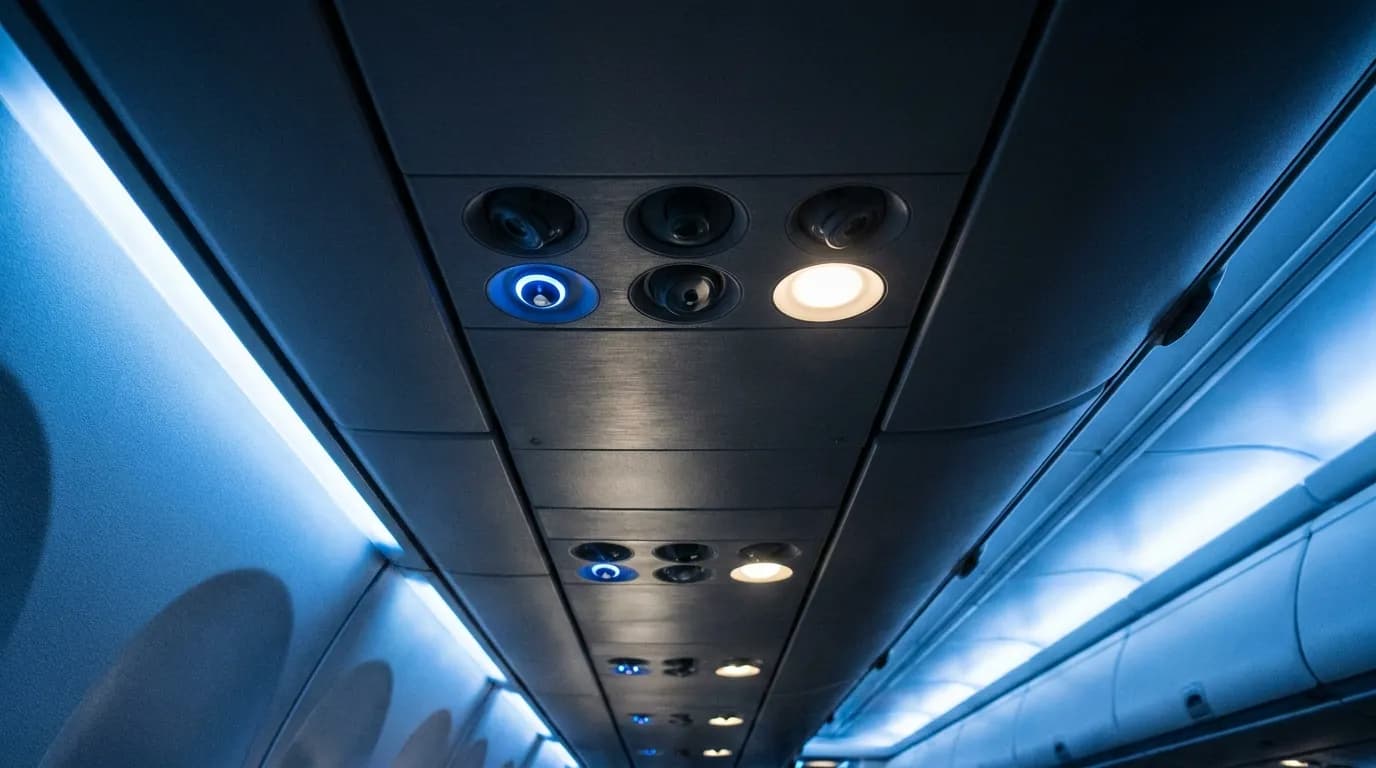
The video from an August 21 American Airlines flight told a familiar 2026 story: a laptop battery failed somewhere between Atlanta and Dallas, smoke in the cabin, a flurry of trained movement, and a landing where one passenger needed medical attention — frightening, contained, over. Federal regulators have logged 58 lithium-battery incidents on US passenger flights this year through August. For the tech-saturated travelers flying out of SFO with four batteries per person, it is worth knowing what actually unfolds in those minutes — because the process is far more rehearsed, and far less catastrophic, than the headlines suggest.
Karpo can prep your gadget-heavy carry-on before any SFO departure — what stays with you, what must be off, and your airline's current battery policy. Text Karpo before you pack and board with nothing to think about.

Thermal runaway, in plain English
Lithium batteries store a lot of energy in a small chemical package, and when a cell is damaged, defective or overheated, that energy can start releasing itself faster than the battery can shed the heat. Each overheating cell warms its neighbors past their own failure point — a chain reaction called thermal runaway. From the outside it follows a recognizable arc: the device gets unusually hot, may swell or hiss, vents acrid smoke, and can flare. It cannot meaningfully explode like a movie prop, but it burns hot and stubbornly, and it doesn't need outside oxygen to keep going — which is why the response is about containment and cooling, not smothering.
The warning stage matters most. Batteries usually announce themselves — heat, smell, swelling — before the dramatic part. Most "battery fires" on planes end at the smoking-device stage precisely because someone acted during the announcement.
The crew's playbook
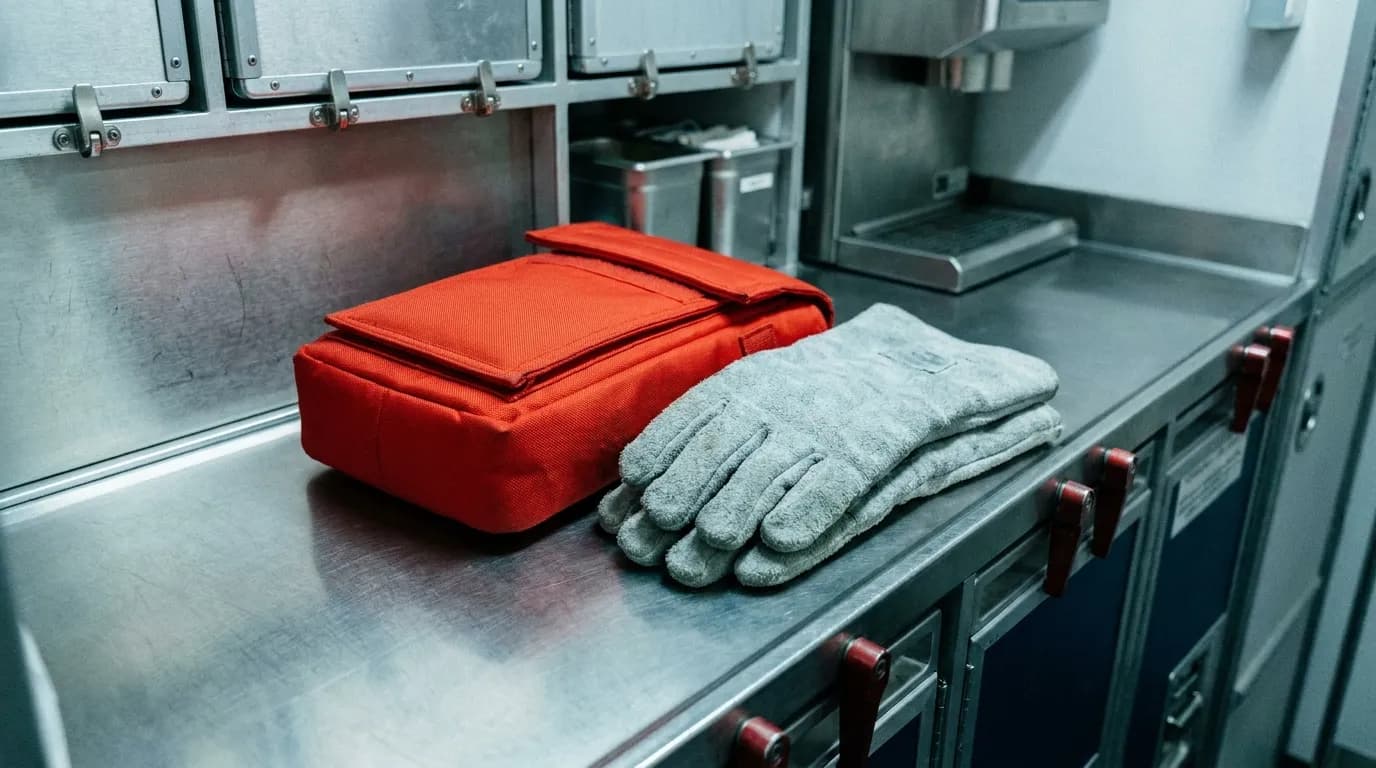
Cabin crews drill for battery events the way they drill for medical emergencies, and modern airliners carry equipment for exactly this: fire-resistant gloves, extinguishers, and thermal containment bags — heavy fireproof pouches built to swallow a burning device. The choreography is quick: identify the device, cool it and cut the reaction with water or extinguisher, isolate it in the containment bag, and monitor it for the rest of the flight. On the August flight, that is precisely the sequence passengers filmed. Pilots, meanwhile, weigh a diversion; smoke events often end with a precautionary landing not because the fire is uncontrolled but because aviation's margin culture says land and check.
The system's one blind spot is the cargo hold — no crew, no containment bag, suppression systems not designed for lithium chemistry. Every rule about keeping batteries in the cabin exists because of that asymmetry: up here, a battery fire is a procedure; down there, it is a problem.
Your two jobs as a passenger
Job one is speed: if your device — or your neighbor's — gets hot, smells sharp or starts smoking, press the call button immediately. Seconds genuinely matter in the announcement stage, and crews would unanimously rather investigate a warm phone than fight a burning bag. Do not play hero with a water bottle before telling anyone, and do not stuff a misbehaving device into a seat pocket or bag where it can heat unseen. Job two is prevention, which is unglamorous: don't sit on your phone, don't charge under pillows and blankets, keep power banks where you can touch them, and leave the swollen old battery at home in the e-waste bin where it belongs.
The calm takeaway
Fifty-eight incidents against the millions of US flights and billions of batteries flown this year is a small number made vivid by phone cameras. The honest reading of 2026's streak is not that flying with electronics is dangerous — it is that the safety system is holding while the battery count per passenger climbs, and regulators and airlines are tightening the rules to keep it that way. Fly out of SFO with certified batteries in the cabin, pay attention to heat, and the odds are overwhelming that the only fire on your flight will be the sunset out the window.
Practical notes
If a device overheats in flight: alert the crew instantly, don't handle a smoking device yourself, and follow instructions. Prevention basics: spare batteries and power banks ride in the cabin only, certified brands, nothing swollen or damaged, charging where you can see the device. Airlines have been adding restrictions on in-flight power-bank use through 2026 — check your carrier's current policy before flying from SFO, and consult the FAA's PackSafe pages for the underlying federal rules.
Tags: #karpo #sanfrancisco #sfo #travelsafety #lithiumbattery #thermalrunaway #flightsafety #powerbank #travel2026
Sources consulted: faa.gov · upi.com · flysfo.com
All trademarks are the property of their respective owners.
Ask Karpo first
Want a pre-flight battery check tailored to your gear, or your airline's latest cabin rules before an SFO departure? Ask Karpo and board already sorted — the calm flight is the prepared one.