 Bernal Heights Pottery Glaze Supply Browsing Route: Walk
Hidden Gems & Odd Finds
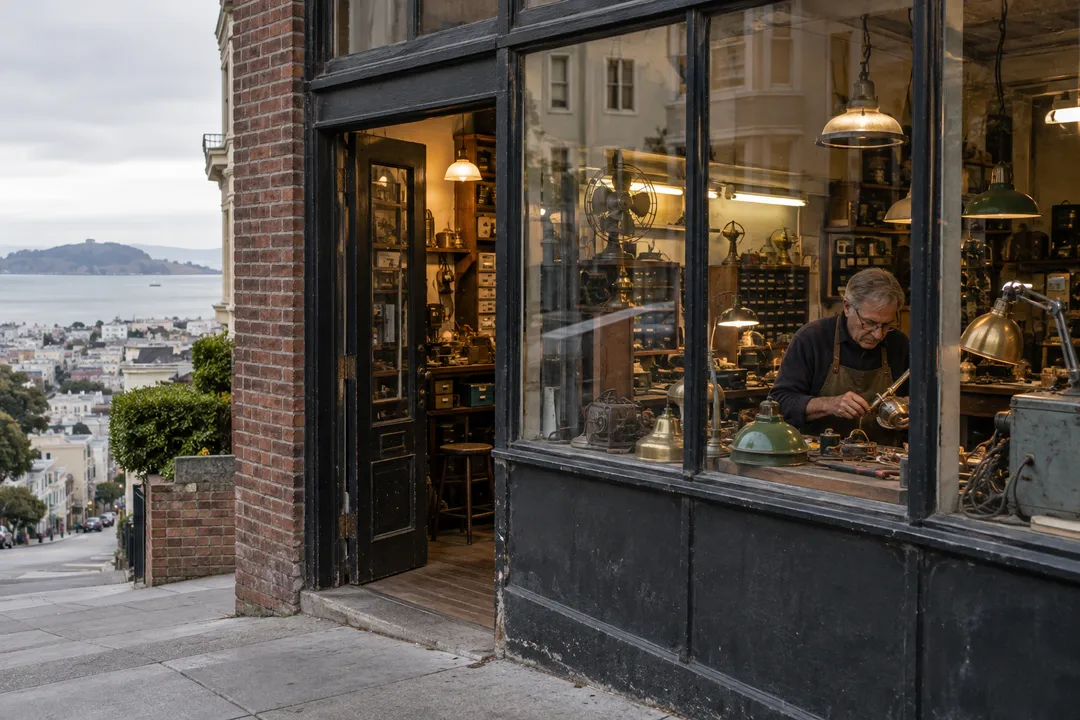
Phil's Lamp Repair Shop: Marina Fixes Without Waste
A long-running Marina repair counter where lamps share the bench with vacuums, mixers, shavers, cords, switches, and the practical parts of home life.
Phil's Electric Vacuum Center is the San Francisco lamp repair shop for the unglamorous but valuable electrical problem: a lamp that flickers, a switch that fails, a cord that has become unsafe, or a small household fixture that deserves repair before replacement. The shop is at 2701 Lombard St. in the Marina. Current listings show Monday through Saturday service beginning at 9:30am and ending at 4:30pm, with Sunday closed.
Why a Multi-Repair Counter Can Be the Right Fit
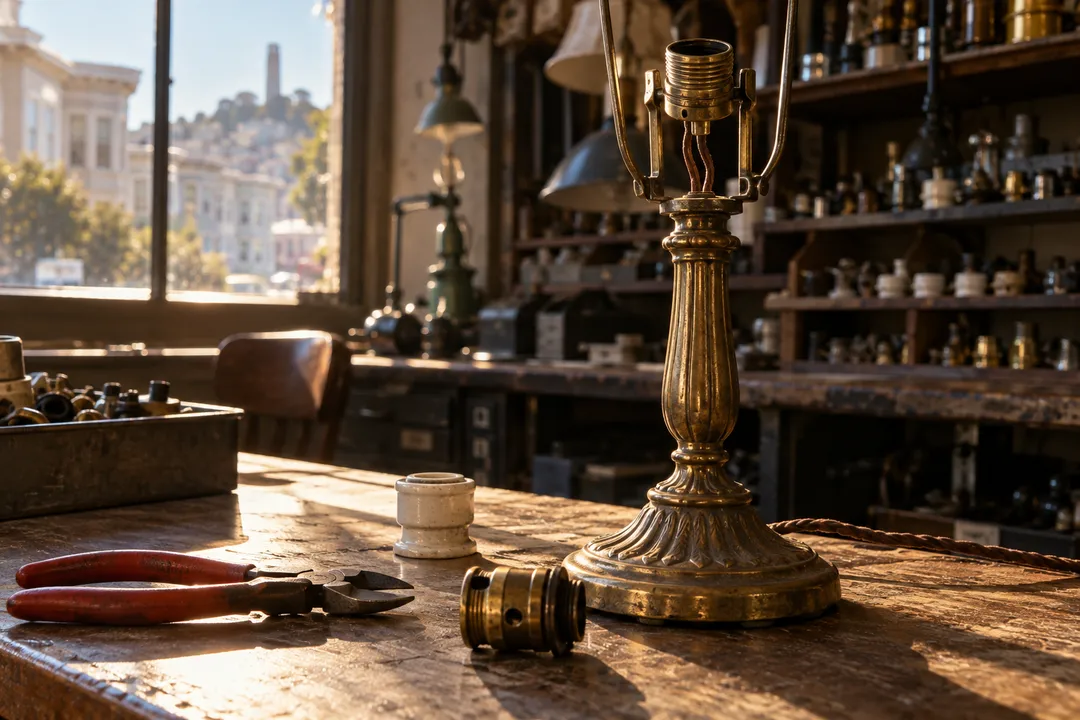
Phil's is not presented as a boutique restoration atelier. Its business description pairs lamp repair with vacuum sales and repair, small-appliance repair, electric-shaver service, and household cleaning products. That mix is useful when your lamp is part of a wider home-repair pile. The staff is accustomed to diagnosing everyday electrical objects, which makes this a sensible first stop for a functional repair: a switch, cord, socket, plug, or connection that needs attention more than a museum-grade finish.
The shop's long history is part of the local story. Business listings describe Phil's as operating since 1941, and the current Lombard storefront has the feel of a neighborhood trade counter rather than a showroom built for styling photographs. Expect practical questions: what failed, whether the fixture has power, whether the cord is damaged, and whether a replacement part exists. Bring the lamp as a working problem, not as a prop whose symptom you have to hide.
How to Prepare a Lamp for an Everyday Repair
Unplug it, remove the bulb, and wipe loose dust from the base so the technician can see the socket and switch. If the cord has been taped, bring the tape and explain why. Put the finial, harp, and any tiny screws in a bag. If the lamp is part of a matching pair, bring photos of the working partner rather than carrying both unless the second one has the same fault. That preparation keeps the counter moving and reduces the chance of losing a small piece.
The Intake Questions That Save Time
Write down the symptom in plain language: 'the lamp turns off when the cord moves,' 'the switch feels hot,' or 'the socket no longer grips the bulb.' Note whether the problem occurs in one outlet or every outlet. If a dimmer or smart plug is involved, bring it or name it. Phil's also handles small appliances, so a specific description helps the staff separate a lamp circuit issue from a household power issue without making the counter guess.
The posted schedule makes Phil's a useful weekday or Saturday errand, but the hours are not late-night hours. Go early if the lamp is needed for a weekend project, and avoid leaving a fragile shade in the car while you run other errands. The queue strategy is simple: call first for an oversized fixture or a repair that needs a special part, then bring the complete base and cord. A five-minute phone call is better than a second trip across the Marina.
What the Shop Is Best At
Phil's is strongest when the goal is safe function and a clear repair path. A damaged cord, bad switch, dead socket, or small electrical component is the kind of problem that belongs at a general repair counter. The business also advertises lamp services alongside vacuum and appliance work, so you can ask whether a fixture needs a repair or whether a part should be replaced. That practical answer can be more useful than an elaborate restoration plan for a lamp used every day.
Do not confuse an everyday repair with a decorative restoration. If the lamp has rare painted metal, a fragile antique shade, or a complex chandelier frame, describe that before the work starts. A functional counter can still tell you whether the job fits its bench, but the right answer may be to seek a specialist. The honest advantage of Phil's is that you can get a grounded electrical assessment without pretending every lamp is a collector's piece.
A Marina Walk After Drop-Off
2701 Lombard puts the shop near a useful stretch of Marina errands. After leaving a small lamp, walk toward the Presidio edge or continue toward Marina Green, keeping the route short if you need to return for a pickup. The neighborhood works best as a practical loop: coffee, one errand, then home. If the repair is complete, use both hands and a box rather than carrying the lamp by its cord or shade.
How to Handle Parts and Pickup
Ask what part is being changed and whether the original will be returned. Keep a photo of the lamp before drop-off so you can compare the final assembly, especially if the shade, harp, or finial was removed. If the staff gives you a care instruction, write it down. A repaired cord still needs sensible use: no pinching under furniture, no overloaded power strip, and no loose connection hidden behind a cabinet.
The People Who Will Appreciate This Place
Phil's suits the renter with a favorite reading lamp, the homeowner repairing several small appliances at once, and the person who would rather fix a useful object than throw it away. It is also a good fit for someone who values a real counter conversation over a checkout page. The trade-off is atmosphere: this is an operating repair business, not a curated vintage-lighting gallery. Bring a practical problem and the shop's character makes more sense.
What I Would Not Do
I would not arrive at closing time with a heavy chandelier and expect an instant answer. I would not bring a lamp with its symptom hidden by a temporary adapter, and I would not assume a cord repair makes a damaged socket safe. That small amount of triage is the best way to respect the shop's working hours.
Practical Notes
Address: Phil's Electric Vacuum Center, 2701 Lombard St., San Francisco, CA 94123. Current listings show Monday–Saturday service roughly 9:30am–4:30pm and Sunday closed; the shop's public descriptions include lamp repair, vacuum repair, small-appliance repair, and electric-shaver service. Call before bringing a large fixture or a lamp with a fragile shade, and keep every loose hardware piece together.
The Best Way to Start
Start with the symptom, not the diagnosis. Tell Phil's what the lamp does, when it fails, and what you have already tried without opening the fixture. Then ask whether the shop can repair the component, source a replacement, or recommend a different specialist. That workflow fits a neighborhood electrical counter and gives you a useful answer even when the original lamp turns out to need more than a quick switch replacement.
Ask Karpo for more information.
Keep reading
- Bernal Heights Pottery Glaze Supply Browsing Route: Walk
 Potrero Hill Pottery Glaze Supply Browsing Route: Walk
 Mission Pottery Glaze Supply Browsing Route: Studio Walk