 Bernal Heights Pottery Glaze Supply Browsing Route: Walk
Hidden Gems & Odd Finds
Potrero Hill Independent Eyewear Shop Finder for Makers
A Potrero Hill guide for makers and artists: prescription safety frames, lenses that keep colours true, workbench fitting tips and a hilltop walk to test them.
Potrero Hill has a long history as a working neighbourhood. Its lower slopes once held factories and warehouses, and today many of those buildings shelter studios, small manufacturers, furniture builders and design firms. Up the hill, painters and ceramicists work from garages and back rooms with views of the downtown skyline. For people who spend their days at a bench or an easel, glasses are not just about seeing clearly. They have to keep dust and chips out of the eyes, stay put while you lean over a project, and show colours as they really are. Independent opticians are well placed to help with all three.
When Everyday Glasses Are Not Enough
Ordinary glasses are not designed to stop flying debris. A splinter from a lathe, a fleck of metal from a grinder or a drop of glaze can all strike the eye from the side, where everyday frames leave a gap. Wearing safety goggles over regular glasses works, but the combination is bulky, fogs easily and tempts people to skip protection for quick jobs.
Prescription safety glasses solve that by combining your correction with impact-resistant lenses and side protection in a single frame. Many independent opticians can order them, and they are worth asking about if you work with tools regularly. Explain the kinds of materials you handle so the optician can recommend the right level of protection.
Finding the Right Working Distance
Makers tend to focus at very specific distances. A jeweller peers at work a few inches away, a woodworker looks down at a bench at waist height, and a painter steps back and forth from a large canvas. A lens tuned for reading or for driving may leave the most important distance slightly blurred.
Measure the distance you work at most often and take that number to your appointment. Better still, bring a small piece of your work or a typical tool. Opticians appreciate a clear picture of the task, and it helps them choose between single-vision lenses, bifocals placed higher in the frame, or occupational designs made for close and middle distance.
Keeping Colours True for Painters and Designers
If colour is central to your work, mention it early. Some tints and coatings shift colours slightly, which matters when you are matching glazes, mixing paint or approving a print. Clear lenses with a good anti-reflective coating keep the view as neutral as possible indoors, which is where most colour decisions are made.
Lenses that darken in sunlight can be handy for errands but may stay faintly tinted in a bright studio with large windows. If you choose them, keep a clear pair for colour work. A thoughtful optician will talk through these trade-offs rather than recommending the latest feature, and that kind of honesty is one of the reasons makers return to the same small shop.
Fitting at the Bench, Not the Mirror
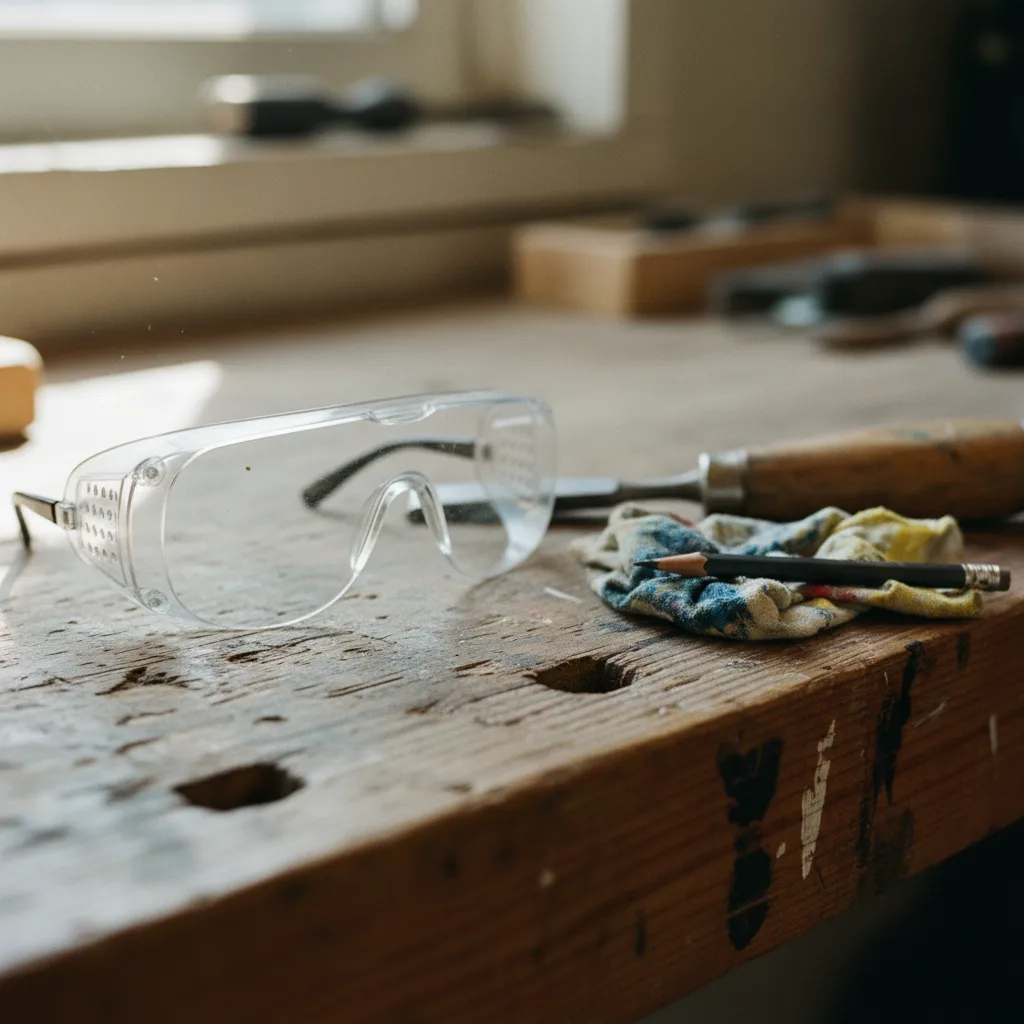
When you try frames, move the way you do at work. Look down as if you were cutting or carving, tilt your head to read a measurement, and lean forward over the counter. A frame that sits nicely while you stand upright can slide down your nose the moment you bend over a bench.
Ask for adjustable nose pads and temple tips that grip without pinching. If you wear ear protection or a respirator, bring it along, because straps and ear cups press on the arms of your glasses. A few millimetres of adjustment at the counter can make the difference between a pair you tolerate and one you forget you are wearing.
Bring a magnifier or loupe if you use one. Some makers find that a well-chosen lens means they reach for it less often, while others pair the two on purpose for the finest tasks. Either way, showing the optician your full kit avoids surprises once you are back at work.
A Walk to Test Your Eyes on the Hill
Potrero Hill rewards anyone who takes the time to walk it. Once your glasses are ready, climb towards McKinley Square, a small park with sweeping views across the city to the downtown towers and the hills beyond. Looking far out after a day of close work is a pleasure in itself and a good chance to see how your new lenses handle distance.
From the park, follow the curving block of Vermont Street that twists down the slope, a quieter rival to the famous crooked street across town. Then wander along the neighbourhood's main commercial strip, where cafes and small restaurants fill the ground floors of older buildings, before heading back towards the studios.
Two Pairs or One
Many makers end up with two pairs: protective glasses for the workshop and a more relaxed frame for life outside it. This keeps your everyday pair free from scratches and sawdust and lets the safety pair focus on doing its job. It also means a broken pair in the studio does not leave you stranded.
Others prefer a single pair with side shields that clip on and off. These can work well for lighter tasks or for people who move between a desk and a bench throughout the day. Talk through your routine with the optician and decide what will actually be worn, because the safest pair is the one you never leave on the shelf.
Looking After Glasses in a Dusty Studio
Studios are hard on lenses. Fine dust settles on every surface, and wiping it off with a shirt can grind it into the coating. Rinse lenses under running water first, then dry them with a clean microfibre cloth kept in a sealed pouch. A small spray bottle of lens cleaner on the bench makes the habit easy.
Store your glasses in a hard case when you take them off, rather than resting them on the bench where tools and offcuts land. Check screws and hinges now and then, since vibration from machines can loosen them over time. Independent opticians are usually glad to tighten a frame while you wait.
Sharing Tips Around the Studios
Potrero Hill's maker community is close-knit, and good advice travels quickly. Ask neighbouring studios where they had their safety glasses made, which frames stood up to daily use and which coatings survived the dust. Shared studios often have a favourite local optician, and a recommendation from a fellow maker carries more weight than any advert.
It is also worth encouraging apprentices and new studio members to sort out proper eyewear early. A short trip with a more experienced maker, followed by coffee on the hill, can make the errand feel like part of joining the community rather than another chore.
Using Karpo APP to Plan the Errand
Ask the Karpo APP for independent eyewear shops around Potrero Hill that suit makers and artists, then add McKinley Square and a cafe on the hill for the waiting time. Karpo keeps the outing in one plan, so getting the right glasses fits neatly around studio hours.
Ask Karpo for more information.
Keep reading
- Bernal Heights Pottery Glaze Supply Browsing Route: Walk
 Potrero Hill Pottery Glaze Supply Browsing Route: Walk
 Mission Pottery Glaze Supply Browsing Route: Studio Walk