 Bernal Heights Pottery Glaze Supply Browsing Route: Walk
Hidden Gems & Odd Finds

SF Horror Bookstore: Plan One Sunday Browsing Stop
Plan an SF horror bookstore outing for Sunday with one main browse, a return endpoint, and a shorter route that preserves the purpose when plans change.
A Sunday SF horror bookstore trip needs a defined browsing area before it needs a long list of stops. Choose where you will start, where you must finish, and how much of the day belongs to books. Then use Karpo APP to shape an outing around those limits. This page offers a planning method rather than naming a shop or advertising a Sunday schedule. No opening time, admission arrangement, or journey duration is assumed by the example.
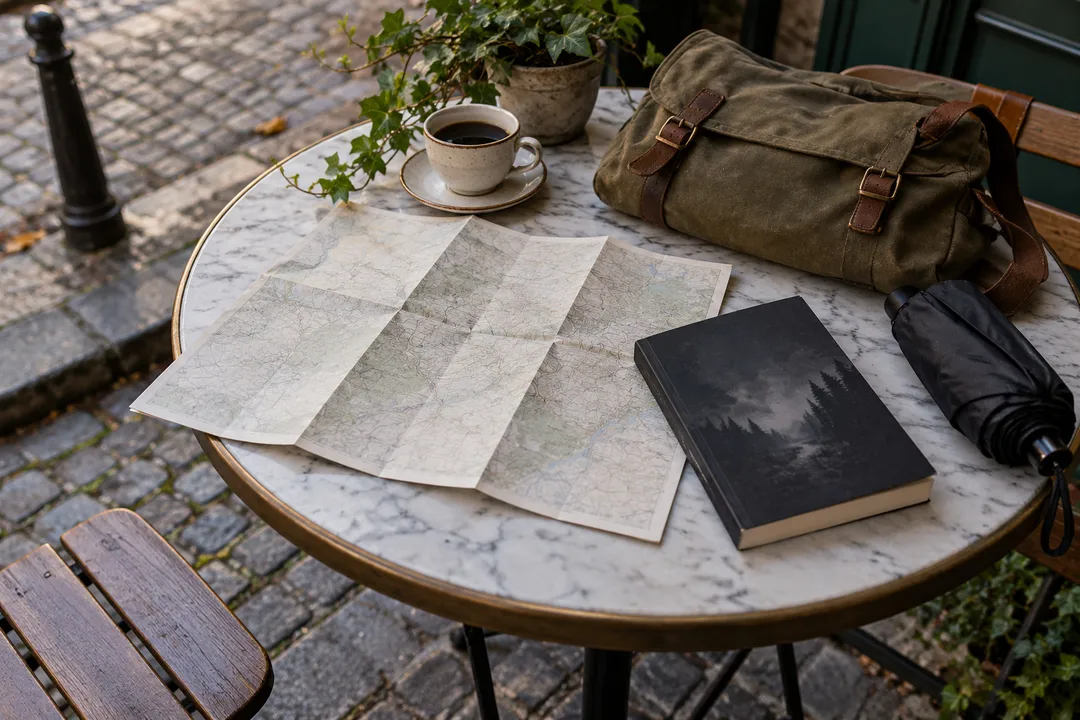
Start at the end of Sunday
Work backward from the commitment that cannot move. That might be dinner, a performance, or the time you want to be home. Reserve space for the return before allocating time to a bookstore. An attractive recommendation becomes less useful if it leaves you hurried for the rest of the afternoon. Write the endpoint in the request, along with whether you are comfortable changing transit services or prefer to keep the trip within a single area.
Give the outing a main purpose. A person hoping to find one supernatural novel has different needs from someone comparing several sellers' selections. Decide which activity would make the day feel successful even if nothing else happens. Treat coffee, a waterfront view, or a meal as optional additions unless they are already booked. That simple hierarchy makes it easier to shorten a plan when browsing takes longer than expected or a companion wants to linger over another shelf.
Tell the planner how you prefer to move
Describe your travel preferences in everyday terms. You might want limited walking, a route that avoids a steep climb, a straightforward return, or enough room in the schedule to sit down. These are questions for the plan to address, not automatic accessibility assurances. When a particular entrance, curb, staircase, or seating arrangement matters, use the venue's own information for that detail. A neighborhood name alone does not explain what the final approach to a shop will be like.
An adaptable request is: "Plan a Sunday horror-fiction browse in San Francisco, starting near my chosen transit stop and ending near my dinner destination. Keep one bookstore as the main stop. Explain the travel choices and offer a shorter alternative if I lose time." Supply your actual starting and ending areas. You can initially use recognizable public locations rather than private addresses. This gives the conversation a useful geographic frame while leaving the exact destination open for a later decision.
Read a route as a sequence of decisions
Look at the order of activities before judging the number of recommendations. Does the plan send you past the same place twice? Does it place a time-sensitive stop after an optional activity? Are you carrying purchases farther than necessary? Ask for the reason behind the sequence. A concise explanation can reveal whether the proposed route was designed around your needs or merely assembled from several places that happen to share a broad location.
Remove a stop when it adds travel without improving the reading task. Two bookstores may have overlapping strengths, so a second visit is not automatically better than a longer first browse. You can ask for a different alternative: another seller if a specific title is unavailable, a shorter walk if you feel tired, or an indoor pause if the weather turns. Each alternative should solve an identifiable problem. A backup list with no purpose simply restores the planning work you hoped to reduce.
Leave room for the bookseller's answer
Before entering, decide whether you are asking about a particular book or inviting suggestions. For a title request, carry the author and the edition details that matter. For an open recommendation, explain the mood and an example of something you liked. That distinction helps a conversation move quickly without making staff reconstruct a vague online description. Any holding, special-order, photography, or bag policy belongs to the shop. The planning article does not assign those rules to unnamed businesses.
Browsing can change the trip in a useful way. You may discover an unfamiliar writer or realize that an illustrated edition needs more consideration. If the outing still has space, spend it there instead of rushing to complete every line of an itinerary. If the day is already tight, take a note and leave the purchase for another decision. The schedule serves the reading experience. Completing more stops does not prove that the plan was better.
Build a shorter route before you need it
Create a reduced version while the main plan is still clear. It should preserve the essential browse and the return endpoint, with the optional walk removed. Label this as your personal alternative, not a measured promise about transit. You can also prepare a no-visit outcome: save the title list and continue choosing books from home. That option is particularly useful when the day changes before you leave, rather than after you have committed time to travel.
For a damp outing, pack books inside something protective and place the items you need frequently in a separate pocket. Searching through a bag on a narrow sidewalk is less pleasant when paper purchases are exposed. If the plan includes a walk near the bay, treat it as a preference rather than the only acceptable finish. An indoor ending can preserve the afternoon's purpose without pretending that a weather forecast guarantees comfort or that every nearby venue has space.
Practical Notes for a shared afternoon
When you are going with someone else, agree on a browsing window and a meeting point before separating inside. The example does not prescribe a shop's rules or a universal amount of time. It simply prevents one person from waiting uncertainly while the other follows a long chain of recommendations. Discuss whether purchases are part of the goal. Someone who wants only to look may enjoy the same visit while having a different idea of when it is finished.
Ask for the plan to distinguish an established fact from an unresolved detail. A dated event listing, an official shop page, and an inferred walking connection are different kinds of information. Retain only the hard details that have a reliable basis. There is no need to fill every itinerary field to make the result look complete. A plan with a clearly chosen area, a sensible sequence, and an honest blank can be more useful than a polished page of assumptions.
Afterward, evaluate the route by comfort and attention rather than distance covered. Did you have enough room to browse? Was the return easy to understand? Which optional addition felt worthwhile? Use those observations in the next request to Karpo, whose public description includes working around your schedule. The practical outcome is a better Sunday brief, not a claim that the app reserved books or monitored opening doors. Keep the parts that helped and simplify the rest.
Ask Karpo for more information.
Keep reading
- Bernal Heights Pottery Glaze Supply Browsing Route: Walk
 Potrero Hill Pottery Glaze Supply Browsing Route: Walk
 Mission Pottery Glaze Supply Browsing Route: Studio Walk