 Bernal Heights Pottery Glaze Supply Browsing Route: Walk
Hidden Gems & Odd Finds
City Bees Honey Shop Stand: Neighborhood Jars at Ferry Plaza
City Bees sells honey from hives in San Francisco backyards, sorted by neighborhood, at the Ferry Plaza Farmers Market on Saturdays from 8 am to 2 pm.
City Bees sells a kind of honey you cannot buy anywhere else: jars sorted by San Francisco neighborhood, from hives that live in residents' backyards. Robert MacKimmie, the beekeeper behind it, runs his stand at the Ferry Plaza Farmers Market at 1 Ferry Building on Saturdays from 8 am to 2 pm, on the back side of the building near the base of Market Street. If you are hunting for a honey shop in San Francisco, this table is the most local one in the city.
From Marshall's Apprentice to Urban Apiarist
City Bees says it got started in 1996. According to its Foodwise seller page, Robert got hooked on beekeeping that year while working with beekeepers Spencer and Helene Marshall of Marshall's Farm Natural Honey, whose own stand works the same Saturday market. His interest turned into a full-time career as an urban apiarist in 2009, and the business has been built around city hives ever since.
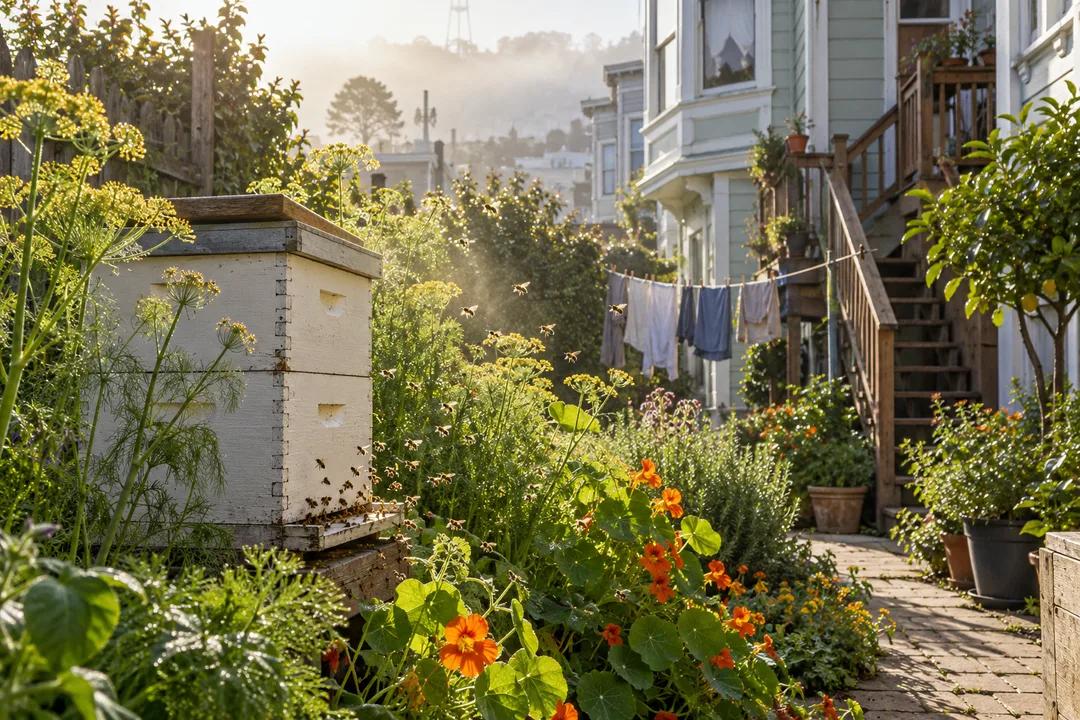
The model is neighborly. Foodwise explains that many of the hives sit in the backyards of San Francisco residents, who host the bees in exchange for honey. The seller page puts the count at 35 hive sites in backyards, gardens and parks around the Bay Area, and the operation holds Pollinator Partnership Bee Friendly Farming certification. A 2022 SF Standard profile described MacKimmie tending about 25 sites scattered across the city itself.
That arrangement is why the jars carry neighborhood names. Bees forage within a few miles of their hive, so a colony in the Inner Sunset works different gardens and street trees from one on Telegraph Hill. Selling the harvests under their neighborhood names turns the stand into a tasting map of San Francisco rather than a single generic city honey.
The Neighborhood List
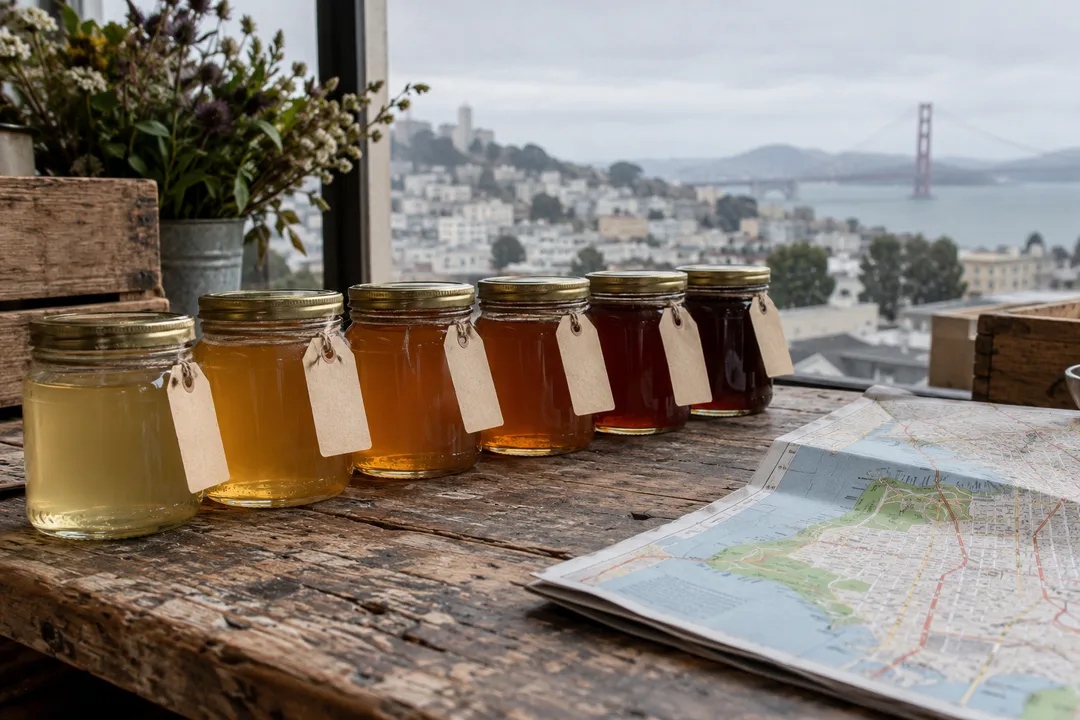
The City Bees website lists the honeys by place. Inner Sunset jars come from hives at 17th Avenue and Lincoln and at 25th Avenue and Judah. There is McLaren Park honey from Gambier Street, Bayview honey from Thomas Avenue, Mission honey from the Bi-Rite store on 18th Street and from 22nd Street and Fair Oaks, and NOPA honey from the Bi-Rite on Divisadero.
The list continues with Mount Olympus, Mountain Lake Park, the Richmond at 8th Avenue and Fulton, Telegraph Hill East from the Greenwich Steps, and the Great Highway at 48th Avenue and Santiago, near Ocean Beach. Not every neighborhood is available every Saturday, because each hive produces a small harvest, so treat the list as a menu of possibilities rather than a guaranteed lineup. Two entries stand out for visitors: the Mission and NOPA hives are listed at Bi-Rite grocery locations, so the honey comes from blocks many residents shop on every week, and the Greenwich Steps hive sits on one of the city's best-known public stairways.
The SF Standard profile gave a sense of how much these honeys differ: Potrero Hill honey, it reported, has a warmth and wildness with hints of anise from the wild fennel growing on the hill. That is the practical case for buying two small jars instead of one big one: the difference between hives a few miles apart is the whole reason to shop here.
Blends and Cappings
Alongside the single-neighborhood jars, City Bees sells blends. The website names four of them: All City Cappings Blend, Creamy Cappings, Dark Cappings and City Limits. Cappings are the wax caps beekeepers slice off the comb before extracting, and the honey that drains from them is pooled across many hives, so a cappings blend works as a cross-section of the whole operation rather than one block.
If you want one jar that represents San Francisco, the All City Cappings Blend is the honest answer. If you want a conversation piece, buy the neighborhood where you live or where you are staying and compare it with a second one from across town. City Bees does not publish a price list online, so prices are posted at the stand.
How to Shop the Stand
Arrive early. Ferry Plaza runs from 8 am to 2 pm on Saturdays and is at its busiest by late morning, and with each hive producing only a small harvest, the earlier you arrive the more neighborhoods you are likely to find on the table. The stand is on the back side of the Ferry Building, the bay side, so walk through or around the building from the Embarcadero rather than looking for it along the front arcade.
Ask questions. The point of buying from the beekeeper is that he can tell you which block a jar came from and what was flowering when it was harvested. If you have a sunny yard and are curious about hosting a hive, this is also the place to ask, since backyard hosts are how City Bees grows.
On Sundays, the City Bees website also lists a stand at the Clement Street market in the Inner Richmond, held at 244 Clement Street. That is the better choice if you live on the west side or want to pair honey shopping with the dim sum and bakeries of Clement Street.
Around the Ferry Building
The Ferry Building opened on July 13, 1898, replacing a wooden terminal built on the same site in 1875, and its marketplace hall stays open daily from 6 am to 10 pm. After the honey, walk inside for bread or cheese to go with your jar, then out to Embarcadero Plaza at the foot of Market Street.
A longer walk north along the Embarcadero reaches the Exploratorium at Pier 15, at the Embarcadero and Green Street, a hands-on science museum that makes a natural follow-up for children who have just learned how bees forage. For a quieter view, Pier 7 near Broadway is a long public fishing pier looking back at the Ferry Building clock tower.
Practical Notes
City Bees stand, Ferry Plaza Farmers Market, 1 Ferry Building, San Francisco, CA 94111, on the bay side of the building. Saturdays 8 am to 2 pm. Sunday stand at the Clement Street market. Founding year, hive model and market day are from City Bees' site and its Foodwise seller page.
Ask Karpo for more information.
Keep reading
- Bernal Heights Pottery Glaze Supply Browsing Route: Walk
 Potrero Hill Pottery Glaze Supply Browsing Route: Walk
 Mission Pottery Glaze Supply Browsing Route: Studio Walk