 Stonestown Winter Farmers Market Picker for Student Cooks
Weekend Plans
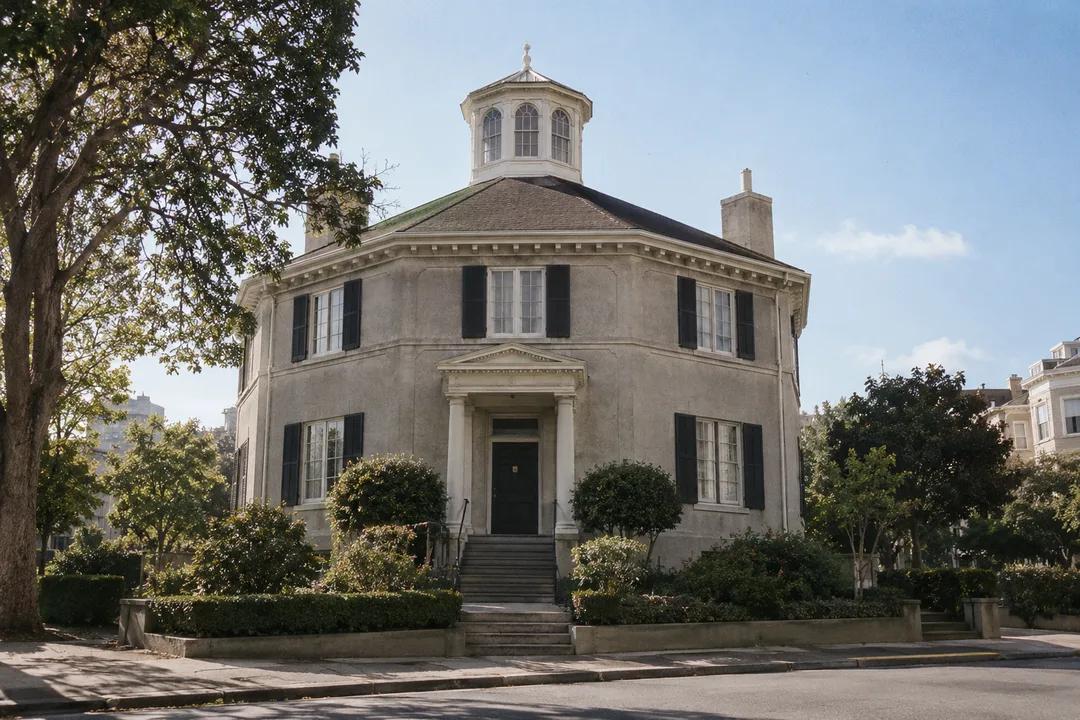
Cow Hollow Historic Mansion Near Me: McElroy Octagon House Guide
An in-depth guide to the McElroy Octagon House at 2645 Gough Street in Cow Hollow, showcasing rare pre-Civil War octagonal architecture and colonial decorative arts.
Nestled inside the tranquil greenery of Allyne Park at 2645 Gough Street, the McElroy Octagon House stands as one of the rarest and most intriguing historic residences in Northern California. Erected in 1861, this pre-Civil War landmark is one of only two surviving eight-sided residential dwellings in San Francisco and represents an extraordinary architectural movement popularized in mid-nineteenth-century America. Built during the peak of the Gold Rush expansion, the home combines innovative eight-sided engineering with a museum collection of American decorative arts, colonial furnishings, and early patriotic documents. Maintained by The National Society of The Colonial Dames of America in California, this historic mansion near me in Cow Hollow offers an enriching cultural destination for history lovers and architectural explorers alike.
Fowler's Octagon Fad and Gravel-Wall Construction
The house was built in 1861 by William C. McElroy, an enterprising merchant and flour miller who drew inspiration from the eccentric philosophy of amateur architect and phrenologist Orson Squire Fowler. In his 1848 treatise titled A Home for All, Fowler asserted that eight-sided houses maximized floor space, eliminated dark corners, enhanced interior ventilation, and allowed sunlight to flood every living space throughout the day. McElroy was captivated by Fowler's scientific claims and resolved to build an octagonal home for his family on the western slopes overlooking the bay.
To construct the exterior walls, McElroy implemented Fowler's pioneering gravel-wall method, an early forerunner of modern poured concrete. Workers blended coarse river gravel, sand, and slaked lime into wooden formwork, creating solid sixteen-inch-thick masonry walls that offered remarkable fire resistance and seismic durability. A wooden cupola was placed atop the low-pitched octagonal roof, functioning as a passive ventilation chimney that drew cool marine breezes through interior air registers. This resilient construction enabled the house to withstand the 1906 earthquake with virtually no structural damage.
Preservation, Relocation, and Museum Transformation
By the early 1950s, the McElroy Octagon House faced imminent demolition as post-war residential developers eyed its valuable parcel. Recognizing its irreplaceable heritage, The National Society of The Colonial Dames of America in California purchased the neglected building in 1952 for the symbolic sum of one dollar. In an ambitious engineering endeavor, preservationists hoisted the entire concrete structure off its foundations and transported it across Gough Street to its present parkland setting on land donated by the Allyne family.
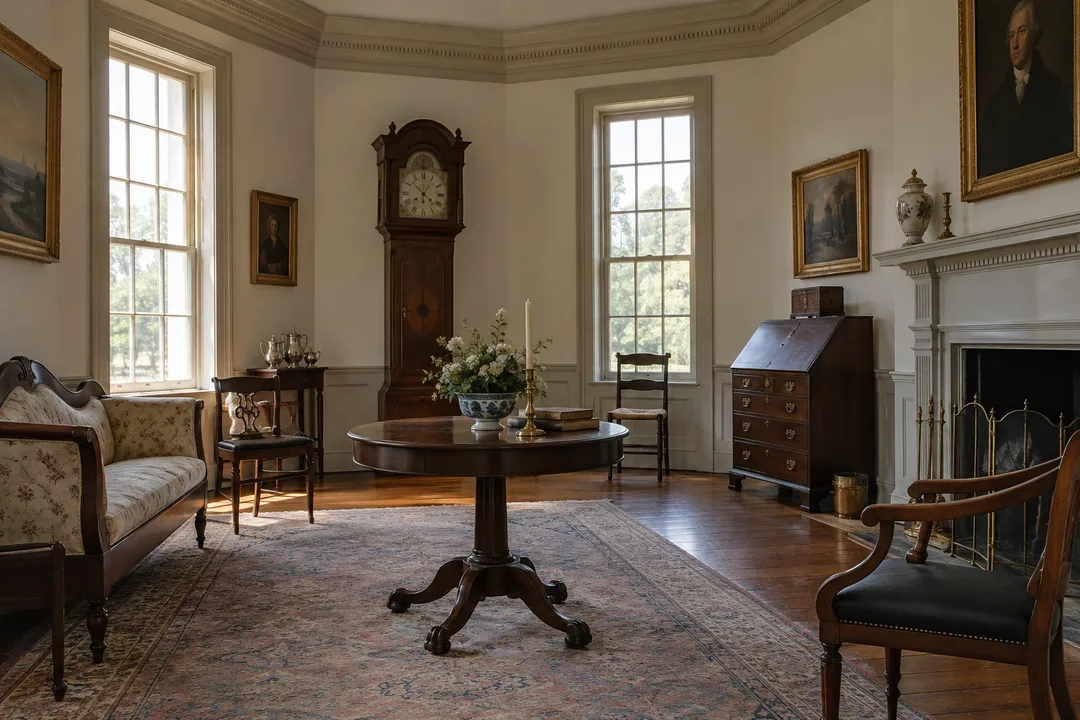
The Colonial Dames subsequently embarked on an exhaustive restoration project, restoring decorative exterior cornices, rebuilding the lantern cupola, and furnishing the interior as a decorative arts museum. In 1968, the building was officially designated San Francisco Landmark #17, and it was placed on the National Register of Historic Places in 1972. Today, the museum showcases museum-grade collections of eighteenth- and early nineteenth-century American decorative arts, including antique pewter, Chippendale furniture, Canton export porcelain, and historic portraits.
Public Access Hours, Admission Policies, and Historic Documents
The McElroy Octagon House maintains focused public visiting hours, opening its doors to the public on the second and fourth Sunday of each month from February through November, between 12:00 pm noon and 3:00 pm. The museum also opens on the second and fourth Thursday of select spring and autumn months for pre-scheduled docent walkthroughs, while remaining closed during January and on major national holidays. Knowledgeable docent guides dressed in period attire greet visitors in the central octagonal foyer, providing detailed historical narratives and answering questions.
Admission to the museum is free of charge, with a suggested donation of $5 for adult visitors and $3 for students and youth to support ongoing structural conservation. An illustrated self-guided architectural booklet detailing the gravel-wall construction process is available in the gift shop for $3. Private group tours and scholarly research visits can be arranged outside public hours for an admission fee of $10 per person by booking in advance with the museum coordinator.
Colonial Documents and Archival Treasures
A premier highlight inside the Octagon House is its collection of rare colonial-era historical documents and signatures. Display cases in the upper salon feature authenticated original signatures of fifty-four of the fifty-six Signers of the Declaration of Independence, including Thomas Jefferson, John Adams, and Benjamin Franklin. This prestigious archival holding is complemented by eighteenth-century needlework samplers, Paul Revere silver spoons, and early California pioneer letters that offer a tangible connection to early American statecraft.
The interior layout features triangular closets and utility chambers tucked between the four main rectangular rooms on each level, an ingenious design solution that transformed the octagonal perimeter into highly functional living quarters. Large windows on all eight exterior faces provide changing natural light, illuminating polished wide-plank pine floors and hand-loomed historic rugs.
Strolling Cow Hollow and Marina Neighborhoods
Following your visit to the Octagon House, take time to wander through Allyne Park, a tranquil city sanctuary filled with century-old Monterey cypress trees and heirloom garden beds. Walking one block north leads directly to Union Street, Cow Hollow's vibrant retail artery lined with restored Victorian shopfronts, sidewalk bistros, and independent coffee roasters. A six-block stroll north down the Gough Street hill brings you to Marina Boulevard and Fort Mason, where expansive shoreline paths offer panoramic views of Alcatraz Island and the Golden Gate Strait.
The McElroy Octagon House is located at 2645 Gough Street, San Francisco, CA 94123, near the intersection of Gough and Green Streets. The location is easily reached via the 45 Union-Stockton and 49 Van Ness/Mission bus lines, both stopping within two blocks of Allyne Park. Street parking is available along Gough and Green Streets, with public parking garages located on Lombard and Union Streets. Visitors arriving by cable car can ride the Powell-Hyde line to Hyde and Green Streets and walk four scenic residential blocks westward through Russian Hill to Gough Street. The tranquil garden paths of Allyne Park surrounding the historic octagonal structure provide shaded park benches, heritage specimen trees, and lovely open lawn spaces ideal for a restful afternoon read.
For more architectural discoveries, hidden historic parks, and authentic cultural experiences across San Francisco, explore the Karpo APP to find curated neighborhood guides and real-time recommendations for your next urban excursion.
Ask Karpo for more information.
Keep reading
- Stonestown Winter Farmers Market Picker for Student Cooks
 Clement St Winter Farmers Market Picker for Lunar New Year
 Fort Mason Winter Farmers Market Picker for Citrus Bakers