 Stonestown Winter Farmers Market Picker for Student Cooks
Weekend Plans
Ghost Walk Near Me in Haight-Ashbury: Haunted Haight Walking Tour
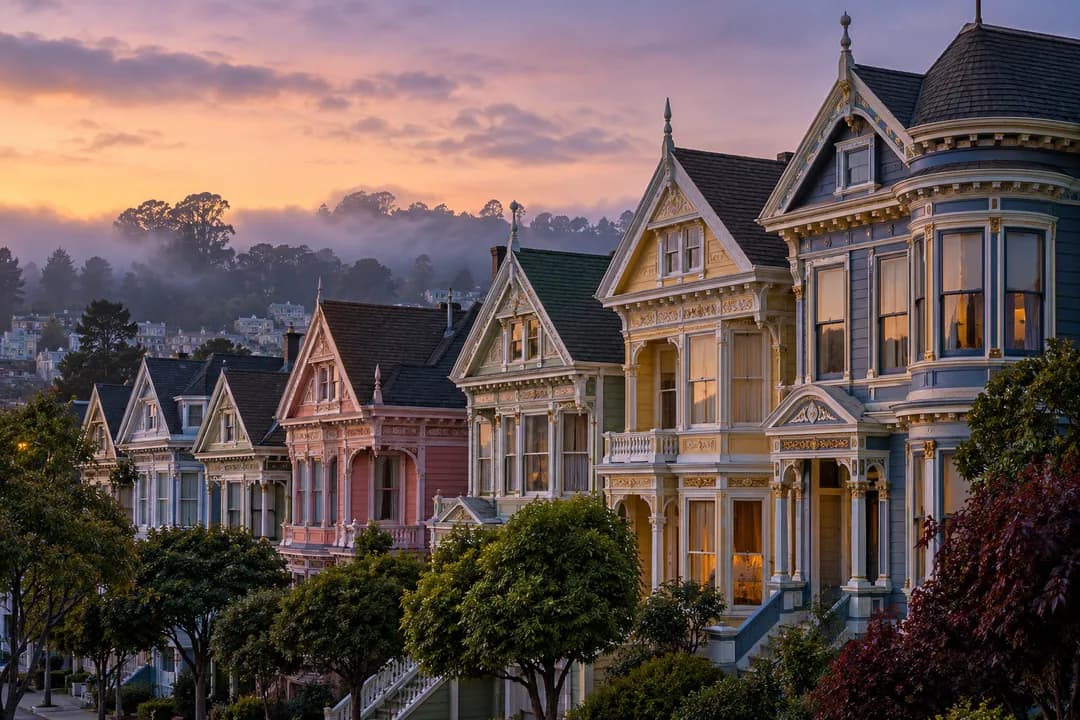
The Haunted Haight Walking Tour departs from 1398 Haight Street, guiding paranormal enthusiasts through Victorian architecture, 1960s counterculture mysteries, and Buena Vista Park for $25.
The Haunted Haight Walking Tour convenes on the sidewalk outside 1398 Haight Street, at the lively intersection of Haight Street and Masonic Avenue, where Victorian gingerbread facades meet the bohemian pulse of San Francisco. Founded in 2001 by paranormal researcher Tommy Netzband and operated by the San Francisco Ghost Society, this two-hour hands-on investigation departs from commercial ghost tours by putting functional electromagnetic field detection equipment directly into guests' hands. Operating throughout the autumn season with tickets priced at $25 per person, this experience provides anyone looking for a ghost walk near me with genuine field research across the historic heart of the counterculture.
Scientific Investigation and Ghost Society Methods
Before taking a single step along Haight Street, Netzband distributes calibrated electromagnetic field meters, temperature sensors, and audio recorders to attendees. Rather than relying solely on oral history, the tour trains participants to identify base baseline electrical readings emitted by municipal power transformers, vintage streetlights, and transit cables before interpreting anomalous spikes. This rigorous approach separates modern environmental noise from unexplained localized readings.
Standing near 1398 Haight Street, the guide recounts the founding of the San Francisco Ghost Society over two decades ago and explains the organization's repository of archival evp recordings, eyewitness affidavits, and property floor plans. The route deliberately avoids theatrical theatrics in favor of documented urban history, focusing on residential tragedies, unsolved Victorian crimes, and verified nineteenth-century cemetery relocations.
Participants are encouraged to log baseline readings across different building materials, learning how dense granite foundations, timber framing, and iron plumbing influence equipment responses. This educational grounding empowers visitors to distinguish between authentic architectural peculiarities and potential electromagnetic field deviations.
The Manson Commune and 1960s Shadow History
Walking two blocks eastward to the intersection of Cole Street, the tour halts outside the preserved Victorian flat at 636 Cole Street. During the tumultuous Summer of Love in 1967, this building served as the temporary communal residence for Charles Manson and his early followers before their departure for Southern California. The guide outlines the psychological and cultural pressures that transformed the neighborhood from an idealistic youth sanctuary into a haven for criminal opportunists.
Subsequent tenants and neighboring residents have consistently documented unexplainable acoustic anomalies within the building, including rhythmic drumming, disembodied whispering through radiator vents, and sudden electronic interference that drains modern smartphone batteries. Tour participants hold their detection meters against the perimeter boundary line, noting localized temperature drops that defy the ambient evening air.
Netzband shares historical police reports and contemporary resident interviews, detailing how the dark countercultural legacy continues to generate localized paranormal claims. The presentation emphasizes factual chronology over sensationalism, illustrating how historical traumas leave long-lasting impressions on urban spaces.
Buena Vista Park and the Recycled Headstones
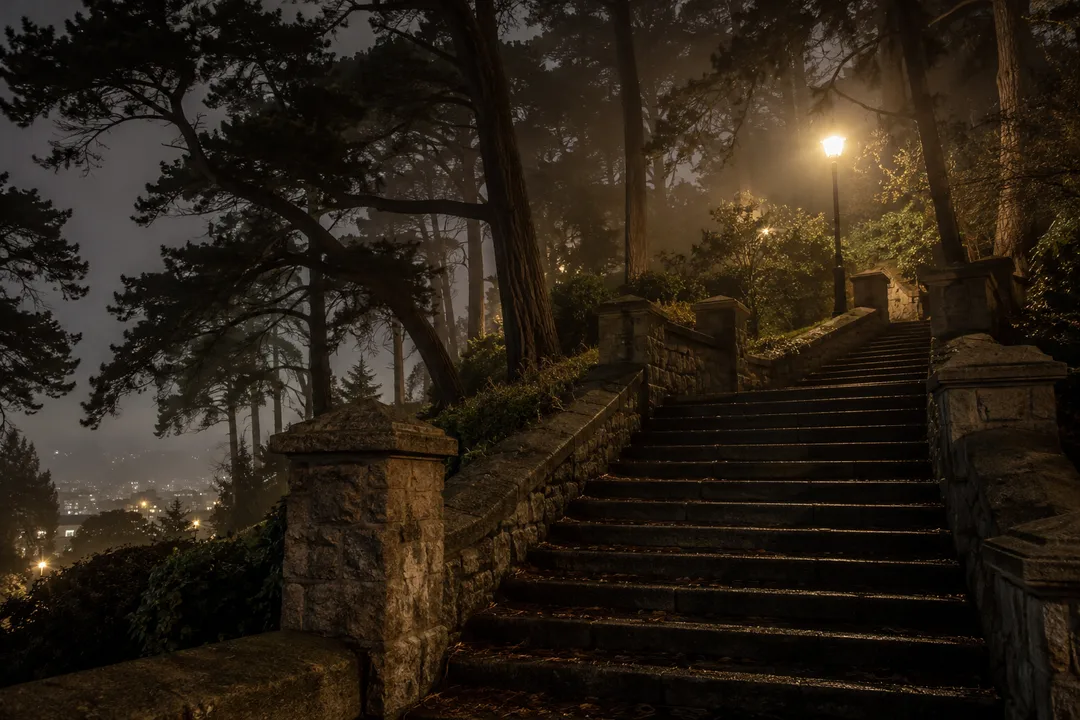
The route ascends toward the dark forested perimeter of Buena Vista Park at 701 Buena Vista Avenue West. Established in 1867 as the city's first municipal park, the hill holds a macabre secret embedded directly in its physical pathways. In the 1930s, during the Works Progress Administration improvement projects, the city utilized discarded marble and granite headstones from cleared cemeteries in the Richmond and Laurel Hill districts to pave gutters and build trail retaining walls.
Netzband shines focused flashlights onto the stone stormwater drains along the park slope, revealing fragmented names, dates of birth, and mourning inscriptions still legible on the masonry beneath fallen pine needles. Visitors walk quietly along the shadowy park rim, listening to accounts of spectral Victorian mourners observed searching the wooded ravines for their desecrated family resting places.
The Spreckels and Doolan-Larson Architectural Legacies
Returning toward the commercial corridor, the walk examines the grand Queen Anne and classical revival structures framing Haight and Ashbury Streets, pausing before the historic Doolan-Larson Building at 557 Ashbury Street. Listed on the National Register of Historic Places, the building witnessed over a century of neighborhood transitions, from Edwardian haberdashery shops to the epicenter of 1967 psychedelic culture.
The narrative also touches upon the imposing white marble facade of the Richard Spreckels Mansion on Buena Vista Avenue, home to tales of Victorian domestic turmoil and tragic railroad accidents. The guide presents historical newspapers detailing nineteenth-century accidents and fires that swept through wood-frame Victorian clusters, grounding each haunted account in concrete municipal building records.
What to Expect on the Route and Booking Rules
The tour spans approximately 1.5 miles over two hours, navigating residential sidewalks, gentle inclines, and unpaved gravel paths along the edge of Buena Vista Park. Participants must wear sturdy closed-toe shoes with aggressive tread to manage park terrain safely. Evening temperatures in the Haight-Ashbury district drop sharply as fog rolls over the Twin Peaks ridge, requiring attendees to wear warm multi-layered jackets and gloves.
Reservations must be secured online via hauntedhaight.com or through the operator's booking portal; tickets cannot be purchased with cash on the sidewalk. General admission is $25 per person. Because equipment is distributed and calibrated individually, group sizes are strictly capped around sixteen participants, ensuring that every attendee has access to detection gear throughout the entire route.
An Honest Assessment: What to Skip and What to Watch For
If you are looking for costumed entertainers telling fabricated campfire stories, this technical investigation is not designed for you. The Haunted Haight tour is built for open-minded skeptics, true crime historians, and serious paranormal researchers who want to handle real equipment. Avoid bringing large bulky backpacks or rolling carts, as the narrow park paths and dark stairways require unencumbered mobility.
Pay close attention to your meters when passing mature cypress trees along Buena Vista Avenue, where sudden electromagnetic deflections frequently occur without corresponding electrical wiring nearby. Look down at the historic curbs along the 1000 block of Haight Street to spot original carriage mounting stones dating back to the late 1880s, tangible relics of the horse-drawn era.
Practical Notes and Neighborhood Contingencies
The meeting point at 1398 Haight Street is accessible via the Muni 7-Haight/Noriega bus, the 43-Masonic, or the N-Judah light rail line exiting at Carl and Cole Streets, just three blocks south. Street parking in the Haight is tightly regulated with two-hour residential parking limits and steep street cleaning restrictions; guests driving should budget twenty minutes to locate street spaces or park at the Kezar Stadium parking lot at 801 Stanyan Street.
There are no public restrooms available within Buena Vista Park during the night hours. Guests should patronize local cafes such as the historic Magnolia Brewing at 1398 Haight Street or Cha Cha Cha at 1801 Haight Street prior to check-in. The tour concludes near Haight and Masonic, leaving participants surrounded by neighborhood diners, vintage record shops, and historic cocktail lounges.
Ask Karpo for more information.
Keep reading
- Stonestown Winter Farmers Market Picker for Student Cooks
 Clement St Winter Farmers Market Picker for Lunar New Year
 Fort Mason Winter Farmers Market Picker for Citrus Bakers