 Bernal Heights Pottery Glaze Supply Browsing Route: Walk
Hidden Gems & Odd Finds
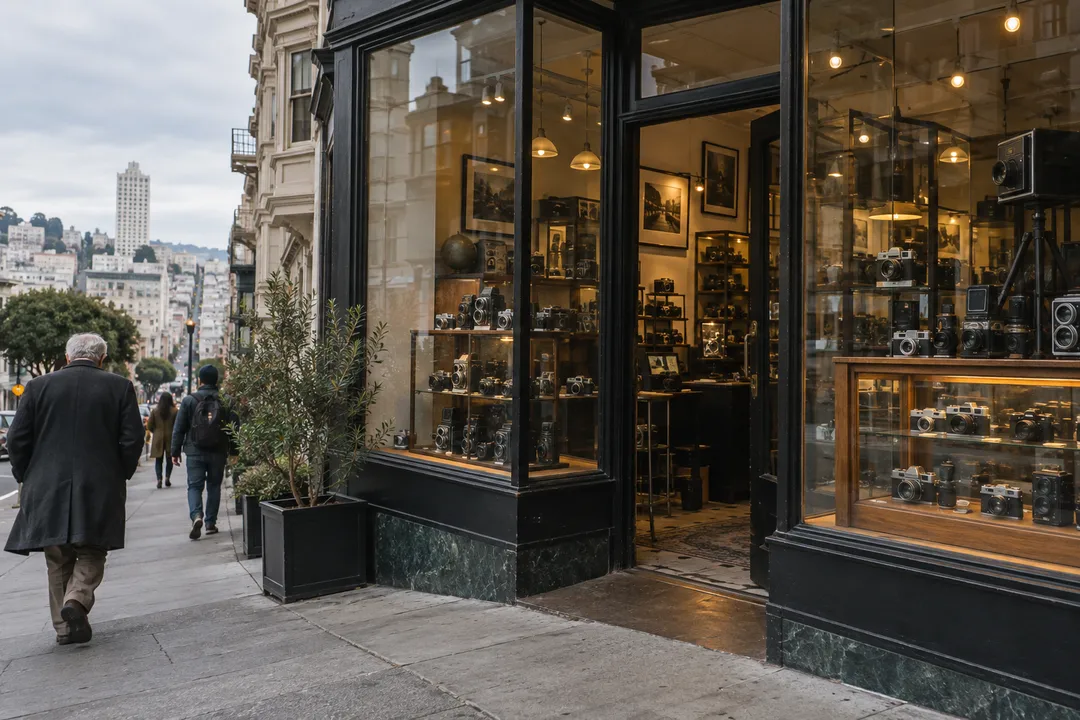
Glass Key Film Lab in Nob Hill: Cameras and Scans
Glass Key Photo at 1230 Sutter Street gives Lower Nob Hill film shoppers a camera-focused drop-off point; browse Polk Street while your roll is in hand.
Glass Key Photo is at 1230 Sutter St in San Francisco's Lower Nob Hill, a camera-shop address that makes sense for film shooters who want a physical drop-off. The useful first step is to separate the job you need from the gear you are browsing: hand over the exposed roll, then ask what developing and scanning options the shop currently accepts. A clear request keeps the camera shelves from turning into a confusing lab queue.
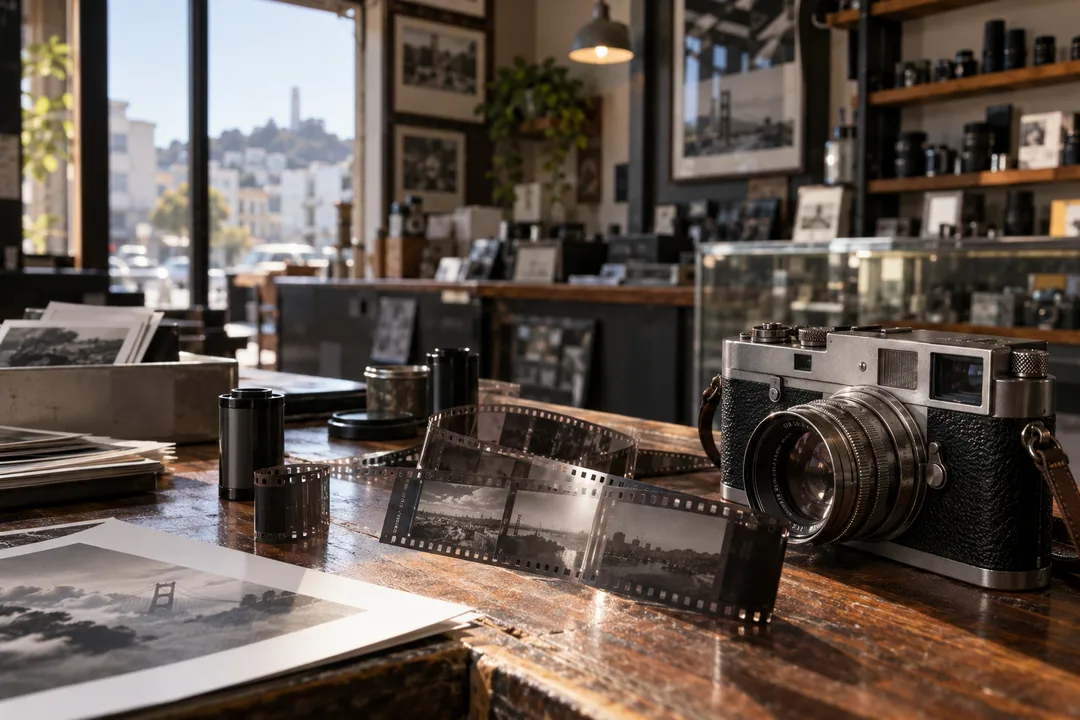
A Camera Shop Address With Lab Intent
The Sutter Street setting is part of the appeal. You are close to Van Ness Avenue, Polk Street, and the sloping residential blocks that make Lower Nob Hill feel different from the waterfront. Arrive with the roll protected from heat and light, and give yourself a few minutes before opening the door. A calm handoff is easier when you have already written down the film stock, format, and any push or pull instruction.
Glass Key is known first as a camera store, so do not assume that every service is identical to a high-volume mail lab. Ask what the shop sends out, what it handles in-house, and how the scan files are delivered. That distinction matters if you need a particular color profile or if the frame is part of a deadline. The right question is not 'how fast?' but 'which part of this order is done here?'
Make the Drop-Off Legible
A good counter note includes your name, an email, the number of rolls, each format, and a plain-language scan request. If you want a neutral file, say so. If you edit heavily, mention that you prefer a scan with room in the highlights. You do not need technical jargon; you need a short description the person at the counter can repeat back to you without guessing.
Use the shop's camera expertise to your advantage. A photographer with a sticky shutter, a light-leak suspicion, or a new-to-them film stock can ask one focused question before leaving. The best exchange is concrete: show the camera, explain what happened on the roll, and ask whether the lab can flag an obvious handling issue. Treat the conversation as a preflight check, not a free repair consultation.
There is no reliable public rate sheet to quote here, so the responsible choice is to leave prices out. Ask for the current total after the staff confirms format, developing, and scan resolution. Keep the written estimate or receipt, because it tells you what was ordered when the files arrive. A price you can trace to your own ticket is more useful than a stale number copied from a directory.
What the Counter Conversation Should Cover
After the handoff, head north toward Polk Street. The blocks around Sutter and Post are good for a short camera walk: layered signs, steep sidewalks, and changing light under the taller buildings. Keep the exposed-film pouch closed and avoid leaving it in a hot car. If you are carrying a vintage body, wrap it before the walk so the camera does not advertise itself to every passerby.
Polk Street gives the route a different tempo, with small restaurants, bars, and neighborhood storefronts instead of the camera-shop focus. You can pause at a corner, make a few notes about the light, and return to your roll later. The best waiting plan is reversible: stay within walking distance, keep your phone available for a pickup message, and do not start a long museum visit until the order timing is clear.
If you want a quieter detour, take the slope toward Lafayette Park. The view changes as the street climbs, and the park offers a bench where you can check your order details without blocking a shop counter. This is a good place to decide whether you want a second roll processed. If you are unsure about a stock, wait for the first result before adding more film to the ticket.
Lower Nob Hill as Your Waiting Room
Inside the store, the practical rules are ordinary but important. Do not open film canisters in the doorway, do not stack loose rolls beside the register, and do not expect the staff to remember an unlabelled special request. Put every instruction on the order. If you are dropping a mixed batch, use separate sleeves and mark 35mm, 120, or specialty format clearly. The shop's central location also helps if you are meeting a friend who wants to compare lenses while you handle the lab order. Keep the two errands separate so the roll never sits loose on a display case.
Glass Key makes the most sense for a photographer who wants a camera-minded conversation in a central neighborhood. It is less suited to someone who only wants the absolute cheapest scan and has no interest in discussing the workflow. The shop's strength is context: gear, film, and the practical questions that happen before a roll becomes a file.
A Film Walk Toward Polk Street
A sensible plan B is to keep the roll sealed and use the Sutter Street outing for research if the timing does not work. Photograph the receipt, write the promised handoff details, and return on a day when you can collect without rushing. Do not ask the shop to promise an hour that its current workflow cannot support; film is easier to protect than to rescue.
Shop Rules That Save a Roll
For the search term film lab near me, the address does most of the work. Glass Key Photo gives you a real Lower Nob Hill location, a camera-focused staff, and a street grid that makes waiting productive. You can leave with an order that is legible, a walk that is easy to shorten, and a better idea of what your next roll needs.
When to Choose This Lab
Practical notes: map to 1230 Sutter St, San Francisco, CA 94109; write stock, format, and scan preference on the ticket; ask what work is handled in-house; and keep the receipt until you have opened every file. Use Sutter, Polk Street, and Lafayette Park as a compact route while the shop processes the order.
Ask Karpo for more information.
Keep reading
- Bernal Heights Pottery Glaze Supply Browsing Route: Walk
 Potrero Hill Pottery Glaze Supply Browsing Route: Walk
 Mission Pottery Glaze Supply Browsing Route: Studio Walk