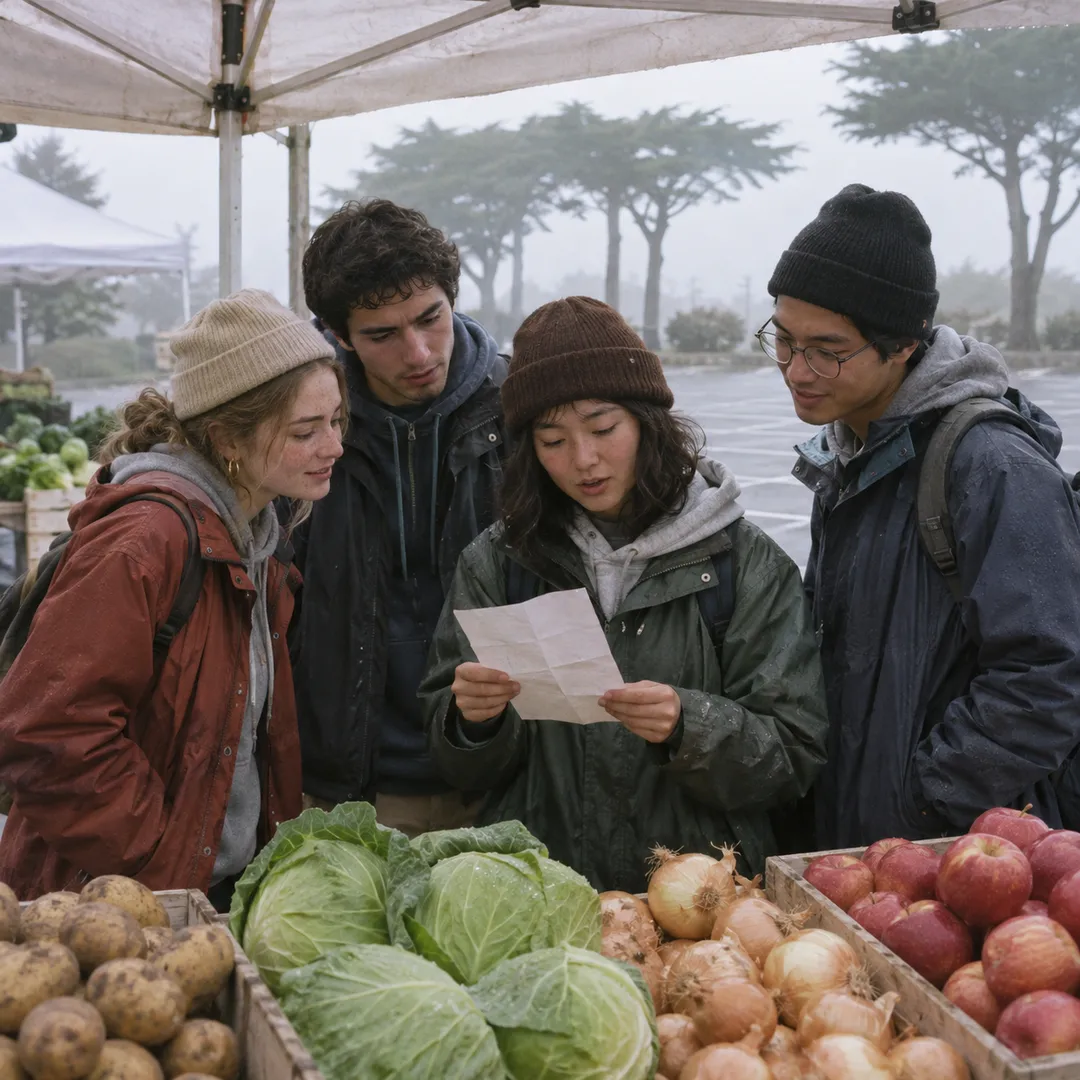
 Stonestown Winter Farmers Market Picker for Student Cooks
Weekend Plans
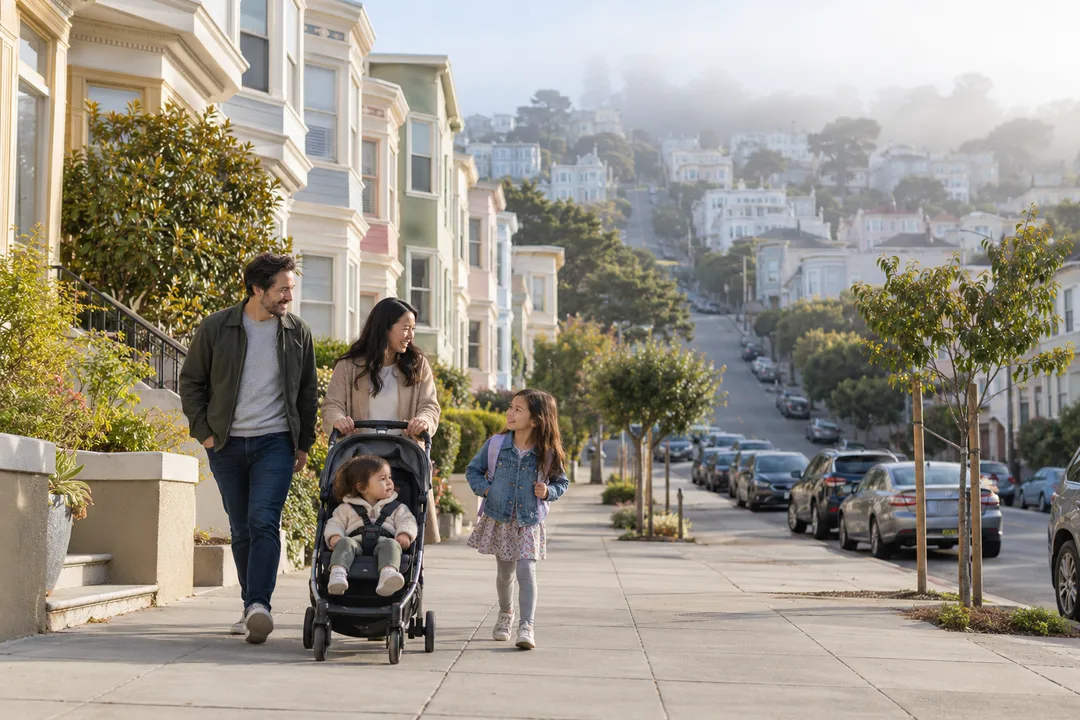
SF Family Outing Planner: One Area, Less Walking Fatigue
Shape a San Francisco family outing around walking effort, pauses and a manageable return, then ask Karpo for ideas within one area that suits the group.
A family walk should be planned around effort as well as distance. An SF family outing planner can help you frame that decision by starting with the people, the route shape you want and the energy you need for getting home. Describe those preferences in the Karpo APP and ask for possible outings in one area. Treat each suggested location as a candidate to assess, with walking demands considered throughout the day rather than only on the first leg.
Describe the walk your family can enjoy
Choose language that reflects the group rather than a vague label such as “easy.” One family may want a short stroll with frequent stops. Another may enjoy a longer walk but prefer to avoid sustained climbing. A child who is happy running around a play area may have less patience for a long approach with nothing to do. Ask the people coming what they want from the walk, and keep their preferences separate from assumptions about their age.
Include equipment and carrying responsibilities in the plan. Pushing a stroller, carrying a small child or bringing bags changes the outing for the adult doing that work. Rotate responsibilities if that is comfortable for the group, but do not build the plan on an arrangement nobody has agreed to. You can request ideas with limited walking while giving only the detail relevant to that request. An initial conversation does not require personal medical information or a precise home location.
Separate distance from elevation and surface
A short line between two points does not describe every part of a walk. Think about climbing, descents, steps, uneven surfaces and the way you enter the activity area. Each can affect how the route feels. If one of these matters to your family, state it explicitly when comparing candidates. An outing described as nearby may still need a closer look at the approach. Avoid translating a broad recommendation into a promise about a route nobody has assessed.
Ask for ideas in terms of the experience you want: a contained area to explore, a place to linger or an activity that does not depend on a long walk. You can then consider the actual approach to the candidate you prefer. Karpo's conversational entry point lets you explain those priorities in ordinary language. This article does not establish an automatic slope calculation or a route certification feature. Your planning request remains useful without relying on either claim.
Decide whether you want a loop or a different finish
A loop returns the family to its starting point, which can be helpful when transport or belongings are tied to that place. A route with a different endpoint needs its own return arrangement. Make the distinction before adding activities along the way. Reaching a pleasing final stop is only part of the outing if you still have to retrace a demanding approach. Give the journey back the same attention as the route everyone is excited to begin.
If you intend to use transport for part of the day, specify which part when you prepare the brief. “We would like a short walk after arriving, with an uncomplicated way home” gives more direction than “family-friendly San Francisco.” Use actual transport information when choosing the final arrangement, rather than assuming that a line visible nearby serves the trip you need. The purpose of the first request is to narrow ideas around a workable shape, not to invent a complete journey.
Put the main experience close to arrival
Consider whether the family can begin enjoying the outing soon after reaching the area. A lengthy approach may be worthwhile for a particular destination, but it should be a conscious choice. If the children care most about an activity, protect energy for that activity. If the walk itself is the experience, let the route provide things to notice and time to stop. These are different kinds of day, even when the overall distance happens to be similar.
Skip a distant secondary stop if reaching it would consume the energy reserved for the main experience. An appealing addition can be saved for another outing. Keeping to one area also makes the plan easier to explain to children: arrive, enjoy the activity, pause and return. That simple sequence can still allow discovery. It does not need an elaborate circuit of named destinations to give the family a sense of having spent time somewhere together.
Treat pauses as part of the outing
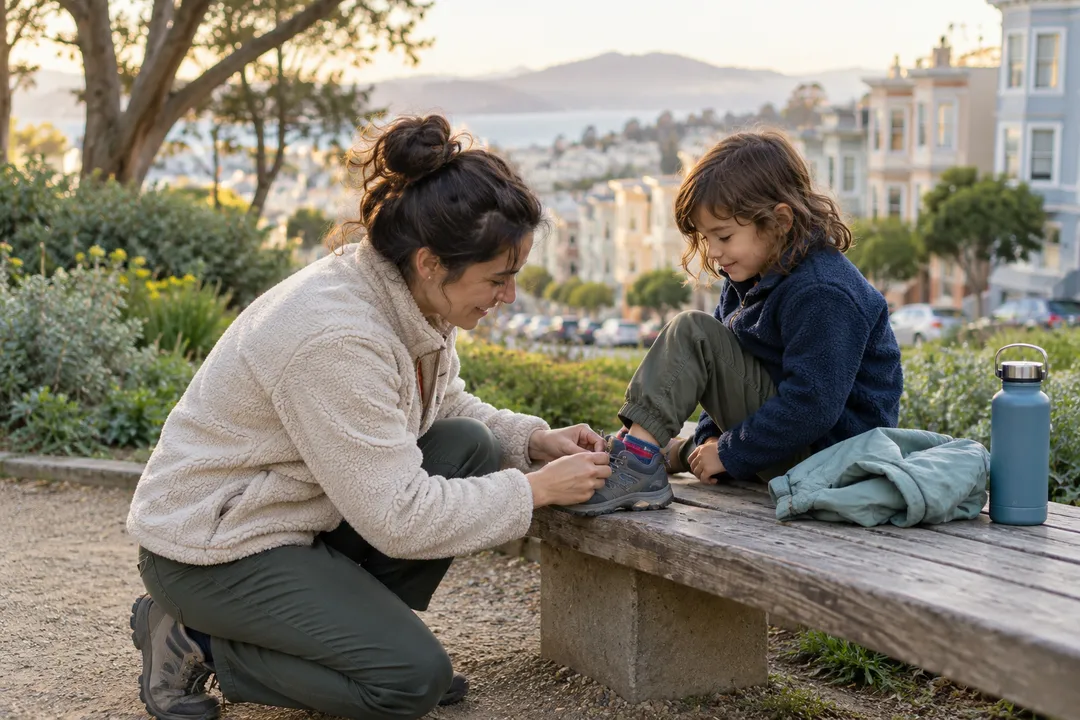
Plan where a pause belongs in the sequence, then establish whether a real candidate offers a suitable place for it. Rest might mean sitting, eating, finding shelter or simply stopping the activity. Different members of the family may need different kinds of break. A photograph of a bench does not establish that it will be available or suitable for everyone. Keep the requirement visible while you decide what kind of destination to pursue.
Do not fill every pause with another task. Children can look around, talk or do very little while adults settle. Carry the supplies your household normally uses, taking account of the rules at any selected activity. For a day with variable comfort needs, a lighter plan gives you room to adapt without losing its purpose. The point is to spend time together in a way the group can sustain, rather than reaching a preassigned number of steps.
Keep a shorter version of the day
Identify the part that makes the outing worthwhile on its own. If the group enjoys that experience and returns comfortably, the day has worked. An optional walk can sit after it, where removing the walk will not break a reservation or strand the family far from its return point. Make the option clear to the children. An addition that depends on how everyone feels is different from a promised destination that adults later try to quietly remove.
Choose the turning point before tiredness becomes an argument. It could be the end of the main activity or a place in the sequence where returning is still straightforward. Use your knowledge of the family to make that choice, rather than a generic walking target. When somebody is ready to finish, reassess the group plan. A smaller outing can leave everyone willing to go out again, which is more useful than completing a route at the expense of that willingness.
Practical Notes: make the effort requirement explicit
A sample message is: “We want a San Francisco family outing in one area, with a short approach and enough energy for the journey home. We are bringing a stroller and prefer to avoid sustained uphill walking. Suggest a few types of outing we could consider, with a simple main activity rather than a long walking tour.” Add your actual starting neighbourhood and time allowance. Those inputs are hypothetical until you supply your own details.
Read the suggestions against the requirement that matters most to your group. Once a candidate stands out, establish the relevant entrance, approach and activity conditions from information about that actual place. Save the final arrival and return arrangement alongside the main activity. You then have a plan based on how the family wants to move through the day. That is a more useful starting point than choosing an impressive destination first and hoping the walk will suit everyone afterward.
Ask Karpo for more information.
Keep reading
- Stonestown Winter Farmers Market Picker for Student Cooks
 Clement St Winter Farmers Market Picker for Lunar New Year
 Fort Mason Winter Farmers Market Picker for Citrus Bakers