 Stonestown Winter Farmers Market Picker for Student Cooks
Weekend Plans

SF Family Outing Planner: A Day at Toddler Pace
Plan a toddler-paced San Francisco outing with one adult interest, a gentle pause and a clear return home, using a brief shaped around your family.
A family outing planner for San Francisco needs room for a toddler to stop, stare and change direction. Adults can still have a satisfying morning, but the useful starting point is a shared experience that survives a slow pace. Think of looking at something together, sitting somewhere pleasant and returning before the day becomes a test of endurance. In the Karpo APP, describe that kind of outing alongside your child's age, your starting neighborhood and the time you need to be home.
Begin with the nap, then choose the pleasure
Imagine a family starting in the Inner Sunset with a child who usually sleeps after lunch. This is an example planning brief, rather than a recommended route. The fixed point is getting home comfortably before that rest. Work backward from it, allowing time for coats, a bathroom stop and the journey back. The remaining space is the outing. If the adults have a particular interest, such as plants or looking at art, name it early so the day has a purpose beyond keeping the child occupied.
Choose one adult pleasure that can be enjoyed in small pieces. Looking closely at a garden, having a seated snack or exploring an interesting room can each be satisfying without requiring a long uninterrupted visit. A toddler's attention does not have to match the adult's interest throughout. The question is whether everyone can remain part of the same outing, with opportunities to pause. Avoid making the adults' entire reward dependent on reaching a final stop after the child's energy is already spent.
Give Karpo a brief that sounds like your family
Try this request: “Plan a gentle San Francisco morning for two adults and a two-year-old, starting in the Inner Sunset. We like plants and quiet places. We need to be home before lunch, want very little travel and would enjoy one seated snack. Suggest two possible outings, with the easiest stopping point for each.” The ages, interests and limits do different jobs. Together they make a more useful request than asking for popular activities for children across the whole city.
Karpo's published instructions invite you to share your mood, budget, neighborhood and companions to get places, events and plans. Use that conversation to describe the tradeoff you want help with. You are asking for ideas shaped around your household, not a compulsory schedule. If a suggestion adds a second destination that feels ambitious, explain why and ask for a smaller version. Keep the parts you like, such as the kind of setting, while changing the amount of movement involved.
Read the transitions as carefully as the destinations
Lay out the proposed morning as a sequence of actions: leave home, arrive, settle, explore, eat and return. The gaps between these actions deserve attention. Getting a coat back on can take longer than the appealing activity described in a listing. A route that looks compact as a string of place names can still involve repeated packing and unpacking. Favor an option that gives the family time to settle once, especially when a stroller, spare clothes and snacks are traveling with you.
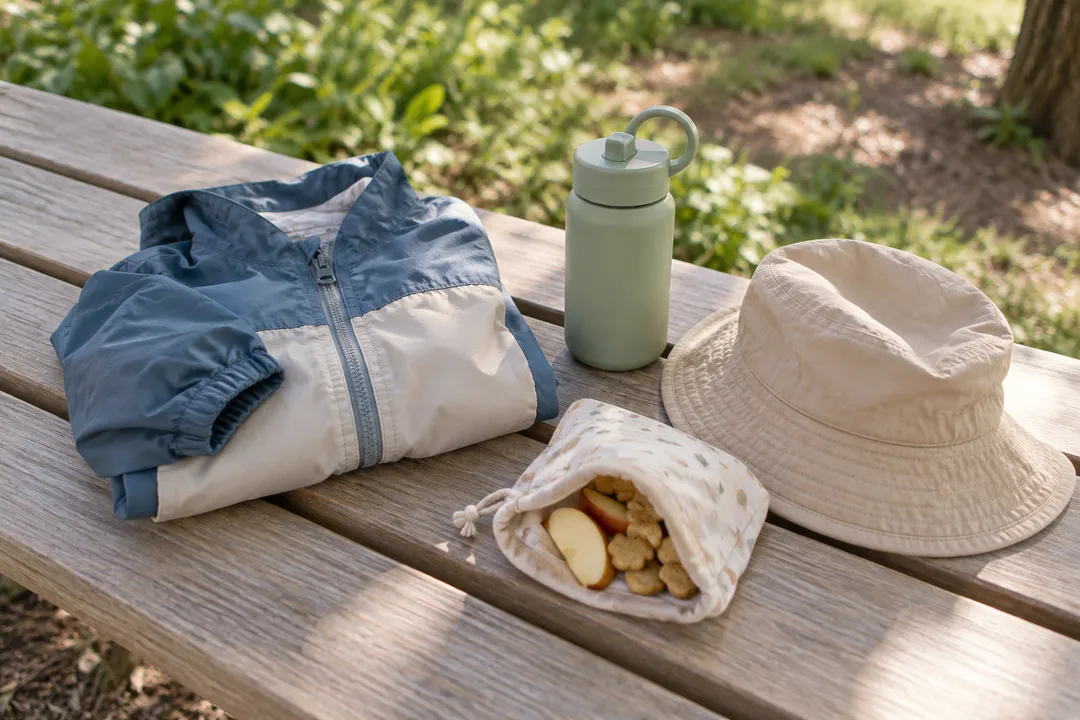
For a stroller outing, say whether the stroller is mainly transport, a possible rest space or something you intend to park during the visit. These are different needs. Ask questions about any proposed location that would affect your choice, such as entrance arrangements or where a stroller can go. Keep those details attached to the relevant suggestion rather than treating the whole neighborhood as uniformly easy. A pleasant concept becomes a practical plan when its individual transitions make sense for the equipment you actually bring.
Let the child choose something small and real
A young child can have a meaningful choice without being asked to design the morning. Offer two things you are happy to do: look for different leaf shapes or watch the water, sit on a bench or have a snack first. This keeps the adults responsible for the overall plan while giving the child a part in it. Do not promise a particular animal, performance or object unless it belongs to an arrangement you already know. The appeal can come from noticing ordinary details together.
Give the adults their own small choice too. One might prefer a quiet view, while the other wants a chance to browse. Decide which interest leads this outing and leave the other for another day. Trying to distribute equal numbers of destinations often makes a short family morning harder to enjoy. Equal consideration can mean everyone gets a comfortable place in one experience. That is a better measure than whether each person has a separate attraction listed beside their name.
A snack is a pause with a job
Place the food break where it supports the rhythm of the visit. Eating before the child becomes uncomfortable can protect the rest of the morning, while saving everything for a destination café makes the outing depend on another transition. Bring what your household normally needs and follow the location's food rules. When requesting a café suggestion, describe seating and meal needs rather than assuming every appealing coffee spot can accommodate the whole family comfortably.
The return deserves its own margin. If your family needs to be back before lunch, ending the activity at lunchtime leaves the hardest part unresolved. Decide which moment starts the journey home and what gets dropped if you leave later than intended. The optional browse, extra loop or second drink should be easy to remove. You can enjoy a visit that is shorter than expected when the important experience happened near the beginning and the way home was already part of the plan.
Keep a useful version for the next outing
Afterward, note the detail that changed the day: the child wanted more time in one place, the snack came too late or the adults enjoyed simply sitting together. Use that observation in your next Karpo request. Describe it directly instead of expecting a new conversation to infer the lesson. A family brief becomes more helpful when it reflects actual preferences, including the things that looked attractive on paper but did not suit this particular stage of family life.
For today's next step, open Karpo APP with one sentence about your child's rhythm and one about what the adults would enjoy. Add your starting area, return deadline and preferred travel style. Ask for a small choice of ideas, then select the outing whose simplest version still feels worthwhile. You do not need an impressive chain of stops to have a memorable San Francisco morning. You need a beginning that interests everyone, enough pauses to stay together and an ending the family can manage.
Ask Karpo for more information.
Keep reading
- Stonestown Winter Farmers Market Picker for Student Cooks
 Clement St Winter Farmers Market Picker for Lunar New Year
 Fort Mason Winter Farmers Market Picker for Citrus Bakers