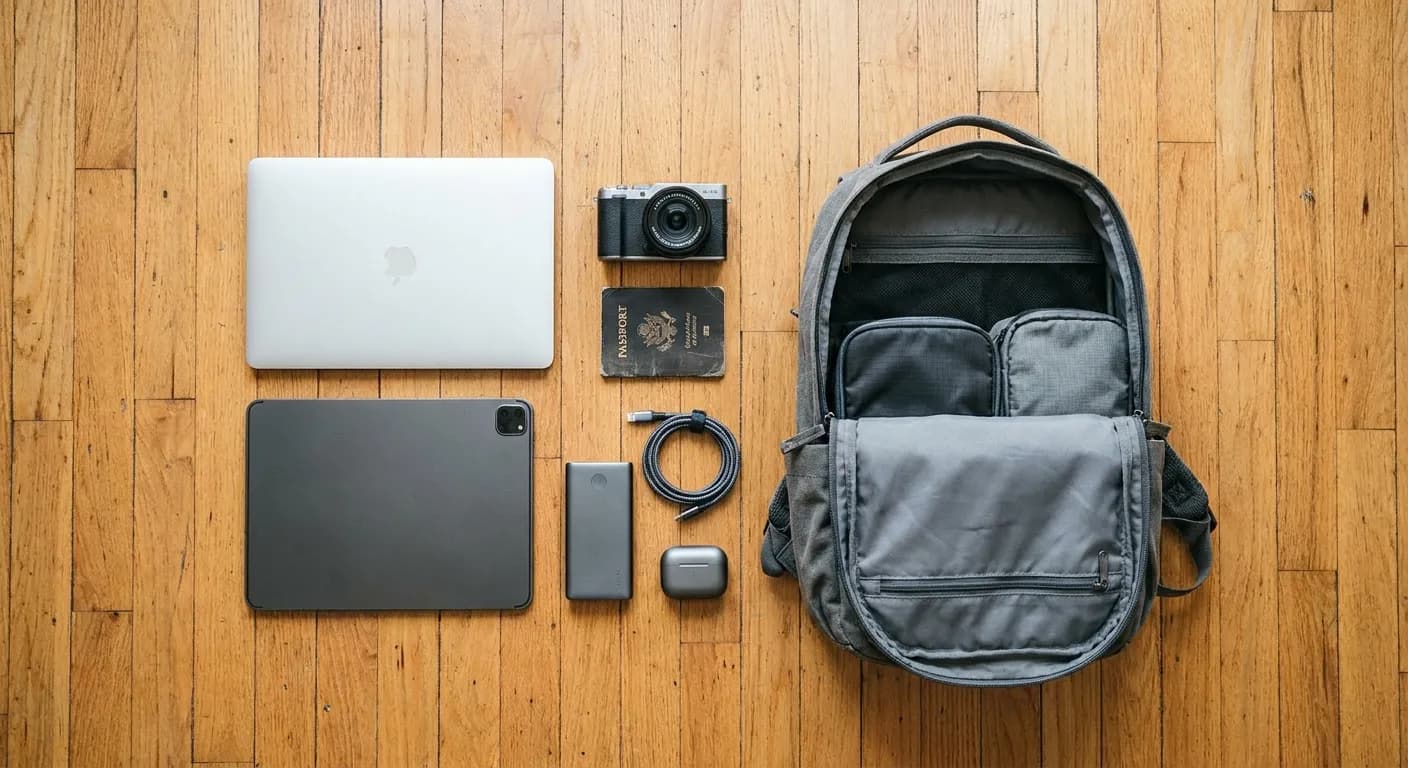
Most in-flight battery emergencies begin as something smaller: a phone that feels wrong, a charger that smells sharp, a device swallowed by a reclining seat. What happens in the next two minutes usually decides whether the story ends as an anecdote or an incident report — and 2026 has supplied plenty of the latter, with 58 lithium incidents counted on US passenger flights through August. Cabin crews are trained and equipped for all of it. The passenger's job is narrower, and worth rehearsing once so it is automatic: notice early, tell fast, touch nothing ambitious.
Karpo can prep the practical side of any SFO trip — airline battery rules, what to charge before boarding, what rides where — so mid-flight problems stay hypothetical. Text Karpo the day before you fly.

Stage one: the warm warning
Batteries telegraph. A device heading toward trouble typically gets unusually hot first — hot beyond the familiar warmth of streaming on a charger — and may swell, click, or give off a sweet chemical smell before anything visible happens. The correct response to a too-hot device is boring and immediate: unplug it, power it off, move it off soft surfaces (out of the blanket, off the pillow, off your lap) onto something that sheds heat, and give it your attention for a few minutes. If heat keeps climbing after it is off and unplugged, that stops being your problem to manage — press the call button and hand the situation to the crew early. Flight attendants deal with warm-device reports routinely and unanimously prefer them over the alternative.
What not to do: keep using it, bury it in a bag to deal with later, or hold it to your body. A battery entering failure accelerates; the early minutes are the cheap ones.
Stage two: the seat-eaten phone
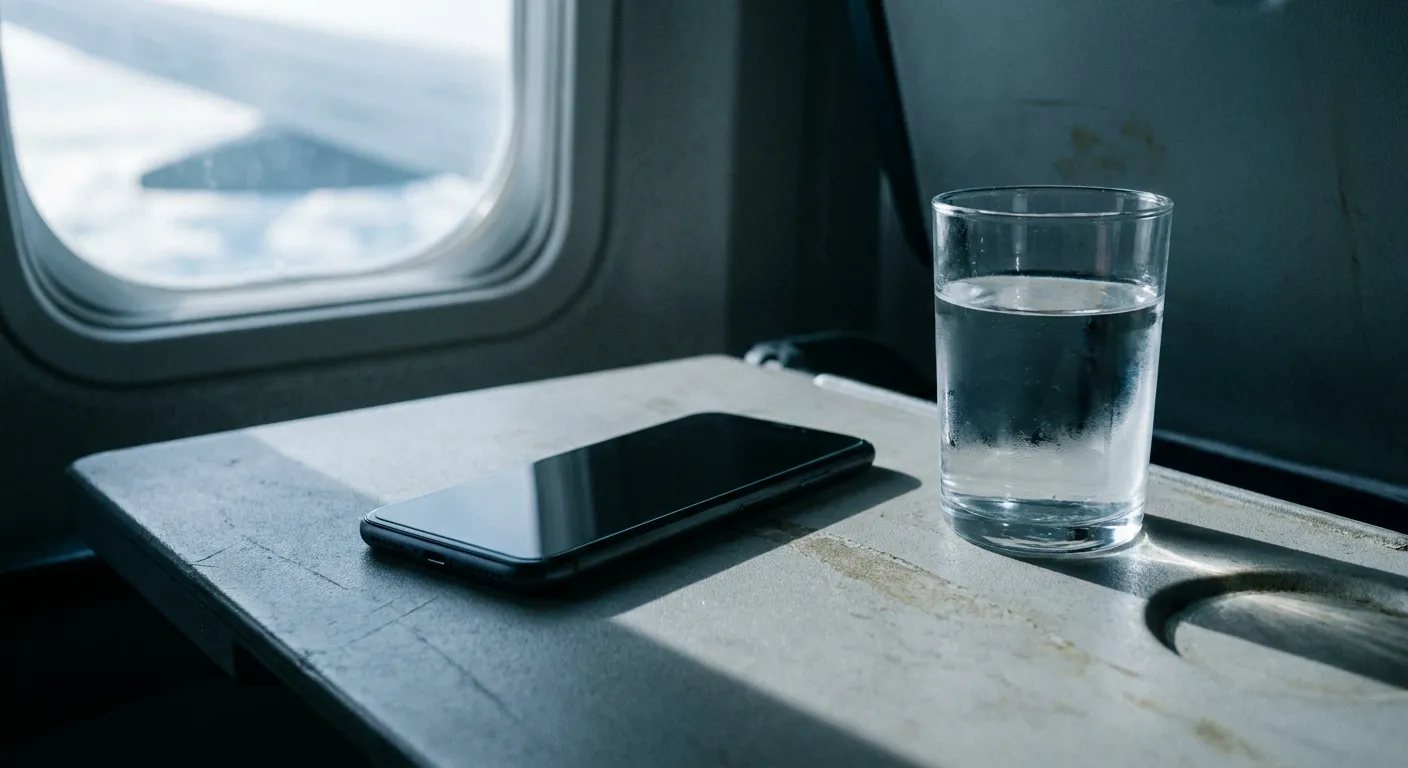
The most underrated battery hazard on a plane is mechanical, not electrical: a phone slips into the seat mechanism, the seat reclines or straightens, and the phone gets crushed — puncturing the battery. The rule, which airlines announce on many long-hauls now: if your device disappears into the seat, do not move the seat, yours or the one ahead. Do not fish for it with force. Press the call button and let the crew retrieve it; they know where devices go and how to move the mechanism safely. A cracked screen is a nuisance; a crushed lithium cell inside upholstery at altitude is the scenario every one of those announcements exists to prevent.
Stage three: smoke, and the choreography around it
If a device — anyone's — begins smoking, the playbook is short. Alert crew instantly and loudly enough to be heard. Move away rather than toward; give the aisle to the professionals. Do not attempt to grab or relocate a smoking device, and do not open a bag that has smoke coming from it. The crew's sequence is drilled: extinguish and cool with water or extinguisher, isolate the device in a thermal containment bag, monitor for the rest of the flight — exactly what passengers on the August 21 American Airlines flight watched happen between Atlanta and Dallas. Pilots may divert as a precaution. Your contribution is speed at the first step and space at every step after; battery events on modern airliners end well precisely because bystanders report fast and then get out of the way.
Rehearsal, San Francisco edition
SF travelers board with more batteries than almost anyone — phone, laptop, watch, buds, bank — which mostly just means more chances to practice good habits. Keep devices where you can feel their temperature, charge where you can see, skip the overnight under-pillow charge in your seat, and know where your call button is without looking. That is the entire curriculum. Aviation's whole safety model assumes small problems get reported early; be the passenger who does.
Practical notes
Warning signs: unusual heat, swelling, chemical smell, hissing. Response ladder: unplug and power off → move to a hard surface → call crew if heat persists or anything escalates. Phone in the seat mechanism: never move the seat; call crew. Smoke: alert crew immediately, keep clear, let them use containment equipment. Crews on US carriers train for lithium events and aircraft carry thermal containment bags. Prevention basics — cabin-only spares, certified hardware, visible charging — live on the FAA PackSafe pages and your airline's battery policy.
Tags: #karpo #sanfrancisco #sfo #flightsafety #overheatingphone #lithiumbattery #travelsafety #inflight #travel2026
Sources consulted: faa.gov · upi.com · flysfo.com
All trademarks are the property of their respective owners.
Ask Karpo first
Want the pre-flight version of this checklist tailored to your gear, or your airline's current in-flight charging rules? Ask Karpo before wheels-up — preparation is the only part of this playbook you control from the ground.