 Stonestown Winter Farmers Market Picker for Student Cooks
Weekend Plans
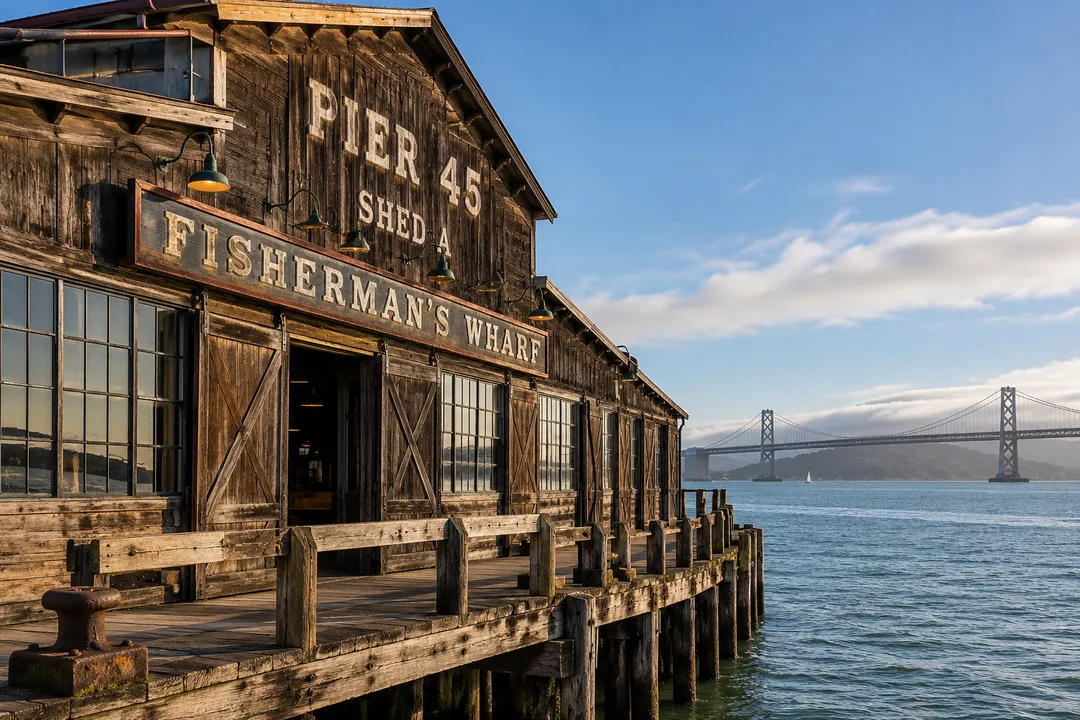
Creepy Doll Museum Near Me at Pier 45: Musée Mécanique
Musée Mécanique at Pier 45 Shed A exhibits antique coin-operated automata, historic mechanical execution dioramas, and the famous Laughing Sal doll with free admission daily.
If you are searching for a creepy doll museum near me in San Francisco, Musée Mécanique at Pier 45 Shed A delivers an unmatched assembly of historic moving figures. Located at Pier 45, Shed A, San Francisco, CA 94133, this landmark repository houses more than three hundred antique coin-operated automata, musical machines, and mechanical dioramas assembled over nine decades. The venue opens every single day of the year from 10 am to 7 pm, welcoming the public with free admission and operating games on original quarters ranging from $0.25 to $1.00. Visitors can reach the pier entrance directly via the historic F Market streetcar line to the Jones Street turnaround, stepping off two blocks from the waterfront entrance where mechanical figures click, whirr, and cackle within historic shipping warehouse walls.
Historic Foundations of the Edward Zelinsky Mechanical Archive
The origins of this mechanical doll showcase trace back to 1933, when eleven-year-old San Francisco native Edward Galland Zelinsky purchased his first penny arcade slot machine for five dollars. Over the following seventy years, Zelinsky scoured world fairs, closing amusement piers, and European collector estates to rescue one-of-a-kind coin-operated mechanical novelties. In 1972, when San Francisco's famed oceanfront amusement park Playland-at-the-Beach was demolished, Zelinsky acquired its most celebrated and eerie mechanical relics, preserving them for future generations.
The collection operated inside the historic Cliff House above Ocean Beach for decades before relocating in 2002 to its current maritime setting in Shed A at Pier 45. Today, third-generation curator Dan Zelinsky maintains every gear, cam, leather belt, and pneumatic bellows by hand at a visible wooden workbench in the center of the hall. Unlike contemporary digital attractions, these hundred-year-old machines rely entirely on gravity, clockwork escapements, and pinned brass cylinders to breathe mechanical life into hand-carved wooden bodies.
Walking through the expansive concrete hall, the soundscape is overwhelming: player pianos chime simultaneously against the clatter of mechanical horse races, steam train whistles, and deep orchestral calliopes. The cavernous warehouse retains the scent of machine lubricating oil, aged redwood cabinets, and antique wax. It functions as both a living museum of industrial-era ingenuity and a shadowy gallery of Victorian mechanical obsessions.
The Cackling Legacy of Laughing Sal and Moving Automata
The undisputed centerpiece of uncanny figurative art inside Musée Mécanique is Laughing Sal, the six-foot-tall automated carnival figure originally stationed outside the Playland-at-the-Beach funhouse. Manufactured in the 1930s by the Philadelphia Toboggan Company, Sal features a gap-toothed, papier-mâché head, bulging painted eyes, synthetic brown curls, and a blue-and-white patterned dress. When triggered by a quarter, her motorized torso lurches backward and forward while a concealed 78 rpm phonograph record blasts her manic, chest-heaving cackle through external speakers.
Generations of San Francisco children grew up simultaneously mesmerized and terrified by Sal's unrelenting mechanical mirth, making her the ultimate regional icon of uncanny folk sculpture. Musée Mécanique preserves not only the primary funhouse Sal but also a second backup model and her male mechanical counterpart, Laffing Sam. Standing inches away from her twitching rubberized arms and shuddering jaw, visitors observe the raw mechanical theatricality that defined mid-twentieth-century American boardwalk culture.
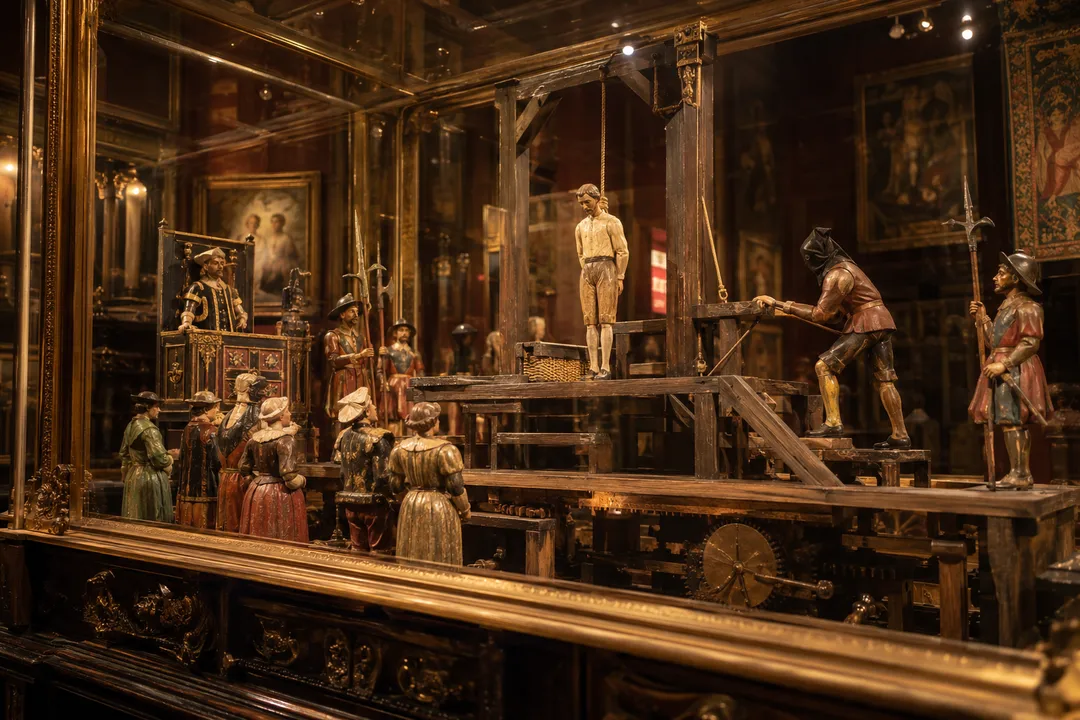
Beyond Laughing Sal, the museum preserves dozens of miniature automaton dioramas showcasing darker Victorian themes. One crowd-stopping cabinet presents an automated French guillotine execution: upon inserting fifty cents, miniature wooden gendarmes escort a carved prisoner up scaffold stairs, the blade drops with a sharp metal snap, and a tiny basket catches the severed wooden head. Nearby, an intricate 1890s diorama depicts a Chinese opium den where reclining miniature articulated figures raise pipes to their lips while painted mechanical dragons drift across the background.
Victorian Bisque Dolls, Fortune Tellers, and Mechanical Curios
Collectors of antique dolls will find exceptional European mechanical vitrines from late-nineteenth-century Parisian makers such as Roullet & Decamps and Vichy. One glass enclosure houses an ornate Spanish dancer automaton crafted with a genuine Jumeau bisque porcelain head, blown-glass blue paperweight eyes, and real human hair ringlets. When activated, clockwork mechanisms inside her torso cause her to tap miniature castanets, tilt her porcelain chin, and pivot across a velvet-covered pedestal with startling lifelike grace.
Adjacent vitrines showcase fortune-telling automatons that rival cinematic lore. In 'The Gypsy Queen,' a lifelike wax-and-papier-mâché soothsayer with piercing green glass eyes breathes rhythmically beneath crimson silk shawls. She scans an antique tarot spread before her mechanical right hand glides across the cards to dispense a printed paper prophecy through a brass slot. Another vitrine contains an antique English execution chamber where miniature hanged figures kick in synchronized clockwork rhythms beneath gaslit rafters.
The craftsmanship of these pieces highlights the Victorian fascination with mortality, spiritualism, and artificial life. Miniature figures are outfitted in authentic period textiles, including hand-stitched silk brocades, miniature brass buttons, and delicate lace collars yellowed by a century of ambient air. The subtle clicking of internal gears and the audible hiss of antique bellows give these doll tableaux an authentic, unvarnished physical presence that digital recreations cannot replicate.
Visiting Strategy, Coin Mechanics, and Fishermans Wharf Pairings
Visiting Musée Mécanique requires zero advance reservations, and admission to browse the hall is completely free. However, enjoying the moving dolls requires a pocketful of quarters; five automated bill-to-coin change machines near the entrance convert five, ten, and twenty dollar bills. Most antique doll dioramas cost twenty-five or fifty cents per cycle, allowing you to operate dozens of historical machines for under ten dollars. The venue accepts cash and card payments at the gift counter for museum souvenir tokens and vintage postcards.
To experience the hall without dense crowds, plan your arrival on a weekday morning around 10 am, when the pier is tranquil and morning light filters through the northern bay windows. Weekend afternoons between 1 pm and 4 pm draw heavy tourist traffic, producing long queues around Laughing Sal and creating substantial ambient noise. The entire facility is situated on a single ground-level concrete floor, ensuring full wheelchair and stroller accessibility with broad aisles between arcade banks.
Photography and video recording are fully permitted and actively encouraged by staff, though visitors must never lean on glass vitrines or shake delicate historical casings. Dan Zelinsky or an assistant mechanic is frequently stationed near the center bench rebuilding brass gears, and they readily answer technical questions regarding automaton restoration. If you have sensitive hearing or are visiting with toddlers who might be overwhelmed by Laughing Sal's thunderous cackle, consider bringing earplugs for a more comfortable stay.
Neighborhood Stroll, Waterfront Dining, and Practical Notes
After exploring the mechanical doll cabinets, continue your walking tour along the historic Fisherman's Wharf waterfront. Pier 45 is also home to the USS Pampanito World War II submarine and the SS Jeremiah O'Brien liberty ship, both berthed directly outside Shed A. Walking three blocks west along Jefferson Street brings you to the historic Cannery courtyard and Ghirardelli Square, where outdoor brick plazas overlook the Golden Gate Bridge and Alcatraz Island.
For a classic San Francisco meal, skip the chain seafood counters and walk three blocks west to The Buena Vista Cafe at 2765 Hyde Street for their world-famous Irish coffee and sourdough French dip. Alternatively, head two blocks east to Boudin Bakery's flagship on 160 Jefferson Street for clam chowder in fresh sourdough bread bowls. If weekend crowds on Pier 45 become overwhelming, pivot to the San Francisco Maritime National Historical Park at Hyde Street Pier, where quiet historic tall ships provide a peaceful maritime companion to your mechanical doll outing.
Ask Karpo for more information.
Keep reading
- Stonestown Winter Farmers Market Picker for Student Cooks
 Clement St Winter Farmers Market Picker for Lunar New Year
 Fort Mason Winter Farmers Market Picker for Citrus Bakers