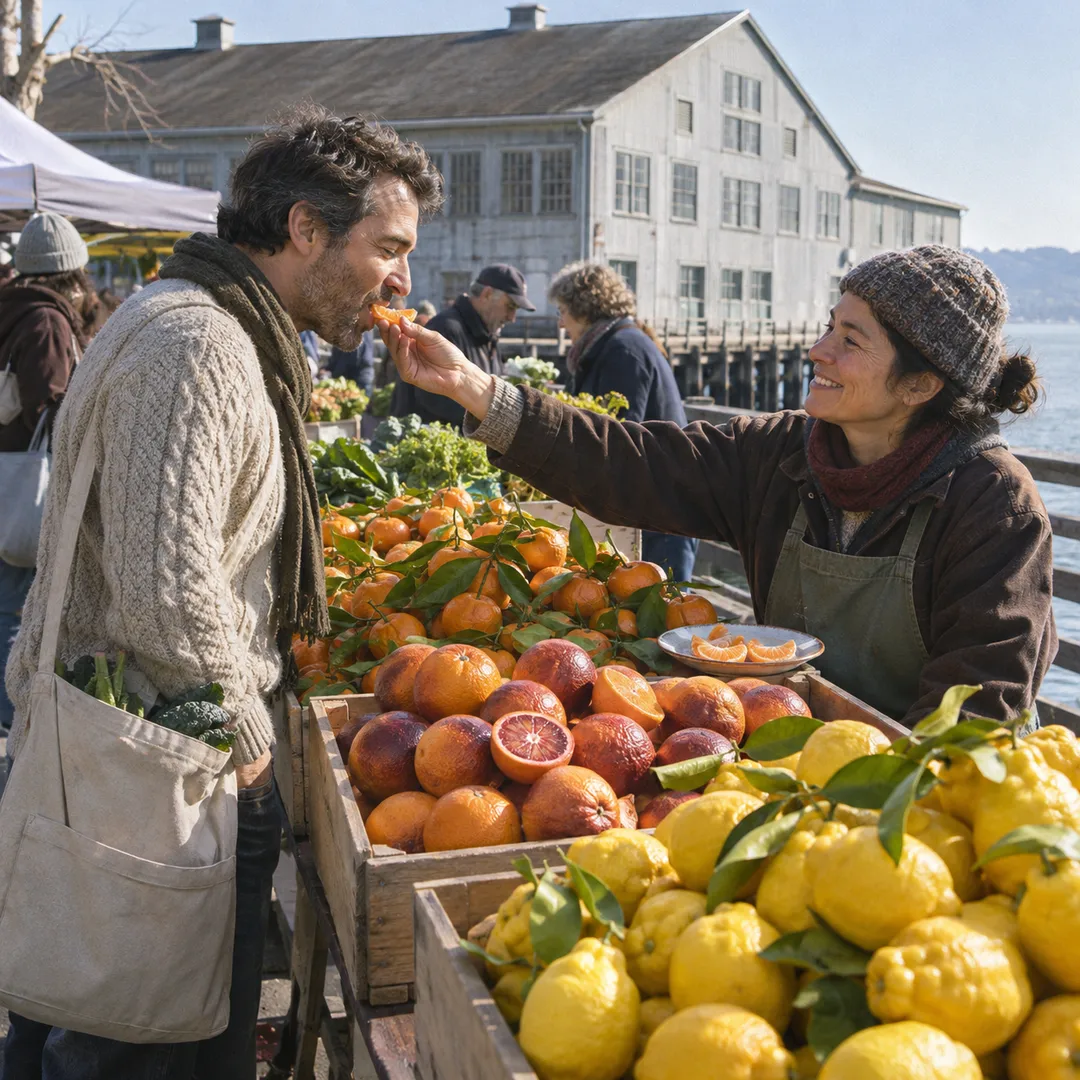
 Stonestown Winter Farmers Market Picker for Student Cooks
Weekend Plans
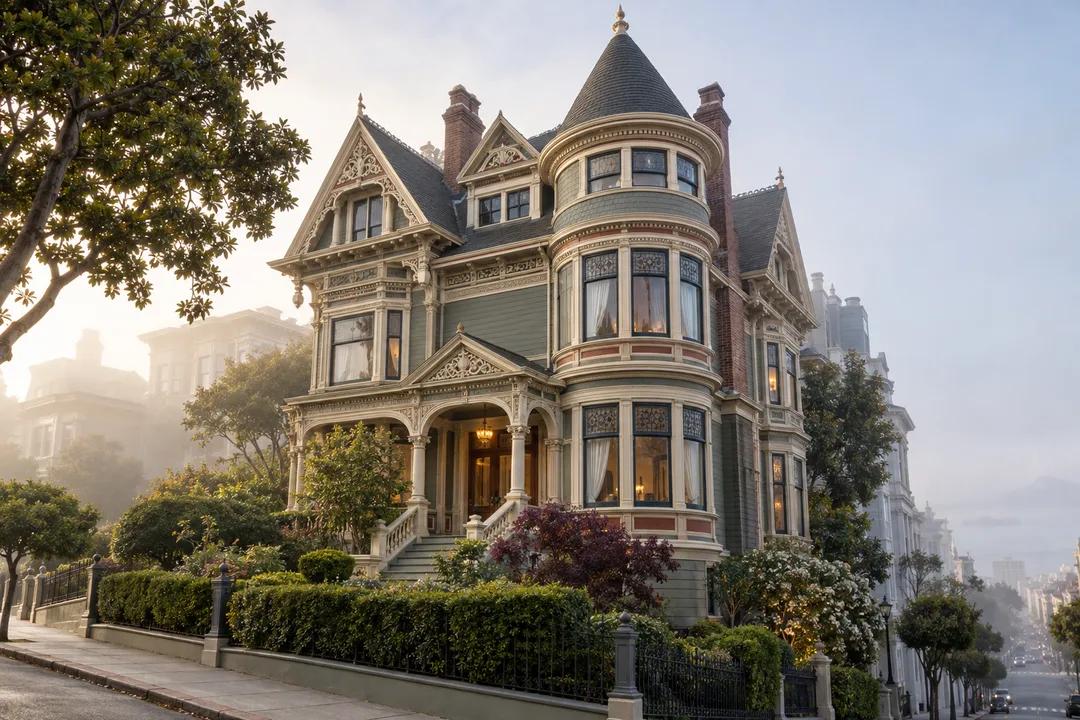
Creepy Doll Museum Near Me in Pacific Heights: Haas-Lilienthal House
The Haas-Lilienthal House at 2007 Franklin Street showcases an authentic 1886 Queen Anne Victorian nursery with German bisque dolls and antique dollhouse miniatures.
If you are searching for an authentic creepy doll museum near me in San Francisco, the Haas-Lilienthal House in Pacific Heights offers a rare glimpse into authentic Victorian childhood artifacts. Located at 2007 Franklin Street, San Francisco, CA 94109, this 1886 Queen Anne mansion stands as the city's only fully furnished, intact Victorian residence operating regularly as a public house museum. Docent-led tours operate Wednesdays, Saturdays, and Sundays between 12 pm and 3 pm, with adult admission priced at $10 and discounted $8 tickets available for seniors and students. Visitors can take the MUNI 49 Van Ness bus to Jackson Street and walk two blocks west to explore an authentic third-floor nursery where nineteenth-century bisque dolls, miniature wooden dollhouses, and antique children's playthings have remained preserved in their original domestic setting for over a century.
Surviving the 1906 Catastrophe: The Haas Family Legacy
The Haas-Lilienthal House was commissioned in 1886 by prominent Bavarian-Jewish merchant William Haas and designed by architect Peter R. Schmidt. Constructed entirely of old-growth California redwood, the grand home features gabled roofs, a circular corner tower, stained glass transoms, and elaborate Eastlake-style wooden ornamentation. When the catastrophic earthquake and fires of April 1906 devastated San Francisco, the house survived miraculously thanks to the Van Ness Avenue firebreak created by city engineers just two blocks to the east.
Because three generations of the Haas and Lilienthal families resided continuously in the home until 1972, the building was never modernized, gutted, or stripped of its historical furnishings. In 1973, the family deeded the mansion, along with its complete inventory of Victorian decorative arts, clothing, and domestic ephemera, to San Francisco Architectural Heritage (SF Heritage). Today, the organization operates the landmark as both its headquarters and a living educational museum of Gilded Age San Francisco life.
Climbing the sweeping central mahogany staircase transports guests from opulent ground-floor parlors up to private family quarters. The upper floors reflect the intimate domestic routines of Victorian family life, retaining authentic gaslight chandeliers, embossed Lincrusta-Walton wall coverings, and period textiles that create an evocative, historic atmosphere unmatched by modern museum displays.
The Third-Floor Nursery and Victorian Dollhouse Tableaux
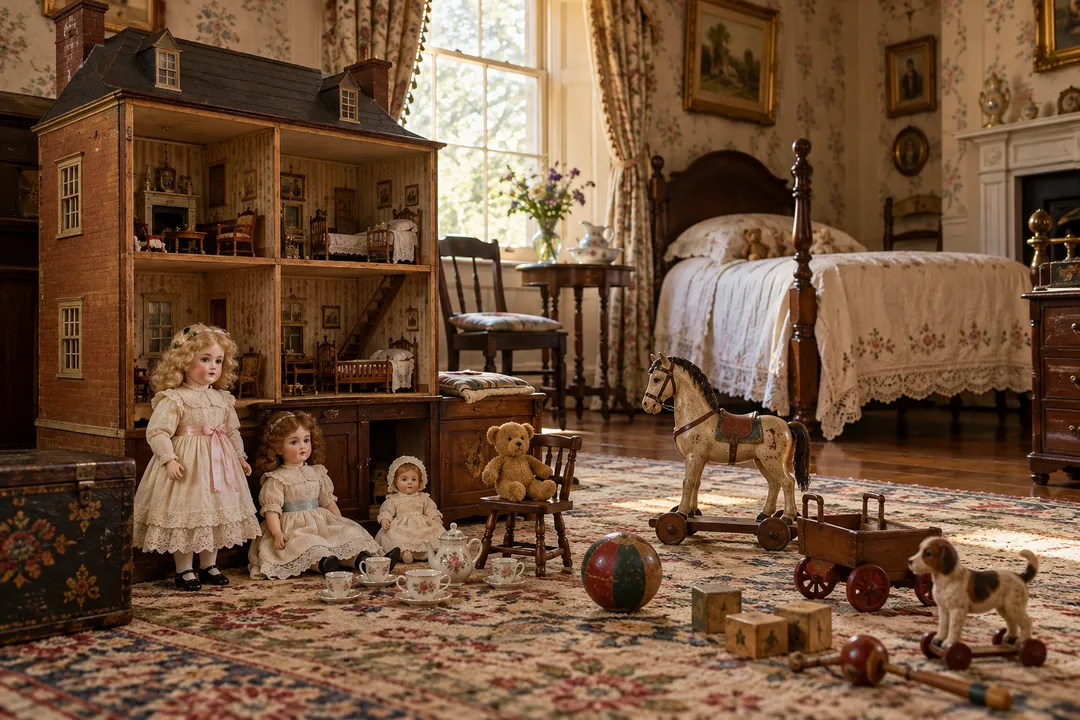
The pinnacle of the tour for doll enthusiasts is the third-floor nursery, an authentic Victorian playroom where Haas family children spent their early years under the care of European governesses. The centerpiece of the room is an elaborate, multi-story handcrafted wooden dollhouse built in the late nineteenth century. The dollhouse replicates a Victorian townhome in exacting miniature, complete with wallpapered salons, miniature cast-iron cookstoves, velvet-draped dining suites, and tiny brass gas lamps.
Arranged within the nursery and surrounding display vitrines are dozens of late-nineteenth and early-twentieth-century antique dolls that belonged to the Haas children. These include German bisque-head dolls manufactured by premier Thuringian dollmakers such as Simon & Halbig and Armand Marseille. The dolls feature fired unglazed porcelain heads, weighted glass sleep eyes that open and close, molded composition ball-jointed bodies, and genuine mohair wigs styled in Victorian ringlets.
Displayed in original wicker perambulators, antique cradle rockers, and miniature wooden high chairs, these historic playthings exhibit an undeniably eerie charm to modern eyes. Their frozen porcelain smiles, hand-painted blush cheeks, and lifelike glass eyes reflect the Victorian ideal of childhood innocence, while their antique patina and solemn gazes evoke the passage of a bygone century.
Bisque Craftsmanship, Automata Toys, and Nursery Etiquette
A close examination of the nursery's collection reveals the industrial and artistic sophistication of late-nineteenth-century doll manufacturing. Bisque porcelain, fired at high temperatures without a glaze to mimic the matte texture of human skin, allowed dollmakers to sculpt realistic facial expressions, delicate nostrils, and parted lips displaying tiny porcelain teeth. The Haas collection includes composition body dolls with leather armatures, allowing limbs to pose with natural posture.
In addition to porcelain figures, the nursery preserves antique mechanical wind-up tin toys, painted cast-iron banks, and lithographed paper theater sets. One notable piece is an antique clockwork walking bear and a miniature painted carousel that operated via spring mechanisms. Period children's books with chromolithograph illustrations, slate writing boards, and miniature wooden Noah's Ark animal sets line the built-in redwood bookshelves.
The docents provide rich historical context regarding Victorian child-rearing etiquette. In upper-middle-class San Francisco households of the 1880s, dolls served an educational function, training young girls in domestic management, sewing miniature wardrobe items, and rehearsing social tea etiquette. The presence of mourning dolls dressed in miniature black silk garments also reflects how Victorian families used playthings to teach children how to navigate family bereavement and funeral etiquette.
Docent Tour Schedules, Ticketing Rules, and Preservation Guidelines
Public docent tours of the Haas-Lilienthal House are conducted on Wednesdays and weekends (Saturdays and Sundays) between 12 pm and 3 pm. Guided tours depart approximately every forty-five minutes and run for about an hour. Tickets are $10 for adults, $8 for seniors aged 65 and over and students with valid ID, while children under twelve enter free of charge. Tickets can be purchased online via haas-lilienthalhouse.org or at the ground-floor museum reception desk on the day of the visit.
Because the house contains fragile historical furnishings and delicate antique dolls, all visitors must be accompanied by an official SF Heritage docent; independent self-guided wandering is not permitted. Flash photography, video tripods, and bulky backpacks are strictly prohibited inside the house to safeguard antique woodwork and glass display cases. Photography without flash for personal use is permitted throughout the nursery and parlor floors.
Visitors must climb three substantial flights of stairs to access the nursery floor, as the historic 1886 structure does not feature a modern passenger elevator. Handrails are present on all staircases, but guests with limited mobility should plan accordingly. Comfortable flat walking shoes are strongly recommended, as street shoes walk across delicate antique wool runners and parquet hardwood floors throughout the tour.
Pacific Heights Architecture Walk and Fillmore Dining Pairings
After completing your tour of the nursery, spend an hour strolling through Pacific Heights to view the surrounding Victorian architecture. The four-block radius surrounding 2007 Franklin Street contains some of San Francisco's finest intact 1880s Stick-Eastlake and Queen Anne residences, including the historic Spreckels Mansion and the Whittier Mansion along Jackson Street. Lafayette Park, located two blocks west on Gough Street, offers green lawns and panoramic views across the city skyline toward the bay.
For post-museum lunch or coffee, walk three blocks west to Fillmore Street, the premier dining corridor of Pacific Heights. Stop into Jane on Fillmore at 2123 Fillmore Street for artisanal sourdough sandwiches, seasonal salads, and fresh-baked pastries, or visit Noosh at 2038 Fillmore Street for Eastern Mediterranean flatbreads and skewers.
Ask Karpo for more information.
Keep reading
- Stonestown Winter Farmers Market Picker for Student Cooks
 Clement St Winter Farmers Market Picker for Lunar New Year
 Fort Mason Winter Farmers Market Picker for Citrus Bakers