 Bernal Heights Pottery Glaze Supply Browsing Route: Walk
Hidden Gems & Odd Finds

SF Craft Class Shortlist: Fit Making Into Your Day
Fit an SF craft class shortlist around your actual day. Start with arrival and departure needs, then compare the whole outing rather than lesson length alone.
A free afternoon can look spacious until you put the journeys around it. You leave one commitment, reach a studio, settle into unfamiliar work and then need to be somewhere else. A San Francisco craft class shortlist becomes more useful when it begins with that entire window. Instead of searching for a craft and hoping it fits, describe the day you have available. You can use the Karpo APP to discuss activity ideas around your starting point, preferred travel effort and next commitment, then assess real session listings against those boundaries.
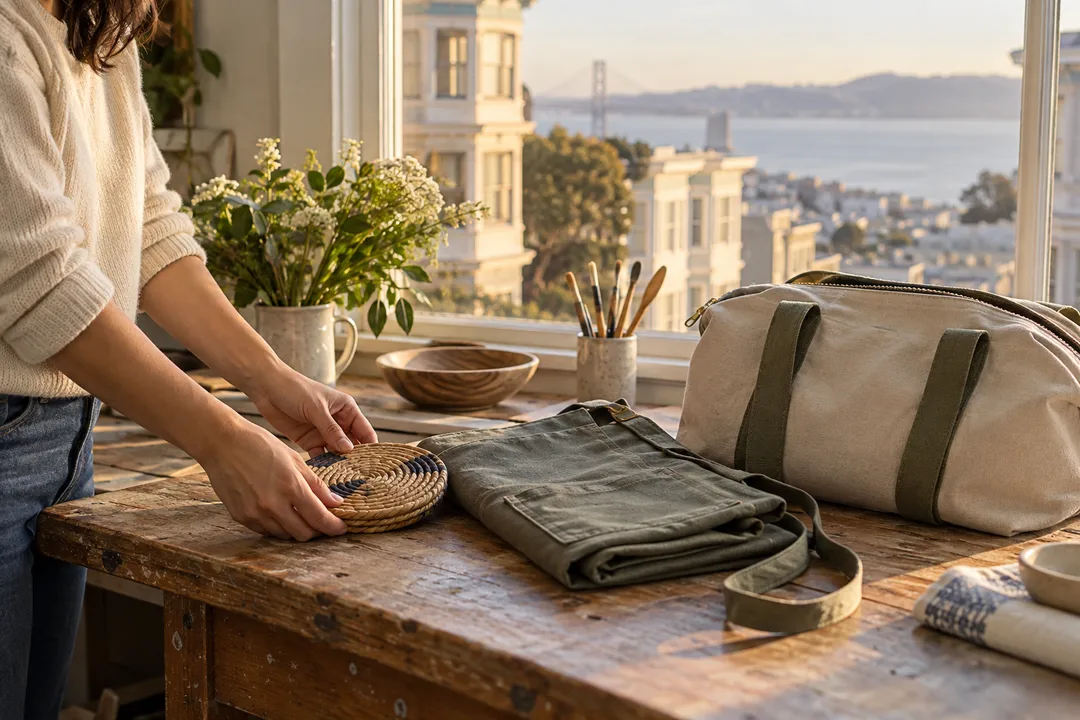
What time can you actually leave?
Begin with the moment you are free to travel, not the moment another activity is supposed to end. If you are leaving work, lunch or an appointment, consider the time you personally need between those plans. Perhaps you want to eat before handling materials, change clothes or leave a bag at home. These are your planning choices. Include them openly instead of creating an itinerary that works only if you move from one commitment to the next with no pause.
Use a specific starting area when you are ready to narrow the search. If you will already be in the Mission, that matters more than where you woke up. If you expect to leave from the Richmond, say that rather than simply requesting somewhere central. You can also compare two versions of the afternoon if the starting point is uncertain. Keep each version intact so you do not accidentally combine the easiest part of one journey with the most convenient part of another.
Is the end of the day fixed or flexible?
Identify the commitment you cannot move. A departure, appointment or meal with other people creates a different boundary from a casual wish to stop somewhere afterwards. Work back from that fixed point when deciding what lesson duration you would consider. If the workshop is the only plan, let it occupy the afternoon without manufacturing an unnecessary deadline. Knowing which situation you are in helps avoid both an overpacked schedule and an overly narrow search that rules out activities you could comfortably enjoy.
Set aside a personal margin before the next commitment. You may want time to pack an object, wash your hands or sit down after concentrating. The amount is up to you and belongs in your preference brief; it is not a claim about every provider's timetable. If your afternoon has a firm end, do not assume you can leave a structured lesson partway through. Select an arrangement whose stated schedule fits rather than making the whole outing depend on an unagreed early departure.
How much travel would feel worthwhile?
Describe convenience in terms of the trip you are willing to make. You might prefer one straightforward ride, a short walk from your starting point or a destination along the direction of your next stop. A place that appears nearby on a city map is not necessarily the journey you would enjoy. At this stage, use travel preferences to define the search. Once actual candidates have addresses, assess the route using their real locations rather than assigning a confident travel time to an unnamed studio.
Think about the return as a separate journey. A session could be easy to reach from work but inconvenient for getting home with a project. Another might require more effort at the beginning and leave a relaxed finish. Include both ends when comparing the afternoon. If you dislike transfers, long walks or carrying a delicate object far, make that explicit. You are choosing a complete experience, and the route is part of how it will feel even when the lesson itself is equally appealing.
What does the published duration include?
Read a candidate's timing alongside its arrival and completion instructions. The teaching duration may sit within a larger visit that includes getting settled, preparing materials or packing. Use whatever the provider actually states about those stages. If a detail is absent, keep it as an unanswered question. Avoid treating the advertised lesson length as a complete door-to-door plan or adding an invented standard allowance for every workshop. A useful comparison distinguishes information in the offer from the personal margins you choose around it.
Also establish whether the project requires a return visit. A compact item can still involve a later finishing or collection stage, while another project may be ready to carry when the session ends. The actual arrangement matters more than the apparent size of the object in a picture. If you are visiting SF briefly, your ability to collect it later could determine the choice. If you live nearby, another visit may be easy enough that it does not need to rule out the activity.
Should you choose a shorter project or fewer stops?
When an activity does not fit, consider which part of the day you would rather change. A smaller project might give you the introduction you want within a tighter window. Removing an optional stop might allow you to enjoy a more sustained session. Those are different afternoons, and either can be the better choice. Make the decision based on what you most want to experience. A plan with fewer activities can still be full of interest if the main activity has room to breathe.
Keep a fallback that changes the plan honestly. For example, if your available window shrinks, you could choose a different day for the craft rather than inventing a last-minute lesson or assuming a seat will open. You might keep the afternoon for an independent creative activity while saving the taught session for later. A fallback is a personal decision about how to use your time. It does not require Karpo or a provider to have reserved an alternative place in advance.
What should the request to Karpo contain?
Try a message such as: "I want a craft afternoon in San Francisco between lunch and an evening commitment. I will leave from the Inner Sunset and want a straightforward journey. Help me compare activity types with a bounded project and explain how to assess their full time commitment. I prefer a relaxed finish and would like an object I can carry easily." Supply your actual date, departure point and latest comfortable finish when those are decided. Ask for a few contrasting directions rather than an unsupported timetable for imaginary classes.
For practical notes, keep the final shortlist to a small set of real candidates with their published duration, participation requirements, completion arrangement and actual location. Put your own travel estimate and buffer beside those details without confusing them with provider rules. Then choose the outing whose beginning, making time and ending all work together. A conversational recommendation helps you organize the decision; you still need the provider's booking process to establish a place. Bring the clearer brief into the Karpo APP when you want to refine the afternoon further.
Ask Karpo for more information.
Keep reading
- Bernal Heights Pottery Glaze Supply Browsing Route: Walk
 Potrero Hill Pottery Glaze Supply Browsing Route: Walk
 Mission Pottery Glaze Supply Browsing Route: Studio Walk