 Bernal Heights Pottery Glaze Supply Browsing Route: Walk
Hidden Gems & Odd Finds
SF Craft Class Shortlist: One Group, Different Skill Levels
Shape an SF craft class shortlist for people with different skills. Agree on shared essentials, then leave room for individual choices at the same worktable.
One friend makes things every weekend. Another has not touched craft supplies since school. A third is interested mainly because everyone will be together. Choosing a San Francisco workshop for that group is less about finding the most impressive project than finding a shared starting point with room to grow. Your craft class shortlist should describe what everyone needs and where people can make different choices. Bring that brief into the Karpo APP to explore suitable activity formats before asking a provider whether a particular session can accommodate your group.
Ask each person one useful question
Start with what would make the afternoon enjoyable for each participant. Avoid asking everyone to name a craft immediately. The experienced maker might say they want to learn an unfamiliar technique. The beginner might want a result they can finish without falling behind. Someone else may care about sitting together and talking. These answers reveal the task more clearly than a list of unrelated favorite materials. Write down the need behind each preference so you can recognize several ways of meeting it.
Give each person a private opportunity to name a firm limitation. That could involve materials, access, pace, cost or discomfort with a particular activity. A person does not need to explain a personal reason to have it included in the plan. Keep these limits separate from preferences such as a favorite color or a wish for a decorative object. The useful distinction is between something that would make participation impossible and something that would make a workable afternoon a little more appealing.
Look for a common base with optional depth
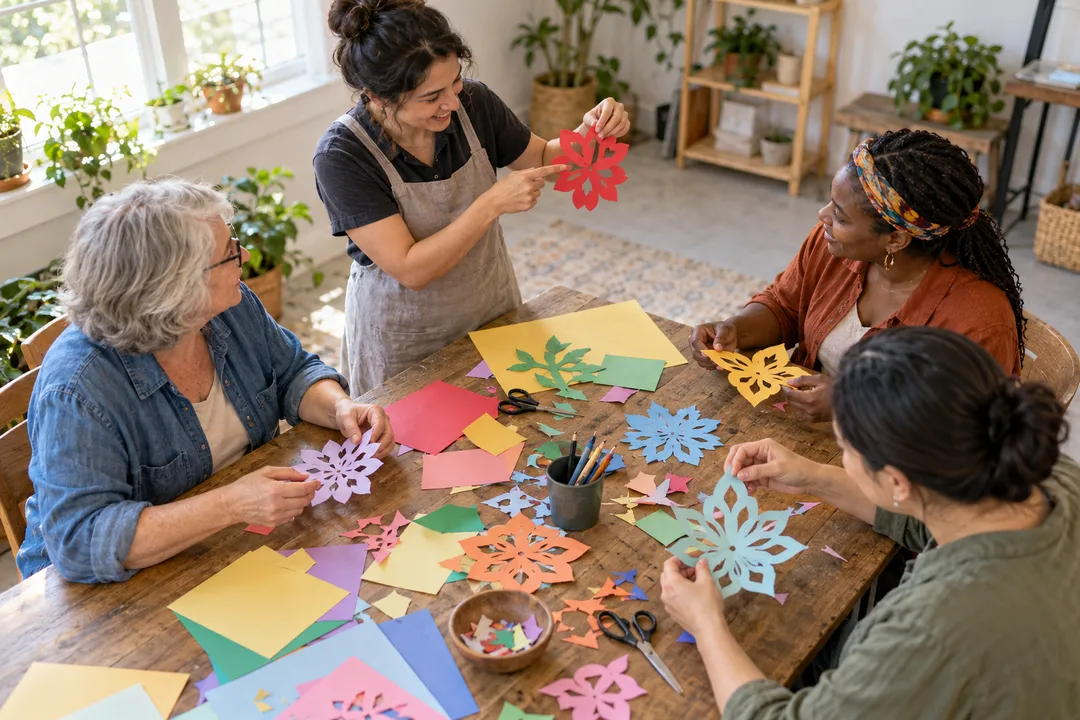
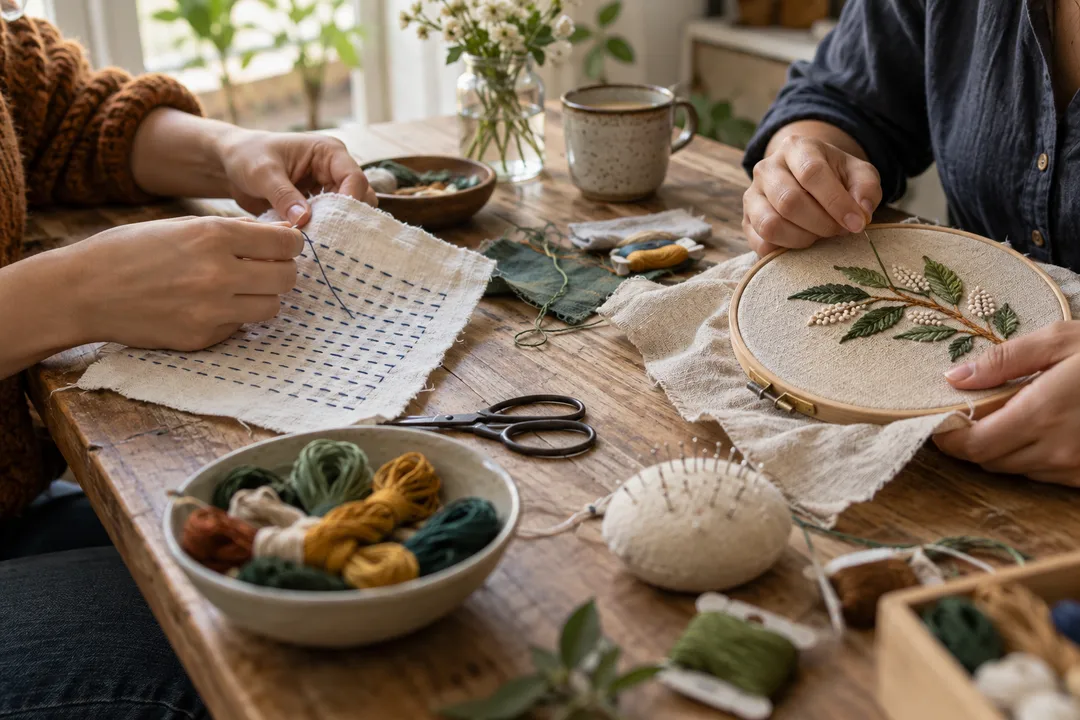
A suitable format might introduce one basic process while allowing different levels of detail. Imagine a paper project where everyone learns the same joining method but chooses a simple or elaborate arrangement. Or imagine textile work where a common foundation allows additional decoration. These are examples of design possibilities, not assertions about workshops currently scheduled in SF. Use them to describe the kind of flexibility you want. A real provider must establish whether its lesson, materials and teaching plan support that arrangement.
Optional depth is different from expecting the instructor to teach unrelated projects at the same time. If one person wants an advanced technical lesson and another needs every basic step introduced, they may need different sessions. Recognizing that early is useful. You could choose an unfamiliar medium so everyone begins together, or agree that this outing is mainly social and leave specialized study for another day. A good group decision gives each person a reason to attend without requiring one lesson to fulfill incompatible learning goals.
Protect beginners from becoming a group project
Decide that experienced friends will participate as learners rather than automatically becoming extra instructors. Someone may welcome a familiar person's help; someone else may feel watched or corrected. Let the beginner ask for assistance and let the actual teaching arrangement carry the responsibility for instruction. This keeps the outing from quietly turning into one friend managing everyone else's work. It also leaves the more experienced participant free to enjoy a personal project instead of spending the entire session solving problems around the table.
Discuss whether people want to compare results at the end. A lighthearted look at everyone's different choices may be enjoyable, but an informal competition can change the mood. You can describe the outing as trying a process together rather than producing the most polished piece. That framing helps when the group has different experience levels or different reasons for attending. It is easier to select an appropriate activity when the invitation makes clear what kind of participation will be valued.
Choose the booking shape before the project
Distinguish joining an existing public lesson from requesting a private group session. A public class has its own curriculum, duration and participation rules. A private arrangement may involve a different minimum group size or package. Do not treat the word group in your search as proof that both options are available. Establish which format is being offered and how your party would join. If the group wants individual creative choices, that is a question about the actual lesson rather than an assumption based on the booking label.
Agree on who will handle the practical conversation. That person can gather answers, but the decision still needs to reflect the group. Share one concise brief instead of sending the provider several contradictory requests. Include the number of participants, the range of experience and the shared goal. If a requested adaptation matters to participation, obtain a clear response about it before anyone pays. A proposed workshop plan and an accepted booking are separate stages, and a planning conversation alone does not secure places for the group.
Use a decision rule everyone understands
Compare a small number of options against the same essentials. Ask whether every person can participate, whether the total commitment fits, and whether each has something appealing to do. Then consider softer preferences such as the object, atmosphere or neighborhood. A simple way to choose is to require agreement on the essentials and accept differences on the rest. This avoids an endless vote where people rank activities using completely different criteria without realizing why they disagree.
When two formats remain, name the tradeoff aloud. One may offer more shared instruction while the other leaves more freedom to personalize. One may be a shorter experiment while the other becomes the main event of the day. Let participants say which version they actually want. If an option only works because one person is willing to endure it, consider another format or a different shared activity. A successful afternoon need not prove that crafts are the right answer for every group on every occasion.
Draft the request and keep the reply usable
Here is a starting message for the Karpo APP: "We are four people planning a craft activity in San Francisco. Two are complete beginners, one does textile projects regularly and one mostly wants a social afternoon. Help us compare formats with a shared basic technique and optional detail. We want individual projects at the same table, clear instruction and no competition. Explain the questions we should put to a provider." Add the group's area, spending ceiling and available window as concrete preferences.
For practical notes, preserve a short decision record after the conversation: the common goal, firm participation needs, experience range, booking format and any provider answers that made the activity workable. Keep personal information out of the shared record unless the person wants it included. Once the group agrees, send the selected session description so everyone understands the same offer. The point of the shortlist is a clear invitation that people can accept comfortably, with enough freedom for different hands to make different things together.
Ask Karpo for more information.
Keep reading
- Bernal Heights Pottery Glaze Supply Browsing Route: Walk
 Potrero Hill Pottery Glaze Supply Browsing Route: Walk
 Mission Pottery Glaze Supply Browsing Route: Studio Walk