 Bernal Heights Pottery Glaze Supply Browsing Route: Walk
Hidden Gems & Odd Finds
Noe Valley Comic Shop Crawl Planner for Young Readers
A Noe Valley comic shop crawl planner for parents: how to help a young reader pick a first graphic novel, keep the walk flat, and end with a park story time.
There is a moment in many families when a child starts flipping past the words of a picture book to stare at the drawings, then asks for something longer but still full of pictures. That is often the right time for a first graphic novel. Noe Valley, a sunny pocket of San Francisco known for strollers, bakeries and a friendly main street, is an easy place to go looking for one. This comic shop crawl planner is for a parent and a young reader taking that step together.
Why Noe Valley Works for Families
Noe Valley sits in a natural bowl between hills, which gives it more sunshine than many parts of the city and a main street that is pleasantly flat by San Francisco standards. That makes it a rare neighbourhood where a crawl with a stroller or a slow-walking child does not involve a climb. Twenty Fourth Street is lined with bakeries, toy stores, cafés and small shops, all close enough to cover on foot.
The neighbourhood also has a strong family culture. Weekend mornings bring parents with coffee, toddlers on balance bikes and older kids clutching library books. Shop owners are used to small visitors, and children's sections tend to be welcoming rather than an afterthought. For a first graphic novel hunt, that relaxed atmosphere matters, because a nervous or bored child will not want to browse for long.
Knowing When a Child Is Ready
The signs are usually simple. A child who reads speech bubbles in picture books, retells stories by pointing at pictures or loves cartoons with clear panels is often ready. Graphic novels can bridge the gap between early readers and chapter books, because the drawings carry much of the story while the words stay short and manageable.
Some parents worry that comics are not real reading, but teachers and librarians increasingly treat them as a valuable step. Following a sequence of panels builds attention, vocabulary and the ability to understand how scenes connect. The best first choice is the one the child wants to open again tomorrow, so let their excitement guide the decision rather than an age label on the back cover.
Planning the Walk With the Karpo APP
Open the Karpo APP and describe the outing as you would to a friend, such as a flat Saturday walk in Noe Valley with a bookshop that has kids' graphic novels, a bakery and a playground nearby. Karpo suggests places that match and shows what other parents and visitors have said, so you can spot shops with good children's sections and spaces where little ones can sit down.
Limit the plan to two shops with a snack in between. Young children browse in short bursts, and a crawl that feels like an adventure rather than an errand keeps them engaged. Put the shop that sounds most child-friendly first, so the earliest memory of the day is sitting on a cushion with a book, not waiting by a counter.
Choosing the First Graphic Novel Together
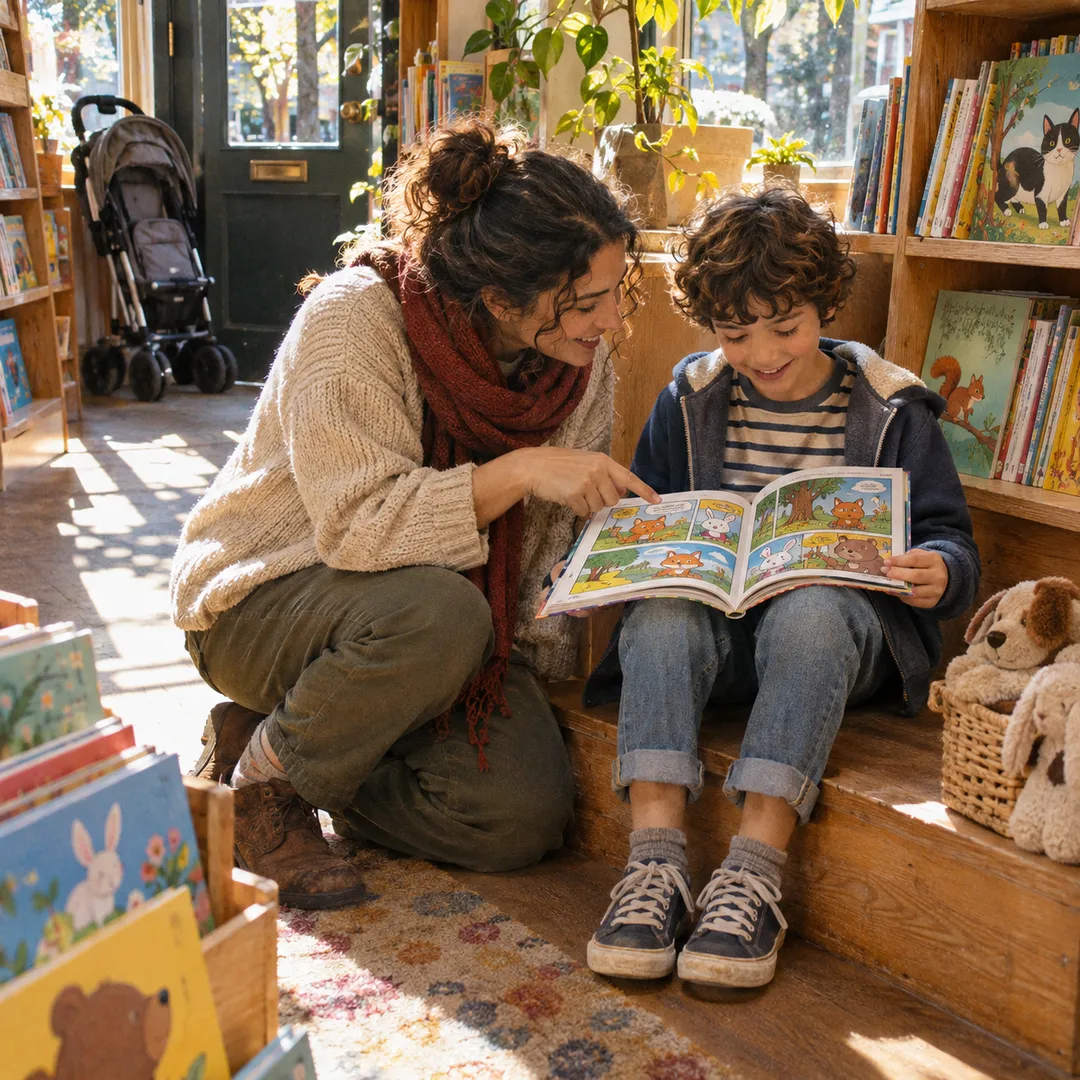
Inside, head to the children's section and look for shelves of early reader comics, which use large panels, a few lines of text per page and plenty of humour. Animal heroes, friendship stories and gentle adventures tend to work well for beginners. Let the child pull down three or four options and flip through them without being rushed.
Ask them simple questions as they look, such as which character they like or what they think happens next. Their answers will tell you which book has caught them. Booksellers can also point you toward series, which are a great choice because a child who loves the first volume will have a next one waiting. One book chosen with real excitement is worth more than a stack picked by an adult.
Snack Breaks on Twenty Fourth Street
A bakery stop between shops gives everyone a rest and keeps moods steady. Noe Valley has several cosy bakeries and cafés where a pastry and a warm drink can be shared at a window seat. This is a good moment to flip through the new book together, reading a few panels aloud and letting the child explain the pictures in their own words.
If the child is restless, let them pick the next stop or count shop dogs along the way. Small games turn the walk into part of the story. Parents who make the day feel unhurried often find that children ask to come back, which is the best sign that the first graphic novel has opened a door to more reading.
Story Time in the Park
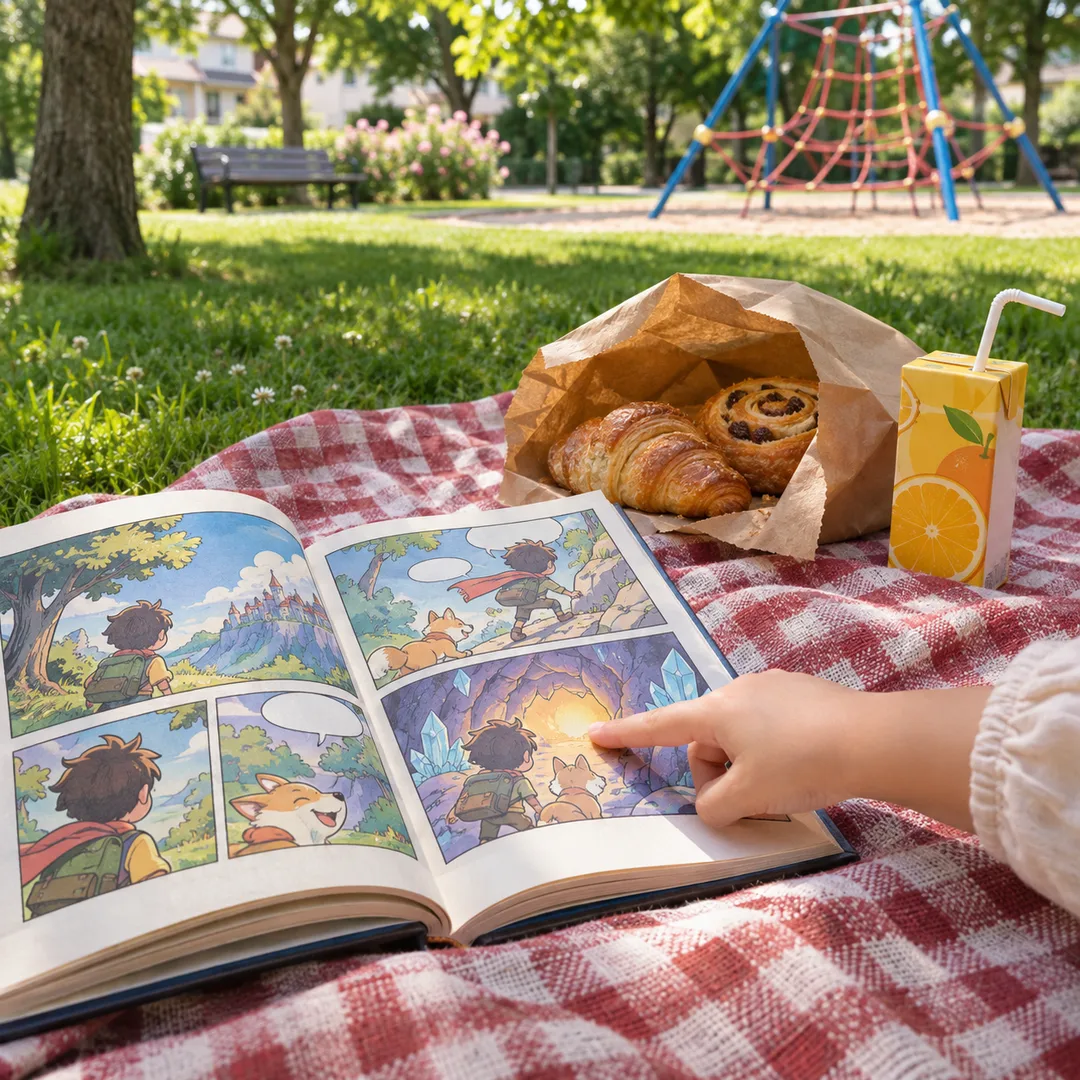
The neighbourhood has a few small parks and playgrounds within easy walking distance of the main street. Bring a light blanket and a bag of snacks, let the child run off some energy on the climbing frames, then settle down together on the grass for a reading break. Reading the first chapter aloud outdoors gives the new book a happy memory attached to it.
For older siblings, turn the park stop into a small challenge, such as finding the funniest panel or acting out a scene. Comics invite that kind of play because the drawings make characters vivid. When the child starts reading parts aloud without help, you will know the crawl has done its job.
Keeping It Gentle for Little Legs
Even on a flat street, a long day can tire small walkers. Keep the whole crawl within a few blocks, and if you want to visit a shop farther away, take the streetcar or plan it for another weekend. A stroller with a basket is useful for carrying books, snacks and jackets, since Noe Valley mornings can start cool before the sun breaks through.
Schedule the outing for the morning or early afternoon, when children are at their brightest. Avoid planning it right before nap time or a big lunch, because hungry or sleepy readers rarely enjoy browsing. If the child loses interest after the first shop, end the day there. A short, happy visit beats a long one that ends in tears.
Practical Notes for Parents
Before you leave home, look at a few graphic novels the child already enjoys at school or the library, so you can mention them to staff. Bring a sturdy tote bag and something to wipe sticky fingers before handling books. A small notebook lets older children draw their own comic panels during breaks, which often sparks even more interest in the books.
Let the child carry the new book home if they want to, and set aside time that evening for another chapter. Over the following weeks, a return trip to Noe Valley for the next volume in the series can become a small family ritual. That steady rhythm, rather than any single perfect book, is what turns a curious child into a lifelong reader.
Ask Karpo for more information.
Keep reading
- Bernal Heights Pottery Glaze Supply Browsing Route: Walk
 Potrero Hill Pottery Glaze Supply Browsing Route: Walk
 Mission Pottery Glaze Supply Browsing Route: Studio Walk