 Bernal Heights Pottery Glaze Supply Browsing Route: Walk
Hidden Gems & Odd Finds
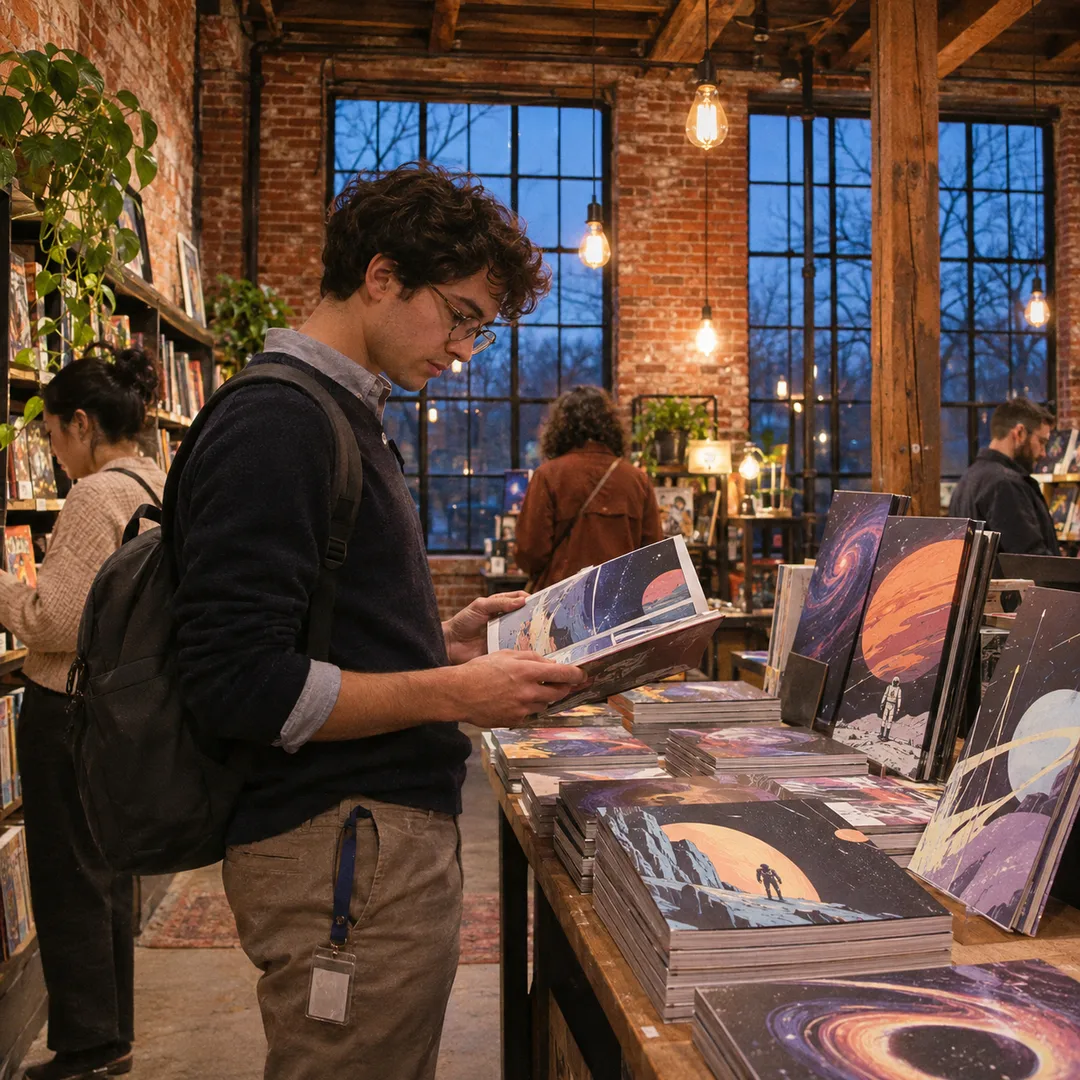
Dogpatch Comic Shop Crawl Planner for Sci-Fi Fans After Work
A Dogpatch comic shop crawl planner for sci-fi fans after work: pick space and future stories, ride Third Street, and read beside the old shipyard cranes.
Mission Bay empties out in the early evening as researchers, engineers and lab technicians leave glass buildings full of microscopes and code. A few blocks south, Dogpatch waits with its brick warehouses, workers' cottages and quiet waterfront, and it makes a calm place to switch off. This comic shop crawl planner is for the science fiction reader among them, someone who spends the day on real experiments and wants to end it with starships, strange planets and future cities drawn on the page.
Why Dogpatch Suits an Evening Crawl
Dogpatch grew up around the shipyards on the eastern waterfront, and many of its streets still carry that working history. Small wooden cottages built for shipyard workers stand next to brick warehouses that now hold studios, cafés, galleries and makers' shops. The scale is human and the traffic is light, which makes the neighbourhood feel like a pause button after a busy day in the labs next door.
It also sits right on the light rail line that runs along Third Street, so you can leave a Mission Bay office and be in Dogpatch within a few minutes. That makes a short weeknight crawl realistic. You do not need a free Saturday to hunt for comics. Ninety minutes after work is enough for one shop, a bite to eat and a chapter by the water.
What Science Fiction Comics Offer Scientists
People who work with real science often enjoy fiction that takes their ideas seriously and then pushes them somewhere wild. Science fiction comics are full of that energy, from hard science stories about orbital mechanics and generation ships to dreamlike tales of alien ecosystems and machines that think. The art lets a reader see invented worlds in detail, which can feel like a holiday for a mind that spends all day on precise measurements.
Many readers in this crowd also like comics that question technology, such as stories about artificial minds, biotech gone strange or cities shaped by data. Reading them after a day of building those tools gives a pleasant mix of recognition and distance. Some say it even sparks ideas for their own work, which is a good excuse for buying one more volume.
Mapping the Evening in the Karpo APP
Before leaving the office, open the Karpo APP and describe the evening you have in mind, such as a short after-work walk in Dogpatch to find science fiction graphic novels, with a quick dinner and a waterfront spot to read before dark. Karpo suggests places that fit and shows what visitors have shared about them, which helps you find shops that lean toward genre fiction or carry translated European and Japanese science fiction.
Keep the plan tight. On a weekday evening, one bookstore or comic shop plus a backup option is plenty, and the rest of the time belongs to food and the water. Put the shop closest to the light rail stop first, so you can still walk there if you leave the lab late, and treat any second shop as a bonus.

Browsing With a Researcher's Eye
Start by scanning the science fiction or speculative section rather than the superhero wall. Look for collected editions and standalone graphic novels, which suit a busy schedule better than monthly issues. Flip to a random page in the middle and read it cold. If the worldbuilding grabs you without context, the book will probably hold your attention on a tired evening.
Ask staff about recent European science fiction albums, Japanese space opera manga and independent publishers that specialise in strange futures. Many readers find that translated work offers fresh ideas because it comes from different scientific and cultural traditions. Keep a short note of artists whose style you love, since following illustrators often leads to better discoveries than following famous series.
Dinner Between the Warehouses
Dogpatch has built a reputation for small restaurants, bakeries and bars tucked into old industrial buildings. A casual dinner here feels relaxed, and many places have counters or communal tables where a solo reader fits in easily. Order something simple and spend a few minutes looking through the new book while you wait.
If you came with colleagues, turn the meal into a quick swap. Each person can describe the book they picked and why, which often leads to borrowing and trading over the following weeks. Lab teams that try this sometimes end up with an informal reading circle that meets every few weeks, using Dogpatch as a regular escape from the office.
Reading Beside the Old Cranes
Crane Cove Park, on the waterfront edge of the neighbourhood, keeps two huge shipyard cranes from the industrial era standing over a small beach and lawns. At dusk the cranes turn into dark silhouettes against the sky, and they look like props from a science fiction film. It is hard to imagine a better setting to open a story about ships and machines.
Bring a light jacket, because the wind off the bay picks up in the evening. Find a bench facing the water and read the first chapter while the light fades. The quiet sounds of the bay and the distant hum of the city make a calm soundtrack, and many readers say these short sessions are the best part of their week.
A Walk Through the Shipyard Past
On longer evenings, take a slow loop past the old brick buildings near the historic shipyard and up into the streets of cottages behind them. Some of these homes are among the oldest surviving houses in the city, spared by the great earthquake and fire. Walking past them after reading about distant futures gives a pleasing sense of time stretching in both directions.
If you want a little climb, Potrero Hill rises just to the west, with views back over the bay and the downtown skyline. It is a steep walk but a short one. For most weeknights, though, the flat waterfront and a quick return to the light rail are enough, leaving energy for another chapter at home.
Practical Notes for After Work
Carry a slim tote or a padded sleeve in your work bag, so new books do not get bent beside a laptop. Choose bound collections over loose issues for the same reason. If you plan to read outside, check the sunset time and leave enough light for the walk back, since parts of the waterfront are dim after dark.
Keep the habit small and repeatable. One weeknight crawl a month gives you a steady supply of new reading without turning comics into another task. Over time the route becomes familiar, staff start remembering your taste and the old cranes become a landmark for the end of a long week, which is exactly what a good after-work ritual should feel like.
Ask Karpo for more information.
Keep reading
- Bernal Heights Pottery Glaze Supply Browsing Route: Walk
 Potrero Hill Pottery Glaze Supply Browsing Route: Walk
 Mission Pottery Glaze Supply Browsing Route: Studio Walk