 Stonestown Winter Farmers Market Picker for Student Cooks
Weekend Plans
Mission District Clay Pot Cooking Workshop Kitchen Route
Learn traditional Mexican cazuela braising, earthenware seasoning rituals, and heritage Latin market sourcing across San Francisco's vibrant Mission District.
Navigating the colorful mural-lined streets of San Francisco's Mission District provides an extraordinary cultural starting point for exploring the rustic craft of Mexican cazuela cookery. Across Mexico, ancestral earthenware vessels known as ollas and cazuelas de barro have defined slow-simmered home cooking since pre-Hispanic times. Molded from natural clay and fired with lead-free glazes, these wide, shallow vessels circulate steady, radiant heat that softens dried heirloom beans, dissolves tough meat fibers into velvety guisados, and deepens complex chile adobos. Translating this culinary workshop tradition into your own home kitchen brings vibrant heritage flavor and tactile artisan cooking to weekend dinner plans.

Mexican Barro Earthenware and Ancestral Cookware
The engineering behind traditional Mexican barro cookware represents an ancestral harmony of earth, water, and fire. Artisans blend local clays with volcanic sand to produce durable ceramic structures capable of withstanding open hearth fires and direct stovetop burners. The broad, low-walled design of the cazuela maximizes surface exposure, encouraging deliberate evaporation that thickens savory salsas and rich moles into concentrated, glossy sauces. Understanding the structural properties of Mexican clay cookware helps home cooks appreciate why traditional guisados taste remarkably different when prepared in earthenware rather than modern stainless steel.
Traditional Mexican cooks prize barro vessels for their ability to mellow sharp acidity and round out pungent spices. The mineral composition of fired terracotta reacts subtly with cooking liquids, neutralizing harsh tannins from dried chiles and softening the acidity of fresh tomatillos. Earthenware acts as an exceptional thermal reservoir, maintaining an uninterrupted gentle simmer that tenderizes proteins without shredding their texture. This balanced heat ensures that delicate herbs like epazote and Mexican oregano infuse deeply throughout the entire pot.
The cultural legacy of barro cookware connects intimately with the communal soul of San Francisco's Mission District. Along vibrant blocks of 24th Street and Mission Street, generations of immigrant families have celebrated holidays and weekend gatherings around bubbling pots of pozole and slow-cooked frijoles. Recreating these heritage techniques in a Bay Area apartment honors the culinary endurance of Latin American home cooks while offering a grounding, hands-on cooking experience centered around craftsmanship and shared food.
Curing Raw Clay Pots and Managing Open Burners
Curing an unglazed or traditional barro pot before its inaugural cooking session is an essential ritual that ensures structural durability. Home cooks begin by rubbing the raw exterior base and interior walls thoroughly with halved cloves of fresh garlic, which releases natural sticky juices that penetrate micro-pores. The vessel is then filled with water, brought to a gentle simmer over a low flame, and allowed to cool completely, annealing the ceramic matrix and eliminating any raw earthy dust before culinary ingredients are introduced.
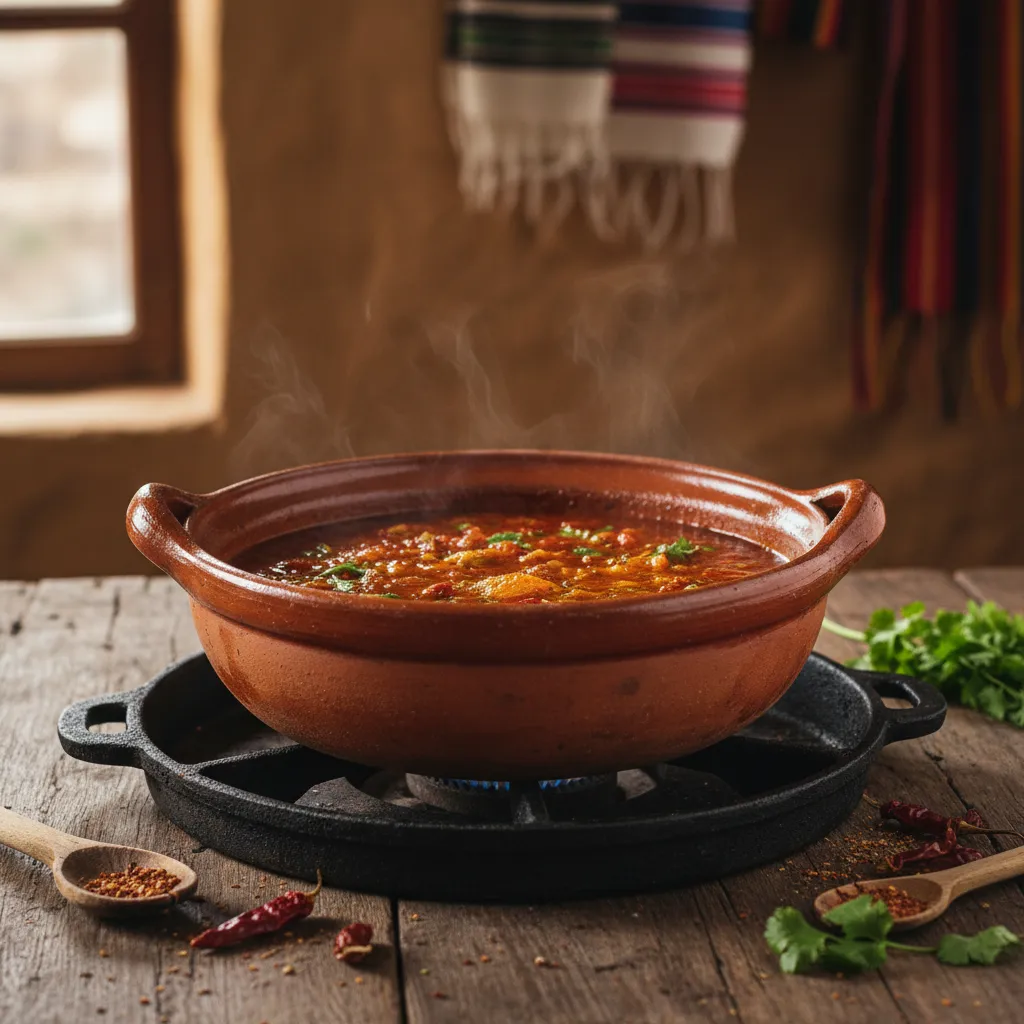
Stovetop burner management requires careful discipline to prevent thermal fracture when cooking with clay in modern kitchens. Cooks must always place a heavy cast-iron flame tamer or stainless-steel diffuser between the gas burner and the cazuela, avoiding direct concentrated flame points on the earthenware base. Starting on the lowest flame setting allows the pot to warm gradually across five minutes before nudging the heat to a steady medium simmer, establishing a stable thermal reservoir that protects the pottery from cracking.
Monitoring the acoustic and visual cues of clay pot braising replaces reliance on digital timers. As a chile-laden adobo simmers within the cazuela, the liquid produces a slow, deep acoustic pulse as heavy bubbles break through the surface, releasing fragrant plumes of toasted ancho and cumin steam. When the sound shifts from an active splash to a heavy, rhythmic murmur, the cook knows that collagen and starches have emulsified, indicating that the braised meat has reached tender perfection.
Slow-Simmered Frijoles de Olla and Braised Adobos
A quintessential showcase for Mexican earthenware is the preparation of traditional frijoles de olla, slow-simmered heirloom black or pinto beans seasoned with white onion, pork lard, and fresh epazote sprigs. Cooking dried beans in an earthenware olla yields an incomparably creamy interior texture with intact skins that never burst or turn mushy. The natural clay imparts a subtle earthy mineral quality to the bean broth, producing a rich, flavorful pot liquor that forms the cornerstone of daily Mexican domestic dining.
Another benchmark preparation is slow-braised pork or beef in rich red chile adobo, featuring dried guajillo and pasilla chiles toasted on a comal and blended with garlic, cloves, and Mexican cinnamon. Seared gently in the cazuela with a touch of lard, the meat braises over ninety minutes beneath a loose foil or clay lid, absorbing the smoky, fruit-forward complexity of the chiles while rendering tender, spoon-shredded mouthfuls.
Presenting a completed meal in its cooking cazuela brings vibrant rustic elegance directly to the dining table. The wide earthenware vessel stays hot for nearly an hour off the burner, keeping stews steaming while diners assemble tacos with warm corn tortillas, fresh cilantro, diced white onions, and wedges of ripe lime. Serving straight from the clay celebrates the unhurried communal spirit of Mexican family cooking, turning a simple dinner into a festive culinary celebration.
Mission Street Heritage Sourcing and Neighborhood Walks
Gathering authentic ingredients and traditional barro cookware for a weekend cooking session provides an inspiring walking itinerary through San Francisco's Mission District. Strolling along 24th Street between Mission Street and Potrero Avenue brings home cooks past legacy panaderias, herbal botanicas, and family-owned carnicerias. Exploring these colorful storefronts introduces shoppers to dried heirloom chiles, fresh epazote, heritage pinto beans, and fresh-pressed corn masa crafted daily from stone-ground nixtamal.
The neighborhood journey offers prime opportunities to source authentic lead-free Mexican cookware from long-standing Latino houseware and kitchen merchants along Mission Street. Shopkeepers can help you select sturdy glazed cazuelas, deep bean ollas, and cast-iron comals suitable for stovetop use. Supporting these independent neighborhood retailers connects your cooking directly with local community merchants while securing reliable tools with genuine cultural provenance.
Along with cookware and staples, visiting specialty Mexican spice purveyors and neighborhood produce markets reveals vibrant fresh ingredients that elevate traditional braises. Shoppers can find fresh Mexican oregano, piloncillo raw cane sugar cones, canela soft cinnamon bark, and fresh hoja santa leaves. Stocking your pantry from these neighborhood markets ensures that your home cooking captures the nuanced, multi-layered depth that defines authentic regional Mexican gastronomy.
Cazuela Cleaning Discipline and Clay Kitchen Protocols
Proper cleaning and storage protocols ensure that your Mexican barro cookware delivers decades of delicious, reliable kitchen service. After dining, let the cazuela cool down completely to ambient room temperature before introducing any wash water, as sudden cooling can cause instant ceramic cracks. Hand-wash the vessel using warm water and a stiff natural fiber scrubbing brush, avoiding commercial chemical dish detergents that can soak into unglazed clay surfaces and alter the taste of future dishes.
If caramelized mole or bean residue adheres to the bottom of the pot, simply fill the vessel with warm water and a tablespoon of baking soda, letting it soak for twenty minutes to soften stubborn spots naturally. Once thoroughly cleaned, dry the pot with a cotton towel and let it sit upside down in a warm, well-ventilated location until the raw base is completely dry. Storing the pot with its rim unencumbered by plastic wrap prevents trapped humidity and keeps the earthenware fresh and odor-free.
Preparing your kitchen for a clay pot cooking session requires basic organization and sensible safety mindfulness. Always ensure a heavy heat diffuser is centered securely over your stovetop burner before lighting the flame, and have heat-resistant silicone or wood trivets set on your countertops for effortless pot resting. Keeping thick dry kitchen towels within reach allows you to handle the broad earthenware handles safely as the vessel heats up. Practicing these simple handling precautions guarantees an enjoyable, deeply rewarding day of traditional culinary craft.
Ask Karpo for more information.
Keep reading
- Stonestown Winter Farmers Market Picker for Student Cooks
 Clement St Winter Farmers Market Picker for Lunar New Year
 Fort Mason Winter Farmers Market Picker for Citrus Bakers